1
News
The Lions, The Wizard and the Wardrobe Malfunctions
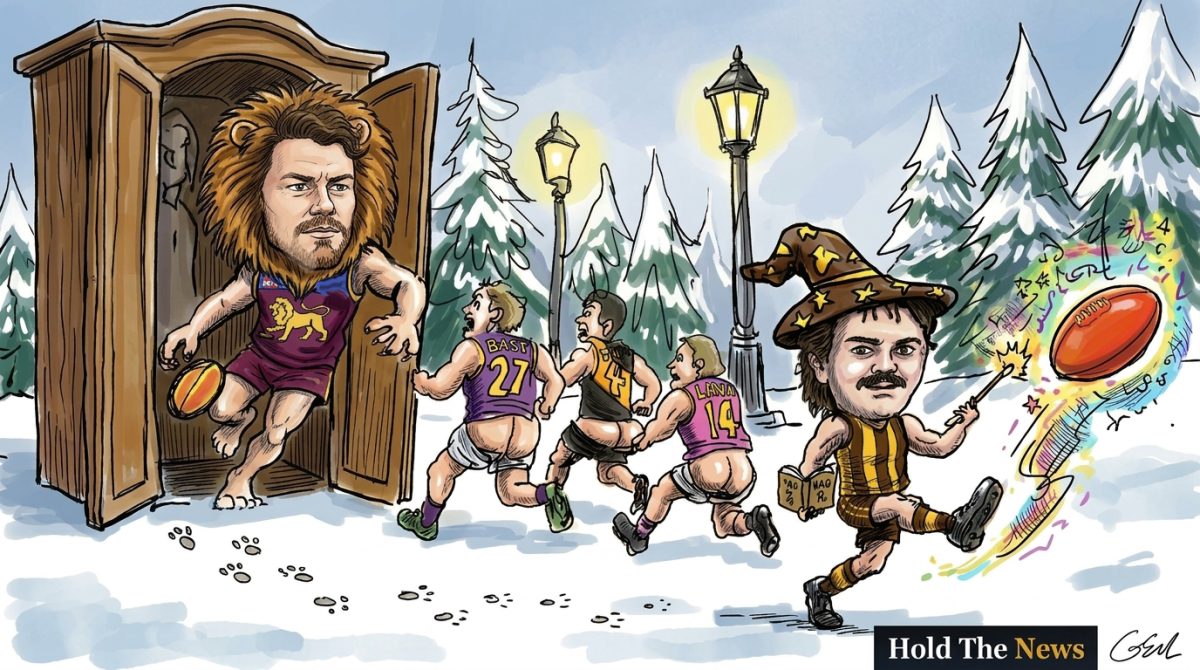
Lions, the Wizard and the wardrobe malfunction
It has been a tense finals series in the AFL. The Brisbane Lions have made the Grand Final for the third year in a row, brushing aside the Hollywood Hawks with the kind of casual confidence you would expect from reigning double premiers. Even the magic tricks of Hawthorn’s young gun Nick Watson, better known as The Wizard, were not enough to slow them down.
Meanwhile, Fremantle, the never‑premiers, the eternal bridesmaids, the club that has turned heartbreak into a lifestyle brand, knocked over Sydney and now find themselves staring at a Brisbane side chasing a triple dynasty. It is a matchup that feels like destiny for one team and emotional suicide for the other.
As we wait for the big showdown, it is hard not to reflect on the season that was. Hawthorn’s light has been extinguished, but memories of their chaotic opening round still linger. Jack Ginnivan sparked controversy when he was spotted wearing a novelty ring on the sidelines despite the AFL’s strict no‑jewellery policy. Which reminded me of the many other wardrobe malfunctions that have graced Australia’s favourite sport.
There have been plenty of classics over the years. The Western Bulldogs were fined for wearing inappropriate socks in 2001, for one example. The 2025 season delivered one of the funniest examples. Richmond’s number‑one draft pick Sam Lalor suffered a viral wardrobe malfunction during his AFL debut when his shorts briefly slipped while celebrating a goal against Carlton. And this wasn't the only bums out moment.
Brisbane also had a kind of full mooning festival. During the Sir Doug Nicholls Round, the Lions wore a special Indigenous AFLW guernsey featuring a yellow arc across the backside and a black tree rooted into the lower half of the jumper. The design was widely praised, but one unfortunate detail had fans making the same joke. To the naked eye, it looked like the players were running around with their shorts sliding down their behinds.
After his Brownlow win Lachie Neale appeared to be wearing a different girlfriend on his arm (And after a gut punch on Ginnivan he may not even see the GF). Lets also not forget mid season 2026, Swans star Isaac Heeney seemed to be wearing a class‑action lawsuit.
The AFL never disappoints. Whether it is dynasties, wizards, heartbreak merchants or wardrobe chaos, the theatre is always full and the costumes are never quite safe, and yes, there may be some focus on fixing 'the culture' next year, but it sure is a hell of a ride.
Meanwhile, Fremantle, the never‑premiers, the eternal bridesmaids, the club that has turned heartbreak into a lifestyle brand, knocked over Sydney and now find themselves staring at a Brisbane side chasing a triple dynasty. It is a matchup that feels like destiny for one team and emotional suicide for the other.
As we wait for the big showdown, it is hard not to reflect on the season that was. Hawthorn’s light has been extinguished, but memories of their chaotic opening round still linger. Jack Ginnivan sparked controversy when he was spotted wearing a novelty ring on the sidelines despite the AFL’s strict no‑jewellery policy. Which reminded me of the many other wardrobe malfunctions that have graced Australia’s favourite sport.
There have been plenty of classics over the years. The Western Bulldogs were fined for wearing inappropriate socks in 2001, for one example. The 2025 season delivered one of the funniest examples. Richmond’s number‑one draft pick Sam Lalor suffered a viral wardrobe malfunction during his AFL debut when his shorts briefly slipped while celebrating a goal against Carlton. And this wasn't the only bums out moment.
Brisbane also had a kind of full mooning festival. During the Sir Doug Nicholls Round, the Lions wore a special Indigenous AFLW guernsey featuring a yellow arc across the backside and a black tree rooted into the lower half of the jumper. The design was widely praised, but one unfortunate detail had fans making the same joke. To the naked eye, it looked like the players were running around with their shorts sliding down their behinds.
After his Brownlow win Lachie Neale appeared to be wearing a different girlfriend on his arm (And after a gut punch on Ginnivan he may not even see the GF). Lets also not forget mid season 2026, Swans star Isaac Heeney seemed to be wearing a class‑action lawsuit.
The AFL never disappoints. Whether it is dynasties, wizards, heartbreak merchants or wardrobe chaos, the theatre is always full and the costumes are never quite safe, and yes, there may be some focus on fixing 'the culture' next year, but it sure is a hell of a ride.