1
Politics
Under the Radar – Australia’s Looming ICE Age
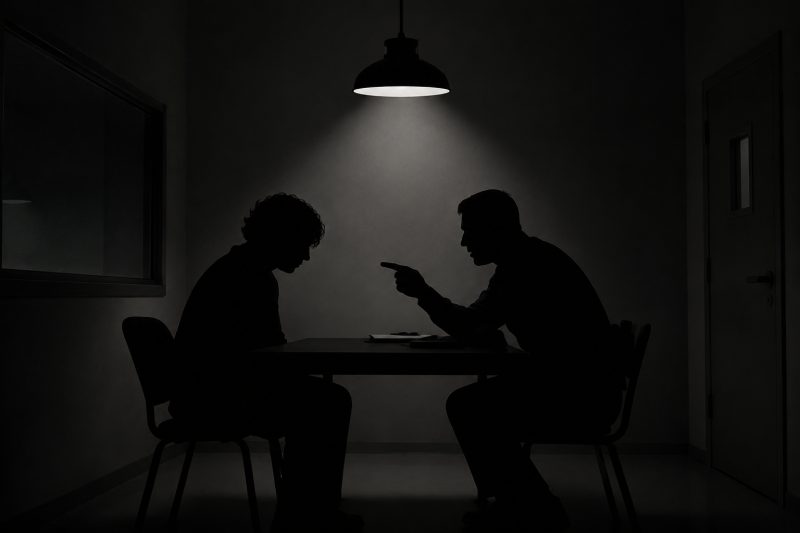
Currently wending its way through the Australian Senate is a piece of draft legislation that threatens to do what the United States Administration did to thousands of its innocent residents across the American Heartland from Jan 2025 to Jan 2026 – monster them.
Throughout 2025, the U.S. Immigration and Customs Enforcement (ICE) agency arrested more than 328,000 individuals in targeted US communities, detaining nearly 70,000 people in custody simultaneously by mid-December of that year. Many of those arrested, assaulted and detained by ICE have subsequently been released – declared by the US judiciary as having no case to answer. A number were killed during the course of those ICE and US Border Patrol operations.
Australia is now set, potentially, to follow suit when its Government’s draft legislation entitled the “ASIO Amendment Bill (No. 2) 2025” passes through the Senate, without too much fuss and well under, it seems, the Australian media’s radar.
So why the concern?
Well, this legislation aims to make ASIO's compulsory questioning powers permanent by repealing existing sunset clauses and expanding the grounds on which questioning warrants can be issued. It follows the passage of the ASIO Amendment Bill (No. 1) 2025, which successfully passed both Houses in September 2025 to temporarily extend those same powers until March 2027. The legislation enabling this was originally introduced in 2003 in the wake of the 9/11 terrorist attack in the US and previously required parliamentary review and renewal every few years. The sunset date was recently extended to March 7, 2027, by a separate piece of legislation.
What powers are we talking about here?
The key ones are listed as follows:
Removal of the Sunset Clause: The draft legislation repeals the existing sunset provision, transforming ASIO's compulsory questioning powers (introduced in 2003) into a permanent power.
Expanded Warrant Scope: It proposes broadening the scope of adult questioning warrants – previously restricted to counter-terrorism investigations - to now cover four new national security grounds: sabotage, the promotion of communal violence, attacks on Australia's defence system and serious threats to Australia's territorial and border integrity.
Changes to Prescribed Authorities: It modifies the criteria for "prescribed authorities" (who oversee the questioning), tightening disqualification and conflict-of-interest rules as well as clarifying the Attorney-General's powers to terminate appointments. It also requires that any post-charge questioning occur only before a prescribed authority who is a retired judge.
Reporting Requirements: It Imposes additional requirements ensuring the Attorney-General is immediately aware of any relevant information regarding the conduct of questioning.
Opposition to this draft legislation has come from legal and human rights bodies in Australia. Privacy and legal advocates, such as the Law Council of Australia, have voiced concerns over the removal of the sunset clause, the broadening of the grounds for questioning and the retention of provisions allowing minors as young as 14 to be subject to questioning warrants. Those supporting it point to a need by ASIO to be given these permanent powers in the light of evolving and more complex security and extremism threats, with the Bondi massacre of 14th December 2025 still raw in our memory.
But will these enhanced powers encourage ASIO and other Australian federal agencies to emulate US Border Patrol Commander, Gregory Bovino and his roving gangs of heavily armed ICE and other Federal US agents during that 12- month period - shooting and killing the likes of Renee Good and Alex Pretti, execution-style?
Can we trust ASIO to follow the rule of law if or when these new powers becoming permanently enacted. And should they be?
Imagine, for instance, if an ASIO director-general decided to go after a certain cohort of Australians, using these newly-legislated powers. He or she now has the luxury of using “promotion of communal violence” - whatever that means - as facts and grounds for compulsorily questioning a Renee Good or Alex Pretti who happened to be exercising their democratic rights to demonstrate against “Police State” practices.
Suddenly there’s a posse of ASIO and police officers on these peoples’ doorstep, ransacking their accommodation or offices, carrying away their business and personal equipment and belongings and forcing them to answered questions, refusing them legal assistance and threatening to detain them for 24 hours if they do not provide the answers being sought.
Supposing these people have teenage children as young as 14. Then those children can also be detained and questioned, albeit with legal and minor support advocates. But what about the legacy of trauma impacting these minors?
Australia does not need to descend into the American “ICE” age with this proposed ASIO legislation. At minimum the existing legislation should (1) retain its extant sunset clause, (2) strike out the “promotion of communal violence” clause and (3) restrict the compulsory questioning powers to adults. Our police can detain and question minors who are suspected of conducting criminal acts. Being a young teenager is traumatic enough in today’s world, so why push them further over the edge?
Sudo NIM
Throughout 2025, the U.S. Immigration and Customs Enforcement (ICE) agency arrested more than 328,000 individuals in targeted US communities, detaining nearly 70,000 people in custody simultaneously by mid-December of that year. Many of those arrested, assaulted and detained by ICE have subsequently been released – declared by the US judiciary as having no case to answer. A number were killed during the course of those ICE and US Border Patrol operations.
Australia is now set, potentially, to follow suit when its Government’s draft legislation entitled the “ASIO Amendment Bill (No. 2) 2025” passes through the Senate, without too much fuss and well under, it seems, the Australian media’s radar.
So why the concern?
Well, this legislation aims to make ASIO's compulsory questioning powers permanent by repealing existing sunset clauses and expanding the grounds on which questioning warrants can be issued. It follows the passage of the ASIO Amendment Bill (No. 1) 2025, which successfully passed both Houses in September 2025 to temporarily extend those same powers until March 2027. The legislation enabling this was originally introduced in 2003 in the wake of the 9/11 terrorist attack in the US and previously required parliamentary review and renewal every few years. The sunset date was recently extended to March 7, 2027, by a separate piece of legislation.
What powers are we talking about here?
The key ones are listed as follows:
Removal of the Sunset Clause: The draft legislation repeals the existing sunset provision, transforming ASIO's compulsory questioning powers (introduced in 2003) into a permanent power.
Expanded Warrant Scope: It proposes broadening the scope of adult questioning warrants – previously restricted to counter-terrorism investigations - to now cover four new national security grounds: sabotage, the promotion of communal violence, attacks on Australia's defence system and serious threats to Australia's territorial and border integrity.
Changes to Prescribed Authorities: It modifies the criteria for "prescribed authorities" (who oversee the questioning), tightening disqualification and conflict-of-interest rules as well as clarifying the Attorney-General's powers to terminate appointments. It also requires that any post-charge questioning occur only before a prescribed authority who is a retired judge.
Reporting Requirements: It Imposes additional requirements ensuring the Attorney-General is immediately aware of any relevant information regarding the conduct of questioning.
Opposition to this draft legislation has come from legal and human rights bodies in Australia. Privacy and legal advocates, such as the Law Council of Australia, have voiced concerns over the removal of the sunset clause, the broadening of the grounds for questioning and the retention of provisions allowing minors as young as 14 to be subject to questioning warrants. Those supporting it point to a need by ASIO to be given these permanent powers in the light of evolving and more complex security and extremism threats, with the Bondi massacre of 14th December 2025 still raw in our memory.
But will these enhanced powers encourage ASIO and other Australian federal agencies to emulate US Border Patrol Commander, Gregory Bovino and his roving gangs of heavily armed ICE and other Federal US agents during that 12- month period - shooting and killing the likes of Renee Good and Alex Pretti, execution-style?
Can we trust ASIO to follow the rule of law if or when these new powers becoming permanently enacted. And should they be?
Imagine, for instance, if an ASIO director-general decided to go after a certain cohort of Australians, using these newly-legislated powers. He or she now has the luxury of using “promotion of communal violence” - whatever that means - as facts and grounds for compulsorily questioning a Renee Good or Alex Pretti who happened to be exercising their democratic rights to demonstrate against “Police State” practices.
Suddenly there’s a posse of ASIO and police officers on these peoples’ doorstep, ransacking their accommodation or offices, carrying away their business and personal equipment and belongings and forcing them to answered questions, refusing them legal assistance and threatening to detain them for 24 hours if they do not provide the answers being sought.
Supposing these people have teenage children as young as 14. Then those children can also be detained and questioned, albeit with legal and minor support advocates. But what about the legacy of trauma impacting these minors?
Australia does not need to descend into the American “ICE” age with this proposed ASIO legislation. At minimum the existing legislation should (1) retain its extant sunset clause, (2) strike out the “promotion of communal violence” clause and (3) restrict the compulsory questioning powers to adults. Our police can detain and question minors who are suspected of conducting criminal acts. Being a young teenager is traumatic enough in today’s world, so why push them further over the edge?
Sudo NIM



_6a0fa846ce9676.52001931.jpg)
_6a0fa8bc4115d3.04374860.jpg)