WEEKLY
June 8, 2026
Edition #63
Showing all topics � Login to filter
1
Politics
NSW Parliament Week: New Laws on Domestic Violence, Hate Crimes, and Fuel Price Transparency
Article image
NSW Parliament sitting week: Tuesday 2 June, Wednesday 3 June, Thursday 4 June

Bills Introduced
Children's Guardian and Other Legislation Amendment Bill 2026
Introduced by the government in the Legislative Assembly.
This bill amends legislation governing the Children's Guardian.
The specific mechanism and effects were not detailed in this week's proceedings.
It affects families and child protection services across NSW.

Coal Innovation Administration Amendment Bill 2026
Introduced by the government in the Legislative Assembly.
This bill amends the Coal Innovation Administration Act.
The specific mechanism and effects were not detailed in this week's proceedings.
It affects coal industry operations and administration in NSW.

Energy and Utilities Administration Amendment Bill 2026
Introduced by the government in the Legislative Assembly.
This bill amends legislation governing energy and utilities administration.
The specific mechanism and effects were not detailed in this week's proceedings.
It affects energy and utility providers and consumers across NSW.

Education Legislation Amendment (Parental Rights) Bill 2026
Introduced by the government in the Legislative Council.
This bill amends education legislation relating to parental rights.
The specific mechanism and effects were not detailed in this week's proceedings.
It affects parents, schools, and students across NSW.

Greater Sydney Parklands Trust Amendment (Review) Bill 2026
Introduced by the government in the Legislative Council.
This bill amends legislation governing the Greater Sydney Parklands Trust.
The specific mechanism and effects were not detailed in this week's proceedings.
It affects Greater Sydney parklands management.

Bills Debated or Passed
Health Services Amendment (Right to Primary Health Care) Bill 2026
Introduced by the government in the Legislative Assembly.
This bill establishes or modifies the right to primary health care in NSW.
The specific mechanism and effects were not detailed in this week's proceedings.
It affects patients and primary health care providers across NSW.

Crimes (Domestic and Personal Violence) and Other Legislation Amendment Bill 2026
Introduced by the government in the Legislative Assembly.
This bill amends laws governing domestic and personal violence offences and related matters.
The specific mechanism and effects were not detailed in this week's proceedings.
It affects people experiencing or perpetrating domestic and personal violence across NSW.

Crimes Legislation Amendment (Organised and Gang-Related Crime Reforms) Bill 2026
Introduced by the government in the Legislative Council.
This bill amends criminal laws to address organised and gang-related crime.
The specific mechanism and effects were not detailed in this week's proceedings.
It affects organised crime units, law enforcement, and communities affected by gang violence.

Crimes (Sentencing Procedure) Amendment (Good Character) Bill 2026
Introduced by the government in the Legislative Council.
This bill amends sentencing law relating to good character considerations.
The specific mechanism and effects were not detailed in this week's proceedings.
It affects defendants, courts, and sentencing outcomes across NSW.
This bill passed the Legislative Council.

Crimes Legislation Amendment (Hate Crimes) Bill 2026
Introduced by the government in the Legislative Council.
This bill amends criminal laws to strengthen protections against hate crimes.
The specific mechanism and effects were not detailed in this week's proceedings.
It affects communities at risk of hate-motivated violence and law enforcement agencies.
This bill passed the Legislative Council.

Parliamentary Budget Officer Amendment Bill 2026
Introduced by the government in the Legislative Council.
This bill amends legislation governing the Parliamentary Budget Officer.
The specific mechanism and effects were not detailed in this week's proceedings.
It affects parliamentary budget oversight and transparency.
This bill passed the Legislative Council.

Road Transport Amendment (Demerit Points Reduction) Bill 2026
Introduced by the government in the Legislative Council.
This bill amends road transport legislation concerning demerit points.
The specific mechanism and effects were not detailed in this week's proceedings.
It affects drivers holding demerit points under NSW road rules.

Statute Law (Miscellaneous Provisions) Bill 2026
Introduced by the government in the Legislative Council.
This bill makes miscellaneous amendments to various NSW statutes.
The specific mechanism and effects were not detailed in this week's proceedings.
It affects various areas of NSW law.

Crimes and Summary Offences Amendment Bill 2025
Introduced by the government in the Legislative Council.
This bill amends crimes and summary offences legislation.
The specific mechanism and effects were not detailed in this week's proceedings.
It affects criminal offences and penalties across NSW.

Fair Trading Amendment (Fuelcheck) Bill 2026
Introduced by the government in the Legislative Assembly.
This bill amends fair trading law to establish or modify the Fuelcheck scheme.
The specific mechanism and effects were not detailed in this week's proceedings.
It affects fuel retailers and consumers buying petrol and diesel across NSW.

Road Transport Amendment (Non-Registrable Motor Vehicles) Bill 2026
Introduced by the government in the Legislative Assembly.
This bill amends road transport legislation relating to non-registrable motor vehicles.
The specific mechanism and effects were not detailed in this week's proceedings.
It affects owners and operators of non-registrable motor vehicles.

Crimes Amendment (Breaking and Entering Offences) Bill 2026
Introduced by the government in the Legislative Assembly.
This bill amends laws governing breaking and entering offences.
The specific mechanism and effects were not detailed in this week's proceedings.
It affects people charged with breaking and entering and property owners across NSW.
This bill passed the Legislative Assembly.

Environmental Legislation Amendment (Plastic Reduction and Container Recycling) Bill 2026
Introduced by the government in the Legislative Assembly.
This bill amends environmental laws to reduce plastic use and support container recycling.
The specific mechanism and effects were not detailed in this week's proceedings.
It affects retailers, manufacturers, and consumers across NSW.

Abortion Law Reform Amendment (Sex Selection Prohibition) Bill 2025
Introduced by the government in the Legislative Council.
This bill amends abortion law to prohibit sex selection as grounds for abortion.
The specific mechanism and effects were not detailed in this week's proceedings.
It affects pregnant people and abortion service providers across NSW.

Library Amendment Bill 2026
Introduced by the government in the Legislative Assembly.
This bill amends library legislation.
The specific mechanism and effects were not detailed in this week's proceedings.
It affects public library services across NSW.
This bill has received assent and is now law.

Worth Watching
The Crimes Legislation Amendment (Hate Crimes) Bill 2026 has passed the Legislative Council and is now before the Legislative Assembly, where it is expected to receive further consideration. This bill strengthens criminal protections for communities facing hate-motivated violence.

The Environmental Legislation Amendment (Plastic Reduction and Container Recycling) Bill 2026 continues to be debated in the Legislative Assembly as NSW moves toward reducing single-use plastics and improving container recycling rates.

The Education Legislation Amendment (Parental Rights) Bill 2026, now before the Legislative Council, will shape parent-school relationships and decision-making around student welfare and education matters.

Weekly NSW Parliament Briefing — sourced from NSW Parliament Hansard API. Parliamentary material Copyright NSW Parliament. This is a summary only.
2
Opinion
The Honk of the Golden Goose
Article image
With the rise and availability of general-purpose AI, autonomous agents and vehicles, corporations are racing to deploy this new technology across their organisations. With dollar signs in their eyes, executives are visualising lower costs, improved productivity and fewer employees.

It is certainly true that implementing this technology can result in cost savings. In many cases, this may lead to restructuring and eventually to job losses. For the bottom line of an individual business, this can look like a win.

What may not be apparent to the executives running businesses is that their competitors are doing the same thing — not just in their own industry, but across the board.

What makes AI different from many previous technologies is its ability to adapt quickly to almost any business. This means productivity gains may not be limited to one sector. Gains are expected across the board.

Generally, a gain in productivity is a good thing. But if those who steer corporations decide to use these gains mainly to reduce workers and pad out their margins, they may in fact be killing the goose that lays the golden egg.

Workers are also consumers. When a portion of the workforce becomes unemployed, consumption falls with them. This decrease in consumption may come as a surprise to corporate leaders who expected both higher margins and continued growth.

A scenario like this could lead to further job cuts and, in the worst case, a recession.

But is there another way?

Yes. Instead of killing the goose that lays the golden egg, we could look after it and make sure it keeps laying.

How?

If the decision-makers in large corporations were to channel productivity gains into lower prices instead of higher margins, AI could have a deflationary effect. Goods and services could become cheaper, consumption could increase, and most people would either keep their jobs or find employment elsewhere in a growing economy.

Unfortunately, the less pleasant scenario is also plausible. Companies may first use AI to cut staff and lift margins. If enough companies do this at once, unemployment could rise, consumer demand could fall, and prices may only come down later, after the damage has already been done.

In other words, we may get the painful version of deflation: not cheaper goods through shared productivity, but falling prices forced by weaker demand.

That would be the rollercoaster ride — job losses, market shock, recession, and then a slow recovery as prices are eventually forced down to meet the new reality.

The ultimate question is this:

Can you hear the honk of the golden goose?

Historical Fact
This kind of rollercoaster ride is not new.
During the early Industrial Revolution, Britain became more productive, but ordinary workers did not immediately share the gains.

Historian Robert C. Allen described this period as 'Engels' Pause — a time when output per worker rose while real wages stagnated.
Machines created more wealth, but the benefits took decades to flow through to workers.

British industrial revolution
3
AD Advertisement
Write for Hold The News
Hold the News
4
Opinion
Wave Goodbye to Privacy
Article image
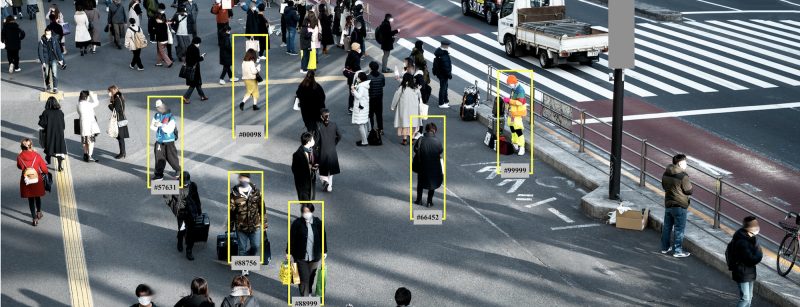
Part and parcel of our 21st Century dystopia is the death and burial of what we used to regard as being our right to privacy.

Yes, we have a Federal Privacy Act 1988 that regulates federal government agencies and most private sector organisations. Plus, we have a privacy framework that covers state and territory government agencies, including local councils. Which is nice.

Trouble is, none of this really matters in today’s world where large corporations or government agencies that hold all of our personal data have either been hacked by hostile states or global criminal networks.

Consider, for instance, the mainland Chinese telecommunications giant Huawei. Western countries have long suspected that Corporation’s state-sponsored infiltration of western telecommunications’ networks, believing that the Chinese company’s devices contain backdoor entry points for Chinese state hackers to compromise global telecom infrastructure while, in the process, collecting and analysing user data hidden within that ‘infrastructure’. Not to mention the host of ransomware attacks that have occurred recently against a host of mainstream government and non-government data-holding agencies – Optus (2022) and the like.

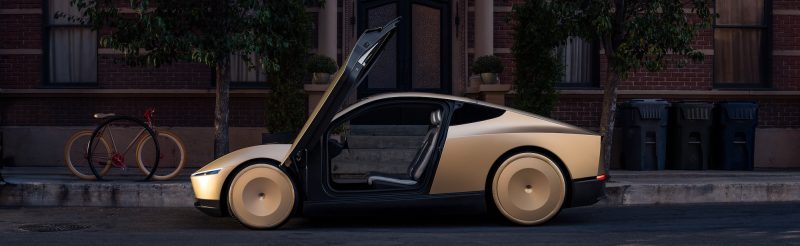
No one should be surprised, therefore, to have read in the ‘Sydney Morning Herald’ last week of, a warning from ASIO for our politicians not to engage in sensitive conversations while driving their taxpayer-funded Chinese electric vehicles in and around our Capital.

So much thus far for our made-in-China phones and cars. But what about other pieces of hardware that Mainland China is now producing en masse and sending in increasing quantities to our shores – computer hardware and software products, for instance: the likes of CPUs, memory chips (RAM, ROM), logic gates, microcontrollers, and storage devices (hard drives, SSDs) and so forth?

So many of these products are now crucial to the frontline weaponry this Country is including in its key defence armoury. But who knows whether products or components such as these emanating from rogue states such as the PRC, Russia, North Korea or Iran are being ‘spiked’.

Just before you put all of the above down to Cold War-style paranoia and hysteria on this writer’s part, please consider the following story which, given the lack of clear and irrefutable evidence, will need to remain an anecdote. Sydney’s Garden Island naval base has been made aware of the ‘fact’ that Chinese-manufactures electric cars can now capture electronic emissions from that base’s communications hub. So maybe ASIO needs to add this threat to their Foreign Interference remit as well.

We all know that Mainland China is bent upon reclaiming Taiwan – which probably explains its deep interest in how Putin is progressing with his imperialistic war in Ukraine. Not that the PRC will follow the Russian plan of direct military intervention. Though it may. More likely the PRC will resort to subversion and undermining, dissembling and demoralising before quietly crossing into its Promised Land. And once that happens, then privacy in another western democracy will go the same way as it has in Hong Kong – nowhere fast.
5
AD Advertisement
Sponsor a Good Read
Sponsor a Good Read
Hold the News
6
Lifestyle
I’m outta here! Aussies obsessed with astrotourism
Article image
A massive wave of city-dwelling Australians is actively turning to the night sky to find mental peace. They’re transforming what used to be a niche scientific hobby into a major national movement known as astrotourism.

Australia’s star power. Tourists love it.
The traditional nightlife of neon signs and crowded venues is completely losing its appeal for a demographic suffering from chronic screen fatigue. Instead, people are seeking out the absolute absence of artificial light.

The shift is a direct response to light pollution, which now prevents more than 80% of the world's population from seeing the Milky Way from their doorsteps. In contrast, regional Australia holds a massive geographical advantage. Because the Southern Hemisphere faces the core of our galaxy, and the Australian interior offers vast stretches of unlit land, the continent boasts some of the cleanest, darkest night skies on the planet.

To capitalise on this, local communities are actively establishing dark-sky towns and protected reserves. These are areas where local councils deliberately modify street lighting and restrict upward glare to preserve the natural darkness.

Think of it as sensory deprivation therapy for the modern mind. By stepping into a landscape where the only illumination comes from ancient star clusters; city slickers are discovering an immediate antidote to the constant cognitive demands of urban life.

The rise of night-centred travel
In New South Wales, the Warrumbungle National Park near Coonabarabran serves as Australia’s first officially designated Dark Sky Park. Due to its high altitude, low humidity and strict regional light-restriction laws, the park has become a premier hub for metropolitan travellers eager to set up telescopes and camera tripods away from the coastal city glow.

This isn't an isolated pocket of enthusiasts. Over in Western Australia, an initiative called Astrotourism WA has united dozens of regional shires to map out dedicated observing sites for visitors. Towns like Morawa have signed on as official astrotourism destinations, deliberately designing public spaces to support dark-sky photography and deep-space observation.

Meanwhile, high-end travel operators are completely shifting their business models to cater to this night-focused market. Companies are running dedicated astrophotography workshops in hyper-remote locations like William Creek, near South Australia's Kati Thanda-Lake Eyre. Here, award-winning photographers teach city professionals how to use wide-field cameras and star trackers under moonless skies. They're capturing high-resolution panoramas where the Milky Way is bright enough to cast an actual shadow on the ground.

Turns out, awe is good for your health
The true beauty of this movement lies in its profound impact on mental health. While an evening scrolling through a phone provides a superficial distraction, it completely fails to calm an overworked nervous system.

Medical and psychological research is beginning to back up what night-sky travellers already know. Studies published by international space and development organisations indicate that regular interaction with the night sky directly correlates with lower psychological distress, reduced anxiety and enhanced daily happiness.

When a person experiences the sheer scale of a meteor shower or watches the Aurora Australis paint the horizon in Tasmania, the brain undergoes a psychological shift driven by awe. It turns out that looking into the deep cosmos triggers a form of mindfulness that lowers cortisol levels, reduces blood pressure and places daily urban anxieties into a much smaller, manageable perspective.

Trading artificial light for starlight, the ultimate recharge
The rise of dark-sky tourism proves that finding peace doesn't require complex technology. By trading streetlights for starlight, everyday Australians are proving that the ultimate way to recharge your life isn't found by looking at a device. It's found by stepping out into the dark, looking up and reconnecting with the universe above.

Site: darksky.org
7
AD Advertisement
Write for Hold The News
Hold the News
8
Science
AI is causing synaptic pruning in our brains, and it’s a concern.
Article image
If you've used artificial intelligence recently to summarise a long work document, write an email or plan your weekly schedule, you probably felt a sense of relief. It feels like a superpower. Suddenly, a task that used to take you an hour of hard thinking is completed by a computer in three seconds flat.

But while your schedule is clearing up, something quiet and slightly alarming is happening inside your skull.

There's a golden rule in neuroscience that explains how human intelligence works: “Cells that fire together, wire together.” Every single time your brain struggles to solve a difficult problem, write a tricky sentence or organise a messy calendar, your brain cells fire signals to each other. That struggle builds physical pathways in your mind, keeping you smart and sharp.

But what happens when you stop struggling?
Recent brain research shows a worrying trend. When you let AI do all your thinking, your brain cells stop firing together. And when they stop firing, your brain does something drastic. It triggers a process called synaptic pruning, where it literally deletes those pathways from your mind.

What is Synaptic Pruning?
To understand synaptic pruning, you have to look at how efficient the human brain is. Your brain uses up a massive amount of your body's daily energy. It wants to save energy, so it operates on a strict "use it or lose it" policy.

Think of your brain pathways like walking tracks in a thick forest. If you walk down a specific path every single day, say, the path of writing your own reports or solving hard problems; that track stays clear, wide and easy to navigate.

But if you start riding an AI helicopter over the forest instead, you stop walking the path. This is where synaptic pruning comes in. The word "pruning" actually comes from gardening, where you chop off the weak, unused branches of a bush so the plant can save its energy. Your brain does the exact same thing. It looks at that quiet walking track, decides it's a waste of energy to keep it open, and lets the surrounding forest grow wild. The branches close in, the weeds take over, and your brain permanently prunes away the path until it vanishes.

Synaptic pruning is a natural process that usually helps clear out useless junk, like old memories of what you ate for lunch years ago. The danger today is that AI is causing brains to prune away the wrong things, like the ability to think critically, solve problems or create original ideas.

Why teenagers are especially at risk
While this is a concern for adults, neuroscientists are particularly worried about teenagers and young adults. A teenager's brain is undergoing a massive construction project. It's actively going through a major phase of synaptic pruning, deciding which thinking hardware to make permanent for adulthood and which parts can be thrown in the bin.

If a student uses AI to write every school essay, summarise every book chapter, and solve every math problem, their brain never gets the chance to build those foundational tracks. The brain looks at those quiet areas and assumes they aren't needed, permanently pruning them away.

We aren't just looking at a generation that's getting a bit lazy, we might be looking at a generation whose brains are being physically rewired by synaptic pruning, to be completely dependent on technology just to think.

The danger of mental atrophy
This isn't just a scary theory. An extraordinary study from the MIT Media Lab tracked the brains of people using AI assistants for writing tasks. The researchers discovered that relying on AI actually caused a drop in brain connectivity by up to 55 per cent.

The researchers called this "cognitive debt," meaning, when people outsourced the work of thinking to a chatbot, they got a short-term speed boost, but collected a long-term mental debt. When the researchers took the AI away, the users struggled to remember what they'd written and couldn't even quote from their own essays.

A broader review on digital offloading published in Frontiers in Psychology backed this up. It highlighted that when people delegate planning and information synthesis to external tools, they run a massive risk of "epistemic atrophy," meaning their higher-order reasoning and independent memory recall begins to waste away from lack of use.

How to protect your mind
This doesn't mean we all need to throw our computers in the bin. AI is a tool, and it's here to stay. But we do need to change how we use it so we can stop this accidental synaptic pruning.

Think of AI like an electric bicycle. If you turn the motor on full power and never pedal, you'll get to your destination quickly, but your legs will eventually waste away. But if you pedal hard and only use the motor to help you up the steepest hills, you get a great workout and go further than ever before.

If you want to keep your brain sharp, you have to keep walking those mental tracks. Write the first draft of that email yourself. Spend ten minutes struggling with a difficult problem before asking a computer for help.

The human brain is a beautiful, adaptive organ, but it won't fight to keep what you don't use. If you want to stop the clippers of synaptic pruning, you have to keep doing the hard work of thinking for yourself.

Resources
Your Brain on ChatGPT: Accumulation of Cognitive Debt

Cognitive Offloading
9
Science
Australian Astronomers Just Found Something Passing Through Our Galaxy
Article image
And nobody knows what it is.

There is something on a very regular 44-minute clock in the Milky Way that is emitting radio waves and X-rays. Scientists don't know what it is, and that's an amazing thing.

In February 2024, a team of astronomers led by Dr Ziteng (Andy) Wang of Curtin University / ICRAR discovered a strange periodic object within the Milky Way. It was discovered with the Australian Square Kilometre Array Pathfinder (ASKAP) telescope in Western Australia and, fortunately, the NASA Chandra X-ray Observatory was also observing the same region of the sky at the same time.

What they had discovered was something they had never seen before – an object that was emitting radio waves and X-rays in lock-step, every 44 minutes. The results are reported in the journal Nature.

How is this unique?
Objects that radiate short-duration, periodic radio bursts (long-period radio transients, LPRTs) are already rare and poorly understood. They turn on and off over a time scale of minutes, instead of the milliseconds characteristic of pulsars, and most of them vanish before astronomers can get a close-up look.

ASKAP J1832-0911 is different:
  • It has been visible and active for more than 6 months, performing its radio bursts reliably and changing brightness as well.
  • What's more, it's the first LPRT ever seen to produce X-rays during its radio pulses, which is something that has never been recorded before in an LPRT.

Key Stats at a Glance
  • 44 min | Period between each pulse of radio and X-ray energy.
  • 15,000 ly | Distance from Earth to the object, located toward the center of the galaxy (the Milky Way).
  • 6 months | Duration since it has been active and detectable.

The wide-field view of the night sky by ASKAP compared with Chandra's narrow view was like finding a needle in a haystack, so it was good that Chandra happened to be observing the same region of the night sky at the same time.

Note: The study is open access and available to journalists and researchers for free.

So what is it?
The short answer is, no one knows. There are two main theories and neither of them fits the bill:

Theory 1: A Magnetar
A magnetar is an extremely dense, magnetized remnant left behind after a massive star's explosion. Magnetars are known for their high energy output, which could account for the radio and X-ray emissions. However, the known properties of magnetars don't quite match up with ASKAP J1832-0911.

Theory 2: A Binary Star System
This model suggests two stars orbiting one another, one of which is a highly-magnetized white dwarf (the cooling core of a dead low-mass star). The key to this model is that the magnetic field of the white dwarf would have to be greater than 5 billion Gauss. This level sits at the far end of what physics currently deems possible, but it is not impossible.

Why is it so hard to see?
ASKAP J1832-0911 is located around 15,000 light-years from Earth in one of the most crowded regions of the Galaxy, packed with stars, gas, and interstellar dust.

  • It has not been detected in optical or infrared observations.
  • No useful data was obtained by the recently retired Spitzer Space Telescope.
  • It has never been seen by the James Webb Space Telescope (JWST).

Astronomers hope that JWST observations may one day reveal a physical counterpart where all other instruments have failed.

Why Australia is at the centre of this
The CSIRO's ASKAP telescope, situated at the Murchison Radio-astronomy Observatory in the far-west of Western Australia, has been at the centre of the action for several of these strange discoveries. It features a large field of view that makes it one of the few instruments able to cover vast areas of sky at once, allowing it to detect intermittent and rare signals.

The signal isn't the first one that Australian astronomers have found that repeats within the Milky Way:

In 2022, scientists at Curtin University observed another spinning object emitting bursts of radio power every 18 minutes, which was referred to at the time as "unlike anything astronomers have ever seen."
Now, ASKAP J1832-0911 joins that list of enigmas, and there are likely many more out there that have yet to be discovered.

A new class of object indeed!
The most intriguing aspect — and the most troubling one — to the scientific community is the fact that ASKAP J1832-0911 might fall into a category they don't have. Long-period radio transients have been seen in just a few cases, and each new one has added to the confusion.

The simultaneous X-ray detection, in particular, could prove to be the key that will ultimately solve the mystery. It eliminates some of the possible explanations and suggests a physical process that none of the available models of neutron stars and white dwarfs could explain. Data from the James Webb Space Telescope is still forthcoming, and could yet provide answers to what lies at the center of this.

The Bottom Line: In our galaxy, there is something that is flashing at us every 44 minutes. For at least 10 months, it has been doing so. It remains a mystery as to why, and we still don't know what it is.

Article references:
Nature/arXiv paper:
CSIRO/ATNF: ASKAP, CRACO
Chandra:
ABC News
10
Fiction
The Other Panopticon - Chapter 1, Scenes 1 + 2
Article image
Links to earlier scenes:
The Other Panopticon - Synopsis
---

CHAPTER 1, Scenes 1 + 2 (5 minute read)

Darwin – Late Summer 2006
‘Darwin – at the Top End of Australia - is like a seaside resort on steroids, Michael. Seen from the air, it appears to push the boundaries of modernism without quite getting there - a kind of Gold Coast minus the skyscrapers and surf-line, if you like. But an emerald city, nonetheless, hugging a coastline and washed by a clear azurean expanse of ocean that has been carrying trafficked asylum-seekers into its harbour since 1976.’

The boffin paused for effect. He had a self-congratulatory look about him. Anticipating my response, he shifted sideways in his chair and peered briefly at me through his pince-nez. I chose to disappoint him, so he motored on.

‘You’ll love it, Michael,’ he continued, then went back to his briefing notes.
‘That first wave of ‘boat people’ as they were called, were mostly – as you know - from Vietnam in the latter decades of the Twentieth Century, escaping the ravages of war and its aftermath. But now, in the early part of the 21st Century, these driven, desperate people are coming from everywhere.’
The Immigration director folded his notes. ‘Any questions?’ I shook my head.

He managed a slight nod before rising from his chair and striding from the briefing room. He was one of many with whom I’d be spending the first week in Canberra - learning about the new asylum seeker ‘threat’ from the shores of Indonesia, Sri Lanka and, less frequently now, Vietnam.
The second week would be different, with boffins being wheeled in to brief me on the various joint defence establishments dotted around the Northern Territory and encouraging me to sign endless indoctrination forms. Foremost among these establishments was Pine Gap which had just encountered an inaugural breach of its perimeter. The four perpetrators were now awaiting trial - facing serious charges under Crimes Act and newly-minted national defence legislation.

These four so-called ‘Christians Against All Terrorism’ or ‘CAAT people’,’ the Defense security director reminded me on Day 4 of my briefing, ‘are one of your first tasks when you hit the ground running in Darwin. They need to be to interviewed. Or at least some of them do.’
‘Surely this is a defense remit,’ I argued, ‘not an intelligence one.’
‘You’re the fourth arm of defense,’ replied the director, ‘so you’ll need to get an intelligence perspective on Pine Gap and all of those other secret squirrel establishments in and around the Top End when you land there.’
‘Are your wife and daughter accompanying you to Darwin?’ I was asked by the ASIO personnel director on Day 8 of my briefing.
‘We talked about that,’ I replied. ‘And the jury is still out.’

--- o0o ---

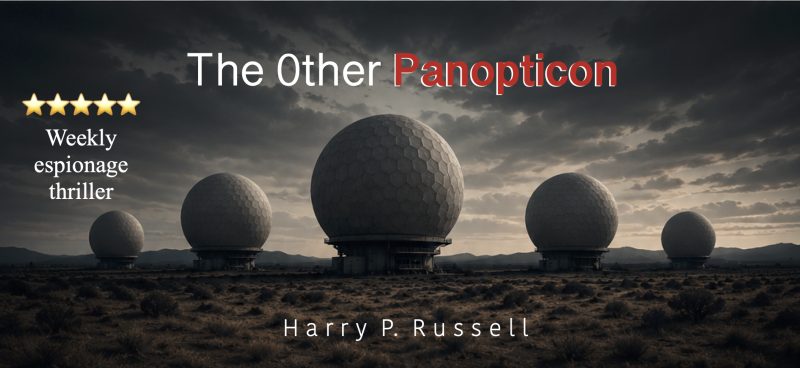
‘I’d describe the Pine Gap Defence Installation as a kind of hot sandy patch of desert with a cluster of huge golf balls sitting around waiting to be putted into a hole that isn’t there.’

Adele Goldie took a long sip of her light lager as we sat facing one another in the beer garden alongside the pool in Darwin’s iconic Cavenagh Hotel – The Cav. She was the only one of the four CAAT intruders into Pine Gap who had agreed to talk to me.
Goldie was an attractive twenty-something slip of a girl – a short lithesome brunette with a soft, subtle grin and, as I was about to discover, a personality as tough as old nails.

‘You’ve seen the photos we took after we broke into the place,’ she continued. ‘The golf balls remind me a bit of panopticons. You know, giant cylindrical prison towers that can spy on mere mortals like you and me but are, in themselves - unfathomable.’
‘Like the reason for your decision to break in there?’ I ventured.
‘Hardly,’ she replied. ‘We spent a heap of time planning that protest and the result clearly speaks for itself?’
‘So you are planning to spend a lifetime behind bars – all four of you?’

‘We wanted publicity, Mister Millstone, ‘and we bloody-well got it!’ she grinned. ‘Now we need to wait until a beak decides whether we’re the Christian freedom fighters we claim to be or dangerous enemies of the state opposed to Pine Gap’s weapons of death.’
I was already across the legal too-ing and fro-ing that was going on with this matter behind closed doors. The defence hardliners and their legal team wanted to send a message to future would-be ‘saboteurs’ and shunt the four Pine Gap intruders off to gaol for a decade or two. The human rights brigade and their lawyers were arguing that the charge against the four should not even be trespassing, as the CAAT people were merely exercising their democratic right to protest against an installation producing weapons responsible for destroying innocent civilians in places like Iraq and Afghanistan.
‘You know we’re a bunch of Christians,’ she added. ‘So we are confident God will prevail in this matter.’
Then my cell phone lit up and I was summoned to welcome another leaking fishing boat that had just struggled 400 kilometres across the Timor Sea from Kupang.

‘What have you got?’ I asked.

‘Two fifteen-year-old Indonesian fishermen were paid by the people-smuggler to guide the boat to our shoreline. And somehow, they all made it. Navy has counted about thirty half-starving Afghanis and Tamils – mostly women and children. Plus, we have one Ukrainian Tatar.’
What the hell is a Ukrainian Tatar doing on an asylum seeker boat from Kupang? I began asking myself. I was already starting to craft my interview of that asylum seeker in my head.

To be continued...
11
AD Advertisement
Sponsor a Good Read
Sponsor a Good Read
Hold the News
12
Other
Passionate Writers Wanted
Article image
Writing for Hold The News can be both fun and rewarding. It gives you the opportunity to express your thoughts, share your knowledge, and build your own audience.

Where does your passion lie?

We feature a diverse range of topics and are always looking for new voices.

Lifestyle
Living the great Aussie lifestyle?
Write about dining, travel, outdoor adventures, health, hobbies, or anything that inspires others to get out and enjoy life.

Sport
Nothing brings Australians together quite like sport.
Whether your passion is footy, cricket, tennis, motorsport, or something else entirely, there is always something worth writing about. Coaches and experienced players are also encouraged to contribute practical advice to help readers improve their game.

Culture
Not a sports fan but love the arts?
Write about movies, concerts, theatre, books, exhibitions, music, or local events. Readers are always looking for interesting things to see and do.

Humour
If your writing can make people smile—or even laugh out loud—we would love to hear from you.
Humour is one of the most valuable things we can offer our readers, and talented humour writers are always in demand.

Politics
Whenever the Federal Parliament or NSW Parliament sits, we feature a summary of proceedings.

If you have an informed opinion or would like to explore an issue in greater depth, this category is for you. Keep in mind that HTN is politically neutral and aims to present views from all sides of politics.

Other
Have something interesting to say that doesn't fit neatly into an existing category?
This is our surprise bucket, where almost anything goes.

Build Your Audience
As a writer, your goal is to attract and retain readers. That may take some experimentation. Your HTN writer profile shows how many people are reading your articles, allowing you to test different styles, topics, and approaches to see what resonates most with your audience.

Earn From Your Success
Writing for HTN is primarily about sharing ideas and building an audience, but successful volunteer writers can also be rewarded.
Writers receive 60% of sponsor revenue, distributed in proportion to the readership their articles attract during the first week after publication.

Get Started
Sign up for a writer account and start publishing today.

Register as a writer
13
AD Advertisement
Write for Hold The News
Hold the News