WEEKLY
July 27, 2026
Edition #70
Showing all topics � Login to filter
Science & Tech  ·  News  ·  Humour  ·  Lifestyle & Culture  ·  Politics  ·  Other  ·  Fiction  ·  Business  ·  Science & Tech  ·  News  ·  Humour  ·  Lifestyle & Culture  ·  Politics  ·  Other  ·  Fiction  ·  Business  ·  
1
Science
How soon before your expensive new smartphone stops getting critical security updates?
Article image
Installing the latest security updates is one of your best defences against hackers, but some smartphone makers slash the number of updates for Australians compared to what they offer elsewhere.

From online shopping and internet banking to paying bills and filing tax returns, these days people are far more likely to reach for the smartphone in their pocket, rather than sit down in front of a computer.

This transition to a mobile-first lifestyle means the world is always at our fingertips, but the more reliant we become on our smartphones, the more attractive a target they become for hackers.

That’s why installing software and security updates is more important than ever. Along with adding new features, new updates patch recently discovered security vulnerabilities that can open the door for attackers.

The Australian Cyber Security Centre advises that “updates are one of the strongest defences in your security toolkit”. Other security experts agree that installing the latest updates is one of the easiest and most effective things people can do to keep hackers at bay.

That’s why it’s such a concern when smartphone makers start to scale back the number of years they offer security updates, so they can save money on support costs at the expense of people’s safety.

Every gadget maker varies in the number of years they provide Operating System and security updates. What you get also depends on exactly which smartphone you buy and even where you buy it.

As a rule of thumb, the more you spend on a smartphone, the longer it should receive updates. Samsung and Google offer an industry-best seven years of security updates for their flagship Android smartphones, while Apple offers roughly the same for iPhones.

Things get much worse when you look to budget Android handsets. For example, Motorola has scaled back upgrades for its cheaper handsets, with this year’s $299 Motorola Moto G57 only getting two years of security updates and no Android OS updates.

That’s a terrible way to treat customers, putting them at unnecessary risk when you consider that budget handset buyers tend to hang on to their phones for longer. They’re also likely to be less tech-savvy, meaning they’re left more vulnerable without the latest updates.

In comparison, Samsung’s similarly-priced Galaxy A17 gets six years of updates. It’s certainly something to think about when it comes time to buy a new phone.

Don’t assume the most expensive gadgets always get the most updates. The $2999 Honor Magic V6 folding smartphone is one of the most expensive smartphones in Australia, but it astoundingly gets fewer security updates than Samsung’s budget Galaxy A17 which costs a fraction of the price.

Honor says Australians will only receive three years of security updates for the Magic V6. Meanwhile, Europeans get six years of updates for the exact same device.

This is because Honor is bound by European law that forces smartphone makers to extend product lifespans to reduce e-waste. They are legally required to provide at least five years of Operating System and security updates for all devices sold in the region.

No such law exists in Australia, so Honor can get away with leaving buyers of a $2999 smartphone vulnerable to the latest security threats after only three years.

Until Australia cracks down on this behaviour, we need to vote with our wallets and send a clear message to smartphone makers. Always read the fine print when shopping for a new smartphone to ensure that it’s designed to keep you safe for years to come.
2
News
Middle East Crisis Pushes Fuel Prices Higher as Australia Braces for Supply Squeeze
Article image
Hold The News is a weekly magazine for Australian writers and journalists to educate, inform and entertain readers with well written articles. It is not our intention to compete with mainstream media for the daily news. If for wahtever reason you missed the main headlines last week, here is a brief summary.

Editor

Government reassures Australians on fuel security amid Middle East tensions
The federal government has assured Australians that the nation’s fuel supply remains secure, despite escalating conflict in the Middle East driving petrol prices higher. Officials said Australia continues to hold adequate fuel stocks, but global uncertainty is already flowing through to household budgets. Motorists are paying considerably more at the bowser as international crude oil markets respond to the risk of further disruption.

Household budgets take double hit from rates and petrol
Australian households are facing one of the sharpest monthly budget squeezes in decades as higher interest rates combine with soaring petrol prices. Analysis released this week estimates the two pressures have reduced a typical household’s spending capacity by about $450 a month, forcing many families to cut discretionary expenses. The latest blow adds to persistent cost-of-living pressures, with little immediate relief expected while global energy markets remain volatile.

Woodside’s 40-year gas extension faces Federal Court scrutiny
Plans to extend the life of Woodside’s gas operations by another four decades are under scrutiny in the Federal Court. The case centres on concerns raised by Indigenous groups over potential impacts on cultural heritage, alongside the project’s broader climate consequences. The proceedings could become an important test of how energy development is weighed against environmental and cultural protections in Australia.

Syngenta to halt paraquat sales in Australia
Chemical manufacturer Syngenta will stop selling paraquat in Australia following tighter government regulation of the controversial herbicide. Paraquat has been banned or restricted in more than 70 countries, while some scientific studies have associated exposure with an increased risk of Parkinson’s disease. The withdrawal marks a significant shift in Australia’s agricultural chemicals market after years of international concern over the product’s potential health effects.

Suspected bird flu cases detected in South Australia
Two additional suspected cases of H5 bird flu have been detected in South Australian birds, including the first reported on a metropolitan beach. The findings suggest the virus may be spreading beyond previously affected regional areas as wild birds move across the state during winter. Authorities are monitoring bird populations and assessing the risk of further transmission.

Labor conference blocks Gaza genocide debate
MP Ed Husic’s push for the Labor Party to debate formally recognising the war in Gaza as genocide failed to secure enough support to reach the conference floor. The decision prompted criticism of Labor’s internal culture and decision-making, with Husic indicating he would continue speaking out on the issue. The dispute reflects continuing divisions within the party—and the wider Australian community—over the conflict in Gaza.

Two injured in Cairns police shooting
Two people were shot and injured by Queensland police during an armed confrontation in Cairns on Saturday morning. The incident unfolded after officers responded to reports of an armed person, with the situation escalating at the scene. Authorities are investigating the circumstances surrounding the shooting and the officers’ decision to discharge their weapons.

Five deaths in one day add to Western Australia’s road toll
Five people were killed in separate crashes across Western Australia in less than 24 hours, adding to concerns about the state’s rising road toll. Police have urged motorists to slow down, remain alert and take greater responsibility behind the wheel. The deaths have renewed debate over driver behaviour, road conditions and whether further safety measures are needed.

ABC withdraws two Four Corners episodes over accuracy concerns
The ABC has removed two Four Corners investigations by former reporter Mahmood Fazal following concerns about their accuracy. The episodes, Meth Highway and Cocaine Nation, examined Australia’s illicit drug trade. Their withdrawal has placed renewed scrutiny on the broadcaster’s editorial standards and fact-checking processes.

Australians chase medals at Glasgow Commonwealth Games
Australia’s netball team began its gold medal defence against Tonga on day two of the 2026 Commonwealth Games in Glasgow, while the swimming team continued adding to the nation’s medal tally. Australian gymnasts also took part in the team events as competition gathered pace across the Games. The results provided an early indication of whether Australia can maintain its traditionally strong Commonwealth Games performance.

---

AI-generated weekly digest — stories relevant to Australia, 18 July 2026 – 25 July 2026. Review and edit before publishing.

Sources: ABC News Australia, Guardian Australia, BBC News Australia, Sydney Morning Herald
3
AD Advertisement
Sponsor Hold The News from $40
Advertisement image
Are Google Ads Driving You Mad?

Advertising with us is simpler,
we don't sell clicks,
we offer an ad that lasts forever.

Our articles continue being read for weeks, months and years after initial publications and so too will your ads.

What's more important is that the money goes towards paying Australian writers and journalists and not to some US Giga company with a billing centre in a remote tax haven.

I mean simple , no subscriptions no ongoing commitment, just start advertising for as little as $40.00 + gst

Register your sponsor account here: Register

Steven Sesselmann
Edito
4
Humour
Australia's long history of ridiculous wars
Article image
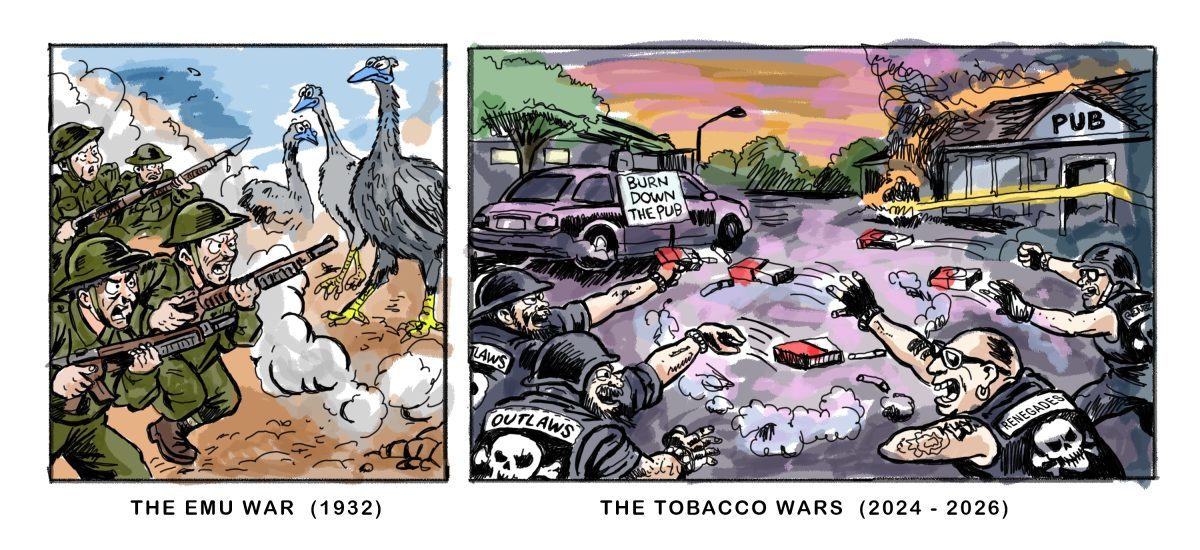
Australia has a long and colorful history of fighting battles that seem absurd in hindsight, from the infamous Emu War of 1932, where soldiers armed with machine guns were outsmarted by birds, to today’s escalating Tobacco Wars.

Since 2023, nearly 300 arson attacks linked to the trade have been reported nationwide, alongside countless allegations of extortion, intimidation and murders.

Australians now spend up to $8.5 billion a year on illicit nicotine, more than on cannabis, cocaine, ecstasy and heroin combined.
That makes illicit nicotine one of the largest, and certainly the fastest growing, black markets in Australia’s history.

Most recent developments involve a 20-year-old, whom detectives arrested, (Essendon man, Jesse Hadchiti), alleging he acted as a high-ranking local recruiter for the syndicate, using the encrypted handle "CommBank" from his family home.. 'Grand theft auto' style crimes where online organisers left getaway vehicles and cans of petrol with instructions to burn various hospitality residences are just part of the fanfare of 2026 Melbourne nightlife.

Police say the arrested man was a high-ranking member of an organised crime syndicate and was directed by criminals living overseas.

Police describe this overseas network as a mafia-like cartel operating out of the Middle East and Iraq known as "The Commission" or "The Cartel". Kazem "Kaz" Hamad, the alleged founder and overseas tobacco kingpin who directed operations from the Middle East was detained by authorities in Iraq in January 2026.


Sources
The Great Emu War - Wikipedia
Hadchiti Arrest - ABC
Kazem Hamad Arrest - Guardian
5
AD Advertisement
Un-Googled Advertising
Advertisement image
Welcome..*, you have taken the first step towards better advertising.

Our ads stay forever !

Because our editions freeze as they were, your ads continue being seen for months if not years.

Create a sponsor account today: Register

Questions? Contact us:


No subscriptions, no ongoing commitment, just a piece of your own digital real estate.
6
Lifestyle
Did you watch it last night?
Article image
Have you seen the Instagram clip by Irish comedian Des Bishop, about mindfulness? It’s about how people download apps and attend classes to learn about mindfulness, when as kids - if you’re roughly Gen X or older - we practised mindfulness every day without even realising it.

"You waited for somebody, you waited," he says. "Mindfulness. Huh? You're on the bus? You're on the bus… watching condensation drip. Mindfulness!"

Des also talks about rewinding videotapes before you gave them back. Remember the torture of that wait?

“Have you ever rewound anything in your life?” He says to a young audience member. “You are the post-rewind generation!”

And he concludes, “we were mindful half of every day. We didn't have a choice. We didn't have a cable service in our pocket."

The irony, of course, is that you may well already have seen the routine. Many people you know might have, too. You just didn’t all sit round together and watch it, then chat about it in the work kitchen the next morning.

It may eventually find its way into your feed if it hasn’t already. And, in one sense, more people may actually end up seeing it than would ever have watched it on mainstream television. But they'll experience it separately, in their own time, and probably on their own - in bed, on the bus, waiting somewhere. It's a shared experience of sorts, but a very fragmented one.

It got me thinking about other things we've quietly lost.

For years, one of the most common questions in Australia was, "Did you watch it last night?" There was no need to explain what "it" was. We all knew. Families gathered around one television after dinner. We shared a newspaper on a Sunday. Everyone knew the songs in the Top 40. (You’d tape them on a big clunky cassette recorder). Going to a concert meant watching the band, not filming it. Even the office kitchen became a place to relive last night's television, the weekend's football or the latest blockbuster.

Many of us haven’t even got an office anymore.

Today, we're more connected than ever, - in theory - yet somehow less connected by common experiences. Two friends can sit opposite each other in a café, both laughing at something on their phones, yet they're laughing at completely different things. Every social media feed is unique. Every algorithm serves a different version of the world.

We've gained unlimited choice, but in doing so we've lost many of the moments that once connected us at exactly the same time.

The FIFA World Cup reminded me what we’ve been missing.

People were talking about the same things again. The tension of the England v Mexico game, the aggro of the Argentinians, the Australian coach’s decisions, the colour and passion of the fans, Donald Trump's ridiculous interventions, how hot Jude Bellingham was, and all the stories that spilled beyond the pitch. Friends, colleagues and strangers once again shared the same reference points. We laughed at the same moments, argued about the same incidents and looked forward to the same matches.

Perhaps that's why events like the World Cup still feel so special. They're not just sporting tournaments. They're among the few occasions left where millions of us experience the same story at the same time.

In a world of personalised feeds and endless choice, maybe the greatest luxury isn't having something new to watch. Maybe it's simply having something to share.

Source
Des Bishop - Mindfulness -comedy - YouTube
7
AD Advertisement
Un-Googled Advertising
Advertisement image
Welcome..*, you have taken the first step towards better advertising.

Our ads stay forever !

Because our editions freeze as they were, your ads continue being seen for months if not years.

Create a sponsor account today: Register

Questions? Contact us:


No subscriptions, no ongoing commitment, just a piece of your own digital real estate.
8
Politics
How much tax are you really paying ?
Article image
Ask the average worker in Australia how much tax they pay and the most likely answer will be around 25% - 30% - because that's what is shown on their pay slip.

Thirty percent may feel like a fair amount to pay for living in a developed nation with schools, hospitals, roads and police.

If only it were that simple.

Governments understand that there is a limit to how much visible taxation voters tolerate. Once the amount taken begins approaching half a person’s income, resistance grows and governments lose votes.

The dilemma faced by government is how to maintain Australia’s standard of services when costs exceed the amount constituents are comfortable with, the solution, additional taxes.

These taxes are cleverly disguised as tariff, duty, excise, levy, stamp duty, GST , fees, etc. Taxes the average worker (voter) never see on their pay slip.

So let us ask the question again: How much tax do you really pay?

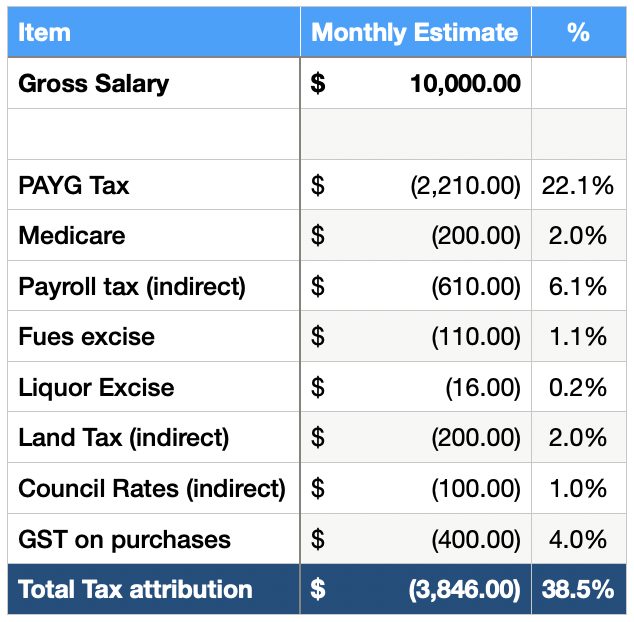
Let's consider a middle-to-upper-income worker earning $120,000 a year. For convenience, $10,000 per month.

Under the current 2026–27 resident tax schedule, the first $18,200 is tax-free. Income from $18,201 to $45,000 is taxed at 15%, with income from $45,001 to $135,000 taxed at 30%.

This produces an annual income-tax bill of $26,520, or $2,210 per month. The Medicare levy takes approximately another $200 per month, leaving our worker with around $7,590. Twenty four percent, most will say that's reasonable.

That, however, is only the visible taxation.

Many may not realise that if he or she is employed by a business large enough to pay NSW payroll tax, the employer incurs another $610 per month in payroll tax attributable to that employee’s salary and compulsory superannuation.

Our hypothetical worker commutes to work and spends around $440 per month on fuel. At present fuel prices the government collects fuel excise of around $110.00 plus $40.00 GST. (ignoring the temporary discount due to the middle east conflict)

The worker spends roughly 1/3 of his or her net salary on rent, around $2500. Residential rent is GST free but does that mean, no tax?

No the landlord has most likely bumped up the rent to cover land tax and council rates, estimated to be around $200.00 and $100 respectively.

The same person spends around $110.00 per month at a bottle shop, which puts another $16 wine equalisation tax and $10 GST into government coffers.

Fortunately our hypothetical Aussie isn't a smoker or a gambler otherwise he or she would be making a further voluntary tax contribution.

These are just some of the taxes that Australians contribute. Others include stamp duties on the transfer of property and on insurance policies, national park entry fees, as well as tariff's and customs duties on imported goods.

To estimate ordinary GST, assume our worker spends approximately $4,400 per month on GST-taxable goods and services. Because GST represents one-eleventh of the final GST-inclusive price, this produces an estimated monthly GST contribution of $400. That amount includes the GST already identified on fuel and alcohol—it is not added twice.

Tax Example
Hold The News


This calculation is not intended to represent everyone's situation, but it shows how the real tax burden on the average Australian is significantly more than what we declare on our tax returns.

Questions worth thinking about:

Do we need the extra complexity of so many taxes?

How does the current tax system affect high vs. low income earners?


Sources
Tax Rates and Codes - ATO
Insights Into Government Finance - ABS
9
Other
Addiction
Article image
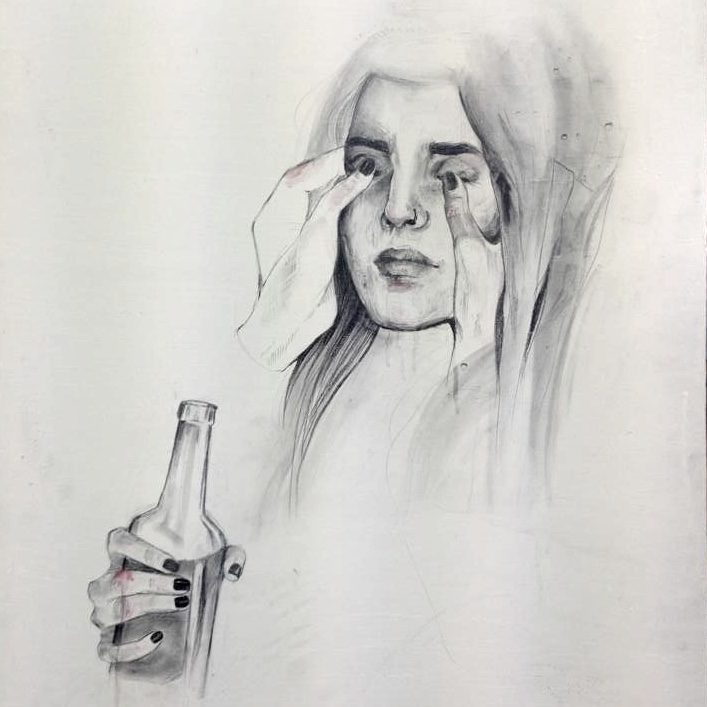
It never arrives wearing its own name.

It comes disguised as relief, as courage, as silence, as one more time.

Slowly, it asks for less of your choices and more of your life.

It teaches your reflection to look away.

The prison it builds has no visible walls, only doors that become harder to find.

Yet somewhere beneath the hunger, beneath the shame, the person you were keeps breathing.

Recovery is not forgetting the darkness.

It is discovering that freedom was never lost -
only waiting to be chosen again
10
Fiction
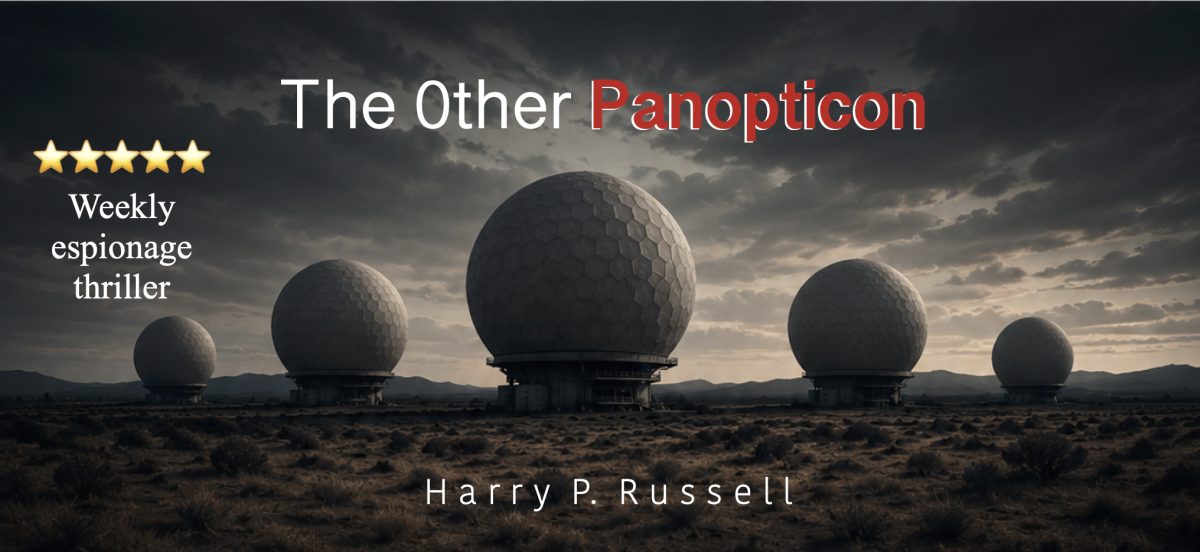
The Other Panopticon
Article image
Chapter 2, Scenes 7 & 8 (5 minute read)

Links to earlier scenes:
The Other Panopticon - Synopsis
The Other Panopticon - Chapter 1
The Other Panopticon - Chapter 2


I let Cecilia run her own race – largely. Choreographing Enzo and his wife Portia’s connection with the Cunninghams, would not be as straightforward.

There would be no point, we found, in allocating dummy identities for Enzo and Portia. For one, it would put too much pressure on Portia who could not, under any circumstances, be briefed on Operation Catch-22. So Enzo would need to make most of the running and hope his wife agreed to fall into place, somehow, alongside him.

‘You have to find accommodation close to the Anglican Cathedral,’ I told him. ‘I’ll get Clarence to talk to all the estate agents in the area. Once, we’ve found a place for you, it will be a matter of your convincing your Catholic wife to begin regularly attending the Cathedral with you, instead of one of the local Catholic churches nearby. You’ll then need to encourage Portia to get to know the Cunningham couple and start treating them as your new best friends.’

Enzo gave me a sideways glance.

‘You don’t know my Portia all that well, do you Michael?’ he asked.

I shook my head.

‘Well, she is a smart, wonderful woman but’, she sums people up very quickly and definitively, so it’s conceivable she might not gel with Bruce and Beryl that easily. Who knows?’

‘Then you will need to use all of your skillset to ensure she does,’ I replied.

It was not the response he was after.

‘Where do we tell the Cunninghams I work?’ he asked.

‘Immigration,’ I replied. ‘We’re all collocated in this building, so it doesn’t really matter if either of them sees you entering these premises.’

‘And should Portia be looking for work?’

‘Encourage her to help out at the Cathedral, maybe work alongside Beryl Cunningham there, if she can. What’s her professional background?’

‘Gym instructor,’ he replied.

‘Perfect!’ I replied. ‘Then get her to try out as one of the Cathedral bellringers.’

Enzo’s laughter was cut short by a buzzing sound – Zorkov’s small black transmitter buried in my coat pocket was making a nuisance of itself.

I disappeared into my office and read the message on its tiny screen.

‘You have mail,’ it told me, as a tropical thunderclap overhead momentarily rattled through our office building.

--- o0o ---

I was close to clearing the Catch-22 PO box when I caught sight of the male who’d been on my tail – the same one described by Darna Del Rosario as being tall, solidly built and wearing a baseball cap. He was standing inside the post office, as if waiting for me to pass by the doorway. Instinct should have told me to move on – but I decided not to.

The man stood his ground as I pushed open the door. I stood in his head space.

‘Stop following me,’ I growled. ‘Or you will find yourself in a police cell.’

The man looked at me half-bemused and half-intimidating, but said nothing. Instead, he brushed past me, towards the exit. I turned and watched him go, then followed him for a few blocks until he evaporated – like the professional I suspected he was.

I retraced my steps to the post office and collected the mail that Zorkov’s little black transmitter had promised me.

It consisted of an envelope, inside which was a return plane ticket to Singapore then returning from Singapore the following day. The tickets were accompanied by a map of Changi Airport, with a cross marking an area where presumably I would be meeting Zorkov and/or his cronies.

I showed the map to Cameron Miller back in my apartment that evening and he studied it for some time.

‘I know the area of Changi he’s marked here,’ said Miller. ‘It’s a secluded spot in Changi’s Terminal 2 called Harry’s Bar where he’ll almost certainly have his people stationed. Our people often use the same bar.’

I couldn’t help myself.

‘Are you telling me it’s a favourite catch-up site for you and the SVR?’

‘Kinda,’ he replied. ‘The bar manager there is one of ours.’

‘Can you brief your bar manager then to cover my back there tomorrow?’

‘I’ll go one better,’ said Miller, ‘I can be there with you – somewhere nearby. It’s about time I got another look at Lvov Dmitriyevich Zorkov and his team of goons. I suppose you know that Zorkov is based at the Russian Embassy in Singapore as a Minister-Counsellor, so he’ll be on home soil.’

Continued....
12
Science
Winter is the Ultimate Time for Family Stargazing (and seeing the ACTUAL Subaru logo in the sky)
Article image
Are you reading Hold the News while rugged up on a train, thinking about anything but standing in the cold looking up at the sky?

If so, that’s totally understandable. But, if you’re willing to brave the chill, bundle up the family and step outside, you’ll find that winter hosts one of the most spectacular, free shows on Earth.

The sky is a spectacle in winter
The stars seem to pop with a little extra brilliance during the colder months, and there’s a strong reason for that.

Cold air holds less moisture than humid summer air, which means the atmosphere becomes incredibly crisp and clear.

Without that hazy moisture blocking our view, the light from distant stars travels to our eyes with almost zero interference.

They look sharper, brighter and infinitely more magical.

Additionally, because the sun sets so much earlier, you don't have to keep the kids up late to enjoy a dark sky, you can head out right after an early dinner and still get a prime view of the cosmos.

Three winter jewels you'll see clearly, including the Subaru logo
1. Orion and the Great Star Nursery
The undisputed crown jewel of the winter sky is Orion the Hunter. He’s incredibly easy for kids to find because of his "belt", which comprises three bright, icy stars lined up in a perfectly straight row.

If you look just below his belt, you’ll see what looks like a smaller, faint sword hanging down. Look closely at the middle "star" of that sword. You'll notice it isn't sharp, it looks like a tiny, smudgy patch of light.

That smudge is the Orion Nebula. It’s a colossal, glowing cloud of gas and dust roughly 1300 light-years away. Explain to your kids that they’re looking at a real-life cosmic nursery. Inside that fuzzy patch, brand-new baby stars are actively collapsing and igniting at this very moment.

2. The Pleiades: a pocketful of cosmic diamonds
Follow the line of Orion’s belt upward and to the right, past the bright orange star Aldebaran, and you’ll stumble across a tiny, shimmering cluster of stars. This is The Pleiades, also known as the Seven Sisters.

While it looks like a small handful of glitter thrown onto black velvet, this is actually a tightly packed family of more than 1000 hot, baby-blue stars travelling through space together.

If you drive a Subaru, it should look very familiar! "Subaru" is the Japanese name for the Pleiades. The car company actually named itself after this exact star cluster, which is why their logo features a sparkling cluster of blue stars. Fascinating, right?

3. Sirius: The cosmic disco ball
If you follow the three stars of Orion’s belt in the opposite direction, down and to the left, you’ll run straight into Sirius, the "Dog Star". Sirius is famous for being the brightest individual star in the entire night sky.

Because it’s relatively close to Earth (just under 9 light-years away), and shines so intensely, its light has to fight through our moving atmosphere.

As a result, Sirius doesn't just sit there quietly. If you watch it closely, especially when it's low on the horizon, it furiously flickers and flashes vibrant, sparkling colors like red, green, blue and white. It looks exactly like a tiny, brilliant disco ball hanging in the deep freeze of space, putting on a spectacular color show just for you.

Escaping the glow to chase the dark
To really experience the scale of the universe, you'll want to get away from the glow of streetlights and neighborhood porch lights. Light pollution acts like a giant, artificial blanket over the night sky, washing out everything but the very brightest stars.

Plan a mini-adventure with the kids. Pack a thermos of hot cocoa, grab your thickest blankets and drive just 20 to 30 minutes out of town. Once your eyes adjust to the darkness (which takes about 15 minutes), look up. It will be both humbling and mind-blowing!

Use the telescope in your pocket
The best news is, you don't need a massive, expensive telescope to navigate the night sky. In fact, the only tool you really need is already in your pocket.

By downloading a free stargazing app, you can turn your smartphone into a high-tech window to the universe. Simply point your camera at the sky, and the app will map out exactly what you're looking at in real-time. (I’ve included links to useful apps at the bottom of the article.)

Making memories under the stars
There’s something incredibly bonding about standing together in the quiet of a winter night, looking up at the same stars that humans have gazed at for thousands of years. It’s a simple, cozy and deeply memorable way to connect as a family. So, grab those beanies, fill up the thermoses, and go see what the universe has waiting for you tonight.

RESOURCES
At the time of writing, here are some free apps to get you started:
SkyView® Lite: An app that uses augmented reality (AR) to overlay constellations and track satellites like the ISS as they pass overhead.
Download it for iOS on the App Store
Download it for Android on Google Play

Stellarium Mobile: Built by the creators of the world-famous open-source planetarium software, this app simulates a highly realistic, 3D night sky tailored to your exact time and location.
View it here or download the desktop planetarium software directly at Stellarium.org.

Star Tracker: A beautifully designed offline map that responds smoothly as you wave your device across the horizon, mapping out 88 constellations and thousands of stars.
Get Star Tracker on Google Play
14
Lifestyle
The easiest “almost” sourdough recipe (that doesn’t require a starter kit)
Article image
Sourdough is basically a delicious, living science experiment.

Unlike regular bread that uses store-bought yeast packets, traditional sourdough relies on a "starter", which is a bubbly mix of flour and water that captures wild yeast and friendly bacteria right out of the air.

It’s what gives the bread its signature tangy flavour, chewy texture and those beautiful, irregular air bubbles. Because it's naturally fermented, it’s also much easier on adult guts and little tummies to digest.

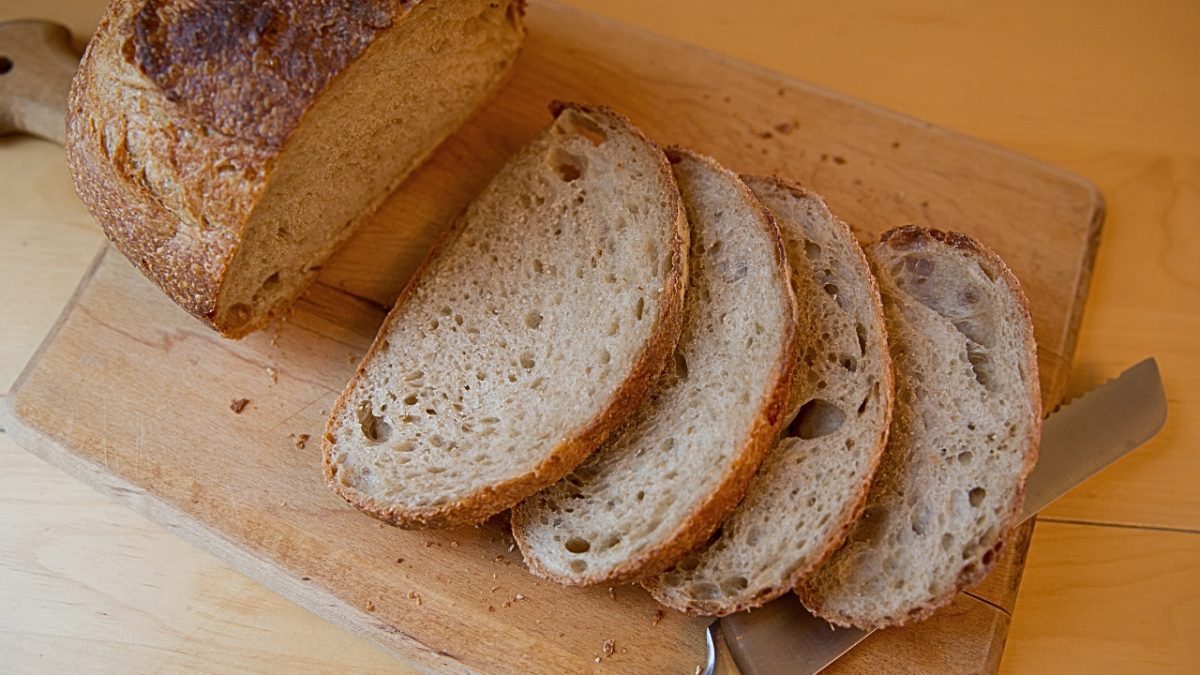
If you don't have a sourdough starter bubbling on your counter, don't sweat it. The recipe below is an "Almost-Sourdough”. It uses a tiny splash of Greek yogurt (or lemon juice) and a long, slow rise to mimic that classic tangy flavour and bubbly texture, no starter required!

The "Almost-Sourdough" no-knead bread
This is the ultimate adult and kid-friendly recipe. There's zero heavy kneading required, and you do most of the waiting overnight while you sleep.

What you’ll need:
  • 3 cups (360g) all-purpose flour or bread flour
  • 1/4 tsp active dry yeast (this “almost sourdough” does require yeast)
  • 1 1/2 tsp salt
  • 1 tbsp Greek yogurt or lemon juice (secret weapon for that sourdough tang)
  • 1 1/2 cups warm water
  • A heavy pot with a lid (a Dutch oven is perfect, but any oven-safe pot works)

Step-by-Step:
  • Mix the dry stuff: Dump the flour, yeast and salt into a large bowl and stir it up.

  • Add the wet stuff: Stir the Greek yogurt (or lemon juice) into your warm water, then pour it into the bowl. Stir with a wooden spoon or spatula until you have a wet, sticky, shaggy dough. No kneading needed!

  • The big sleep (12–18 hours): Cover the bowl tightly with plastic wrap and leave it on the counter overnight. This is where the magic happens. The tiny bit of yeast will slowly ferment the dough, building up those awesome sourdough-like bubbles and flavours.

  • Shape it: The next day, your dough will be puffy and covered in bubbles. Dust your hands and a piece of parchment paper with flour. Gently scrape the dough out onto the paper and fold it over itself a few times to form a rough ball. Cover it with a clean towel and let it rest for 1 hour.

  • Into the pot it goes: Simply lift your dough (still sitting on the parchment paper), and lower it straight into your pot. Put the lid on. Let it sit covered in the pot for about 30 minutes to puff up.

  • The easy bake: Put the lidded pot straight into your unheated oven. Close the door, turn the heat to 230°C (450°F), and set your timer for 45 minutes. As the oven and pot heat up together, they’ll trap the escaping steam, which is the secret to a perfect, airy rise and a crispy crust.

  • Get that golden crust: Carefully take the lid off and bake for another 10 to 15 minutes until the crust is a gorgeous, deep golden brown.
Let it cool on a wire rack for at least 30 minutes before slicing (if you can resist the smell for that long!).

So there you have it, one of the easiest sourdough recipes on the planet. Slather it in your choice of spread and enjoy.
15
Lifestyle
Are Wellness Trends Making Us Healthier or Just Busier?
Article image
There was a time when looking after yourself meant eating a few vegetables, going for a walk and attempting to get eight hours of sleep.
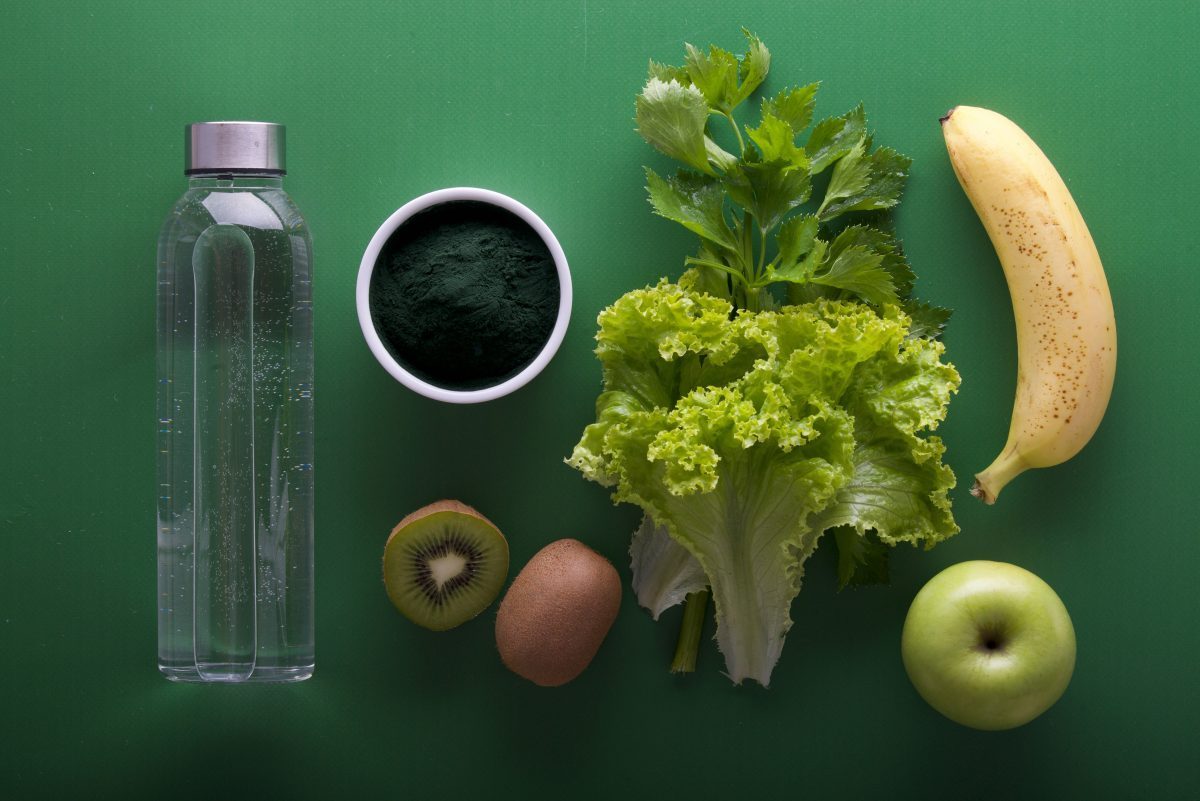
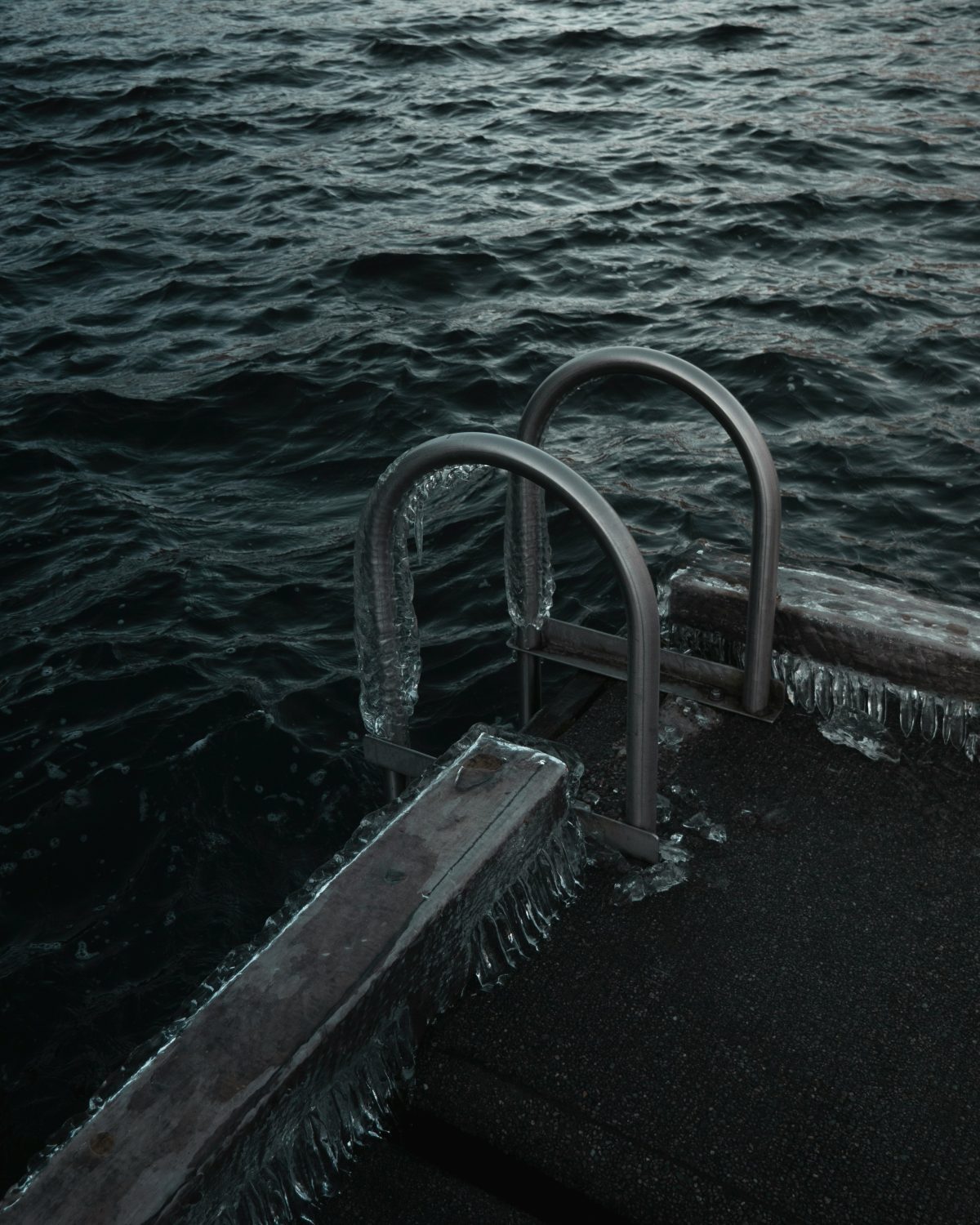
Now it's about waking before sunrise, reviewing the quality of our sleep, scraping our tongues, recording our resting heart rate, drinking room temperature water with added collagen or protein, write three pages in a gratitude journal and lowering ourselves into a tub of water cold enough to preserve seafood.

All before your mushroom-based coffee.

Wellness has become less of a gentle pursuit and more of an unpaid internship. It comes with equipment, apps, subscriptions, powders, protocols and a morning routine that requires its own project manager. But who benefits when these habits become trends?

Because trends rarely spread on their own. They are often nudged along by marketing budgets, influencer partnerships and a steady stream of content designed to make us feel as though we are missing out on something essential.

iceplunge-yann-allegre-unsplash
Yann Allegre for Unsplash


The cold plunge cometh
Cold plunges are perhaps the perfect symbol of modern wellness. They are uncomfortable, photogenic and easier to tolerate when you believe they are transforming you at a cellular level.

They are also highly shareable. A neatly framed video of someone lowering themselves into icy water is far more compelling than a clip of someone going for a brisk walk. That makes cold plunges ideal for social media, where visibility often drives popularity.

Cold-water immersion is not entirely hype. Research suggests it may help reduce muscle soreness after exercise, and some studies have found potential improvements in mood, stress and sleep, but overall, existing evidence is limited by small studies and a lack of diverse participants.

In other words, a cold plunge might make you feel alert and impressively hardy. It probably will not turn you into an immortal Viking.
There are also genuine risks worth considering, including cold shock, dizziness, hypothermia and heart rhythm problems, particularly for people with certain medical conditions. A chilly shower may deliver much of the invigorating effect without requiring a backyard swimming pool of ice or a subscription to a wellness studio.

Supplements: Meals as Capsules
The supplement aisle has expanded from a modest shelf of multivitamins into something resembling a chemistry storeroom. There are capsules for sleep, focus, stress, skin, energy, digestion, joints and vague promises of 'balance'. A committed wellness follower can consume a small handful of pills before eating any actual food.

This is also a booming industry. Supplements are easy to package, easy to market and often promoted through influencers who present them as essential parts of a daily routine. The line between health advice and advertising can be difficult to spot, particularly when it arrives wrapped in personal testimonials and discount codes.

Some supplements are genuinely useful. Iron, vitamin D, folate, B12 and other nutrients can be important when there is a diagnosed deficiency, increased need or restricted diet.

But more is not always better. Supplements can interact with medications, affect surgery and cause side effects when taken in high doses or combined indiscriminately. It's always wise to chat with your doctor or pharmacist about any supplements. It's far less glam, but way more sensible.

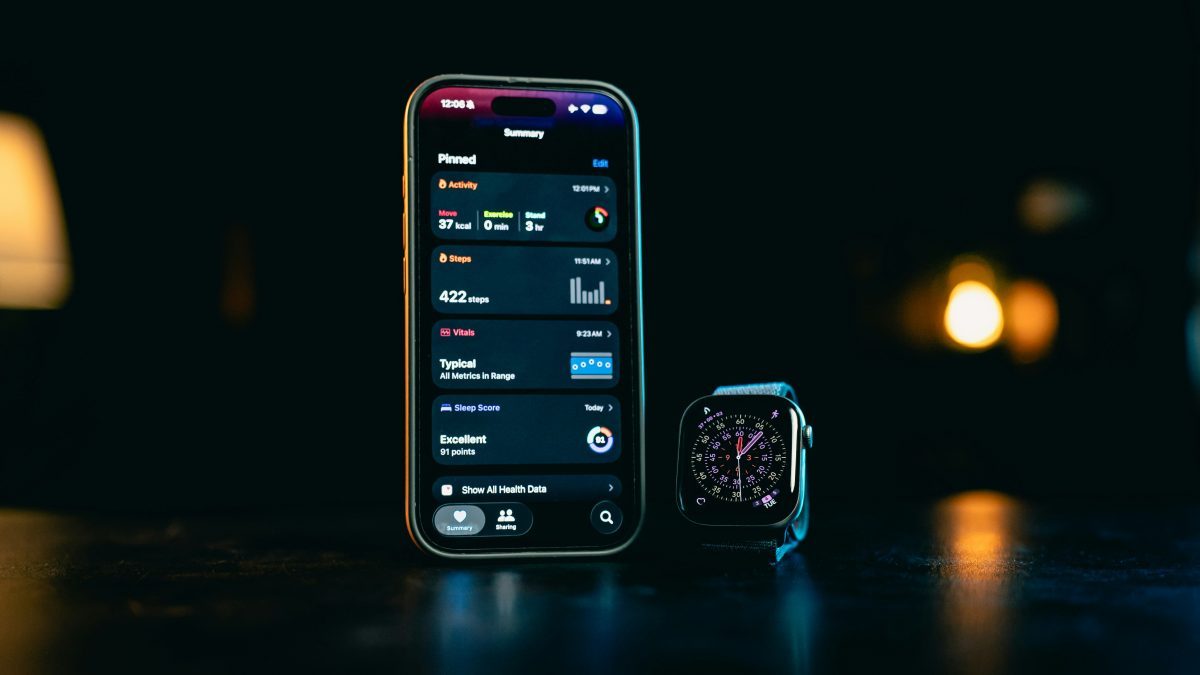
fitness tracker
Image courtesy of Unsplash


Tracking A Perfect Night’s Sleep
Sleep trackers promise to reveal what happens after we drift off, providing scores for sleep quality, duration, interruptions and different sleep stages.

They can be useful for spotting patterns. You may discover, for example, that three glasses of wine, a late curry and watching crime documentaries in bed do not create ideal conditions for deep sleep. But they are also part of a growing market of devices and apps that turn everyday behaviours into data streams. The more we track, the more we are encouraged to optimise, upgrade and subscribe.

Consumer devices are not medical sleep studies and cannot reliably diagnose sleep disorders. Sleep specialists have also raised concerns about people becoming so preoccupied with achieving perfect sleep data that the anxiety itself begins to interfere with sleep.

There is something particularly cruel about waking feeling refreshed, checking your device and learning that you apparently slept terribly.

Sauna Now, Detox Never
Infrared saunas occupy a softer corner of the wellness world. You sit in a warm wooden box, sweat gently and emerge feeling relaxed and lightly poached. They are also a staple of boutique wellness studios, often bundled into memberships or packages that promise relaxation, muscle recovery and detoxification.

Regular sauna use has been associated with cardiovascular and wellbeing benefits, although much of the stronger research relates to traditional Finnish saunas rather than the infrared versions marketed by wellness studios. Reviews of sauna therapy suggest promising results, but researchers still call for higher-quality evidence around the ideal frequency, duration and type of heat exposure.

It's the word “detox”, however, that should make us pause. Sweating removes water and small amounts of certain substances, but it does not replace the work performed by your liver and kidneys. Mostly, it just makes you sweaty.

When Relaxation Becomes Work
Breathwork, meditation, stretching and journalling can all be helpful. The problem begins when every calm activity is turned into a measurable performance.

A simple morning might now involve ten minutes of breathing, 20 minutes of meditation, mobility exercises, affirmations, visualisation, hydration tracking and a carefully curated breakfast.

Many of these practices are beneficial in isolation. But when they are packaged together, promoted heavily and presented as a non-negotiable routine, they can start to feel less like self-care and more like a checklist. By the time you have completed your routine for reducing stress, you may need to relax.

Perhaps the most useful wellness habit is choosing fewer wellness habits. Keep the ones that make you feel better, fit easily into your life and do not require a spreadsheet.

Always question extravagant claims, especially when they arrive with a discount code. Health does not need to become a personality, a competition or another full-time job. Sometimes the boring basics remain the best ones: sleep, movement, decent food, time outdoors, strong relationships and regular medical care.

No ice baths required.
16
Lifestyle
Social Media and its Effect on Teenagers
Article image
Headlines linking social media to teen bullying and mental health issues and the government’s recent ban for under-16s have put social media and its effects on teenagers in the spotlight. Growing up has always been tough, but could social media be making the pivotal teenage years more challenging? Or are the growing calls to restrict teens’ access to popular platforms simply a result of media hype? We take a closer look at how social media really impacts teenagers and what their family and friends can do about it.

Social media and mental health
The way teens interact with social media can have serious implications for their mental health. While likes and positive comments can provide a temporary dopamine boost, teens can come to crave that validation and feel despondent if it doesn’t come. A lack of engagement or bullying comments can also negatively impact their self-esteem.

Scrolling can also encourage teens to compare their lives and bodies to the heavily curated, filtered, or AI-enhanced images posted by celebrities, influencers, and their peers. These comparisons can be harmful when teens are trying to establish their identities and place in the world. Social media algorithms also feed off engagement, so the more teens like this content, the more they see.

Left unchecked, passing negative feelings can become much bigger problems. As their self-image and worldview change, social media-loving teens may be prone to depression, anxiety, self-harm, and social isolation.

Is addiction the problem?
Social media is designed to be addictive, with an endless loop of likes, comments, and new content keeping people on the platforms. Feeling addicted to social media may become an issue for teens who prioritise scrolling over sleep and study. But addiction isn’t necessarily the issue for most teenagers. Spending just a little time on social media can be damaging for some teens, while others may not have any issues spending hours scrolling. What matters more is the content they see and how they’re engaging with it.

Reducing the risks
friends having fun
Pexels - credit Genie Music - https://www.pexels.com/photo/laughing-teenagers-in-park-16699323/

Teens are less vulnerable to social media’s influence when they lead balanced lives. Parents and other adults can help them achieve this through the following strategies:
  • Model healthy sleep habits: Establishing a regular family bedtime and switching all phones off an hour before lights out can help your teen sleep better.
  • Get active: Fun family activities like walking the dog, cycling around the neighbourhood, and swimming in the surf can combat sedentary time online.
  • Communicate offline: Talking openly with the teens in your life is a great way to counteract harmful online messages.
  • Encourage social activities: Spending time with friends after school and on weekends naturally encourages teens to disengage from the apps.

Managing a world with social media
Social media isn’t all bad. These platforms can help teens express themselves and connect with like-minded individuals. They can be vital communication tools for teenagers living in remote areas or feeling socially isolated. But they can also be damaging for teens when they’re most vulnerable. Teens and the people who love them should understand the risks and remember that it’s OK to turn off the apps if it all becomes too much. If it ever does, we recommend reaching out to a trusted friend, adult, or one of these excellent community resources:
  • Kids Helpline: 1800 55 1800
  • headspace: 1800 650 890
  • Beyond Blue: 1300 22 4636
18
Lifestyle
Go Where People Still Say "G'day"
Article image
With cut-price global travel deals and border restrictions becoming a distant memory, around one in four Australians is planning an international holiday in the next year. Aussies preferring domestic travel typically favour the capitals or places close to home. But why take the well-worn tourist path when there are so many awesome regional locations across Australia waiting for you? Enjoy the clean country air, relaxed vibe, and hospitality of these great Aussie destinations where people still say “G’day.”

Esperance, WA: Untouched Coastal Getaway
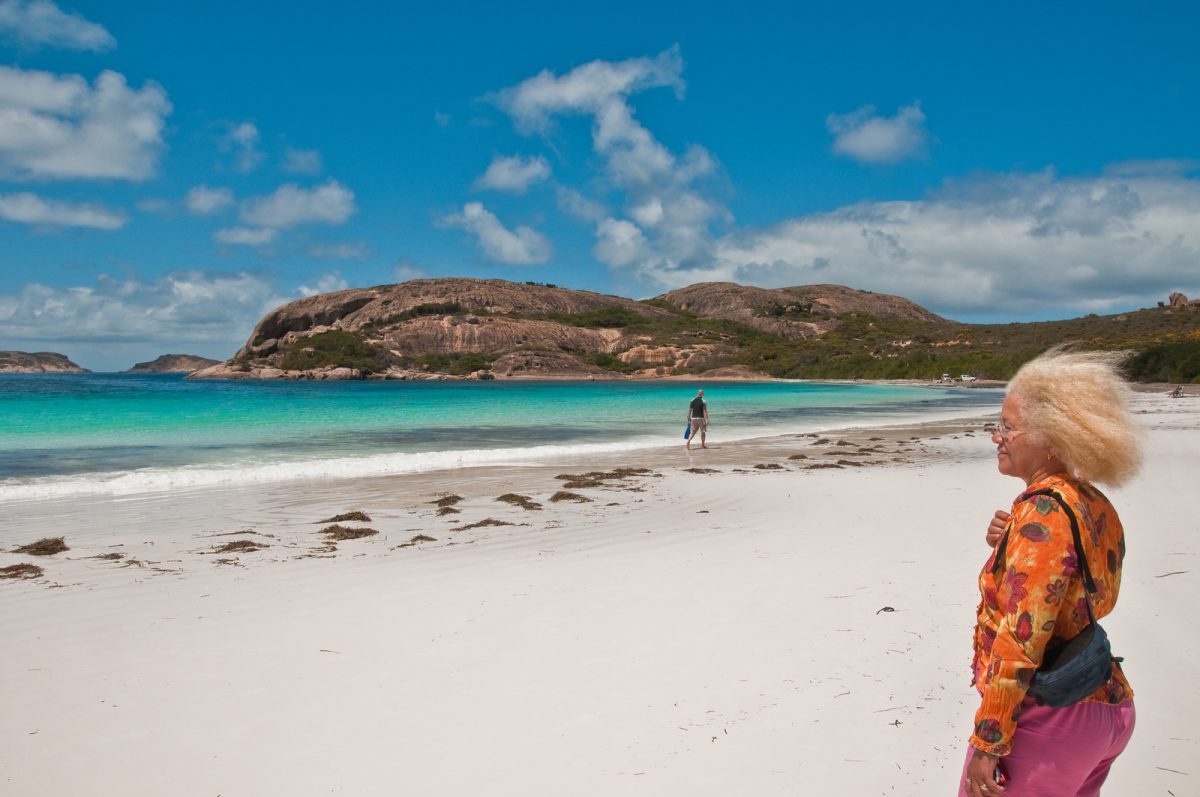
Lucky Bay, Esperance
Flickr - credit Graeme Churchard - https://www.flickr.com/photos/graeme/5526490679/

Beach holidays on the East Coast commonly come with crowds, so why not head west? Take a 1.5-hour flight from Perth to Esperance, home to more than 20 white sand beaches including Lucky Bay, voted the world’s best beach in 2023, and West Beach, known for its surf breaks and friendly dolphins. When you’re not enjoying the water, hit the trails in Cape Le Grand National Park or get a bird’s-eye view of this picturesque coastal wonderland on a scenic helicopter flight. Esperance is a stunning place that encourages you to take your shoes off and reconnect with nature.

Orange, NSW: A Gem for Gourmet Tastes
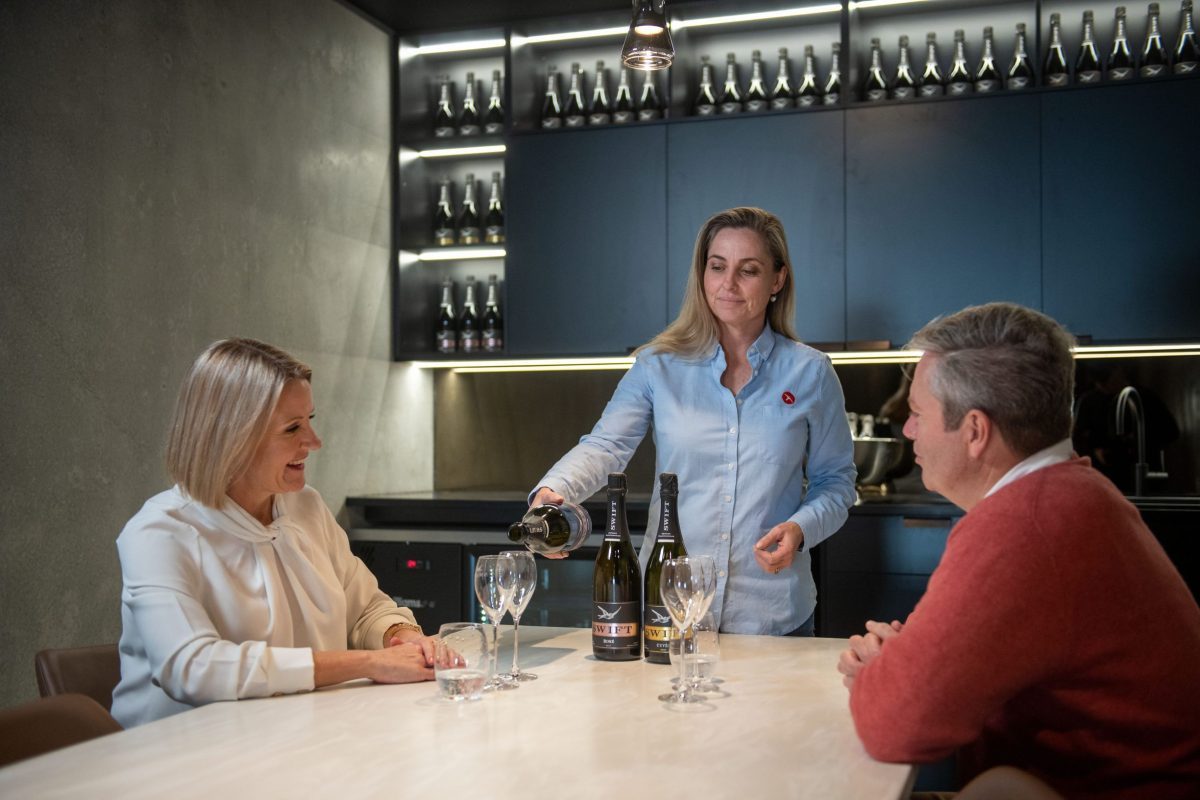
Printhie Wines cellar door
Destination NSW

If you love good food and wine, you'll love Orange, roughly a 3.5-hour drive from Sydney or Canberra. With five different wine trails and more than 30 cellar doors, Orange was recently named NSW’s top wine region by the esteemed Halliday Wine Companion. Many local wineries feature farm-to-table restaurants, including Printhie Wines, Borrodell Estate, and Rowlee Wines. We recommend visiting during April, when the town hosts Orange FOOD Week, the longest-running food festival in regional Australia. Whenever you go, you’ll appreciate Orange’s laidback vibe which encourages you to savour every flavour and truly treat yourself.

Castlemaine, Victoria: Step Back in Time
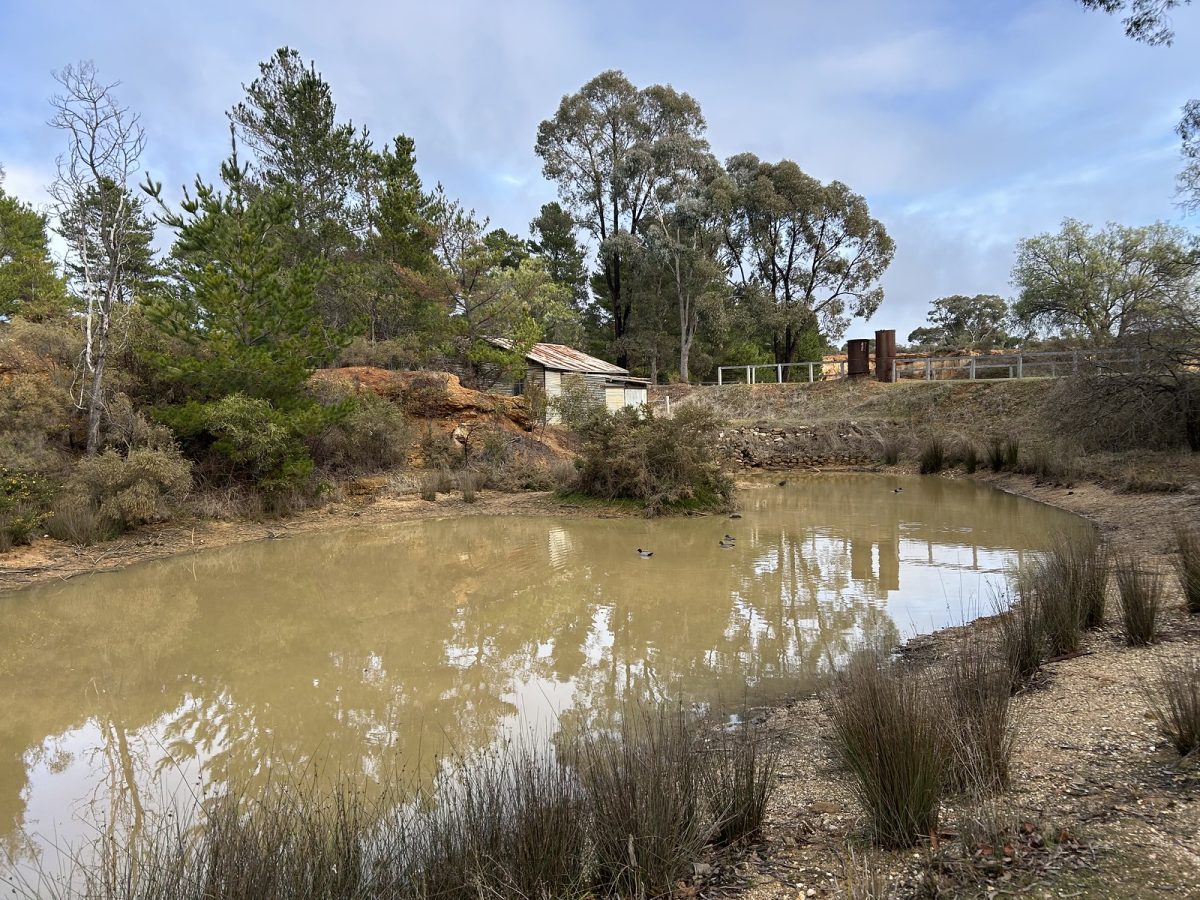
Gold Diggings, Castlemaine
Flickr - credit Leonie Burke - https://www.flickr.com/photos/birdsey7/54658192718/

History buffs shouldn’t miss Castlemaine, a charming gold rush town 90 minutes' drive from Melbourne Airport (Tullamarine). Its Georgian architecture and tree-lined streets make it feel much further from the bustling Victorian capital. Castlemaine Diggings National Heritage Park’s miners' huts, shallow alluvial diggings, and Garfield Water Wheel provide a glimpse into the prospecting past. Secure a miner's right from Service Victoria [1] and you can even try fossicking. The Theatre Royal and Buda Historic Home and Gardens reveal a more cosmopolitan side of Castlemaine’s history. With historic hotels, shops, and pubs, Castlemaine offers a delightful alternative to contemporary cities.

Start planning a regional getaway
No matter what kind of holiday you’re looking for, you’ll find it in regional Australia. This is just a sample of some of the amazing destinations waiting for you. Visiting them is a wonderful way to boost the local economy and learn more about our beautiful country. So start planning and make this the year you explore more of Australia.

1] [Miner's right application
20
Lifestyle
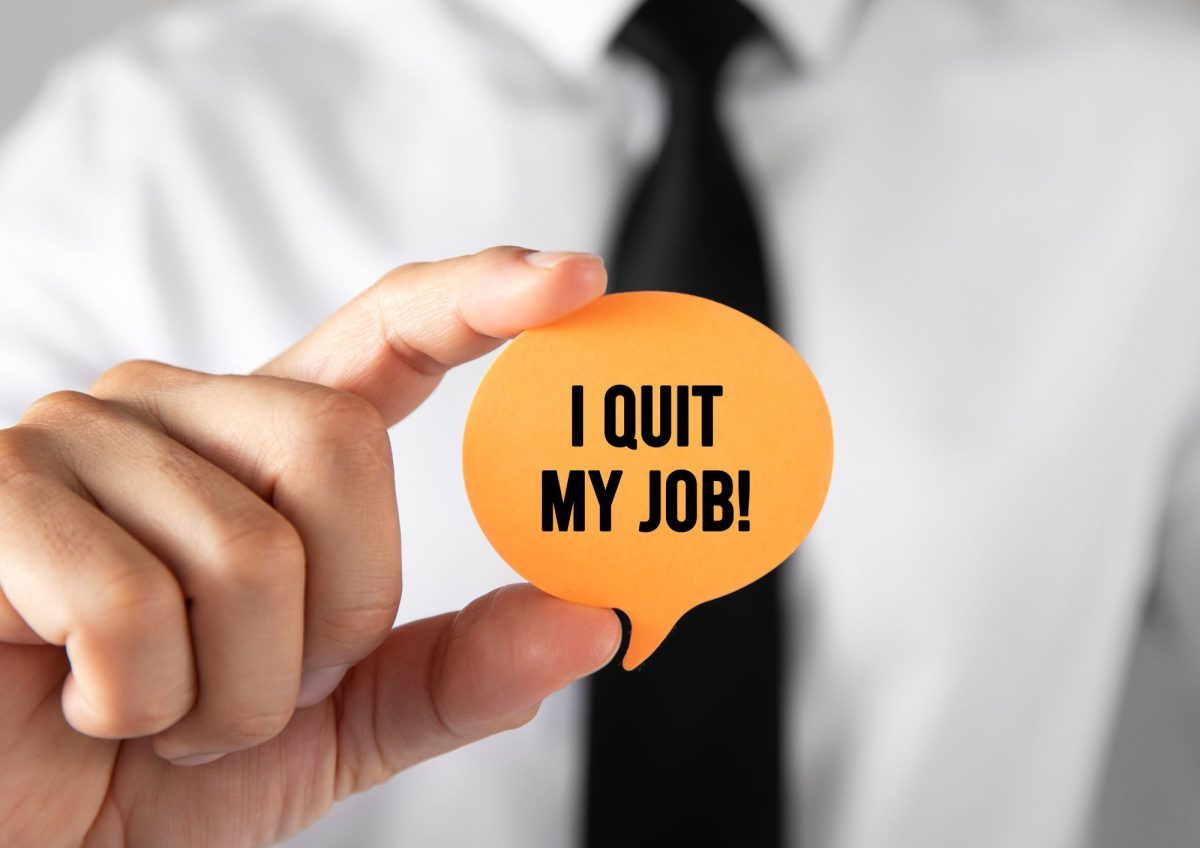
I Walked Out Of A Job On My First Day, And It Changed My Life- Why quitting can sometimes be a good thing.
Article image
Usually, I’m not a quitter.
At least, that’s what I like to tell myself.

I’m the kind of person who believes in sticking things out. In giving things a chance. In pushing through the uncomfortable beginnings because most worthwhile things feel difficult at first. New jobs. New cities. New friendships. They all ask something of us before they start giving anything back.

But sometimes, quitting is exactly the right thing to do.

For this story, I need to take you back a few years. I had just moved to a new city and was excited about the fresh start that lay ahead. Before the move, I’d been working as a graphic designer for a magazine, and when I came across a job that looked similar, I jumped at the opportunity.

There was a test, which I passed, and a start date the following week. The salary wasn’t great, but I convinced myself that didn’t matter. I’d work hard, prove myself and climb the ladder.

Sometimes you know immediately, and it didn’t take long to realise I’d made a mistake.
Actually, it took about three hours.

The office felt heavy from the moment I walked in. Everyone looked exhausted. Conversations were clipped and hurried. There was none of the excitement that usually comes with starting somewhere new.

Then came the work itself.

On my very first day, I was expected to do things that were well beyond anything I’d done before. Perhaps it would have been manageable with a proper brief or some guidance, but there was none of that. I was simply expected to know.

So, I did what most people do when they’re trying desperately to make a good impression: I guessed. And, unsurprisingly, I guessed wrong.
When I showed my new boss what I had done, she barely looked at it before telling me everything that was wrong. Back at my desk, I asked someone nearby for help, but they were too busy to stop.

It’s funny how quickly we can sense whether we belong somewhere. Sometimes it takes months. Sometimes years. And sometimes it takes a single morning.

Despite being in my thirties, there was only one person I wanted to talk to that day. My mum.
I sent her a message explaining what had happened, expecting encouragement to stick it out. After all, she had always taught me not to give up at the first sign of difficulty. Instead, she replied with something I’ll never forget:
“Life is short. You’re worth more than that. Just leave. You don’t owe them anything.”

Those words landed differently because they came from someone who believed so strongly in perseverance. She wasn’t telling me to quit because things were hard. She was reminding me that hard and wrong are not the same thing. There’s a difference between pushing through discomfort and ignoring your instincts. One helps you grow, while the other slowly chips away at you.

Quitting and giving up are not the same thing

That afternoon, I walked out. And, strangely, I felt lighter. I smiled all the way home.
That night, my husband and I opened a bottle of champagne.
“What are you going to do next?” he asked.
“Keep looking.”

And that’s exactly what I did.

I couldn’t afford to take much time off, but I approached the search differently after that. I listened to my instincts a little more. I paid attention to how people made me feel. I stopped assuming that gratitude meant accepting whatever was offered. Most importantly, I stopped confusing endurance with self-worth.

I didn’t leave that job because I was lazy or incapable or unwilling to work hard. I left because something inside me knew that staying would cost more than leaving.

Eventually, I found a job that felt right. Not perfect, because no job is perfect, but right.

And sometimes I wonder what my life would look like if I had stayed in that office, convinced myself to tough it out and ignored that voice telling me to leave. I suspect it would have led me somewhere very different.

Sometimes the bravest thing you can do is leave

We all know that good things take time. Relationships require effort. Careers require patience. Growth is often uncomfortable.

But every now and then, life asks a different question. Not Can you keep going? But Should you?

And knowing the difference between those two questions might be one of the most valuable skills we ever learn.
21
Science
Imposter Syndrome In Writers What happens when you’re a writer, but you don’t feel like one
Article image
You’ve written a book. Congrats! But now what?

You want to know if it’s any good. You want to know if people will like it. You want to know if you’ll get published.
And then your brain starts asking the questions: “Do I really belong here?” “Am I good enough?” “What if people find out I’m not as smart as they think? Or as talented?”

Welcome to imposter syndrome!

If you’re a writer, chances are you’ve met it already.

It doesn’t matter whether you’ve just started putting words on a page or whether you’ve been writing for years. Imposter syndrome has a habit of appearing at exactly the wrong moment: just after you’ve finished a piece you’re proud of, when someone compliments your work, or when you compare your progress to everyone else’s.

At its core, imposter syndrome is the feeling that your achievements don’t quite match the person you believe yourself to be. It’s the quiet voice that tells you that other writers are more talented, more intelligent or somehow more deserving of success. It convinces you that your accomplishments aren’t really accomplishments at all.

It can creep in when you’re working hard but feel as though you’re getting nowhere. It can appear when people around you seem to be moving forward while you remain stuck in the same place. Sometimes, all it takes is reading an incredible book or seeing another writer achieve something remarkable for you to start questioning your own abilities.

Almost every writer knows this feeling: the fear that you’re not good enough, that you don’t belong, or that one day someone will discover that you’ve been pretending all along.

The strange thing about imposter syndrome is that it rarely disappears completely. Even accomplished authors, poets and journalists experience moments of doubt. Success doesn’t magically silence that inner critic; it simply teaches you not to listen to it quite so much.

One of the most important things to remember is that these feelings are normal. In fact, they are often a sign that you care deeply about your work. Nearly everyone who creates something meaningful experiences moments of uncertainty.

You are not the only one who feels like an imposter. You are simply a writer doing what writers have always done: questioning yourself while continuing to write anyway.

But what happens when it starts to affect your writing?

Imposter syndrome has a way of chipping away at your confidence. It makes you question your talent, downplay your achievements and wonder whether everyone else has somehow figured out something that you haven’t. If that sounds familiar, here are a few things that might help.

• Write down everything you’ve achieved so far. Chances are, you’ve come much further than you give yourself credit for.
• Find someone who believes in your work and lean on them when self-doubt creeps in. Sometimes, we need other people to remind us of what we’re capable of.
• Keep doing the things that make you feel like yourself. For writers, that usually means continuing to write, even when confidence is low.
• Set smaller, more manageable goals. Finishing a chapter feels much less daunting than finishing an entire book.
• Look after yourself. Sleep, food and rest matter more than we like to admit. Speaking as the mother of a seven-year-old who occasionally refuses to sleep, everything feels harder when you’re exhausted.
• And finally, talk to someone you trust. Often, saying your worries out loud is enough to shrink them back down to size.

Make friends with failure. Failure should be embraced and celebrated because it means you are moving forward, because without failure we would never achieve success.

Remember, you are not alone.

Be careful not to compare yourself too much to other authors who might appear more successful than you. You can’t know what their background is or what they’ve been through. There is no right way or wrong way to write a book.
The goal isn’t to eliminate self-doubt completely. It’s to keep creating despite it.
22
Business
Airport Lounges on the Decline But Aussies are Still Keen
Article image
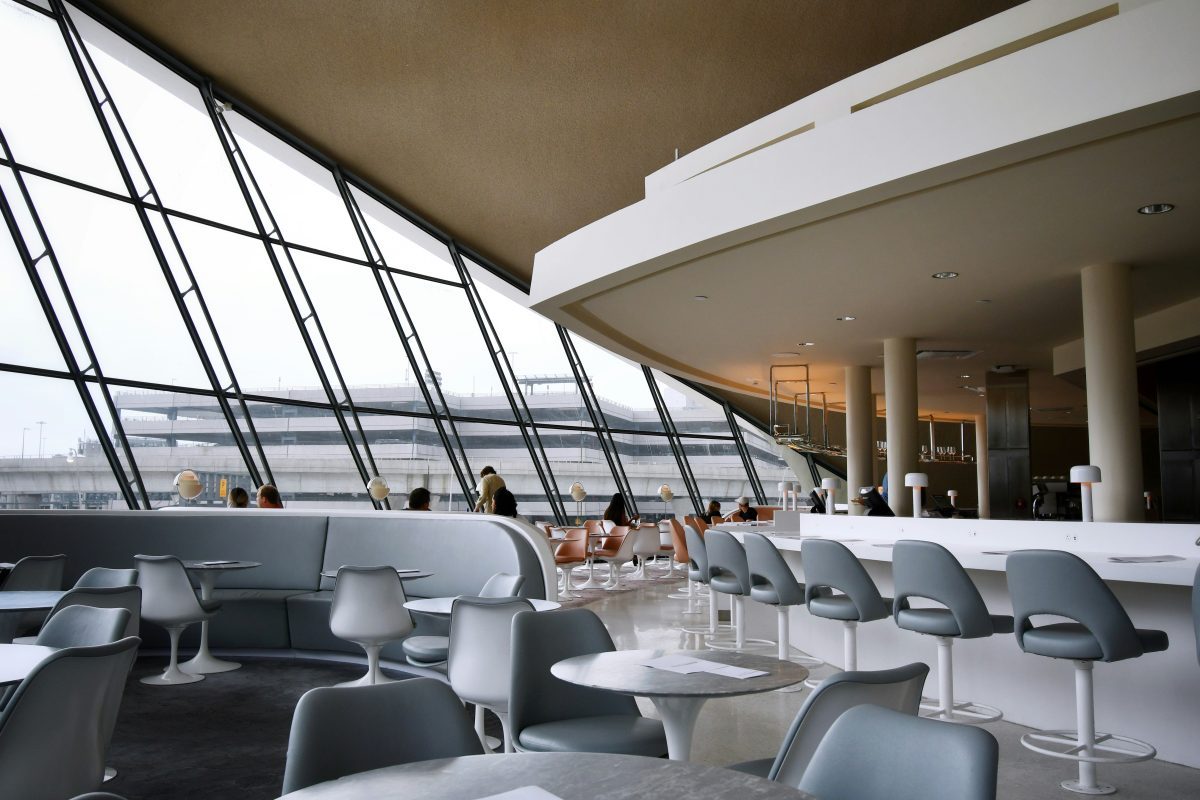
Airport membership lounges may have lost some of their sparkle, but it seems many Aussies still want in, according to recent research from Money.com.au.

While these premium lounges may no longer be the hushed sanctuaries they once were, plenty of Australian travellers are still willing to flash a membership card, wave a credit card perk or pay their way inside, with the research showing 26 per cent of Australians still regularly using an airport lounge when travelling.

Most membership lounge visitors are not paying at the door, however. Around 17 per cent access lounges through rewards credit cards or frequent flyer memberships, while nine per cent purchase a single-use pass or annual membership.

It appears the humble comfortable seat is doing much of the heavy lifting.

When asked what they valued most about airport lounges, 67 per cent of respondents nominated comfortable seating and a quiet space away from the terminal. Complimentary food and drinks followed at 61 per cent, while 45 per cent appreciated extras such as Wi-Fi, showers and other amenities.

In other words, the miniature muffins are welcome, but somewhere to sit without guarding a power point like buried treasure is even better.

Money.com.au head of insights Sean Callery said lounges had faced growing criticism for overcrowding and shrinking benefits, but continued to offer travellers a degree of escape from busy terminals.

He said Australians were almost twice as likely to use lounge access bundled with another travel product than pay an additional entry fee each time they flew.

The findings also revealed a sizeable generational divide. Millennials were the biggest lounge users, with 41 per cent visiting them when travelling, followed by 37 per cent of Gen Z. Usage dropped to 23 per cent among Gen X and just 15 per cent among Baby Boomers.

Younger travellers were also more prepared to open their wallets for the privilege.

Gen Z were the most likely to buy lounge access through a one-off pass or annual membership, at 20 per cent. Millennials followed at 16 per cent.

Millennials, meanwhile, were particularly skilled at getting through the door without paying separately, with 25 per cent using lounge access attached to a rewards credit card or frequent flyer membership.

Callery said premium travel experiences had become part of the broader travel culture for many younger Australians, with lounges adding another layer to the journey.

The research suggests the airport lounge is not disappearing just yet. Its velvet rope may look slightly less exclusive, the buffet may have seen better days, and every charging point may already be occupied, but the chance to escape the gate area still has considerable appeal.

Sometimes luxury is simply a chair, a coffee and nobody announcing a delayed departure directly into your ear.