WEEKLY
June 29, 2026
Edition #66
Showing all topics � Login to filter
News  ·  Lifestyle & Culture  ·  Fiction  ·  Humour  ·  Science & Tech  ·  Business  ·  Opinion  ·  Politics  ·  News  ·  Lifestyle & Culture  ·  Fiction  ·  Humour  ·  Science & Tech  ·  Business  ·  Opinion  ·  Politics  ·  
1
News
Political Killjoys
Article image
What kind of "low life" murders cartoonists?
A week or so ago, Russian national, Semyon Skrepetsky, aka Robert Kuzovkov - known by some as a “critical artist” and others as a “subversive artist” was assassinated, according to media reports, in the Polish town of Biala Podlaska which is east of Warsaw, near the border of Ukraine.

And this was no accidental shooting. Information emanating from Polish authorities makes it clear that the murder was targeted - Skrepetsky was shot five times, once in the head. The first few shots downed him, then the assassin approached to fire twice more at point-blank range. Polish Prime Minister, Donald Tusk, claims that a 36-year-old man carrying a Georgian passport had been arrested, but Polish police and security authorities, he said, are “working to establish the mastermind” behind the event which was likely to be a “political murder”.

According to AFP, Reuters, Skrepetsky was a visual artist who made a name for himself with his provocative caricatures of Putin, as well as of Belarusian leader, Alexander Lukashenko, Chechen leader, Ramzan Kadyrov and Soviet leader Josef Stalin. But he also directed his satire toward the Russian opposition, including with caricatures of Alexei Navalny.

Born in a village in Russia's Altai Republic, Skrepetsky had been living in exile in Poland since 2021. Poland's government claims to have offered him protection but he declined. Three days before he was killed, the artist had travelled to Berlin on Russia Day. There he had staged a protest outside the Russian embassy holding an icon-like caricature of both Stalin and Putin.

The murder of an artist who was critical of Russian, Soviet and Chechen leaders comes amid the heightened tensions focussed on President Vladimir Putin's ongoing war with Ukraine. Poland’s ⁠Deputy Minister of Foreign Affairs, Wladyslaw Bartoszewski, told Radio Zet that Chechens were "also potentially suspected," given the artist's past criticism of their leaders.

Skrepetsky’s assassination is one of several killings targeting prominent opposition or dissident figures in NATO countries in recent years, from Poland to Lithuania and Britain to Berlin. A raft of high-profile Russian politicians, dissidents, activists and former spies have been killed in NATO countries during the Putin era. The Kremlin has denied involvement in any of these murders. Of course.

A satirical cartoon in the SMH of 25 June 2026 pays homage to Semyon Skrepetsky. Thank God we in Australia can still value satire for what it is. And represents.
2
Lifestyle
The Amazing Tricks of Future Smart Homes
Article image
The old blueprint of a home as just a static box where people cook, sleep and store their belongings is officially dead. Instead, the next generation of housing is shaping up to be dynamic, incredibly clever and completely attuned to both our mental wellbeing and the planet.

Homes that generate their own power
The most critical goal for future housing is absolute energy independence. With utility bills skyrocketing and climate targets inching closer, future homes won't just consume energy, they'll actively produce it.

We're moving far beyond standard solar panels slapped onto a roof. The houses of tomorrow utilise building-integrated photovoltaics, which are building materials that generate electricity.

Imagine windows in a living room that don’t just let in light, but the glass itself acts like a giant solar panel to charge phones and run the fridge. Instead of ugly brackets on the roof, the actual roof tiles, external timber walls, and even the paint on the outside of the house will be built to harvest sunlight and turn it into power.

The living, breathing floorplan

The rise of hybrid work means our homes have got to be masters of disguise. Instead of rigid, permanent plaster walls that lock people into one layout forever, future homes will use modular, kinetic architecture.

With the push of a button or a simple voice command, automated acoustic walls will slide along ceiling tracks to completely redraw a floorplan.

A spacious lounge room will instantly partition into a quiet, soundproof study at nine in the morning, then open back up into an entertainment hub by dinner time.

Automation that actually learns habits
We've all seen basic smart home gadgets like voice-activated lights, but the future will be all about true ambient intelligence. This means a house won’t wait for commands, it will quietly observe daily routines and adjust itself to keep everyone comfortable.

The house will uses predictive software linked to subtle environmental sensors. It will track occupants' circadian rhythms (the body's natural internal clock), and automatically shifts indoor lighting from crisp morning sunlight to warm, melatonin-friendly amber tones as evening approaches.

Bringing the wild indoors
Just like the office upgrades we've seen lately, future homes will put biophilic design (designs that naturally connect with nature) at the very centre of their layouts.

Architects will prioritise mass timber frames, natural clay renders, and internal vertical gardens that act as natural air filters. Internal courtyards and massive, automated glass facades will blur the line between a lounge room and the garden outside, ensuring occupants are never starved of natural light or fresh air.

Ultimately, the homes of tomorrow aren't about flashy, useless gadgets or living inside a giant, clinical computer. They're about using clever technology and natural materials to build a space that actually looks after our bodies, minds and energy bills.
3
AD Advertisement
Have Your Articles Published
Hold The News
4
Fiction
The Other Panopticon
Article image
Links to earlier scenes:
The Other Panopticon - Synopsis
The Other Panopticon - Chapter 1, Scene 1+2
The Other Panopticon - Chapter 1, Scene 3+4
The Other Panopticon - Chapter 1, Scene 5+6
---
CHAPTER 1, Scenes 7 + 8 (5 minute read)

I drove to my apartment, took a long cold drink then went for a walk. Another tropical storm was rolling in, but I knew I had time to reach my destination and make it back before the deluge. I’d lived in Darwin before during the wet season – you could smell how far off a storm was.
The indigenous people were out and about again on Cavenagh Street as I got to the GPO and turned the corner at Edmunds Street where the bank of post office boxes was situated. I unlocked Box 22 with the key Zorkov had given me and the door flew open.
Inside was a bulky plain brown padded envelope which I slid from the pigeon hole before closing the box and pocketing the key.
I looked around but there was no one brave enough to be out and about in the darkness and crippling humidity. I walked back to my apartment with the package jammed into a pocket of my jeans. The skies were about to open, so I jogged the last few metres to my apartment block, arriving just as the first thunder clap sounded.
I climbed the set of stairs to my first-floor apartment. then stopped dead before reaching the top. Standing on my welcome mat was a woman I recognised as being my neighbour from the apartment next door – an attractive woman of indeterminate age who I guessed would be from one of the nearby island states.
I wiped the sweat from my face with a handkerchief then joined her alongside my welcome mat, introducing myself. She responded with a glowing smile.
‘I’m Darna. Darna Del Rosario.’
‘Filipino?’
‘Australian. Born in the Philippines. Can I come inside?’
There was more thunder and a fizz of lightning close by. The rain was now bucketing down a few metres away. I opened my front door and let her in.’
‘Really sorry to intrude like this,’ she began, occupying one of my lounge chairs, ‘but I think there is something you should know.’
She joined me in a glass of chardonnay. I sat opposite her, watching her take her first sip.
She was a woman of medium height, with dusky olive skin and jet-black hair strewn around her shoulders. She’d kept her body well-toned; her bare sandalled legs were sinewy and suggestive of someone who jogged regularly. She had the soft facial features of many young women I’d seen from that part of the world, but with prominent crows feet and enough furrows across her brow to suggest the onset of middle-age.
‘I should tell you right now that I work as an escort for high-end clients,’ she began. ‘One of these is a brand-new client called Arthur who talks with an accent that is probably East European.’
‘Russian?’ I wondered.
‘Probably.’
‘He started asking me questions about some of my neighbours here, including you.’
‘What sort of questions?’
‘Who you are, what you do, who you mix with.’
‘And what have you told this gentleman about me, Darna?’
‘Nothing, because I don’t know anything about you…’
She hesitated.
‘…. although, there is one thing.’
She took another mouthful of her chardonnay.
‘Say Michael, you sure know your wines!’
I nodded appreciably.
‘That ‘one thing’?’ I asked, keeping her on track.
She settled back into her chair.
‘It’s a bit creepy actually. I tend to look through my loungeroom window a lot – waiting for my clients to appear, so to speak. Twice now, I’ve seen you leave this apartment building and noticed you were being followed – by a man.’
‘How do you know he was following me?’
‘Because when you were leaving your apartment on foot, he seemed to fall in behind you. But when you were driving out of our basement carpark, he was in a car parked down the street. I saw his car start up the moment you appeared and then he was behind you, travelling in the same direction.’
‘Çan you describe this man?’
‘Sure – he’s a standout: Tall, solidly built, wears a baseball cap, jeans, a black t-shirt and sneakers. He was driving a small white sedan – maybe a Toyota or Nissan, I’m not much good at cars.’
‘Did you get a vehicle registration number by any chance?’
‘Never thought to.’
She leant forward in her seat and peered at me with two of the largest brown eyes I’d ever witnessed in another human.
‘Are you in some kind of trouble, Michael?’
‘No, I’m not, Darna. Tell me about this other guy - this new curious client of yours?’
‘Oh yes - Arthur. Well, he’s actually the newest addition to my … er … cohort, so to speak. Turned up on my doorstep a few days ago claiming I’d been recommended to him by a friend of a friend. He paid well but – as I told my pimp – performed rather poorly. He seemed more interested in talking, asking lots of questions – but not about me, about the people in this apartment block - you in particular, maybe because you live next door, I don’t know.’
I refilled her glass and asked if she’d like something to go with her drink. She declined, saying she had a client arriving in ten minutes time.
‘Can you describe this Arthur client to me?’ I asked.
‘About your age,’ she began, ‘Medium height, big boned, dark hair thinning on top, clean shaven. And he has these fierce dark eyebrows that seem to move independently of one another.’
Zorkov, I told myself. Without the facial hair. But how? And why?

--- o0o ---

I needed to clear my head. Someone had told Zorkov where I live and knew my neighbour was a high-class call girl.
Somehow since his arrival in Darwin less than a week ago, the ‘Directorate S’ operative had been able to smuggle himself out of immigration detention, shave off his beard and moustache, then get himself back into the detention centre in readiness for his meeting with me. In his detention cell he must have slipped back into the rag-and-bone clothes he was wearing when he’d arrived in Darwin a few days earlier, then ‘re-installed’ his facial hair by way of a disguise.
Several things concerned me. The Russian clearly had an ‘ínsider’ in Darwin’s Northern Immigration Detention Centre - helping him get in and out of that Centre. That person - presuming there was only one of them - needed to be identified and subjected to ongoing scrutiny.
Similarly, Zorkov’s tall foot soldier who was shadowing me needed to be identified and also put under the microscope.
Then there was Zorkov’s ASIO insider - with access apparently to my file, my Darwin posting and perhaps even the messages I was sending back to Head Office – to which Zorkov also seemingly had access.
At minimum, there were three SVR assets tied up with Zorkov and his network – keeping me under close surveillance in my own damn Country and I had no way of identifying, let alone outpointing any of them.
I couldn’t risk divulging my contact with Zorkov to anyone within ASIO until I knew who in the Organisation was on the SVR’s books. I thought of making a shortlist of suspects but no one sprang to mind. Not even Oswald Fudge, my old Sydney office nemesis - who hated my guts.
My Darwin office staff numbers were currently depleted. My two current staff consisted of a linguist and an elderly administrative officer called Clarence Ironmonger – a retired Darwin copper who seemed to be on his last legs. My linguist, Intan Wenda – who spoke Indonesian, Filippino, Sinhala and Tamil - was working only part-time in our Darwin office, or full-time when we were all hands on deck, which was practically never. Mostly, he helped out at the Immigration Detention Centre as well as doing some work for the Northern Territory Police.
Two investigator vacancies were supposed to have been filled in my Darwin office before I’d arrived there a few months ago, but there’d been little progress. I’d been quick to recommend two candidates for these two slots, but the corporate job advertising program seemed to have ground to a halt and I was now waiting to find out if my two preferred candidates had been successful in the job application process. Nothing would be resolved overnight.
Meanwhile, with my wife Julie still lukewarm about spending the next few years with me and our daughter in Darwin, I was without any personal or tangible professional backup.
In desperation, I left a phone message with my old CIA confrere, Cameron Miller in Manila. I then shed my clothes and climbed into a cold shower then slipped into a pair of shorts. The bulky brown envelope was staring at me from the kitchen table where I’d left it. I gingerly unpeeled the sealed flap and withdrew the contents.
I was holding a black miniature two-way radio – the size and shape of a cigarette pack. It had a truncated tongue-shaped aerial and a small display screen with a set of control buttons on a panel just below.
Attached to the back of the device was a typed set of instructions plus a log-in password and code and the number I was to use to communicate with Zorkov. According to the instructions, the two-way had messaging as well as voice communication capability with full-duplex (simultaneous transmit-receive) capacity and, so it claimed, an unbreakable encryption algorithm.
I fired up the device and discovered a message was already on it – sent a few hours earlier this day. The message listed what appeared to be a Darwin address - ’52 Rankin Street, Nightcliff’.
I was familiar with Nightcliff –a popular Darwin tourist spot that I had visited once or twice on weekends. But why had this address been sent to me? Surely this was not the dwelling of one of Zorkov’s illegal operatives in Darwin. But if it wasn’t, what was its significance? Was this the beginning of an SVR’s plan to lead me up the first of many blind alleys while carrying out its real foreign interference work elsewhere in the Top End? Or was it real?
I was in a state of confusion and abandonment when the telephone rang and Cameron Miller’s upbeat tones brought me back down to earth.
‘Another crisis Mikey?’ he asked. ‘Or were you just looking for someone to share a Jim Beam with?’
‘God it’s great to hear your voice, Cameron!’ I replied.
‘What’s new?’ he asked.
‘Something called Catch-22,’ I replied.


To be Continued...
5
AD Advertisement
Your Product or Service Here
Hold The News
6
News
Media Ban: Turning Kids into Hackers
Article image
Is censorship really the answer?
Earlier this year the government initiated a ban on social media access for under 16s, including Facebook, TikTok, Instagram, X and more. On the surface, this seems sensible, there is a real issue with the content our children are exposed to, and with algorithms becoming ever more political, skewing what type of content they see, it is an issue that cannot be ignored.

However, if we have learned one thing over the years, banning stuff on the internet never really works, and a recent study shows it to be the case here too. The BMJ study shows that over 80% of the under-16s questioned had accessed the restricted social media platforms after the ban, using private browsers and VPNs to get around the censorship. At those levels, the ban itself is largely irrelevant now, but that doesn’t mean we should just pretend the problem doesn’t exist, so what is the answer?

Education for Everyone
Social media and other forms of user supplied information are not going away, so the risks of misinformation and unsuitable materials are going to be an issue moving forward too. Its time to look at the problem objectively and find a solution that works for everyone moving forward.
Understanding social media, being able to spot fabricated stories, being able to use platforms responsibly are skills we all need, not just kids. So, rather than banning these platforms, what if instead, we educate children to use them better, so they can spot dangers and avoid them.

The eSafety Guide already exists, with its school hub and other resources. Expanding that initiative, giving children a better grounding in general internet use and social media in particular could be a different way to tackle the issue. There is a secondary benefit to an educational approach too, skills learned as a child will stay with them as adults, making sure Australians are better equipped to deal with he challenges of ever evolving social media and other algorithm-led platforms than many countries.

It also avoids something that is inevitable with banning. As children age beyond sixteen and can access the banned platforms, in theory they do so with no experience at all. That leaves them vulnerable to scams and the worst behaviour found online. By learning responsible online use early on, we are equipping our children with skills that protect them for life, rather than just delaying throwing them in at the deep end.

Education is a better fix than censorship, not just for today, where we know the ban has failed, but by providing skills and understanding that will protect Australians for years to come. This does require investment of course, and is not the simple, fast option that a ban presented. But as we have seen, simple is not always best, instead of running away from issues, we must start learning to deal with them.

Sources:
The BMJ study
7
AD Advertisement
Have Your Articles Published
Hold The News
8
News
Greens deal clears Labor tax reforms while independents launch new centrist party
Article image
Labor secures Greens support for tax changes
Labor has passed its capital gains tax and negative gearing reforms after reaching a deal with the Greens this week. The agreement removes a significant legislative obstacle, allowing the government to proceed with changes that will affect property investors and high-income earners. The Greens were unable to secure more ambitious measures they had sought, including removing grandfathering provisions that allow existing investors to retain tax advantages and capping the number of negatively geared properties an individual can hold. Despite these limitations, party leader Larissa Waters confirmed the Greens will support the package through parliament.

Independents form new centrist political movement
Independent MPs Zali Steggall and Allegra Spender have launched Community Strong Australia, a new political party positioned to offer centrist alternatives to both major parties. The pair say the party will champion "reason over rage" in Australian politics. The move reflects growing momentum among the crossbench MPs who have carved out influence in recent years by negotiating directly with the government on major legislation.

editors note
Read earlier article about swinging voters

Angus Taylor stumbles on multiculturalism messaging
Opposition Leader Angus Taylor drew criticism this week after refusing to endorse Australia's longstanding bipartisan policy of multiculturalism, following comments by One Nation leader Pauline Hanson calling for it to be scrapped.
Hanson told the National Press Club that Australia should be "monocultural," saying "we are a multiracial society, but we must be monocultural. Australians must live under the one cultural umbrella." When asked seven times for his response, Taylor declined to say he supported multiculturalism, instead saying he wanted immigrants to "believe in and support Australian values" and that there were "vague words running around."
Labor seized on the exchange during question time. Treasurer Jim Chalmers called Taylor's response "ridiculous," accusing the Opposition Leader of trying to "out-One-Nation One Nation" as the Liberal Party attempts to court right-wing voters. Prime Minister Anthony Albanese also attacked Taylor over the comments in parliament.
The episode has intensified scrutiny of the Liberal Party's direction under Taylor, who made immigration his top priority upon becoming Opposition Leader in February 2026.
---

Stefanovic and Robinson
Youtube

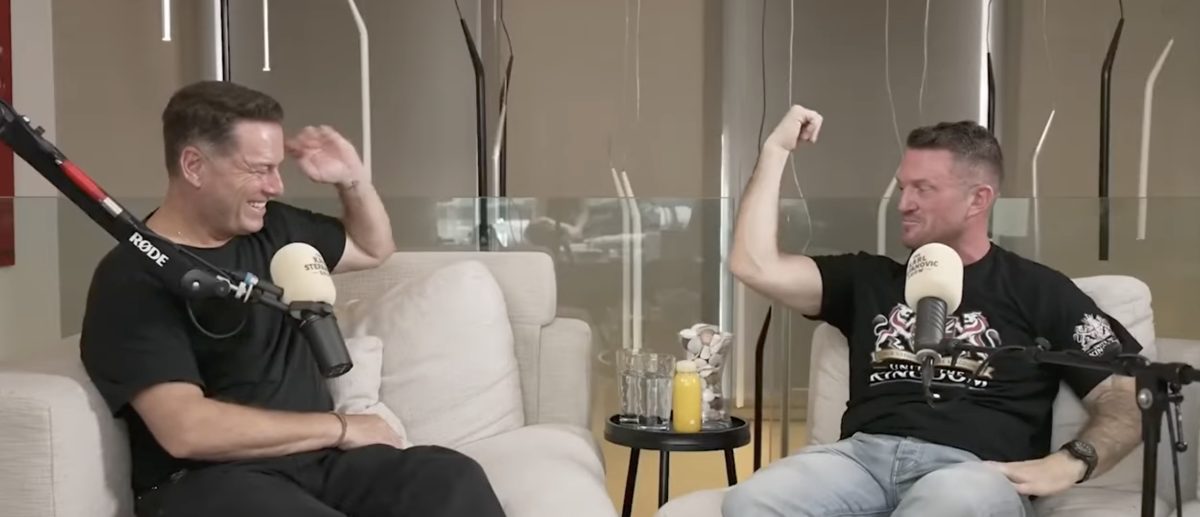
Karl Stefanovic departs Nine after interview controversy
Long-serving breakfast television host Karl Stefanovic has left his position at Channel Nine following reports that he conducted an interview with controversial figures that the network deemed inappropriate. Stefanovic had promised to "unleash the beast" on his podcast when launching the venture earlier this year. Prime Minister Anthony Albanese commented that "words do matter" when asked about Stefanovic's departure, though he characterised it as a matter for the broadcaster to resolve.

Shark attack survivor emerges from induced coma

Leah Stewart, 34, has woken from an induced coma more than a week after being attacked by a shark while swimming at Coogee Beach in Sydney. The attack resulted in the amputation of one of her arms. The incident renewed focus on beach safety and shark interactions along the New South Wales coast.

NT Labor faces internal crisis

An NT shadow minister's driving history has become a source of embarrassment for the Northern Territory Labor Opposition, compounded by the Opposition Leader's failure to disclose the information earlier. The revelations add to existing difficulties the party faces in its attempt to rebuild support ahead of future elections.

Teenagers arrested over Melbourne school abduction

A 15-year-old boy has been charged after allegedly abducting a girl as she walked to school on the last day of term in Melbourne. The arrest reflects ongoing community concerns about child safety in school environments across the country.

Australian coal and gas exports challenged at UN

A group has filed a case at the United Nations arguing that Australia's continued approval of fossil fuel exports violates human rights protections owed to its own citizens. The case challenges the government's authority to permit additional coal and gas projects without adequately protecting Australians from the impacts of climate change.

Indigenous stories preserved through photography

A photography exhibition in Albany, Western Australia has captured the stories and essence of Menang elders, women whose contributions to history have often been overlooked and underrepresented in official historical records. The project represents growing efforts to document and preserve Indigenous narratives and cultural knowledge.

---
Note: Articles above are AI summaries which have been fact checked by the editor.

Sources: ABC News Australia, Guardian Australia, BBC News Australia, Sydney Morning Herald
9
Humour
Freedom of speech in question, after veteran host axed from morning show nobody Watches, to pursue podcast nobody listens to
Article image
In a dramatic moment that shocked influencers who nobody cares about, the cast of morning air-time filler program Sunrise: confirmed that long‑time host Karl Stefanovic has been axed from the program after a “controversial” episode hosting UK loudmouth Tommy Robinson.

Co‑hosts made public scenes, appearing in tears to mourn their lost comrade, in what seems like a desperate attention grab to get listeners for his solo business attempt.

A 20‑Year Career, Mostly Unnoticed

Stefanovic has been waking up with the nation for 21 years, though the nation has not always reciprocated.
Ratings analysts estimate that at least 40% of viewers believed he left in 2014.

Still, the studio insisted his departure was a “huge change,” especially for the show’s loyal audience of:
  • insomniacs
  • airport lounge TVs
  • and people waiting for their dentist appointment

Karl will pursue his own podcast, which nobody knows that is called, because who would bother listening to something so stupid.

Stars Pay Tribute, Public Remains Unaware

Tributes poured in from Channel Nine colleagues, many of whom were surprised to learn Karl still worked there.

One long‑time staffer said:
“He was a real presence in the studio. Mostly because he talked loudly and ate yoghurt with the lid still on.”

Another added:
“It won’t be the same without him. We might actually be able to hear ourselves think without his distracting and idiotic opinions.”

Meanwhile, the general public responded with a collective:

“What? Why is this news?”

Karls’ Future: Unchained, Uncertain, and Mostly Unsubscribed

Despite the chaos, Karl remains optimistic.

In a statement posted to his podcast’s Instagram page (which has 17 followers, including a bot selling crypto), he wrote:

“This is not the end. This is the beginning of a bold new chapter in my broadcasting journey.”

He then accidentally posted a photo of his feet.
10
Science
New Species of Shark Discovered in Queensland
Article image
When you picture a shark, you probably think of a sleek, toothy predator patrolling a sunny coral reef. But if you drop down more than 800 metres into the crushing darkness of the Coral Sea Marine Park off Queensland, things get weird. Down there, the rulebook of evolution changes completely, and you find creatures that look less like modern wildlife and more like prehistoric phantoms.

Taxonomists working with the CSIRO and the global Ocean Census released the finalised data from a massive deep-water audit. They officially logged more than 110 brand-new marine species discovered right off our coastline, and scientists say that number could easily double as they sort through the rest of the haul.

The absolute standout of the collection is a bizarre, new species of ghost shark (Chimaera).

The living relics that outlasted the dinosaurs

Ghost sharks as a broader family aren't new, they're actually living relics. Despite the spooky name, these pale, soft-bodied fish aren't true sharks, but distant cousins that split into their own branch of the family tree nearly 400 million years ago.

Their basic body design predates the dinosaurs, and they've been gliding through the pitch-black abyss virtually unchanged ever since.

They don't have bony skeletons like normal fish, instead relying on lightweight cartilage, just like sharks and rays.

But unlike their famous cousins, ghost sharks have got a distinct, rat-like tail, a plump, sensitive nose tailored for sniffing out food in total darkness, and a large, defensive spine sitting right above their dorsal fin.

What makes this newly discovered Queensland species so special is that it has its own unique genetic blueprint that sets it apart from any other ghost shark seen.

Inside the largest deep-sea workshop in Australian history

Finding these creatures required an intense 35-day voyage on the CSIRO's specialised research vessel, the RV Investigator. The ship travelled roughly 1,000 kilometres off the Brisbane coast all the way to Mellish Reef, dropping advanced deep-towed underwater cameras and sampling nets into trenches between 200 and 3,000 metres deep.

Once the ship returned, it triggered what scientists believe were the largest taxonomic workshops ever undertaken in Australia. Experts from across the globe gathered to combine traditional physical analysis with modern DNA sequencing. It was during these sessions that CSIRO shark expert Dr Will White officially spotted and classified the new ghost shark.

A bustling metropolis in the dark

The ghost shark wasn't the only ancient resident hiding out in the deep. During the workshops, scientists also identified:

  • A new deep-water catshark: A tropical species in the genus Apristurus that features an almost flabby, very dark body, tiny teeth, and an incredibly slow-moving lifestyle.

  • Two new species of deep-sea rays: Flat, cartilaginous predators completely adapted to life on the muddy ocean floor, including a new type of stingaree found on the remote Kenn Plateau.

  • A mountain of invertebrates: The vast majority of the 110 new species are actually smaller creatures like neon-coloured brittlestars, unique crabs, sea anemones and rare deep-sea sponges.

The massive haul serves as a stark reminder of just how little we know about our own marine backyard. We've successfully mapped the surface of the moon and Mars, but when it comes to the deep trenches of the Australian coast, we're still discovering entirely new evolutionary branches of life.

CSIRO News: More than 110 New Species from the Coral Sea Revealed
Ocean Census Feature: Coral Sea Discovered Marine Life
CSIRO Marine National Facility: The Coral Sea Frontier Voyage Log
11
AD Advertisement
Your Product or Service Here
Hold The News
12
Business
Understanding Capital Gains Tax: A Practical Guide to the Government`s Proposed Changes
Article image
Tax policy rarely captures the public imagination. Most people would rather discuss mortgage rates or the rising cost of groceries than government legislation. Yet few reforms touch everyday financial decisions as directly as changes to capital gains tax (CGT).

Whether it concerns a family investment property, a share portfolio, or a small business built over decades, the government's proposed changes have sparked considerable discussion. But once the headlines are set aside, the reforms themselves appear more measured than revolutionary.

What Is Capital Gains Tax?

Capital gains tax applies to the profit made when an asset is sold for more than its purchase price. Rather than being a separate tax, the gain is included as part of an individual's taxable income.

Until now, investors who held assets for at least twelve months generally benefited from a 50 per cent CGT discount. Importantly, this concession never applied to short-term traders or those buying and selling assets frequently.

The proposed reforms introduce a different approach.

For most investments:

1. The 50 per cent discount will be replaced by an inflation-indexed cost base.
2. A minimum tax rate of 30 per cent will apply to inflation-adjusted capital gains.
3. The changes will not operate retrospectively. Existing gains accrued up to 30 June 2027 will continue to fall under the current framework.

These details matter because they provide continuity and reduce the uncertainty that often accompanies tax reform.

Editors note:
Only "realised capital gains" are taxable - meaning the tax only applies when an asset has been sold.

Why Is There So Much Debate?

Supporters argue that the changes create a fairer system by ensuring taxes are levied on genuine increases in wealth rather than gains driven solely by inflation. Critics, meanwhile, worry about potential impacts on investment behaviour and market confidence.

Yet, frankly, when one looks beyond the political noise, the reform itself appears relatively modest.

Many high-income investors already sat within the 45 per cent tax bracket. Under the previous rules, applying the 50 per cent discount effectively reduced their tax burden on capital gains to 22.5 per cent. Under the proposed system, those same investors would adjust their gains for inflation and pay 30 per cent on the remaining amount.

That is certainly an increase, but hardly a dramatic overhaul. One might even describe it as a rather vanilla-flavoured tax reform: significant enough to generate debate, yet restrained in its practical consequences.

Housing and Investment

Housing inevitably remains central to discussions about CGT.

Some believe these changes may ease speculative pressures and contribute to improved affordability for first-home buyers. Others maintain that supply constraints, planning regulations, and infrastructure challenges are far more influential than taxation policy alone.

The truth, as is often the case, likely resides somewhere in the middle.

A Question of Fairness

Tax policy is ultimately a conversation about fairness.

For some Australians, fairness means ensuring that income earned through investments is treated similarly to income earned through work. For others, it means recognizing the risks, patience, and long-term commitment that investment demands.

Governments must navigate both perspectives, balancing economic growth with public confidence in the integrity of the tax system.

Looking Beyond the Headlines

Major policy announcements inevitably generate strong reactions, but reforms frequently evolve before becoming law. Investors and business owners should therefore focus on official guidance rather than political rhetoric or social media speculation.

The proposed CGT changes are not a radical rewriting of Australia's investment landscape. Instead, they represent a relatively cautious adjustment—one that seeks to account for inflation while modestly increasing contributions from capital gains.

Understanding that distinction may help separate genuine policy discussion from unnecessary alarm. Sometimes, the biggest stories are not about dramatic transformations, but about incremental shifts that quietly redefine the rules of the game.
13
AD Advertisement
Have Your Articles Published
Hold The News
14
Opinion
Consumer Protection: Do We Really Need Another Watchdog for Airlines?
Article image
Aviation Consumer Protection Bill 2026.
Last week another bill was put before parliament, suggesting the introduction of another consumer protection watchdog, an Aviation Consumer Ombudsman and a levy on airlines to pay for it.

Of course passengers paying top dollars for flights deserve rights, so when airlines cancel flights or when passengers miss a flight due to matters beyond their control, someone has to cover the cost.

But seriously, is another bureaucratic body really the best solution?

There are of course unforeseen circumstances that may result in a passengers or airlines ability to deliver a flight, traffic, weather, illness, mechanical problems and in worst cases war.

Who is best placed to manage the risks?

Airlines have decades of data and are beyond doubt best suited to predict the probability of any such event happening. To an airline such events aren't rare surprises, they are entirely predictable.

Anyone who understands a bit about business knows that these are business risks and that it is not only possible but in fact standard practice to budget for such events.

Supermarkets expect expired fruit and occasional theft, banks expect bad debts, employers expect staff sick leave etc.., despite their randomness, such events are predictable and businesses set budgets and accrue funds for random events like this with high accuracy.

Why should airlines be any different?

The argument against another regulator is simply that the body most qualified to calculate the risks is the body that should carry it, in this case the airlines. The cost belongs on the ticket price - not on tax payers.

Governments play a role

That said, governments do indeed have a role when it comes to consumer protection, but consumer protection legislation ought to be general - not specific.

Legislating specific laws for each industry will result in over-regulation with a risk of creating inadvertent loop holes.

Parliaments role is to establish simple statutory consumer rights, for example stating that the sale of any product or service comes with an obligation to deliver such product or service.

Who Pays?

Like squeezing a balloon, costs (like the air in the baloon) never disappear, they pop up somewhere else.

In Aviation those costs can end up on the ticket price, on the travel insurance company, on the passenger or as proposed, or as proposed recovered through government intervention which comes with additional costs.

While moving this cost off the books might initially look like a good solution for the airlines and travel insurance companies, it could end up even more costly if a new government body needs to be created.

The challenge is deciding whether creating another regulator is the most cost-effective solution. Australia already has a comprehensive Australian Consumer Law that establishes broad principles applying to almost every consumer transaction. Rather than creating another industry-specific watchdog, Parliament should first ask whether those same principles could be applied more effectively to the aviation industry.

Under such rules airlines that manage risk well will prosper. Those that don't will pay the price.

Governments should legislate principles not industries.

Free markets operate best when the principles of trade are clear.

Source
Aviation Consumer Protection (Consequential Amendments and Transitional Provisions) Bill 2026
15
Politics
Parliament Tackles Tax Reform, Health Insurance Costs and Fair Work Delays
Article image
Federal Parliament sitting week: Monday 22 June, Tuesday 23 June, Wednesday 24 June, Thursday 25 June

Bills Introduced
Tax cuts and restructuring for individuals and businesses
Treasury Laws Amendment (Tax Reform No. 1) Bill 2026 and Income Tax Rates Amendment (Tax Reform No. 1) Bill 2026
The government is proposing changes to the tax system affecting income tax rates and other tax settings. The bills use amendments to the tax code to reshape how tax is calculated and collected. This affects all Australian taxpayers and businesses.

Fuel excise relief extended
Treasury Laws Amendment (Fuel Excise Relief No. 2) Bill 2026
Parliament is considering further relief on fuel excise — the tax charged on petrol and diesel. It works by reducing the rate of fuel excise paid at the pump. This affects motorists and businesses reliant on transport.

Private health insurance rebates overhauled
Private Health Insurance Amendment (Modernising the Private Health Rebate) Bill 2026 and Health Legislation Amendment (Improving Choice and Transparency for Private Health Consumers) Bill 2026
The government wants to modernise how the private health insurance rebate works and give consumers better information about their policies. The first bill changes how the rebate is calculated or structured; the second requires clearer disclosure of policy terms and costs. This affects the 11 million Australians with private health insurance.

Better protections for airline passengers
Aviation Consumer Protection Bill 2026, Aviation Consumer Protection (Consequential Amendments and Transitional Provisions) Bill 2026, Aviation Consumer Protection Levy Bill 2026 and Aviation Consumer Protection Levy (Collection) Bill 2026
Parliament is establishing new consumer protections for air travellers, including a new levy on airlines to fund the scheme. The bills create a new framework requiring airlines to meet certain standards and compensate passengers when things go wrong, funded by a new charge on airline tickets. This affects anyone who flies within Australia.

Removing barriers to workplace cooperation
Workplace Relations Legislation Amendment (Building Cooperative Workplaces No. 1) Bill 2026
The government is changing workplace laws to make it easier for employers and employees to work together on productivity and conditions. It amends the Fair Work Act to allow new forms of cooperation agreements. This affects employers, employees and unions.

Clearing the Fair Work Commission backlog
Workplace Relations Legislation Amendment (Clearing the Fair Work Commission Backlog) Bill 2026
Parliament is introducing measures to speed up decisions by the Fair Work Commission, which handles workplace disputes. The bill creates new procedures to process cases faster. This affects workers and employers waiting for dispute resolutions.

University education access and affordability
Universities Accord (Opening the Doors of Opportunity) Bill 2026
The government is implementing changes to university funding and student access based on the Universities Accord review. The bill restructures how universities are funded and which courses attract different student contribution levels. This affects prospective and current university students and universities themselves.

Equal super contributions for women
Superannuation Legislation Amendment (Tackling the Gender Super Gap) Bill 2025
Parliament is addressing the retirement savings gap between men and women through changes to superannuation law. The bill introduces new requirements or incentives for super contributions to reduce inequality. This affects women workers and their retirement savings.

Better aged care assessment
Aged Care Amendment (Restoring Human Override for Aged Care Needs Assessments) Bill 2026
The government is allowing human assessors to override automated assessments when determining aged care needs. It modifies the aged care assessment process to include discretion for assessors. This affects older Australians applying for aged care services.

Facial recognition and biometric privacy
Online Safety and Other Legislation Amendment (My Face, My Rights) Bill 2025
Parliament is introducing rules around how companies can use people's facial recognition and biometric data. The bill creates new requirements for consent and transparency when organisations collect or use facial images and biometric information. This affects all Australians whose image or biometric data may be collected online or in public.

Other bills introduced include regulations on tariffs and customs procedures, updates to statute law, protections for major sporting events' intellectual property, and defence legislation.

Bills Passed
Private health transparency rules approved
Health Legislation Amendment (Improving Choice and Transparency for Private Health Consumers) Bill 2026
The House of Representatives passed this bill requiring clearer information for private health insurance consumers about policy costs and coverage. The bill passed its final reading after detailed scrutiny. Consumers will now have better access to information when choosing private health insurance.

Tax reform moves forward in Senate
Treasury Laws Amendment (Tax Reform No. 1) Bill 2026 and Income Tax Rates Amendment (Tax Reform No. 1) Bill 2026
The Senate progressed these bills through committee stages, moving them closer to passage. Both chambers are now actively considering the tax changes. The bills remain on track for final passage.

Worth Watching
The major tax reform bills are the most significant items in progress — they will reshape Australia's tax system if passed. The private health insurance reforms, particularly the rebate modernisation, could materially affect out-of-pocket costs for millions of Australians. The airline passenger protections represent a significant consumer rights expansion that has been sought for years. Watch for the Universities Accord implementation bill, which will determine course pricing and university funding for the coming years. The Fair Work Commission backlog bill addresses a persistent issue affecting workers waiting for dispute resolution — its success will determine whether workers can get timely justice.

Weekly Federal Parliament Briefing — sourced from Hansard via OpenAustralia API. Parliamentary material Copyright Commonwealth of Australia. This is a summary only.
16
Politics
NSW Parliament advances bills on medical cannabis driving laws, knife detection, and domestic violence protections
Article image
NSW Parliament sitting week: Tuesday 23 June, Wednesday 24 June, Thursday 25 June

Bills Introduced
New cremation method option for families
Public Health Amendment (Natural Organic Reduction) Bill 2026
Introduced by government.
The bill creates a legal option for natural organic reduction as an alternative to cremation or burial.
It does this by amending public health legislation to permit and regulate the practice.
Families choosing end-of-life arrangements will be affected.

Stricter rules for campaign donations
Electoral Funding Amendment (Advance Payments) Bill 2026
Introduced by government.
The bill changes how electoral funding advance payments work.
It does this by amending electoral funding laws, though the specific mechanism was not detailed in debate.
Political parties and candidates will be affected.

Knife detection at public venues
Law Enforcement (Powers and Responsibilities) Amendment (Knife Scanning) Bill 2026
Introduced by government.
The bill gives police power to use knife scanning technology to detect concealed blades in public places.
It does this by amending police powers legislation to authorise the use and deployment of scanning devices.
Police and people entering scanned venues will be affected.

New park management at Sydney Olympic Park
Sydney Olympic Park Authority Amendment (Millennium Parklands) Bill 2026
Introduced by government.
The bill changes governance arrangements for Millennium Parklands at Sydney Olympic Park.
It does this by amending the Sydney Olympic Park Authority legislation to alter management and operational structures.
Visitors and management of the parklands will be affected.

Bills Debated or Passed
Tax relief for rural vehicles
Motor Vehicles Taxation Amendment (Rural Vehicles) Bill 2026 (No 2)
Introduced by government.
The bill adjusts motor vehicle taxation for rural vehicles.
It does this by amending taxation rules applied to rural-use vehicles.
Farmers and rural property owners will be affected.

National parks land boundary changes
National Parks and Wildlife Amendment (Land Boundaries and Acquisitions) Bill 2026 (No 2)
Introduced by government.
The bill modifies boundaries and allows acquisitions of land for national parks and wildlife reserves.
It does this by amending the National Parks and Wildlife Act to adjust park boundaries and enable new land purchases.
Park managers and adjoining landholders will be affected.

Cannabis and driving safety rules
Road Transport Legislation Amendment (Medical Cannabis and Driving Offences) Bill 2026
Introduced by government.
The bill updates driving laws to address medical cannabis use and related offences.
It does this by amending road transport legislation to clarify driving restrictions and penalties related to cannabis use.
Drivers, particularly those using medical cannabis, and law enforcement will be affected.

Primary healthcare access standards
Health Services Amendment (Right to Primary Health Care) Bill 2026
Introduced by government.
The bill establishes a right to primary health care for NSW residents.
It does this by amending health services legislation to enshrine access to primary healthcare as a legislative requirement.
All NSW residents and primary healthcare providers will be affected.

Stronger domestic violence protections [PASSED]
Crimes (Domestic and Personal Violence) and Other Legislation Amendment Bill 2026
Introduced by government.
The bill strengthens protections for victims of domestic violence and personal violence.
It does this by amending crimes and domestic violence legislation to introduce tougher measures and expanded protections.
Domestic violence victims, their families, and the criminal justice system will be affected.

Building approval and practitioner standards [debated in Legislative Council]
Building (Approvals and Practitioners) Bill 2026
Introduced by government.
The bill reforms building approval processes and practitioner standards.
It does this by amending building legislation to change approval pathways and regulate building practitioners.
Developers, builders, and people commissioning building work will be affected.

Sporting venues governance changes [debated in Legislative Council]
Sporting Venues Authorities Amendment Bill 2025
Introduced by government.
The bill adjusts governance arrangements for authorities managing sporting venues.
It does this by amending sporting venues authorities legislation to alter management structures.
Venue managers and sporting organisations will be affected.

Police body camera rules expanded [debated in Legislative Council]
Law Enforcement (Powers and Responsibilities) and Other Legislation Amendment (Body-Worn Video and Other Matters) Bill 2026
Introduced by government.
The bill expands police use of body-worn video cameras and makes related amendments.
It does this by amending police powers legislation to clarify when officers must use cameras and how footage is managed.
Police, members of the public, and the criminal justice system will be affected.

Energy regulator powers reformed [PASSED]
Energy and Utilities Administration Amendment Bill 2026
Introduced by government.
The bill adjusts powers and functions of energy and utilities regulators.
It does this by amending the Energy and Utilities Administration Act.
Energy companies, utilities regulators, and consumers will be affected.

Parliamentary budget office strengthened [PASSED]
Parliamentary Budget Officer Amendment Bill 2026
Introduced by government.
The bill enhances the role and independence of the Parliamentary Budget Officer.
It does this by amending legislation governing the officer's appointment, powers, and reporting requirements.
Members of Parliament and the public will be affected as the officer provides budget analysis.

Child protection oversight improved [PASSED]
Children's Guardian and Other Legislation Amendment Bill 2026
Introduced by government.
The bill strengthens the role of the Children's Guardian in protecting vulnerable children.
It does this by amending child protection and guardian legislation to expand oversight powers and responsibilities.
Child protection agencies, the Children's Guardian, and vulnerable children will be affected.

Hate crime laws toughened [debated]
Crimes Legislation Amendment (Hate Crimes) Bill 2026
Introduced by government.
The bill introduces or toughens penalties for crimes motivated by hate.
It does this by amending crimes legislation to specify hate-motivated offences and increase sentencing options.
Offenders convicted of hate crimes and communities targeted by hate will be affected.

Crimes and offences framework adjusted [debated]
Crimes and Summary Offences Amendment Bill 2025
Introduced by government.
The bill makes various adjustments to criminal and summary offences law.
It does this by amending crimes and summary offences legislation across multiple provisions.
The criminal justice system and those charged with offences will be affected.

Worth Watching
No items are currently in a holding pattern awaiting next steps.

---

Weekly NSW Parliament Briefing — sourced from NSW Parliament Hansard API. Parliamentary material Copyright NSW Parliament. This is a summary only.
17
AD Advertisement
Your Product or Service Here
Hold The News