There's something wonderfully chaotic about a family snow holiday. One child wants to ski. One wants hot chips. Someone's lost a glove. And yet, with the right destination, a trip to the snow can feel less like a logistical expedition and more like a bright, frosty adventure with rosy cheeks and big mountain memories.
From gentle snow play to kids’ lessons and alpine activities, these Australian snow spots make winter holidays fun for families of all ages. Often during the winter school holidays, there's a range of special kid-friendly activities to enjoy as well.
Keeping it Simple at Lake Mountain, Victoria Best for: first snow trips, toddlers, snow play and easy day trips from Melbourne.
Lake Mountain is one of the easiest places to introduce children to snow without committing to a full ski resort holiday. Close to Melbourne and Marysville, it is a favourite for families who want the snowman-building, sledding, squealing-with-delight version of winter.
The big drawcard for kids is the dedicated toboggan area, with runs designed for different ages and confidence levels. The Mini Run is ideal for little ones finding their snow legs, while older kids can graduate to bigger runs when they're ready.
Families can also try snow play, cross-country skiing and snowshoeing, making it a great option for those who want a softer introduction to alpine activities. There is no downhill skiing here (cross-country only), which is actually part of the appeal for many families. It keeps the day simple, playful and wonderfully low-pressure.
Kid-friendly facilities include tobogganing and snow play areas, with equipment hire, food options, and nearby accommodation in Marysville. It is the kind of place where the agenda can be as simple as: arrive, rug up, slide, snack, repeat.
More About Lake Mountain
Family Friendly at Thredbo, New South Wales Best for: ski school, village atmosphere, gondola rides and families who want a full alpine holiday.
Thredbo is a classic family snow holiday destination with plenty happening both on and off the slopes. It has a lively village atmosphere, a wide range of accommodation, restaurants, shops and activities, plus some of Australia’s best-known ski and snowboard terrain.
For children learning to ski or snowboard, Thredbo offers dedicated kids’ snow programs and lessons for different ages and ability levels. This is a huge plus for parents who want their children to build confidence with instructors while they sneak in a few runs of their own, or at least a coffee that is still hot.
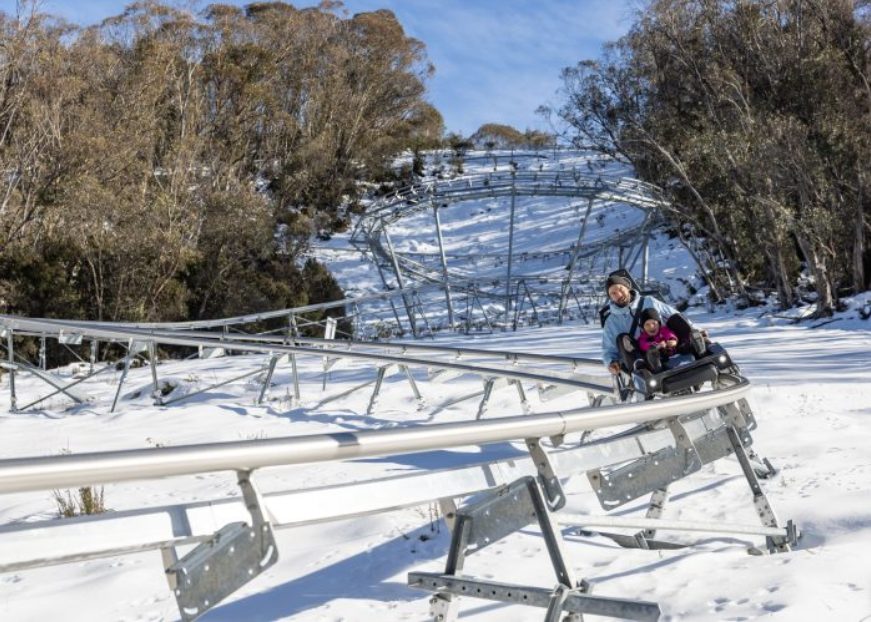
Beyond lessons, Thredbo has big family energy. The alpine gondola is a highlight, giving kids a bird’s-eye view of the resort without needing to clip into skis. The Alpine Coaster is another crowd-pleaser, offering a snowy, speedy ride through the mountain landscape.
Alpine Coaster at Thredbo Alpine Resort - Provided
Thredbo does not allow tobogganing or sledding in the resort, as it does not have a dedicated safe area for these activities. For families, that simply means planning around skiing, snowboarding, village fun, events and scenic alpine experiences instead.
Kid-friendly facilities include ski and snowboard lessons, beginner areas, rental outlets, village dining, family accommodation, the gondola, Alpine Coaster, and school holiday events.
More About Thredbo Alpine Resort
Alpine Adventures at Hotham, Victoria Best for: adventurous families, ski lessons, big mountain views and kids ready to level up.
Mount Hotham has a wonderfully dramatic feel, with its high alpine village, sweeping views and proper snow-country atmosphere. It is a strong choice for families with children who are keen to ski or snowboard, especially those ready to move beyond their very first snow day.
Hotham’s kids’ lesson programs include Mighty Mites for younger children and Kids Club for school-aged kids, with options for different abilities. These programs are designed to help children learn safely, make friends and build skills without parents having to do all the coaching from the sidelines.
Mighty Mites Ski Program Hotham Alpine Resort - Provided
For non-ski time, families can head to the designated toboggan slope for a sliding session or explore snow play areas when conditions allow. Hotham also has gear hire, food outlets, transport around the resort and a range of accommodation options, from lodges to apartments.
Hotham suits families who want snowy adventures, but also offers the practical pieces that make travelling with kids easier.
Kid-friendly facilities include children’s ski and snowboard lessons, tobogganing sessions, equipment hire, family accommodation, food outlets, resort transport, and beginner-friendly areas.
More About Mt Hotham
Final snowball For little kids and first-timers, Lake Mountain is wonderfully simple. For families wanting a full resort holiday with lessons and village life, Thredbo is a strong all-rounder. For adventurous kids ready to lean into the mountain, Hotham brings the big alpine magic.
Pack spare socks and never underestimate the motivational power of a good hot chocolate.
Reply to this article
We welcome your response for publication in our next issue, edition #80. Please briefly introduce the point you are responding to so your reply makes sense to someone who has not read the original article (max. 400 words).
Replies are subject to editorial approval.
2
Lifestyle & Culture
The First 5 Kilometres - How Running Changes More Than Your Fitness
The-first-5-km-Christine-Bernard - My own image (of me a long time ago).
“Did you run far?” someone asked me.
“No, I just ran a 5km.”
I smiled. When did that become just a 5km? I remember when I’d stop at every lamppost to rest or make deals with myself to get a break only once a song was finished. That’s the thing with running that you find out quite quickly, your body complains early. And don’t get me started on your mind. Running isn’t easy.
But guess, what, neither is life.
And when it comes to the parallels between running and life, it turns out that there are quite a few.
Learning to keep going when you want to stop
An internal alarm goes off when you’re running: Stop! Stop! Stop! It happens with every step you take, and the desire to quit becomes overwhelming. Why? Because running doesn’t feel good. At least, not while you’re running, and certainly not when you’re just starting out. But wanting to stop doesn’t mean you should stop. It means learning to push through even when you’re struggling, knowing the outcome will be worth it. As with life, there’s something powerful about knowing when you should quit and when you should keep going, because sometimes the ‘feeling good’ part happens later.
The power of small, manageable steps
The best way to conquer your first five kilometres is the same way you approach any goal you’re trying to achieve in life. You don’t focus on the end result but instead focus on what you can actually do in front of you. If you want to learn a new skill, you don’t sit there thinking about how you’re going to master it, you think about the next small, manageable step that gets you closer to it. Running works the same way. You don’t run 5km all at once in your head. You just get to the next lamp post, the next corner, the next song.
Discomfort isn’t a sign to quit
Discomfort is information, not instruction. Whether you’re starting a new job, having a difficult conversation, or running your first 5km, there will be moments where everything feels uncomfortable. But that feeling isn’t a signal to stop. Quite the opposite! It’s a signal that you’re in something unfamiliar. And it doesn’t last forever. It rises, it falls, and you soon learn how to move through it rather than away from it.
Progress is built in repetition
We all want to be good at things straight away. It’s human nature. But nobody starts that way. Not in running, not in work, not in hobbies. Skill isn’t something you arrive with; it’s something you build through repetition, often long before you feel confident in it. Eventually, you stop thinking about how to do it and simply do it. Whether it’s habits, resilience, or running, you get there by repeating the same small actions until they stop feeling new.
You become the person who doesn’t give up easily
At some point, something shifts without you really noticing it. The run that once felt impossible becomes something you just do. Not because it suddenly gets easy, but because you’ve proven to yourself enough times that you can keep going when it isn’t. And that quiet repetition starts to change how you see yourself. You stop being someone who is trying to run and become someone who runs. The same thing happens in life. You’re not defined by the moments you feel strong, but by the ones where you kept going when it would have been easier not to.
That’s it from me for today. I’m just heading out for a 5km.
Need some motivation? There are plenty races around Australia to help you conquer your first race.
We welcome your response for publication in our next issue, edition #80. Please briefly introduce the point you are responding to so your reply makes sense to someone who has not read the original article (max. 400 words).
Replies are subject to editorial approval.
3
AD
Advertisement
Sell Your Product or Service Here?
Show Your Product to More Customers
• Every ad is front page • Never more than 10 ads • Ad stays forever*
Rufus Delaney’s email hit my desk on the first day of autumn.
‘You’ve got the two investigators you were after,’ it read. ‘They both performed exceptionally well at their selection interviews and there’s been no appeal from any of their opposing candidates. Enzo told us he was looking forward to working closely with you again and Celina was pleased to escape the Sydney rat race.’
A week later, Enzo Rossi and Celina Harrington rocked into Darwin office where they encountered each other for the first time.
‘I’m told you’re an ex-copper,’ I heard Celina announce.
‘And I’m told you’re not,’ Enzo replied.
His response made me smile.
‘Come on in you two,’ I interrupted them - through the open doorway.
We arranged ourselves around my small round meeting table.
‘Congratulations on your appointments here,’ I began. ‘You know there’s a reason I wanted the two of you to join to me at the Top End?’
My question drew blank looks from them both.
‘You’ve each got specific capabilities I need to use. You, Enzo, have worked with me in counter-intelligence and you, Celina, have some of the best undercover skills I’ve had the pleasure to work with. Right now, both of your specialist skills are required to help me nail down an investigation I’m involved with in Darwin which only the three of us can know anything about.
I paused for effect. Enzo was to first to seek clarification.
‘Is that because we have a traitor in our midst?’
I nodded – ‘Maybe’.
He was already on the same page.
‘The investigation is codenamed ‘Catch-22’. It’s either a clever SVR deception operation or investigation of an SVR illegal network based in Darwin.
‘Why can’t at least the DDG be briefed on it?’ asked Enzo.
‘In time, he may have to be,’ I replied. ‘But not at this point.’
‘And whose decision is that?’ he persisted.
‘Mine. Catch-22 is not an ASIO operation; it’s an ASIO Darwin Office operation at this point. Every piece of information regarding it is locked away in this safe,’ I added, gesturing towards my two-drawer security container.
‘Are you suggesting that even Rufus Delaney could be the SVR traitor?’ Enzo asked.
‘Someone extremely well placed in our organisation could be,’ I replied. ‘So I’m not taking any chances.’
I paused for effect.
‘Are you both on board with this?’ I continued.
They both nodded – tentatively.
‘Who am I being targeted against undercover?’ asked Celina.
‘Family of four,’ I replied. ‘The father is called Bruce Cunningham – in his early sixties. He owns a fishing chartering business here. Along with his adult son, Kurt. Bruce spends most of the barramundi fishing season here in the top End taking wealthy interstate fishing tragics to prime Top End barra spots such as Mary’s River and the East Alligator River in the Northern Territory’s Kakadu National Park.’
‘And during the Top End wet season?’ she asked.
‘Weather permitting, Bruce and his 30-year-old son, Kurt, operate ocean fishing charters out of Darwin. Beryl, the wife and mother is in her late fifties. She works as an administrator at Darwin’s Christ Church Anglican Cathedral and their 28-year-old daughter Kylie – or rather Doctor Kylie - works as a lecturer in politics at Charles Darwin University.
‘What is the SVR telling you about this lot?’ asked Enzo.
‘According to a Russian Intelligence asset of untested reliability, all family members are deep sleeper Russian intelligence agents, operating as part of an SVR Directorate S illegal network here for probably half a decade. The two kids would have been young adults when the family underwent their illegals training in Mother Russia. For all we know, Kurt and Kylie may not belong biologically to Bruce and Beryl.
‘If the Russians do own them, they sure as hell gave them Aussie names,’ suggested Celina. ‘Where are they living?’
‘At 52 Rankin Street, Nightcliff – one of Darwin’s more ritzy beach suburbs.’
‘I know the area,’ she said. ‘Stayed there with a girlfriend one time.’
‘Does that girlfriend still live there?’ I asked.
‘I can find out,’ she replied.
‘Your main target with be the 30-year-old son, Celina’ I added. ‘Think you could get to like barramundi and ocean fishing?’
‘That’s pretty well what we do in our line of work, isn’t it boss,’ she smiled, ‘We fish!’
‘And my remit?’ asked Enzo.
‘You and your wife are Christians are you not?’ I asked.
‘Well … Catholics,’ he replied.
‘OK, so you’re both about to switch denominations to Anglican. Your new best friends, Bruce and Beryl Cunningham – you’ll find - are active parishioners at Darwin’s Anglican Cathedral. And, of course, there must be no mention of any of this to your wife, Enzo. Officially, Operation Catch-22 does not exist.’
--- o0o ---
My old Agency sparring partner, Cameron Miller, finally got away from Manila, flying into Darwin that first week of March and booking himself into the Darwin Hilton.
I met him after work that Friday. He had a bottle of Jim Beam ready to empty into a shot glass at the bar and the loudest Hawaiian shirt that not even an Hawaiian would be seen dead in.
‘You’re looking a bit weathered Mikey,’ was his opening greeting. ‘Looks like I’ve arrived here just in time.’
We clinked glasses and toasted ‘our mutual friend Ooshie’ who was still, Miller claimed, undergoing the odd Agency debrief.
I threw Lvov Dmitriyevich Zorkov’s name at him and he caught it with relish.
‘One of the SVR’s more tricky KR characters,’ Miller noted. ‘How in the hell have you crossed paths with him?’
‘Officially I haven’t,’ I replied. ‘And therein lies the problem.’
Miller shot me a sideways glance.
‘You haven’t gone rogue again, have you Mikey?’ he wondered.
‘In a sense – yes,’ I confessed. ‘Which is where I’m hoping you might come in.’
He refilled his glass and dropped some ice into it.
‘Not another bloody traitor in your ranks, is it?’
‘Not sure just yet, but can’t take any chances at this point. That’s why I need your help.’
‘Sort of thought you might,’ he smiled. ‘Can you suggest what might be in it for us?’
‘You mean apart from working out if we have an Alrich Ames[1] in our midst?’
‘Touche Mikey,’ he replied and managed a smile.
‘I’ll need to borrow some of your operational kit,’ I began. ‘But no one at my end nor yours can know who will be using it and why.’
‘Now that could be tricky,’ said Miller. ‘These days the auditors are pretty much on our hammer.’
‘I’ve made a list of what I want,’ I said, handing him an envelope. He tore it open and nodded slightly as he read from my note inside.
‘Can you give me a day or two?’ he asked. ‘I may need to relocate to this fair town if it’s as serious as you’re suggesting it could be.’
‘That would help. Do you have somewhere you can operate from in Darwin?’
‘I’ll need to explore my options,’ he replied. ‘But someone senior to me will need to know why I’m suddenly relocating from Manila to Darwin. Can you give me something to work with?’
Tell them you’re following one of Ooshie’s leads about a problem at the new Robertson Military Barracks just out of Darwin where a small US military advisory team, I believe, is currently operating.’
‘Our defence people won’t want the CIA interfering in its deployment here,’ he suggested.
‘You don’t have to be too specific about the problem Cameron,’ I urged. ‘You just need to set up a base there and have on hand that list of kit I’ve just handed you.’
Miller emptied his glass and leant forward in his bar stool.
‘Why can’t you use your own kit?’ he asked.
‘It’ll raise too many question that I’m not prepared to answer.’
‘And I won’t be in the same boat?’
I got into his head space.
’Cameron, I need that gear,’ I whispered. ‘And I need you working with me and my team on this.’
‘Who in your team?’
‘My two gun investigators. They are the only ones who know what this is about.’
‘Which is more than I do, Michael.’
‘Get yourself over here, with your gear, and I’ll brief you up fully.’
‘And it I don’t?’
‘Then this conversation never took place, my friend.’
[1] Aldrich Hazen ‘Rick’ Ames is a former CIA counterintelligence officer who was convicted of espionage on behalf of the Soviet Union and Russia in 1994.
We welcome your response for publication in our next issue, edition #80. Please briefly introduce the point you are responding to so your reply makes sense to someone who has not read the original article (max. 400 words).
Replies are subject to editorial approval.
5
AD
Advertisement
Have Your Articles Published
Every writer wants to have their work published and read. This is your chance to make the Internet a better. Join our team or writers at Hold The News and write engaging articles that entertain, inform or trigger feelings in the reader. Give it structure, give it meaning and make it worth reading.
We publish on almost any topic as long as it's well written, human written and truthful.
Readers Judge Articles sort by reads within each edition, simple and easy to see what gets read.
It's a bit ironic that while tech experts are busy building a highly advanced digital future, the human brain is quietly slipping into low gear.
Because smartphones and screens are increasingly handling the heavy thinking, memory and focus are starting to pay the price, paving the way for a modern phenomenon known as digital dementia.
The brain has its own built-in system for a software update, known as neuroplasticity. Put simply, it's the mind's natural ability to physically rewire and reshape itself based on what it does every day.
If a person doesn't actively challenge their mind, it quickly loses its sharp edge. Thankfully, top neuroscientists have mapped out exactly how everyday people can keep their biological networks firing with a few simple daily habits.
The proof that mental workouts actually change the brain
Dr Henry Mahncke, a prominent neuroscientist and the CEO of Posit Science, looked closely at a massive wave of cognitive research data in January 2026. His conclusion was definitive: targeted mental exercises work by physically changing the brain's structure so people can think faster, focus better, and remember more.
By committing to just a few minutes of daily mental activity, everyday workers are building what doctors call a cognitive reserve. This acts exactly like a savings account for the mind, protecting the brain against the standard fuzzy thinking that's usually part of getting older.
Nobody needs a university degree or hours of free time to see real results. Scientists recommend focusing on three basic types of activities each day to keep the mind in peak condition.
1. Speed training to lock in focus
This first exercise involves tracking multiple moving targets on a layout, or reacting quickly to symbols that change in the blink of an eye.
A famous long term medical study called the ACTIVE trial proved that this specific type of visual speed training cuts the long term risk of mental decline by up to 25 per cent.
It works because it triggers a vital brain chemical called acetylcholine, which is the exact fuel the mind uses to pay attention and notice small details. These exact exercises are available on the BrainHQ Official Website, which was built specifically by Dr Mahncke and his research team.
2. Double-duty tasks to boost processing power
This second habit forces the brain to handle a physical movement and a tough mental puzzle at the exact same time.
For example, while going for a brisk daily walk, a person can try counting backwards from 100 by subtracting 7 each time (100, 93, 86 and so on).
It sounds remarkably simple, but it forces completely different areas of the brain to share energy and resources under pressure. This directly strengthens executive function, which is the exact control centre the brain uses to plan, make decisions, and manage daily life.
3. Real-world learning and lively debates
Learning a brand new, complex skill like a musical instrument or a foreign language is fantastic for the mind, but it works even better when a social element's thrown into the mix.
Dr Gustavo Toledo, a cognitive health specialist at Houston Methodist hospital, published a clinical brief highlighting how critical human connection is for overall intelligence.
Dr Toledo warned that when people lose regular, deep interactions with others, they miss out on vital opportunities to challenge the brain with spontaneous conversation.
Having a friendly, passionate debate or learning a new skill alongside others forces the brain to constantly adapt and process unpredictable information.
The daily formula for a sharper mind
The ultimate secret to keeping intelligence alive doesn't come from a single magic phone app. The latest results from a major global project called the US POINTER clinical trial show that brain exercises work best when they're paired with a healthy lifestyle.
A balanced diet and regular aerobic exercise that pumps fresh oxygen straight to the head are essential.
By treating mental fitness as a basic lifestyle habit rather than a chore, everyday Aussies can easily protect their cognitive health, outsmart digital dementia and ensure their minds stay incredibly sharp for the long haul.
We welcome your response for publication in our next issue, edition #80. Please briefly introduce the point you are responding to so your reply makes sense to someone who has not read the original article (max. 400 words).
Replies are subject to editorial approval.
7
AD
Advertisement
Sell Your Product or Service Here?
Show Your Product to More Customers
• Every ad is front page • Never more than 10 ads • Ad stays forever*
The security intelligence world can sometimes be a little immature.
Who else would you invite along to your annual threat assessment address on the 24. June at your security intelligence Headquarters (where not even some former long-serving ASIO staff are permitted to enter) than PRC ambassador, Xiao Qian?
Offered pride of place in the second row on the day of ASIO Director-General Mike Burgess’s state-of-the-nation security intelligence address, one could imagine the top Chinese diplomat as squirming in his plush auditorium chair as a video, critical of his Country’s foreign interference in Australia, begins to play out.
Then, several days later, surprise surprise – the honoured guest turns around and makes headline news, delivering – in a media release - a scathing denial of Burgess’s claims of PRC foreign interference in this Country.
So, let’s question what might have been the subtext of this intriguing episode.
First off, why invite the PRC ambassador to an event like this in the first place? It’s not as if Xiao Qian’s legions of intelligence personnel wouldn’t have access to the ASIO video clip in the first place (courtesy, no doubt, of some form of alleged PRC foreign interference). So if ASIO knew that, then why go to the trouble of inviting the top diplomat to be part of the audience on the day?
It’s doubtful the Australian Government would have wanted any diplomatic pushback from this, given its propensity to co-exist cautiously with our more powerful neighbour. So why rock an already unsteady boat? Could it be that whoever choreographed this ASIO threat assessment event must have had a reason for inviting Xiao Qian along for the floor show. I’ll leave it up to the reader to join the dots.
Which brings us to the question of knowledge and expectation – knowledge of the PRC psyche for one and of the PRC’s strategy for two.
What I am saying here is that the likes of China’s leader, Xi Jinping, like other autocratic leaders such as V.V. Putin and D.J. Trump, to name but two, do not deal with criticism in any shape or form perfunctorily. Putin, for instance, has a tendency to assassinate anyone who dares to call him or his Country out (recent Sudo NYM articles to this effect refer), whereas Trump is more prone to character assassination while also, of course, denying culpability.
Xi Jinping, on the other hand, while prone to harassing and incarcerating his internal opponents, is more inclined to respond to criticism from another country in a ‘mia non culpa’ fashion, which normally takes the form of a propaganda-style rant that paints his Country as being accused unfairly even in the face of smoking gun evidence.
And this, essentially, is what we see with PRC Ambassador, Xiao Qian’s, media release after witnessing the recent ASIO video at the Organisation’s headquarters.
One can almost visualise the enraged top diplomat returning to his Embassy office and firing off an encrypted TOP SECRET missive that day to Beijing, recommending an “appropriate” response from his Chinese Communist Party colleagues.
Beijing, one imagines, didn’t waste much time. Several days later the media release response was all over the Australian news outlets, attacking not just ASIO but also Western intelligence agencies for their “’security alert’ slandering China for stealing intelligence”. IN fairly typical style, the ambassadorial letter criticises “certain Australian and media organisations” who have “lately… repeated fabricated and hyped falsehoods and fallacies regarding the security threat posed by China.” It went on to claim that “these allegations have never been substantiated, and not a single perpetrator has been held accountable, and they have deeply wounded the feelings of the people of both China and Australia and undermined the atmosphere of friendly cooperation between the two sides.” (Ed comment: So there ARE two distinct sides at play here then?)
None of us needs even our “Five Eyes” network to produce evidence to the contrary when it comes to PRC foreign interference in the West, including Australia. In a sense, it’s standard fare – and the PRC knows it. But maybe this is not really the point of all this intelligence-cum-political point-scoring kindergarten story. The real point, for mine, with this particular matter, is that someone – presumably in Canberra – is stirring up a bilateral boiling pot that doesn’t need stirring up, because they can. Yet those running Mainland China have long memories and their game-playing is a bit like an AI brief – instant and predictable. So why bother? Why the indulgence?
We welcome your response for publication in our next issue, edition #80. Please briefly introduce the point you are responding to so your reply makes sense to someone who has not read the original article (max. 400 words).
Replies are subject to editorial approval.
9
Opinion
Financial Literacy Belongs in Every Australian Middle School
Most Australians can remember learning things at school that they have never used again. Yet many adults wish someone had taught them how interest works, why credit card debt spirals so quickly, what a superannuation account actually does, or how to build a simple household budget.
It is a curious contradiction. We spend years preparing young people for examinations, but far less time preparing them for the financial realities that greet them almost immediately after leaving school. In a world shaped by digital banking, rising living costs, mortgages, taxation, and increasingly complex financial choices, that gap is becoming harder to ignore.
Financial literacy deserves a permanent place in Australia's middle school curriculum—not as an optional enrichment activity, but as a core life skill. This is not about turning thirteen-year-olds into investors or accountants. It is about teaching practical knowledge that every citizen will eventually need: how to manage money, understand debt, save responsibly, interpret a pay-slip, appreciate the power of compound interest, and make informed financial decisions. These are not specialist abilities; they are fundamental tools for adulthood.
NAPLAN The challenge, however, may lie less with educators and more with the way success in education is measured. The National Assessment Program – Literacy and Numeracy (NAPLAN) rightly places significant emphasis on reading, writing, and mathematics. Schools naturally strive to perform well because those outcomes are visible, measurable, and closely watched by parents and communities.
What gets measured gets done Yet every measurement system creates incentives. When schools are evaluated primarily through literacy and numeracy outcomes, other valuable disciplines can gradually become secondary priorities. Financial management, design and technology, practical home skills, and similar subjects may unintentionally be viewed as burdens on an already crowded timetable rather than essential components of a well-rounded education.
This should not be interpreted as criticism of teachers or principals. Most school leaders work tirelessly within the framework provided to them, balancing limited time and resources against growing expectations. They respond, quite reasonably, to the standards by which they are assessed. The broader question is whether those standards adequately reflect the skills young Australians need for modern life.
Today's students encounter financial decisions much earlier than previous generations. Before many receive their first full-time salary, they have already been exposed to buy-now-pay-later schemes, digital payment systems, online investment advice, subscription economies, and targeted advertising designed to influence spending habits. Navigating that environment requires more than academic knowledge; it requires financial understanding.
The consequences of financial illiteracy are rarely immediate, but they can persist for decades. Poor decisions regarding debt, savings, and long-term planning often create pressures that extend far beyond individual households. Conversely, simple habits learned early—budgeting, saving consistently, understanding interest, and distinguishing needs from wants—can provide lasting stability and confidence.
Importantly, advocating for financial literacy does not mean diminishing the value of traditional subjects. Literacy and numeracy remain the foundation of any strong education system. Rather, the argument is that preparing students for adulthood requires a broader vision of what education should accomplish. A young person should be able to analyse literature and understand a mortgage; solve equations and read a pay-slip; pursue higher education while also possessing the practical skills necessary for independent living.
Education has always been about more than achieving high test scores. At its best, it equips individuals to navigate the complexities of life with confidence, judgment, and resilience. Financial literacy belongs within that mission, and introducing it meaningfully during the middle school years would represent an investment not merely in economic knowledge, but in the long-term wellbeing of future generations.
We welcome your response for publication in our next issue, edition #80. Please briefly introduce the point you are responding to so your reply makes sense to someone who has not read the original article (max. 400 words).
Replies are subject to editorial approval.
10
Humour & Satire
The Great Victorian Road Robbery
The Great Victorian Road Robbery - Created by Gwynn Earl for HOLD THE NEWS
And no, I’m not talking about the government quietly paying out Mick Gatto through its CMFEU‑flavoured Big Build entanglements on the North East Link. That’s a different kind of toll.
This time, the stick‑up was carried out by Linkt, whose toll‑classification system has spent the past decade quietly relieving motorists of their loose change like a digital bushranger with a spreadsheet instead of a sawn‑off.
According to Transurban, around 1.4 million trips were affected by a “classification error” , a phrase that basically means “the algorithm has been holding up drivers for ten years and nobody noticed.”
Centuries of Highway Robbery.
In the golden age of Victorian bushrangers, the hold‑up was simple:
a masked man stepped onto the road, pointed a pistol, and demanded your purse.
In 2026, the modern version is far more efficient.
No mask. No pistol.
Just a server rack in Docklands whispering:
“Your vehicle has been updated to a higher toll class.” Is this the future?
Linkt’s digital con artists didn’t gallop across the asphalt on a horse, they simply misread the size of 90,000 vehicles and charged accordingly, AI style. A hatchback became a bus. A ute became a large freight. A scooter, for all we know, was billed as a Qantas air jet.
The perfect crime.
Echoes of a massive underworld scam
For ten years, the gang executed the perfect robbery.
A slow steady skim across CityLink and the West Gate Tunnel.
Again, I hate to bring up the shady revelations of recent months concerning the Victorian State Government, the CMFEU and the Big Build. But I don’t hate to bring it up.
Comedian Dave Hughes, recently joined the ranks of the disenfranchised calling for the State government leader to stand down over investigations of corruption, as new information reveals more evidence Gatto was paid out large figures of government spending.
Don't worry, the Loot Is Coming Back (Adjusted for Inflation)
Transurban has promised full refunds, plus an additional payment to recognise the “significant inconvenience” of being robbed for a decade without realising it.
Drivers who were undercharged will not be asked to repay the difference, a gesture so generous it feels like a last minute afterthought.
“Customers don’t need to do anything,” the company says.
Which is fitting, because customers didn’t do anything to get robbed in the first place.
Empty your pockets! A Victorian tradition!
Victorians have endured many forms of highway pain:
congestion, roadworks, tolls, tunnel closures, and the occasional political scandal lurking behind a bulldozer.
But this, the Great Victorian Road Robbery, may be the most elegant of all.
Victorians, like a pious parishioner know exactly when to pull their wallets out, and hand over the wad of bills to the machete wielding assailant, an AI mistake, or whichever other corrupt company/government body wants their illegal cut today.
Would you really have it any other way?
Reply to this article
We welcome your response for publication in our next issue, edition #80. Please briefly introduce the point you are responding to so your reply makes sense to someone who has not read the original article (max. 400 words).
Replies are subject to editorial approval.
12
News
The Right to Disconnect: Why Protecting Downtime is Actually Good for Business
Constantly There For most Australian urban professionals, the concept of a standard nine-to-five is ancient history. Hybrid work was supposed to give us our time back, but instead, it just brought the office into our living rooms. We’ve all found ourselves replying to a "quick" message during dinner or checking emails right before bed, convincing ourselves that staying constantly plugged in is just what it takes to keep up.
But there is a sharp difference between being productive and just being available. The cost of this permanent connection is catching up with teams across the country, showing up as quiet exhaustion and declining focus.
The Productivity Paradox
With Safe Work Australia putting a brighter spotlight on psychosocial risks, and the legal ‘Right to Disconnect’ coming into play, workplace well-being is no longer just a human resources talking point. It is now a structural priority. Yet, there is still a lingering worry among many managers: will drawing these hard boundaries hurt our output?
In reality, it does the exact opposite. True well-being in a high-performing team isn't about office perks or mandatory wellness webinars. It is about how we manage our daily workflows. When people are expected to be reachable 24/7, their mental bandwidth shrinks. Decision fatigue sets in, and the creative problem-solving needed to handle complex projects simply disappears.
Simple Habits
Protecting downtime isn’t about doing less; it’s about making sure the work we do do is of a higher quality. For leaders and teams navigating this shift, making it work practically comes down to a few straightforward habits:
Set Clear Communication Rules: Have an honest chat with your team about what truly constitutes an after-hours emergency. Most things can comfortably wait until the next morning.
Watch the Shadow Culture: If managers are firing off emails at 10 PM, the team feels an unwritten pressure to reply. A simple fix is using the 'delay delivery' button so messages land during work hours.
Judge Outcomes, Not Clock-In Times: Shift the focus away from who stays green on Teams or Slack the longest, and look purely at the quality of the results delivered.
Switching Off
As our work culture continues to evolve, the businesses that succeed won’t be the ones that run their people into the ground. It will be the ones that treat sustainable energy as a genuine business asset. Giving people the space to switch off isn’t a restriction on management—it is just smart leadership.
Reply to this article
We welcome your response for publication in our next issue, edition #80. Please briefly introduce the point you are responding to so your reply makes sense to someone who has not read the original article (max. 400 words).
Media thrives on sensationalism. Tabloid newspaper headlines sold papers long before the internet existed, but the mainsteam media was always there to provide measured reporting.
As news gradually moved online, advertising-driven algorithms designed to capture people's attention became commonplace. Attention is everything, a site may have the best information in the world, but without readers it's worthless.
The secret lies in the algorithm, a simple piece of software that categorises content and matches it to what each individual person is likely to engage with.
What's the problem, you might ask?.
"If I like cooking shows, it makes sense that I see more cooking shows"
Exactly, it does make sense.
But the internet is not there simply to show you cooking shows, it's there to show you what comes in between.
The stuff you cannot un-see!
Yes, advertisements for saucepans and kitchen utensils naturally feature, but alongside comes sponsored content, designed to influence you.
Little by little marketing agencies slip persuasive messages into your daily stream of entertainment, adding a little extra flavour to your recipe.
Before long, your social media feed has morphed from gourmet dinner recipes into a parade of provocative political content telling you that politics is broken.
Perhaps the people sponsoring these messages have their own agendas.
Most likely politics isn't broken, and AI isn't taking over the world, the biggest enemy may be a few lines of code that's running amok, making a few people wealthy and the rest miserable.
Runaway events are not uncommon in nature. Bushfires, floods and avalanches are events that start small and quickly get out of control. We generally associate such events with danger.
Advertising-driven algorithms may present an equally dangerous threat, but at present we don't have a fire brigade or response team capable of containing it.
A question worth asking is this: Will social media burn itself out like a bush fire?
If it does, how much damage will be left behind?
Governments around the world are debating how to respond. Australia has already introduced restrictions on social media access for children, but is that addressing the real problem?
Perhaps nature can teach us something.
Often the old growth has to burn itself to the ground for fresh new plants to emerge from the ashes.
Don't give up your passion for cooking, just be careful and watch what slips into the pot.
We welcome your response for publication in our next issue, edition #80. Please briefly introduce the point you are responding to so your reply makes sense to someone who has not read the original article (max. 400 words).
Replies are subject to editorial approval.
15
Science & Tech
If you love wild birds PLEASE be careful what you feed them
Throwing a few scraps to the birds in your backyard or at the local park feels like a harmless, friendly way to connect with nature. Most people do it with the absolute best of intentions. But the reality of feeding wild birds in Australia is a bit dark.
Our native birds have incredibly specific, highly evolved diets. When we replace their natural foraging with processed human foods, we aren't giving them a treat, we're often giving them a death sentence.
Here's what actually happens when well-meaning people feed the local wildlife.
Feed kookaburras meat and you can weaken their bones
It seems logical to toss a bit of raw beef mince to a kookaburra. They're carnivores, right?
The problem is that in the wild, a kookaburra eats the whole animal: mice, lizards, small snakes and large insects. That means they swallow the fur, feathers and crucially, the bones.
When you feed a kookaburra pure mince meat, you're giving them a meal that's incredibly high in phosphorus but completely devoid of calcium.
To process that phosphorus, the bird's body is forced to leach calcium straight out of its own skeleton.
Over time, this leads to a horrific condition called metabolic bone disease. Their bones become as soft as sponge, their beaks warp and snap, and their legs shatter under their own weight.
To make matters worse, raw mince is sticky and easily gets packed into the roof of their mouth, rotting in their throat and causing fatal bacterial infections.
Feed ducks bread and you can deform their wings
Heading down to the local duck pond with a loaf of stale white bread is a classic family weekend activity, but it's one of the worst things you can do for waterfowl.
Bread is the ultimate junk food for a duck. It fills their stomach with empty, highly processed carbohydrates, meaning they feel full and can stop foraging for the nutrient-rich aquatic plants, seeds and insects they actually need.
In young ducklings, this high-calorie, low-nutrient diet triggers a rapid, abnormal growth spurt that can contribute to a permanent deformity called Angel Wing. The wrist joints in the wing develop incorrectly, causing the primary flight feathers to twist outwards instead of lying flat against the body.
Once a duck has Angel Wing, it can never fly, leaving it completely helpless against predators, cars and winter weather.
On top of that, uneaten bread rots in the water, causing toxic blue-green algae blooms that can wipe out an entire pond ecosystem.
Feed magpies mince and their babies can break in the nest
Just like kookaburras, Australian magpies are clever insectivores that thrive on a diet of beetles, worms and small lizards. Because they're so bold and friendly, they're the number one targets for backyard mince-feeders.
When adult magpies find an easy supply of raw mince or sausage meat, they sometimes stop hunting for high-protein bugs and take the easy option of mince back to their nest.
Nestlings raised on human mince meat suffer from severe calcium deficiencies during their most critical growth phase.
Their bones grow so weak and brittle that they snap under the weight of their own growing bodies while they're still sitting in the nest.
When these babies try to take their first flight, their wings and legs instantly give way, leaving them permanently crippled on the ground.
Feed cockatoos sunflower seeds and you can slowly blind them
Sulphur-crested cockatoos and galahs love sunflower seeds, and it's incredibly satisfying to have a flock of these beautiful parrots eating right out of your hand.
But buying a cheap bag of generic birdseed and dumping it on a feeding platform creates a massive biological hazard.
Pure sunflower seeds are packed with oil and fat but lack essential vitamins. An all-seed diet causes fatty liver disease and severe nutritional blindness in parrots.
Even worse, setting up a permanent feeding station acts like a super-spreader event for Psittacine Beak and Feather Disease (PBFD). This is a highly contagious, incurable virus that causes a bird's feathers to fall out and its beak to grow long, brittle and terribly deformed until they can no longer eat.
When dozens of cockatoos crowd onto the same human feeding tray every day, they swap fluids and dander (body dust), passing the deadly virus around the entire local population.
Feed rainbow lorikeets honey water and you can paralyse their legs
Rainbow lorikeets are nectar feeders, equipped with specialised, brush-tipped tongues designed to lick pollen and nectar out of native blossoms like banksias and grevilleas.
An incredibly common backyard habit is putting out dishes of honey, sugar water or bread soaked in milk to attract them. But the digestive system of a lorikeet simply can't cope with refined sugar or dairy.
This artificial diet can cause severe nutritional deficiencies and significantly weaken the birds' health. Furthermore, homemade sugar and honey mixtures ferment within hours under the Australian sun, turning communal feeding dishes into a breeding ground for deadly Clostridia bacteria.
These contaminated feeding stations have been linked to outbreaks of necrotising enteritis, a serious disease that damages the birds' stomachs and digestive systems, often with fatal consequences.
You're better off planting a native garden filled with flowering shrubs like grevilleas, banksias and bottlebrushes. This naturally produces the complex nectar and pollen they need to survive.
In general
If you absolutely must put out food, skip the home mixes entirely. Instead, offer live mealworms or specialised insectivore mixes for meat-eaters like magpies, and use commercially balanced, vet-approved nectar formulas for the lorikeets. And always scrub the bird dishes clean daily. Let's keep our Aussie birdlife thriving.
We welcome your response for publication in our next issue, edition #80. Please briefly introduce the point you are responding to so your reply makes sense to someone who has not read the original article (max. 400 words).
Replies are subject to editorial approval.
16
Politics
Parliament Tackles Housing Shortage, Gambling Reform, and NDIS Sustainability in Busy Week
Federal Parliament sitting week: Tuesday 30 June, Wednesday 1 July, Thursday 2 July
Bills Introduced Commonwealth land converted to affordable housing Commonwealth Land (Affordable Housing) Bill 2026 This bill allows the federal government to use its own land to build affordable homes for Australians struggling with housing costs. It creates a new framework for converting Commonwealth-owned properties into affordable housing developments. The bill affects low-income renters and first-time buyers in areas with severe housing shortages.
Tighter rules on unfair retail and online trading practices Competition and Consumer Amendment (Unfair Trading Practices) Bill 2026 This bill gives the Australian Competition and Consumer Commission stronger powers to stop retailers and online sellers from using misleading tactics or exploitative practices. It introduces new penalties and court orders to crack down on unfair conduct in the marketplace. It affects consumers shopping in stores and online, as well as businesses selling goods and services.
Stricter controls on online gambling and betting Interactive Gambling Amendment (Gambling Reform) Bill 2026 This bill tightens rules around online poker machines and sports betting to reduce problem gambling. It introduces new restrictions on how gambling services can advertise and operate. It affects online gamblers, betting companies, and people at risk of gambling harm.
New national system to help problem gamblers self-exclude National Self-exclusion Register (Cost Recovery Levy) Amendment Bill 2026 This bill establishes a register where problem gamblers can sign themselves up to be blocked from all gambling services nationwide. It funds the register through a small levy on gambling operators. It affects problem gamblers seeking help and gambling service providers.
New university funding tied to student outcomes Universities Accord (Opening the Doors of Opportunity) Bill 2026 This bill reforms how the federal government funds universities, focusing on access and completion rather than enrolment numbers. It introduces new funding mechanisms and accountability measures. It affects university students, institutions, and taxpayers funding higher education.
Tax crackdown on rogue financial advisers Treasury Laws Amendment (Strengthening Accountability for Tax Adviser Misconduct and Other Measures) Bill 2026 This bill toughens penalties for accountants and tax advisers who mislead clients or facilitate tax fraud. It creates stronger oversight and disciplinary powers. It affects tax professionals, their clients, and the integrity of the tax system.
Medicine shortage protections Therapeutic Goods Amendment (Medicines Shortages and Other Measures) Bill 2026 This bill gives the federal regulator more power to manage and prevent shortages of essential medicines in Australia. It introduces new reporting requirements and intervention tools. It affects patients relying on prescription medicines and pharmaceutical companies.
Health insurance incentive payments update Health Insurance Amendment (Incentive Payments and Other Measures) Bill 2026 This bill adjusts how the government pays incentives to private health insurers and providers to improve services and participation. It modernises payment mechanisms and oversight. It affects private health insurance holders and providers.
Aged care assessments return to human decision-making Aged Care Amendment (Restoring Human Override for Aged Care Needs Assessments) Bill 2026 This bill ensures that aged care needs assessments can be reviewed by human assessors, rather than relying solely on automated systems. It introduces a override mechanism for computer-generated decisions. It affects elderly Australians applying for aged care services and care providers.
Coal industry long service leave overhaul Coal Mining Industry (Long Service Leave) Legislation Amendment Bill 2026 This bill updates long service leave entitlements for coal workers as the industry transitions. It modernises provisions to reflect changing work patterns. It affects coal miners and coal mining companies.
Regulatory red tape reduction across government Regulatory Reform Omnibus Bill 2026 This bill removes or simplifies outdated rules across multiple areas of federal law. It consolidates various regulatory changes into a single package. It affects businesses and individuals dealing with federal regulations.
Pharmaceutical benefits prescribing updates Health Legislation Amendment (Prescribing of Pharmaceutical Benefits) Bill 2025 This bill updates rules around which doctors can prescribe certain subsidised medicines under Medicare. It expands or restricts prescribing rights for specific drugs. It affects patients, doctors, and pharmaceutical companies.
---
Bills Passed NDIS made sustainable for the future National Disability Insurance Scheme Amendment (Securing the NDIS for Future Generations) Bill 2026 This bill implements reforms to stabilise the National Disability Insurance Scheme's finances and ensure it remains viable long-term. It introduces controls on spending growth and eligibility management. It affects people with disability receiving NDIS support and taxpayers funding the scheme.
Defence legislation compliance framework finalised Defence Legislation Amendment (RCDVS Implementation and Related Measures No. 2) Bill 2026 This bill implements final changes to military law and related defence measures. It updates defence accountability and administration procedures. It affects Defence Department operations and members of the Australian Defence Force.
Routine statute law updates enacted Statute Update Bill 2026 This bill tidies up outdated and redundant laws across the statute book. It removes anachronistic language and repeals expired provisions. It affects the clarity and coherence of Australian law generally.
---
Worth Watching Debate continues this week on university funding reforms, NDIS sustainability measures, and new competition laws targeting unfair retail practices. The affordable housing bill will need Senate approval before becoming law. Gambling reform legislation is progressing through Parliament with cross-party support but faces industry scrutiny.
Weekly Federal Parliament Briefing — sourced from Hansard via OpenAustralia API. Parliamentary material Copyright Commonwealth of Australia. This is a summary only.
Reply to this article
We welcome your response for publication in our next issue, edition #80. Please briefly introduce the point you are responding to so your reply makes sense to someone who has not read the original article (max. 400 words).
Gas exporters set to bank $27 billion windfall Australia's largest liquefied natural gas exporters, including Woodside Energy, Santos, Shell and Chevron, are expected to receive an estimated $27 billion revenue boost as conflict in the Middle East continues to disrupt global gas supplies. The higher prices have renewed calls from independent senator David Pocock for a windfall tax, arguing Australians should receive a greater return from the country's natural gas resources. Critics say the existing tax system captures relatively little of these extraordinary profits, while the industry argues additional taxes would discourage future investment. The debate is expected to intensify as export revenues climb. Reuters
Hot Day - magnific.com
Sydney records hottest June in 167 years The Bureau of Meteorology says Sydney recorded its warmest June since observations began in 1859, with a mean temperature of 16.1°C. The previous June record of 15.7°C was set in 1991. According to the Bureau, the unusually warm conditions are consistent with the long-term warming trend observed across Australia and globally. While individual weather events can occur naturally, climate scientists say rising global temperatures have increased the likelihood of record-breaking heat. BOM Sydney
Free Range Chicks - magnific.com
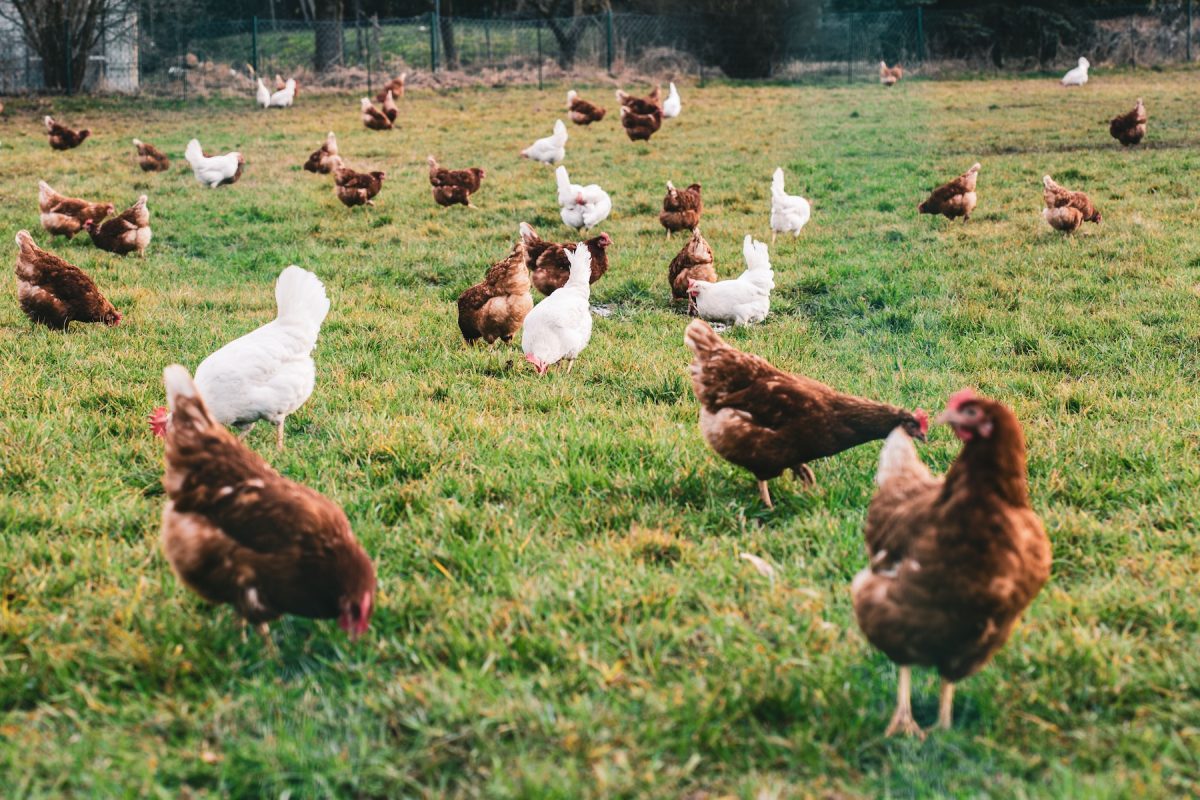
Bird flu prompts indoor housing advice for producers State and territory governments have issued guidance encouraging free-range egg producers to keep their birds indoors where practical as testing continues across Australia for avian influenza. The advisory reflects growing concerns about the virus spreading through poultry operations, particularly among producers using outdoor systems where wild birds can transmit infection. Free-range farming operations face particular vulnerability given their exposure to wild bird populations, and officials have begun conducting surveillance testing to monitor disease prevalence.
Christian Brothers seek reprieve from abuse payouts
The Catholic order known as Christian Brothers has asked a court for a pause in settling abuse victim compensation claims, telling the judge that it is running out of money to honour millions of dollars in outstanding payouts. The request highlights the financial strain placed on the religious institution by decades of accumulated civil claims related to child abuse at schools and facilities across Australia. The order's financial difficulties come as courts continue to process cases from victims who survived abuse in the institution's care.
ACCC sues Amazon over Prime Video ads
The ACCC has taken Amazon to court, alleging the company used unfair contract terms to introduce advertising into Prime Video after customers had already paid for annual subscriptions. Consumers who wanted to continue watching without advertisements were required to pay an extra $2.99 per month. The regulator argues Amazon's contracts unfairly allowed it to alter the service after payment, while Amazon says it is reviewing the case.
ACCC vs Amazon
Federal government doubles penalties for social media platforms
The government has announced it will double maximum penalties for digital platforms that breach the social media age restriction law. Children under 16 have been prohibited from accessing ten major social media platforms since December 2025, and the strengthened penalty regime aims to improve compliance among technology companies. The increased financial consequences reflect the government's determination to enforce the age restriction policy.
Minns warns Labor faces electoral mountain in NSW
New South Wales Premier Chris Minns told the state Labor conference that the party must "climb Everest" to retain power as One Nation's support surges in opinion polls. The premier acknowledged the rising electoral threat posed by Pauline Hanson's party, which has gained traction among regional and working-class voters. Minns' candid assessment reflects internal Labor anxiety about the party's ability to defend its position in the 2027 state election.
Melbourne teenager dies in stabbing outside hospital
A third teenager has been charged with murder following the death of fifteen-year-old Darweish Mohamed, who was found critically wounded outside Craigieburn community hospital in Melbourne's northern suburbs on Wednesday evening. The boy died from his stab wounds, and investigators charge that multiple teenage offenders were involved in the fatal attack. The case has prompted renewed concern about youth violence in Melbourne's outer suburbs.
Australian faces murder charge in Thailand over teen's death
An Australian man has been charged with murder in Thailand following the discovery of the body of seventeen-year-old Tunchanok Donhomla, which was found inside a suitcase near railway tracks in the early hours of Saturday.
Thai police allege the teenager was killed before her body was concealed in the suitcase and abandoned. Investigators say evidence gathered at the scene led them to the Australian suspect, who has since been charged with murder.
Authorities have not publicly released further details about the alleged motive, and the investigation remains ongoing. Under Thailand's legal system, the allegations will now proceed through the courts, where the accused is entitled to defend the charges.
The case has attracted significant attention in Thailand due to the violent nature of the alleged crime. Australian consular officials are expected to provide assistance to the accused in accordance with standard consular practice while the judicial process continues.
---
AI-generated weekly digest — stories relevant to Australia, 27 June 2026 – 4 July 2026. Review and edit before publishing.
Sources: ABC News Australia, Guardian Australia, BBC News Australia, Sydney Morning Herald
Reply to this article
We welcome your response for publication in our next issue, edition #80. Please briefly introduce the point you are responding to so your reply makes sense to someone who has not read the original article (max. 400 words).






_6a27bbbb8d2a81.23180283.jpg)


_6a2696f9cd90f8.89650913.jpg)