The dazzling art installations on the Light Walk Like so many New South Welshmen, I believe our state capital shines brightest during Vivid. The dazzling art installations on the Light Walk elevate the already stunning waterfront trail from Darling Harbour to Circular Quay. While the NSW government is tight-lipped about its investment, Vivid no doubt claims a substantial share of the state’s $324.5 million events budget. That’s a significant spend on public art that boosts the economy for a few short weeks. We see a similar pattern around the country with other government-supported events like Spark Ipswich Arts Festival, Enlighten Canberra, and Rising in Melbourne.
Australian governments have already shown they’re willing to fund short-term art projects. But why aren’t they thinking bigger? Money spent on permanent public art can be more than just an expense. It could be an investment in our nation.
International cities have set the standard I’m not talking about existing structures like the Big Pineapple and Big Merino. People might visit them when they’re passing through, but they’re hardly the drawcards great art would be.
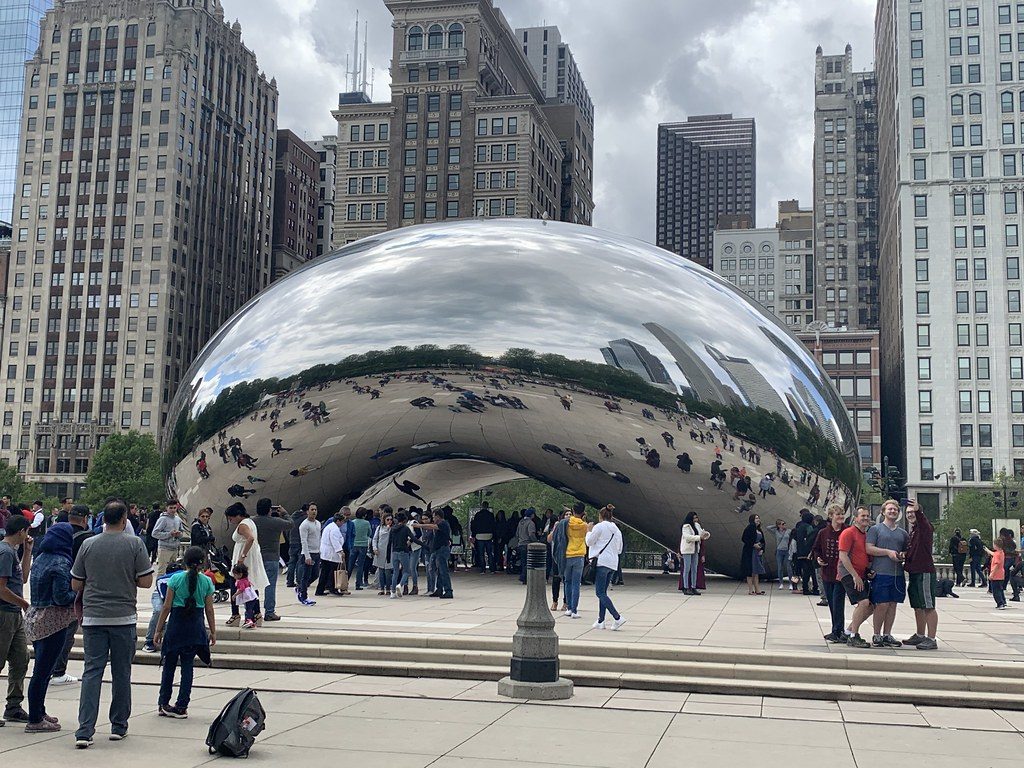
Global hotspots have provided the blueprint for what an investment in great art could be. Consider The Little Mermaid in Copenhagen, Angry Boy in Oslo, Cloud Gate in Chicago, or Spiral Jetty in Utah. Travellers from around the world queue to snap photos with these works that have become national landmarks.
cloud gate - Flickr - credit Steven Kelly Photography - https://www.flickr.com/photos/skellysf/48829060448/sizes/l/
What makes these pieces of public art such icons? They do much more than simply decorate their cities. Leading public artworks might:
List:
Reflect the area’s heritage: The Little Mermaid pays tribute to the character’s creator and one of Denmark’s favourite sons, Hans Christian Andersen.
Be relatable: Many people understand the rage of Angry Boy, whether they’ve felt it themselves or been a parent to a tantrum-prone tot.
Be interactive: Cloud Gate’s mirrored surface encourages viewers to come close to see reflections of themselves and the Chicago skyline.
Provoke deep thought: The Spiral Jetty is always changing with the water levels of the Great Salt Lake, so it encourages viewers to think about life, death, and rebirth.
The enduring popularity of these treasured artworks has helped them become part of their nation’s identities. The right permanent public art could be just as impactful in Australia, boosting tourism, the wider economy, and cultural pride.
Support for local artists It’s only natural that governments investing in permanent public art would also invest in the nation’s artists. These creatives truly understand our country and could create works that reflect our identity. Their artistic vision could help them develop pieces that become beloved icons for generations. Investing in our local artists would help these creatives focus on creating the kind of quality, enduring pieces our country deserves.
little mermaid - Flickr - credit News Oresund - https://www.flickr.com/photos/newsoresund/9566865405/sizes/l/
Making art more accessible Art typically lives behind gallery doors, which can be a real barrier for many Australians. Roughly two-thirds of us didn’t visit a gallery last year. Many stay away because they aren’t sure they’d enjoy it or they worry about what to expect. Permanent public works would remove that barrier by placing art in communities. This would help more people enjoy the benefits of viewing art, which range from simply feeling happier to reducing stress, while bolstering local pride. With so many benefits, spending money on public art could be a real investment in Aussie communities and their members.
Arts festivals like Vivid have an important place in our culture, but it’s short-sighted to focus on these events with temporary art installations. Instead, our governments should consider the legacy of their arts funding and invest in great public art that could benefit our country now and in the future.
Reply to this article
We welcome your response for publication in our next issue, edition #83. Please briefly introduce the point you are responding to so your reply makes sense to someone who has not read the original article (max. 400 words).
Replies are subject to editorial approval.
2
Lifestyle & Culture
First Aussie Ski Holiday? What to Know Before You Go
Snow Time Heading to the snow for the first time is exciting, but Australian alpine adventures come with their own little quirks. One minute you’re cruising through charming country towns with a coffee, the next you’re wondering what on earth 'wheel chains must be carried' actually means.
Before you point the car towards the mountains, here are a few first-timer tips to help make your snow holiday smoother, warmer and less chaotic.
Dress Appropriately This doesn't mean dress warmly, although you should. Layers are your friend, but jeans and snow? Not friends. Denim gets wet, stays wet and turns icy faster than your enthusiasm on a chairlift in sideways sleet. Instead, wear proper waterproof snow pants over thermal leggings or base layers. The same goes for jackets. A regular puffer might be warm, but if it isn’t waterproof, you could end up damp and miserable. Aim for a waterproof outer layer, warm mid-layer and thermal base layer. Think cosy onion.
Hire the Gear Before You Buy For your first trip, hiring snow gear makes far more sense than buying everything. Skis, snowboards, boots, helmets, poles, jackets and pants can usually be hired in surrounding alpine towns or at the ski resorts.
If you’re travelling during Victorian or NSW school holidays, book ahead. Sizes disappear quickly, especially for kids, and nobody wants to start their holiday with a boot-hire treasure hunt.
Book the Lesson, Thank Yourself Later Even if you’re sporty, skiing and snowboarding have their own rules, rhythm and spectacular ways of making you look like a startled penguin. A beginner lesson will teach you how to stop, turn, use the lifts and fall safely.
Lessons are especially helpful for kids, who often pick things up faster when someone other than a parent is giving instructions. Snow schools can also turn the first day from family meltdown into a mini mountain triumph.
Check the Chains Situation If you’re driving to the Australian snowfields, check whether wheel chains need to be carried or fitted. Rules vary depending on the resort, weather and vehicle type, and conditions can change quickly.
Chains can usually be hired in towns on the way up the mountain. Ask staff to show you how to fit them before you go. Trying to decode chain instructions on the roadside in freezing weather is a character-building activity nobody needs.
Pack Sunscreen, Even When It’s Freezing Australian snow can be incredibly bright. The sun reflects off the snow, so sunscreen, sunglasses or goggles, and a lip balm with SPF are essentials, not extras. Wind, cold and sun can leave faces feeling crispy by the end of the day.
Don’t Overpack the Itinerary Your first snow holiday doesn’t need to be all skiing, all day. Leave room for snow play, tobogganing, scenic chairlift rides, hot chocolates, glasses of wine by the fireside, village wandering and early nights. Snow days are tiring, especially for kids.
Bring Snacks and Patience If you're travelling with children, this one is especially important. Snow holidays involve layers, sometimes long queues, gloves that vanish, boots that feel strange and children who suddenly need the toilet after everything is zipped up. Pack snacks, water, spare socks and a sense of humour.
Reply to this article
We welcome your response for publication in our next issue, edition #83. Please briefly introduce the point you are responding to so your reply makes sense to someone who has not read the original article (max. 400 words).
Replies are subject to editorial approval.
3
AD
Advertisement
Sell Your Product or Service Here?
Show Your Product to More Customers
• Every ad is front page • Never more than 10 ads • Ad stays forever*
From singing fruit salad at full volume to helping rescue Mayor Goodway, Australia’s theatres and arenas are filling up with some very familiar faces in 2026.
The Wiggles, Emma Memma, PAW Patrol and more are among the big names currently taking their shows on the road. There are also cackling witches on broomsticks and death-defying circus acts in the mix, giving families plenty of reasons to swap the lounge room screen for a live stage.
Here are some of the biggest family shows across the country with tickets on sale now.
The Wiggles: Sparkle! BIG Show
Wiggles_Sparkle - Provided
The Wiggles are turning up the glitter dial for what they are calling Australia’s biggest family entertainment event of 2026.
The Sparkle! BIG Show promises dazzling lighting displays, enormous singalongs and plenty of interactive moments designed to get children out of their seats. Expect much-loved Wiggles songs, colourful characters and enough dancing to tire out even the most energetic preschooler.
The arena-scale show is now on sale, with performances scheduled around Australia. Some sessions and seating areas are already limited, so families may need to move faster than Captain Feathersword chasing his hat.
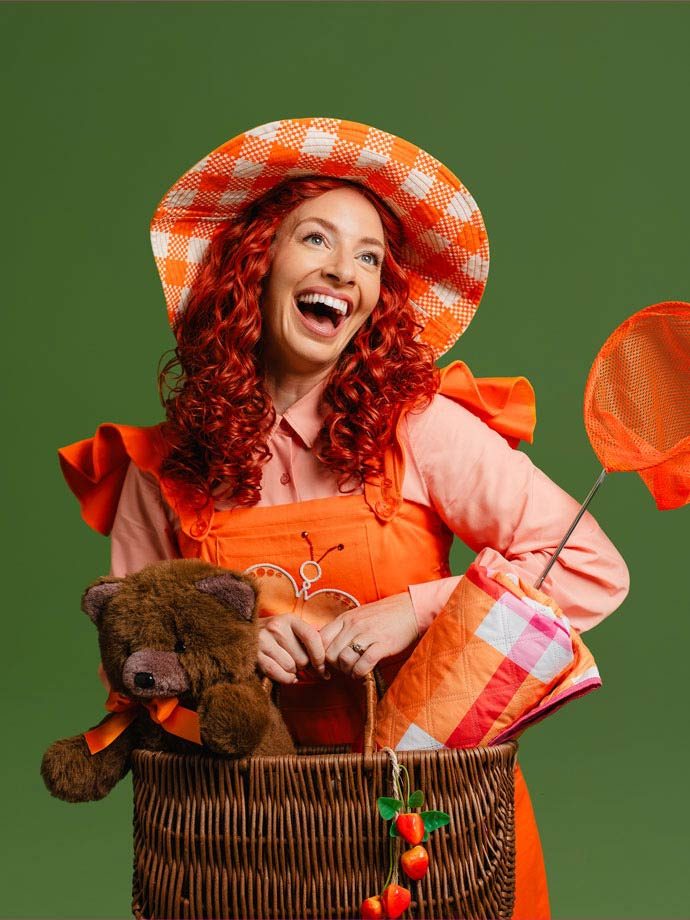
Pack an imaginary picnic basket and prepare to dance with elephants when Emma Memma brings her new Jungle Picnic Tour to stages across Australia.
Inspired by her latest album, the show combines music, movement, storytelling and games in a colourful adventure through the jungle. Children are invited to bring along their picnic baskets and pet rocks, sing new songs and join Emma Memma and her Memma Mates on the dance floor.
The tour includes around 40 dates across metropolitan and regional Australia, with performances scheduled through to September. Every Emma Memma performance also incorporates Auslan, making the experience more inclusive for young audiences.
Adventure Bay is coming to Australia, and naturally, there is an emergency that only a team of highly trained puppies can solve.
In PAW Patrol Live! Race to the Rescue, Mayor Goodway goes missing on the day of the Great Adventure Bay Race. Ryder calls in Chase, Marshall, Skye, Rubble, Rocky, Zuma and Everest to find her and take her place in the race.
The high-energy musical production combines songs, dancing and plenty of audience participation while weaving in messages about teamwork, problem-solving and helping others.
The 2026 Australian tour visits Hobart on 25 July, Brisbane on 8 and 9 August, Sydney on 15 and 16 August, and Melbourne on 22 and 23 August.
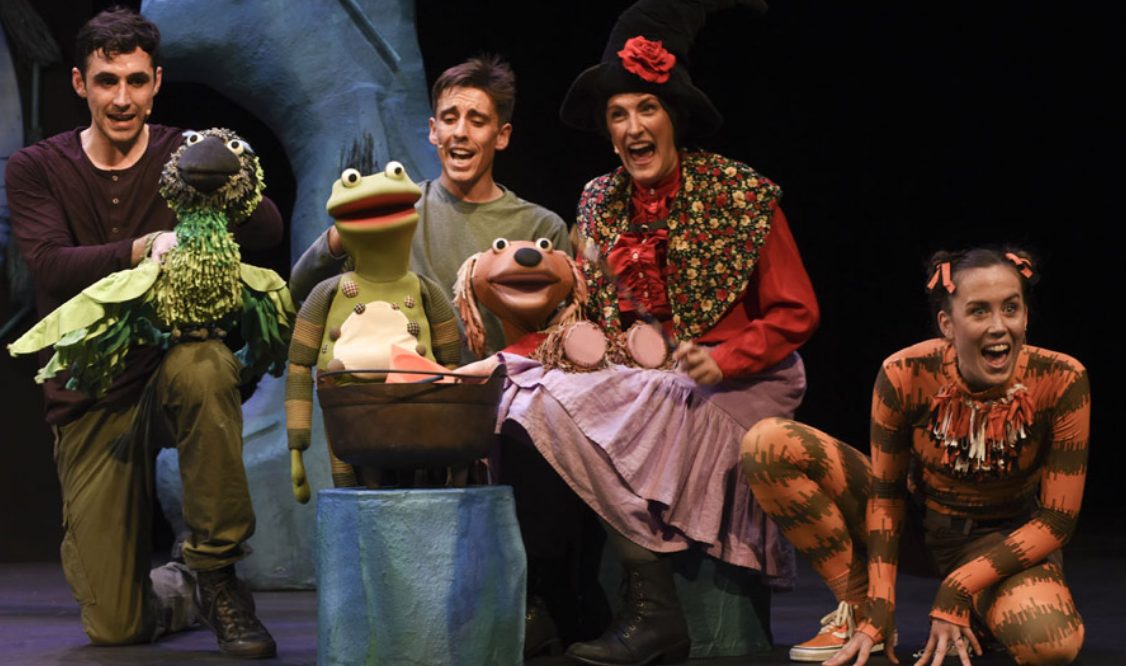
Room On The Broom CDP Theatre Producers - CDP Theatre Productions
Julia Donaldson and Axel Scheffler’s much-loved picture book flies off the page in this gentle theatrical production created for younger children.
Room on the Broom follows a friendly witch and her cat as a gust of wind blows away the witch’s hat, bow and wand. A helpful dog, bird and frog join the search, but fitting everyone onto one increasingly crowded broomstick proves rather complicated.
Featuring puppetry, songs, laughs and a not-too-frightening dragon, the show is touring extensively through New South Wales, Victoria, Queensland and the Northern Territory until October.
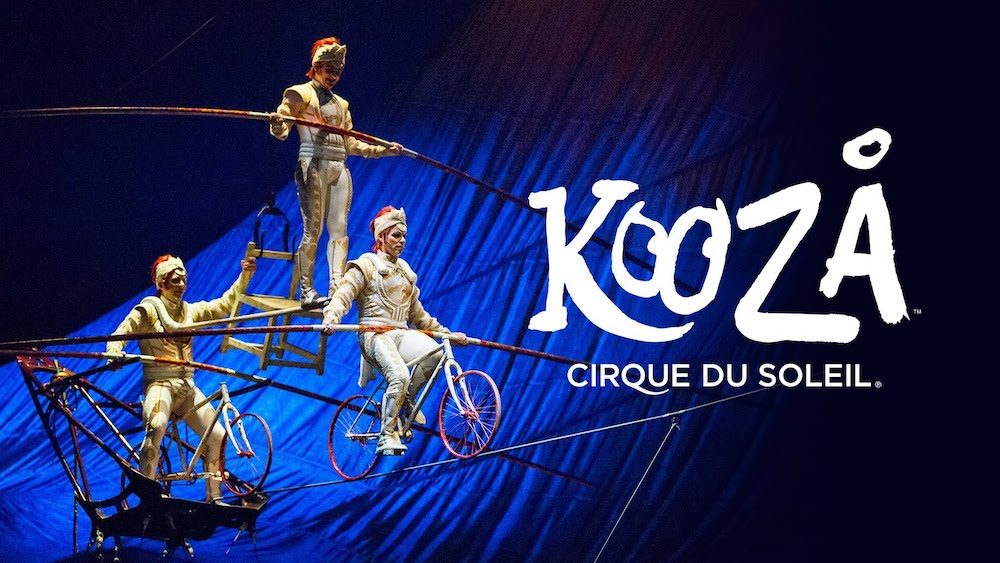
For older children, teens and parents who enjoy watching performers do things that appear to defy both gravity and sense, Cirque du Soleil’s KOOZA is one of the year’s biggest family spectacles.
The show follows a character known as The Innocent, who is transported into a strange and colourful kingdom under the watch of an enigmatic Trickster. Around them, acrobats, contortionists, clowns and high-wire performers deliver a rapid succession of breathtaking circus acts.
KOOZA is playing under the Big Top in Melbourne until 19 July before opening in Brisbane on 1 August and Sydney on 17 October.
We welcome your response for publication in our next issue, edition #83. Please briefly introduce the point you are responding to so your reply makes sense to someone who has not read the original article (max. 400 words).
Replies are subject to editorial approval.
5
AD
Advertisement
Sell Your Product or Service Here?
Show Your Product to More Customers
• Every ad is front page • Never more than 10 ads • Ad stays forever*
Room for children to kick a ball Looking back at old photos of Australian suburbs, you’ll notice a big difference. There is one thing that stands out almost immediately: there’s space. Wide backyards. Clotheslines. Trees. Room for children to kick a ball and neighbours to wave over the fence. And with so much time spent outside, people actually knew their neighbours.
Somewhere along the way, that space began to disappear.
Today, many new homes are built right to the edge of what planning regulations allow. The Australian dream that was once centred on outdoor life, is now encouraging a more indoor lifestyle by squeezing as much house as possible onto as little land as possible. And while these homes comply with council rules, they raise an uncomfortable question: are we building suburbs that are technically permissible, but not particularly liveable?
The rules tell us what we can build, not what we should build In Australia, the size of your yard is determined by local council planning schemes and state building codes. Rather than mandating a specific backyard size, councils regulate how much of a block can be covered by a house and how close that house can sit to its boundaries.
Generally, in Queensland, homeowners must leave a minimum six-metre setback from the front boundary. On standard properties larger than 450 square metres, side and rear setbacks are often as little as 1.5 metres for single-storey homes. As buildings increase in height, those setbacks grow slightly, with walls between 4.5 and 7.5 metres high typically requiring a two-metre gap.
Bigger houses, smaller blocks The Australian backyard has not disappeared overnight. It has shrunk steadily over decades, driven by rising land prices, population growth and a cultural preference for larger homes.
The numbers tell the story. According to data from the Australian Bureau of Statistics, between 2012 and 2021 the average site area of new house approvals in Australian capital cities fell by 13 per cent, shrinking by around sixty-four square metres. Yet during the same period, the average internal floor area remained almost unchanged. We’re in 2026 now, and it’s only gotten worse.
In other words, we haven’t become more interested in living with less. We’ve simply become more willing to build bigger houses on smaller pieces of land.
The result is familiar to anyone who has driven through a new housing estate. Double garages dominate the street. Side paths narrow to little more than corridors. Backyards become courtyards, and courtyards become patios.
And while these homes maximise internal living space, they inevitably minimise everything around them. Unfortunately, a great deal has been lost in this new living space.
When compliance comes at the expense of comfort The challenge with building to the limit is that regulations are designed to establish minimum standards, not ideal ones. A home can satisfy every planning requirement and still feel dark, enclosed and disconnected from the outdoors.
And isn’t that what Australia has always been known for? The great outdoors. Sun-kissed skin, barbeques, and lazy weekends enjoying the breeze. If you had to use a hotspot to determine which part of the house is used the least, the backyard would probably be a winner.
It is a strange irony that Australians spend thousands of dollars creating beautiful indoor-outdoor living areas while simultaneously reducing the outdoor spaces they are meant to connect to. And slowly but surely, we’re losing touch with nature as the new generation builds online gardens rather than real ones.
The economics of every square metre Of course, none of this has happened by accident. Land has become increasingly expensive, particularly in major cities, and developers face immense pressure to deliver housing that buyers can afford. For many families, purchasing a smaller block with a larger home makes financial sense. After all, bedrooms, home offices and open-plan kitchens feel more valuable than mowing a lawn every weekend. Sometimes we’re just left with no choice.
The market rewards houses that maximise internal floor space because internal floor space is easy to measure and easy to sell. Four bedrooms sound impressive on a brochure. A two-bedroom home with a massive gum tree outside is a little harder to market.
Is it time for a change? The Australian backyard has always been more than grass. It has been the setting for birthday parties, sports, barbeques, and the perfect place to finds some calm in an otherwise busy world.
And sure, things change over time, but maybe it’s time for planning regulations to take a little step back in time. A time when space had value.
We welcome your response for publication in our next issue, edition #83. Please briefly introduce the point you are responding to so your reply makes sense to someone who has not read the original article (max. 400 words).
Replies are subject to editorial approval.
7
AD
Advertisement
Have Your Articles Published
Every writer wants to have their work published and read. This is your chance to make the Internet a better. Join our team or writers at Hold The News and write engaging articles that entertain, inform or trigger feelings in the reader. Give it structure, give it meaning and make it worth reading.
We publish on almost any topic as long as it's well written, human written and truthful.
Readers Judge Articles sort by reads within each edition, simple and easy to see what gets read.
Creativity isn't a luxury. It's part of being human.
"I can't even draw a stick figure."
People seem strangely proud when announcing this, as though creativity is something they managed to avoid, like a common cold. It always makes me laugh because, if you've seen my illustrations, you'll know I'm hardly the next great artist. My drawings are all wobbly lines and out-of-proportion characters with a certain childlike charm I'm choosing to believe is intentional. They're certainly not hanging in an art gallery anytime soon.
But I love drawing anyway.
The same goes for writing. Some days the words flow effortlessly. Other days I delete more than I keep. The point isn't that every page is brilliant. The point is that I made something that wasn't there yesterday.
That’s the problem with creativity. We've convinced ourselves that if we're not exceptional at it, we shouldn't do it at all. But creativity was never meant to be reserved for talented people.
Creativity isn't about being good
Creativity can often feel unattainable, a gift only for artists, musicians, and bestselling authors. It’s not even a case of art being subjective, sometimes loved by some and loathed by others. Creativity is simply about making something. A journal entry. A Lego house with your child. Paint splatters on a canvas. A birthday cake. A made-up song to your baby. A knitted blanket. The result matters far less than the act of creating. It’s why art therapy works so well. People simply feel better when they’re being creative.
Creativity gives your brain somewhere else to go
Adulting is hard. We spend our whole childhood wishing we were older, and our whole adult life wishing we had appreciated our childhood more. Bills. Emails. Work. And repeat. Creating something gives your brain a break. It allows you to rest without resting.
Imperfect creations are still worth creating
If I only wrote on the days, I felt inspired, I wouldn't write very much.
If I only illustrated things I thought were beautiful, I'd have an awful lot of blank sketchbooks.
The wonderful thing about creativity is that it gives us permission to be beginners again. To make mistakes. To laugh when things don't quite turn out the way we imagined. Somewhere along the way, adults forget that being bad at something is often the first step towards becoming good at it. It’s a process.
I had a friend who kept a yearly sketchbook. Every day, she'd draw something. Some days she had just five minutes; other days she could lose herself in it for a couple of hours. At first glance, it didn't seem like much was changing, but when she flicked back through the pages at the end of the year, the difference was undeniable. Her lines were more confident, her ideas more imaginative, and the things she once struggled to draw had become second nature.
The same principle sits behind challenges like write 100 Words for 100 Days. The goal isn't to produce 100 masterpieces. It's simply to show up. Because creativity doesn't usually arrive with perfect timing. It turns up because you did.
Creating allows us to give back
We spend so much of our day taking things in. We scroll. We watch. We listen. We read. It’s no wonder we’re all so overwhelmed every day. I don’t think we were meant to be this stimulated, and the constant adverts thrown at us can start to feel a little too much. There's nothing wrong with consuming, but eventually it starts to feel one-sided. There's something deeply satisfying about adding something back into the world instead of simply taking from it. Whether ten people see it or no one does is almost beside the point.
You don't stop being creative because you get older
Children create because nobody has told them they shouldn't.
Adults often stop because somebody did.
Maybe a teacher criticised a drawing. Maybe someone laughed at a story you wrote. Maybe life simply became too busy and taking time to be creative started to make you feel guilty.
But creativity isn't something we outgrow. It's something we neglect.
And, as with all things in life, the more we practice it, the better we get.
What can you create today?
Reply to this article
We welcome your response for publication in our next issue, edition #83. Please briefly introduce the point you are responding to so your reply makes sense to someone who has not read the original article (max. 400 words).
The Odd Harmless Flutter Its no secret that as Australians, we love a bit of a gamble. In fact, per capita, Australians gamble more than any other country. What that means for us in reality, is that between us, we lose about AUD $30 Billion a year. That’s more than the odd harmless flutter, and its causing social issues and mental heal problems across the country.
Yet despite this, and the fact that gambling addiction is well researched and understood, nothing seems to change. Every year there is talk of initiatives to help control the problem, politicians talk a good strategy, often promising funds too, and yet every year, we see little is changing, and problem gambling remains. Why?
It’s part of who we are The first barrier to change when it comes to gambling is something we must all face. Gambling is part of who we are, its Australian culture. Whether it’s a Grand Final or the Melbourne Cup, State of Origin or the Ashes, having a bet on sport is part of the tradition of enjoying it for so many of us.
The thing is, the odd bet on a big event isn’t the problem Australia has with gambling, but it is how gambling has become so normalised. It helps shape our attitude to the industry, and we do have to deal with that. But there is a far bigger issue that keeps gambling in the headlines, and it’s the first thing that needs addressing. Not just for gambling either.
Lobbying The gambling industry spends fortunes, every year, to influence our politicians. The argument is that by restricting gambling, it won’t stop people from gambling, it will just push them towards illegal gambling rings or offshore, internet-based options instead. It is also argued that without money from gambling, grassroots sports will suffer too.
Like all PR, take that with a grain of salt, the goal is to protect their businesses, and while restrictions may not work for everyone, removing the convenience provides a barrier that researches say will have an effect.
Money The other thing is money. Gambling generates a lot of money, not just for the industry, state and territory governance is used to the income from gambling, and they don’t want it to stop. Pokies, casinos and sports betting is a good earner for them, and with most physical gambling regulated at the state level, we can see how things might be difficult to change.
The Big Picture Its not just one of these things we must look at though. Lobbying, and the level of income government gets from gambling are the perfect storm. Attempts at tighter regulation are often watered down to the point of irrelevance by the time they become law, as politicians listen to the loudest voice, which is usually the lobbyists.
While there is a great appetite from the public for stronger measures on gambling, this lobbying process, combined with our causal acceptance of gambling, lets it slip through the net, year after year.
We welcome your response for publication in our next issue, edition #83. Please briefly introduce the point you are responding to so your reply makes sense to someone who has not read the original article (max. 400 words).
Beyond Expectations Not long ago, I ducked into a neighbourhood café to escape an unexpected downpour. It wasn't the closest café, nor was it the cheapest. In fact, another one sat just across the road advertising coffee for almost a dollar less. Yet this place was full.
People weren't rushing in, grabbing their coffee, and leaving. They were chatting with the staff. The barista greeted a gentleman with, "The usual?" before he had even reached the counter. A young mother struggling with a pram was helped through the door without asking. When an elderly customer stood to leave, someone behind the counter walked around to hold the door open as the rain continued to fall outside.
None of those gestures appeared on the menu. None of them cost the business very much. But together, they explained why people kept coming back.
We often tell ourselves that customers make decisions logically. They'll compare prices, study reviews, weigh the pros and cons, and choose the best deal. Sometimes that's true. But more often than we'd like to admit, we make decisions based on something much harder to measure.
We remember how a place made us feel.
Think about the businesses you return to without giving it much thought. It could be your local butcher, the family-owned bookshop, the mechanic you've trusted for years, or the café that somehow remembers you prefer soy milk without you having to ask.
If someone stopped you in the street and asked why you keep going back, you probably wouldn't start talking about pricing strategies or operational efficiency.
You'd tell them a story.
You'd remember the pharmacist who stayed open a few extra minutes because your prescription was urgent. The airline employee who quietly solved a problem without sending you from one counter to another. The hotel receptionist who noticed you looked exhausted after a delayed flight and arranged an early check-in without making a fuss.
Those moments don't just solve problems.
They build trust.
For decades, businesses fought to create better products. Then they competed on price. Later, convenience became the battlefield, with faster delivery, online ordering, and one-click payments changing the way we shop.
Today, almost every business can offer those things.
Technology has levelled the playing field. A small retailer can sell online. A café can use the same coffee beans as its competitor. A clothing store can stock almost identical products. Even artificial intelligence is helping businesses answer customer enquiries within seconds.
The product itself is no longer the only reason people choose one business over another.
What cannot be downloaded, copied, or automated quite so easily is genuine human connection.
A warm welcome. A familiar face.
Someone who notices what you need before you've asked for it.
Those moments don't appear on a balance sheet, yet they create something every business wants but very few can manufacture: loyalty.
Customers rarely become loyal because a company was the cheapest. They become loyal because they felt seen, respected, and valued. In a world where products are increasingly similar, those emotions have become a genuine competitive advantage.
Perhaps that's why people willingly pay six dollars for a coffee they could make at home for less than one.
They're buying the quiet comfort of walking into a place where, for a few moments, they don't feel like just another customer.
In today's marketplace, products may bring people through the door once.
Service is what quietly invites them back again and again.
Maybe that's why the most valuable thing a business sells isn't sitting on a shelf at all.
Reply to this article
We welcome your response for publication in our next issue, edition #83. Please briefly introduce the point you are responding to so your reply makes sense to someone who has not read the original article (max. 400 words).
My nightly call to Julie went unanswered, so I sent her an email.
I was still hoping she and Veronica could join me in Darwin but it would mean dragging my wife away from her real estate business where she had recently been made a partner. And it would also mean dragging our 13-year-old away from her new Sydney girls’ school and relocating her to one of Darwin’s all-girl colleges, none of which we had researched.
I’d just finished devouring my Chinese takeaway when the front doorbell rang and Darna Del Rosario stood before me in a tight-fitting red sarong and matching sandals grasping a bottle of red.
‘I’ve had another visit from my spooky client Arthur,’ she announced.
‘You’d better come in,’ I suggested.
She looked different from our previous encounter. Her jet-black hair was braided into a plait that reached the small of her back and ended in a red bow. Her sarong dress hung barely much lower than the bow. She’d applied enough make-up to hide her otherwise tell-tale facial wrinkles and her blood-red lipstick was particularly disconcerting. The phrase ‘red letter day’ sprang to mind.
She handed me the wine then arranged herself decoratively across my two-seater living room couch and appeared to be staring me down as I went to find the wine glasses.
‘When was your latest encounter with Arthur?’ I asked.
‘Early this afternoon,’ she replied. ‘He paid me a lot of money to perform a special task.’
‘Oh?’
‘He wanted me to seduce you.’
After a brief hesitation, I placed the empty wine glasses on the coffee table in front of her then took a step back.
‘Does he know you’re reporting to me on him? Or have you been working for him on me from the outset?’
The smile on her face reduced suddenly.
‘Are you saying you don’t trust me Michael?’
I unscrewed the cap from the wine bottle and filled both glasses.
‘Not until I find out more about you Darna. Cheers!’
I raised my glass and kept my eye on her as I savoured its contents. She followed suit and her smile gradually returned.
‘My life’s pretty boring,’ she said. ‘Can we talk about you instead?’
She removed something from her handbag.
‘I’ve brought some pretzels to go with the wine,’ she announced, displaying a packet of Woolworths’ best.
I took them and repaired to the kitchen to empty the packet into a bowl, returning to find her jamming something into her handbag.
‘Let’s toast our beautiful new friendship, Michael,’ she declared, again raising her glass.
‘To new friends,’ I replied and took a gulp of my wine which suddenly tasted bitter.
‘Now,’ she announced, ‘what can I tell you about myself that you don’t already know?’
‘Humour me,’ I replied and sampled one of her pretzels.
She slid off her sandals and pulled her legs underneath her on the couch, sending the sarong up around her waist. I was very glad my wife was not lurking somewhere in the apartment.
‘I was born in Manila,’ she began. ‘We were a large family.’
I went to take another sip of my wine but stopped when the room started to fog up. Without warning, my head was suddenly drooping.
‘Are you alright Michael?’ I heard Darna ask.
There was now a dull ache in my jaw and I could scarcely replace my wine glass on the coffee table.
‘Have you drugged this bloody wine?’ I groaned.
Darna was now moving in several directions at once and the room seemed to be doing the same.
‘Good night my friend,’ I heard her say and somewhere to my right a door closed.
Then the lights went out.
--- o0o ---
The ringing was consistent and the longer it went on the more my head hurt. When it stopped, the haze disappeared back into what seemed to be a black hole.
It was the nausea that finally woke me up. Parts of me were now functioning again; sufficiently to get me crawling on all fours towards the bathroom. How I made it to the toilet bowl in time, remains a mystery.
There I remained, retching and bathed in perspiration. When I no longer had anything inside me left to expel, I managed to prop myself up against the bathroom door and take stock. I’d kicked off my sandals and shed my shorts and t-shirt that were damp from what I hoped was hyperhidrosis. I smelt of vomit and my face felt flaccid. Slowly and painfully, I used a towel rail to steady myself., then, taking a deep breath, I reached across to the shower recess and turned the cold tap onto ‘full’.
I’m not sure how long I sat under the cascade of cool running water from the shower head, but it was enough to get me standing upright. After steadying myself, I wrapped a towel around my waist and swallowed a tumbler of water from the bathroom tap. Exhausted from the effort, I stagged into the living room and collapsed onto the couch where Darna had been sitting.
I focussed on a wall clock opposite and it was showing midday. Through the window another tropical storm was building. I needed to ring my office and looked around for my cell phone. I remembered leaving it on the coffee table but figured Darna had souvenired it after I’d passed out. Zorkov’s techos could well now be interrogating it.
My legs were propelling me in the direction of the hall phone when there was a loud knock on my front door and through the frosted glass two heads were visible. I readjusted the towel around my waist and reached the door, peering through its spyhole.
I recognised the voices on my doorstep even before I caught sight of their owners. I opened the door and two horrified faces greeted me.
‘Boss – what’s happened?’ asked Celina.
I ushered my two young investigators inside, repaired to the bathroom and managed to replace my towel with my damp shorts.
‘We’ve been trying to ring you all morning,’ said Celina as I re-entered the living room.
‘That explains the ringing in my head when I was semi-conscious,’ I replied.
I took hold of Enzo’s elbow.
‘I need a favour,’ I told him. ‘Can you see if my next-door neighbour is in, and if she is kindly march her in to this apartment?’
He did as I asked - I heard him ringing Darna’s doorbell, several times.
‘There’s no one there,’ he called through the open front doorway of my apartment.
‘Of course there isn’t,’ I groaned.
‘Boss, what’s this all about?’ asked Celina who seemed concerned about my physical wellbeing.
I dropped into the nearest chair I could find.
‘Make me a mug of tea, Celina and I’ll fill you both in,’ I managed.
Enzo appeared in my sitting room displaying a front door key.
‘I found this under your neighbour’s welcome mat,’ he announced.
‘Then could you please let yourself into her place with the key and tell me what you find.’
‘That’s trespassing,’ he replied.
‘Not if you have the front door key,’ I suggested.
He was gone for barely two minutes and when he returned, he seemed puzzled.
‘The place is empty,’ he said, ‘Except for the furniture and a few things in the fridge. If someone was living there then they’ve taken all their belongings and bolted. Even seemed to have cleaned up after them.’
He handed me Darna’s door key then eased into a chair opposite me. A few minutes later, Celina appeared with three mugs of tea and a raft of questions. I raised my hand as a thank-you gesture and to halt her interrogation.
For the next ten minutes, I took them through the previous night’s encounter with Darna Del Rosario.
‘My neighbour was on Zorkov’s payroll,’ I concluded, ‘and I’ve just been given a not so gentle reminder that if we don’t play by his rules with our Catch-22 investigation, then he will punish us.’
‘But what are his rules?’ asked Celina.
‘Well for one,’ I suggested. ‘We are to concentrate on investigating the Cunningham family and not him.
‘How do we know the Cunninghams are not simply your average Australian family who he’s using to lead us through some kind of SVR maze?’ asked Enzo.
‘We don’t,’ I admitted. ‘But we need to find out more about the Cunningham family first before we can reach that conclusion.’
‘Strikes me he’s holding all the aces in this,’ Celina noted. ‘Doesn’t that tell us something?’
‘It tells me we need to find out why he has made this approach to us in the first place,’ I suggested. ‘Why turn up on our territory and expose himself the way he has? Is he a Ukrainian Tartar freedom fighter who is working against Putin from within? Another Oleg Penkovskiy† who knows he can best undermine Putin by remaining a well-placed SVR insider?’
‘Or is he just another Yuri Nosenko?’ Enzo wondered, ‘whom the CIA judged to be the classic KGB deception agent, sent to tie the Agency up in knots? And now it’s our turn.’
† Oleg Vladimirovich Penkovsky was a Soviet military intelligence (GRU) colonel during the late 1950s-early 1960s. He passed to British and American intelligence information about Soviet missile build-ups in Cuba, enabling US President John F. Kennedy to face down Soviet leader, Nikita Khrushchev and resolve the Cuban Missile crisis without a nuclear war.
We welcome your response for publication in our next issue, edition #83. Please briefly introduce the point you are responding to so your reply makes sense to someone who has not read the original article (max. 400 words).
Replies are subject to editorial approval.
14
Science & Tech
How a hidden underground fungus is fighting climate change
Extraordinary Carbon capture When we talk about fighting climate change, the conversation usually goes the same way. We talk about solar farms, electric cars, and planting millions of trees to pull carbon dioxide out of the atmosphere.
But according to scientists, one of the most effective carbon-capturing systems on Earth is fungus.
Yes, fungus.
More specifically, it's an enormous underground network of microscopic fungi quietly woven through the soil beneath our feet.
And once you understand what it's doing down there, it's hard not to be amazed.
Plants and fungus struck a deal Most of us think of fungi as the mushrooms that suddenly appear in the lawn after rain. But mushrooms are just the visible part of the organism, a bit like an apple on a tree.
The real fungus is underground.
It's made up of incredibly fine white threads called mycelium. These fungal networks, known as mycorrhizal fungi, wrap themselves around plant roots and have been doing so for about 450 million years, long before humans arrived on the scene.
In a way, they've been running Earth's oldest trade agreement. You see, plants are brilliant at one thing. Through photosynthesis, they take carbon dioxide from the atmosphere and turn it into sugars and fats. What they're not very good at is finding nutrients in the soil.
That's where the fungi come in.
Their threads are astonishingly thin. Scientists estimate that a single teaspoon of healthy soil can contain astonishing lengths of these tiny filaments, perhaps even many kilometres of them. They can squeeze into cracks and spaces that roots can't reach, collecting water, phosphorus, nitrogen, and other nutrients.
So the two struck a deal.
The plants hand over some of the sugars they've made from sunlight, and the fungi deliver nutrients and water in return.
Everyone wins.
So much more than dirt For a long time, scientists knew this partnership existed, but what they didn't realise was just how important it was for the climate. Then a major international study published in Current Biology changed everything.
The researchers discovered that plants transfer an estimated 13.12 billion tonnes of carbon to their fungal partners every single year, an amount equivalent to around 36 percent of annual fossil fuel emissions.
Suddenly, the soil beneath our feet starts looking a lot less like dirt and a lot more like one of the planet's biggest climate allies.
So what happens to all that carbon? Well, the fungus doesn't simply pass it along. Some of it is used to build and expand the underground network itself, extending these nutrient highways through the soil. Some of it becomes sticky compounds that act like natural glue, binding soil particles together into stable clumps. This not only helps prevent erosion but also traps carbon in the ground.
Then there's something scientists call necromass. It's not the most appealing name, but the concept is remarkable.
When parts of the fungal network die, they don't just vanish, their tough structures remain woven through the soil. Because they're slow to break down, some of that carbon can remain locked in the soil for long periods of time, depending on local conditions.
The extraordinary thing is that just as we're beginning to understand how important these underground systems are, we're also damaging them.
When forests are cleared or farmland is repeatedly ploughed, these delicate fungal networks are torn apart.
Once that happens, the soil loses structure. The stored carbon is exposed to oxygen and can eventually return to the atmosphere as greenhouse gases.
Heavy use of chemical fertilisers can create problems too. If plants receive all the phosphorus they need from fertiliser, they stop investing in their fungal relationships. Why trade with your neighbour when the supermarket delivers straight to your front door?
The fungi receive less carbon, the networks weaken, and the underground partnership begins to break down.
That's one reason scientists are increasingly interested in regenerative agriculture and minimal-till farming. These approaches disturb the soil as little as possible, giving fungal networks the chance to recover and thrive.
There's something deeply humbling about all of this We tend to imagine saving the planet through dramatic new technologies or grand engineering projects. Yet one of Earth's most powerful climate systems has been quietly operating beneath us for hundreds of millions of years.
The next time you're walking through a park or along a bush track, take a moment to look down.
Beneath the dirt is a bustling microscopic metropolis, trading nutrients, storing carbon, all helping keep our planet habitable.
Sometimes the solutions we're searching for aren't waiting to be invented. They're already here. We just have to stop digging them up.
We welcome your response for publication in our next issue, edition #83. Please briefly introduce the point you are responding to so your reply makes sense to someone who has not read the original article (max. 400 words).
Tobacconists in every suburb Take a walk along almost any Australian shopping strip and there's a good chance you'll pass a tobacconist. In some suburbs, it feels like a new one opens every few months.
Australia has spent decades reducing smoking rates through public education, advertising bans, plain packaging and steadily increasing tobacco taxes. Daily smoking has fallen from around one in four adults in the early 1990s to well under one in ten today. If fewer Australians are smoking, why are more tobacconists appearing?
The answer lies in a much bigger story than cigarettes alone.
Traditional tobacco sales remain legal, but they are no longer the whole business model. Many tobacconists are now selling vaping products, cigars, imported confectionery, drinks, gifts and smoking accessories. The additional products often carry healthier margins than a packet of cigarettes, where retailers typically earn relatively modest returns after excise and wholesale costs. The tobacconist has become more of a convenience store, tinged with tobacco.
But then the legal market is only part of the picture.
Over the past few years, Australia's illicit tobacco market has grown dramatically. Criminal groups have identified tobacco as an unusually attractive commodity. Unlike many illegal drugs, there is already an established customer base, the product is relatively easy to transport and store, and the difference between the price of legal and illegal tobacco has widened as excise has increased. That price gap creates a powerful incentive.
When a legal packet of cigarettes costs $50 or more, illicit products selling for half that price become attractive to smokers trying to manage household budgets. Every increase in excise potentially increases government revenue from legal sales, but it can also make the black market more profitable.
Law enforcement agencies have repeatedly warned that organised crime groups are increasingly involved in illicit tobacco importation, distribution and retailing. Recent firebombing targeting tobacconists in Melbourne and other cities have highlighted that what appears to be a quiet suburban retail business may sometimes sit within a much larger criminal supply chain. In Dee Why, the Sydney suburb nearest to me, NSW Health has issued 90-day closure orders to at least five convenience stores and tobacconists for illegally selling vapes and illicit tobacco.
Of course, it would be wrong to assume every tobacconist is involved in illegal activity. The overwhelming majority operate legitimate businesses. But authorities argue that illicit tobacco has become one of Australia's fastest-growing black markets, creating opportunities for organised crime to infiltrate parts of the retail sector. Experts also point to the rapid rise of vaping.
Australia's regulatory approach to vapes has been among the strictest in the world. While designed to reduce youth uptake and nicotine dependence, the regulations have also contributed to a large illegal market supplying disposable vapes and other products through informal retail channels. Enforcement agencies continue to seize millions of illegal vaping products each year, suggesting demand remains substantial despite tighter controls.
Australia's tobacco control policies have undoubtedly contributed to one of the world's biggest declines in smoking, delivering substantial public health benefits. Yet the same policies have also coincided with a rapidly expanding illicit tobacco market that has become increasingly attractive to organised crime.
The question isn't whether reducing smoking is worthwhile. Most public health experts agree that it is. The more difficult question is whether current taxation, regulation and enforcement settings are achieving every objective they set out to achieve - or whether some of the costs have simply shifted from the health system to the criminal justice system.
The next time you notice another tobacconist opening on your local shopping strip, it may be worth asking a different question. It isn't simply why there are so many of them. It's what they reveal about the changing economics of nicotine and the unintended consequences that can emerge whenever governments try to regulate products people continue to want.
Reply to this article
We welcome your response for publication in our next issue, edition #83. Please briefly introduce the point you are responding to so your reply makes sense to someone who has not read the original article (max. 400 words).
Irony can take many forms, but usually not that many sporting forms, except when someone whose life and times reeks of irony steps up to the plate – in this case D.J. Trump.
By now, we’re all across what happened. Sport’s premier global event: the Football (Soccer) World Cup, hosted primarily by the USA this year, is into the knockout rounds and the U.S. team’s gun striker, Folarin Balogun, is red-carded against Bosnia and Herzegovina and therefore ineligible to play in his winning team’s coming quarter-final qualifying game again Belgium. Enter US President Trump who makes a quick call to Fédération Internationale de Football Association (FIFA) President, Gianni Infantino and the red-card decision is reversed, leaving Balogun eligible to play against Belgium – which he does. Belgium wins 4-1 and progresses to the quarter-finals.
Irony Number One: The name “Infantino” (according to Google) is a predominantly Sicilian surname derived from the Latin word infans or infantinus which translates to "infant." To quote the SMH sport’s writer, Malcolm Knox, “FIFA’s history of shadiness makes it a perfect receptacle for phone calls” from a control-freak like Trump to an acolyte like Infantino. Last December, the Nobel Peace Prize ‘refuznik’ Trump, was presented with an invented FIFA Peace Prize by Infantino because both men, apparently, are bosom buddies.
This year, Trumpism has totally pervaded the USA’s 250 Independence celebrations, so it seemed only fair to Infantino that his ‘big daddy’ host should again be rewarded in kind.
Irony Number Two: Back to Malcolm Knox’s SMH article. Knox makes the point that “Balogun is less American than tens of thousands of victims of Trump’s Immigration and Customs Enforcement Agency” - the USA’s less-than-palatable ICE ‘machine’ that monstered a number of communities across that Country a year or so back. Knox notes: “In 2001, when (Balogun’s) Nigerian-born British-domiciled mother was pregnant, she visited New York where she had her child (Folarin). The Baloguns lived in the US for four months either side of the birth, before returning to England” where Folarin grew up and, under Arsenal tutelage, became a star striker, representing England in two under-age competitions. “Only in 2023,” Knox notes, did the star striker “respond to American invitations to make himself eligible” despite offers to represent Nigeria. “Balogun is an American only by birth”, Knox notes, “a mode of citizenship qualification that Trump’s White House has tried to rescind. In 2024 Trump issued an executive order specifically against “birth tourism”, which may have been relevant in Balogun’s case.”
Irony Number Three: The leader of a country with a population of nearly 350 million finds it necessary for his Country to cheat in order for his national football team to beat a national football team of a country (Belgium) of 11 million people. And even then, the minnow country (Belgium) beats the cheat 4-1.
For mine, these three ironies are less about sport and more about egos, influencers and fair play. The final irony in all of this sorry tale, however, is by far my favourite. The USA had won its games easily prior to taking on Belgium. After the Trump intervention, however, for which Trump was more than happy to claim personal responsibility, the team from tiny Belgium would clearly have been given a boost, especially after its Federation responded by announcing its determination to “fight in the coming hours, days and months in defence of the fundamental principles of ethics, fair competition and the interests of football as a whole.”
As it turned out, they didn’t have to worry, their team was now fully motivated to take on the cheats and bury them 4-1.
Reply to this article
We welcome your response for publication in our next issue, edition #83. Please briefly introduce the point you are responding to so your reply makes sense to someone who has not read the original article (max. 400 words).
Replies are subject to editorial approval.
18
Science & Tech
How medical tech could detect sickness before you even feel it
Think about the last time you went to the doctor. Chances are, something had already gone wrong.
Maybe you woke up with chest pain that wouldn't settle. Perhaps you'd been battling a cough for weeks, noticed an unusual symptom, or simply realised that something didn't feel quite right. You booked an appointment, sat in a waiting room, had your blood pressure checked, answered a series of questions and waited for answers.
Most healthcare has traditionally worked like the fire brigade. We wait for smoke before sounding the alarm.
But medicine is beginning to undergo one of the biggest transformations in generations.
Instead of reacting to illness after it appears, doctors and engineers are working towards something far more powerful: identifying some health problems before you even notice the first symptom.
And surprisingly, the technology helping to make that happen may already be sitting on your wrist.
Your smartwatch is growing up
For years, wearable devices have been excellent motivators and enthusiastic guessers.
They've counted our steps, congratulated us for standing up, estimated how well we slept, and occasionally informed us that our "readiness score" was either outstanding or deeply disappointing.
But despite their popularity, most consumer wearables have had an important limitation.
They weren't medical devices. They could tell you that your heart rate climbed during a brisk walk, but they couldn't provide the kind of information doctors rely on to diagnose or manage serious conditions.
That's now changing.
Biomedical engineers are shrinking sophisticated diagnostic equipment down to astonishingly small sizes.
Devices that once required bulky hospital machinery can increasingly be worn as adhesive patches, discreet rings or lightweight wrist devices designed for continuous use.
The tiny detective working around the clock
Collecting enormous amounts of health data sounds impressive, but it creates another challenge.
Who analyses it all?
Imagine trying to send every heartbeat, every oxygen reading, and every blood pressure fluctuation to a distant computer somewhere else in the world. The sheer volume of information would be overwhelming, expensive to process and vulnerable to internet disruptions.
In medicine, delays matter.
That's where something called Edge AI comes in.
It sounds technical, but the idea is surprisingly simple.
Instead of shipping all your data off to a remote server, the wearable device does much of the thinking itself.
A tiny artificial intelligence processor embedded within the device continuously analyses the information being collected. It looks for subtle patterns and changes that humans might struggle to detect in real time.
Think of it as having a vigilant detective quietly working in the background, twenty-four hours a day.
While you're asleep, walking the dog, gardening or watching television, the system is scanning for early warning signs that something may be changing beneath the surface.
Spotting trouble before it becomes a crisis
One of the most exciting aspects of this technology is its potential to recognise danger before symptoms become obvious.
The human body often whispers before it screams. To the naked eye, these changes are invisible, but to an intelligent monitoring system trained to recognise them, they can be meaningful clues.
Rather than waiting for someone to present to hospital in crisis, healthcare teams may eventually be alerted to emerging problems while there is still time for further assessment and, where appropriate, earlier intervention.
In many cases, earlier treatment leads to better outcomes, shorter hospital stays and fewer complications.
The future of predictive healthcare isn't simply about gathering more information, it's about making sure the right people receive the right information at the right time; while also recognising that these technologies are designed to support (not replace) clinical judgement and professional medical care.
We welcome your response for publication in our next issue, edition #83. Please briefly introduce the point you are responding to so your reply makes sense to someone who has not read the original article (max. 400 words).
Replies are subject to editorial approval.
20
News
Telstra faces Senate grilling as outage sparks death investigation and national security concerns
Australia's largest telecommunications company will front a parliamentary inquiry after a nationwide outage this week crippled business operations, emergency services, and transport systems across the country. The network failure, triggered by server problems at data centres in Sydney and Melbourne, has prompted politicians to demand answers about how such a fundamental infrastructure service could fail so comprehensively. The exact technical cause remains unknown, but the outage's scale has raised serious questions about whether Telstra's systems contain sufficient redundancy to protect essential services.
The fallout extends beyond operational disruption. South Australian police are investigating the death of a person that occurred during the network failure, adding a tragic human dimension to what was already Australia's most serious telecommunications collapse in years. Telstra executives will face a snap meeting of a triple-zero parliamentary inquiry where they will be grilled about the company's operational failures and its emergency response protocols.
UOW - Site image
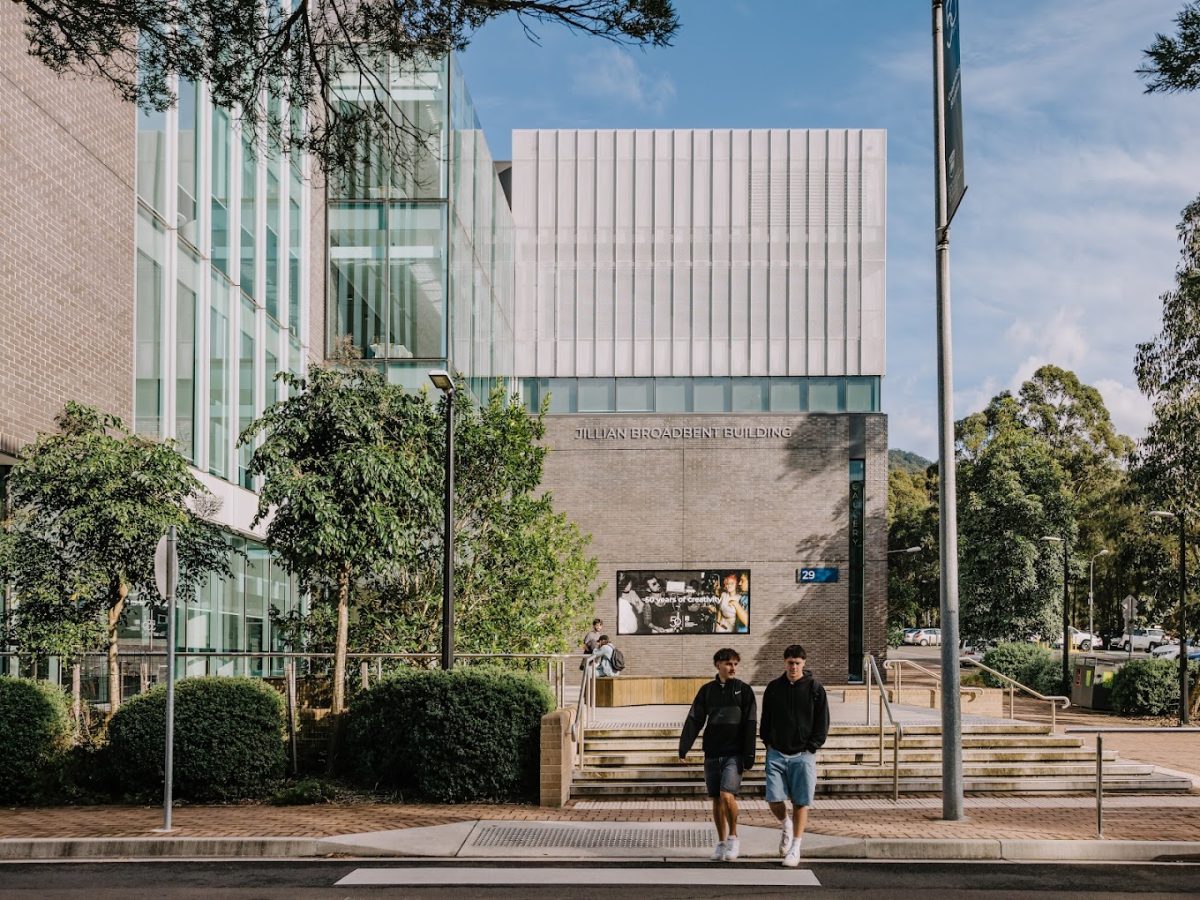
Corruption probe at University of Wollongong A $400,000 executive university position created while other staff were being laid off has triggered an investigation by New South Wales's corruption watchdog. The University of Wollongong's decision to create the new role during a period of job cuts sparked deep divisions within the institution and prompted the inquiry into potential misconduct. The case illustrates ongoing tension between executive remuneration and workforce constraints in Australian higher education.
China Missile Launch - Magnific.com
Pacific defence pivot amid Chinese missile test Prime Minister Anthony Albanese completed a significant week of Pacific diplomacy, meeting with leaders from India, Fiji, Tonga, Samoa, the Solomon Islands, and Papua New Guinea. The strategic push comes as Australia seeks to deepen security ties with regional partners and counter China's expanding influence across the Pacific.
The timing proved symbolically significant. Hours after Australia signed a new defence pact with Fiji, China conducted a test launch of a nuclear-capable missile over the Pacific. The test appeared designed to demonstrate military capability in response to Australia's strengthening regional alliances, though no direct claim of connection was made. The test highlighted the escalating strategic competition between Beijing and Canberra for influence across the Indo-Pacific region.
Census religion question under scrutiny An upcoming survey has found that Australia would no longer count as a majority religious nation if the census format for measuring religiosity was altered. Campaign groups suggest the current census question design inflates the proportion of Australians identifying with a religion. The finding comes ahead of Australia's census in August and raises questions about how demographic data should be collected and interpreted for policy purposes.
ABC and SBS face royal commission questioning The ABC and SBS will appear before a royal commission to answer questions about allegations of antisemitic bias and other complaints. Executives from both public broadcasters are scheduled to front the inquiry on Thursday, where they will address concerns about editorial standards and potential institutional bias in coverage of sensitive issues.
Age verification enforcement on adult websites Australia's eSafety Commissioner will investigate whether major adult websites are complying with age verification laws introduced in March. Nine of every ten most-visited adult sites used by Australians now have age checks in place, but the watchdog is examining whether users can circumvent these protections through VPN technology. The investigation reflects ongoing regulatory efforts to restrict minors' access to adult content online.
Footballer Nathan Fitzgerald farewelled The Epping community gathered at Epping Recreation Reserve for a memorial service honouring footballer Nathan Fitzgerald, who died in an accident the previous week. Teammates, family, and friends attended an emotional ceremony marking the loss of the young player.
Wallabies seek Nations Championship redemption The Wallabies hosted France at a sold-out Suncorp Stadium in Brisbane on Saturday, with both teams attempting to rebound from earlier defeats in the Nations Championship. The match represented an important fixture in Australia's rugby calendar and drew significant public attention in Queensland.
---
AI-generated weekly digest — stories relevant to Australia, 4 July 2026 – 11 July 2026. Review and edit before publishing.
Sources: ABC News Australia, Guardian Australia, BBC News Australia, Sydney Morning Herald
Reply to this article
We welcome your response for publication in our next issue, edition #83. Please briefly introduce the point you are responding to so your reply makes sense to someone who has not read the original article (max. 400 words).











_6a2903590a3d69.80163116.jpg)