Winter entertaining doesn't have to mean spending all afternoon wrestling with pastry dough, stirring multiple saucepans, or serving a meal so heavy that everyone needs to be rolled home. The best cold-weather food is generous, fragrant and deeply comforting, but a few clever choices can keep it fresh, colourful and surprisingly light. Food coma avoided.
Australian nutritionist Kelly Shailer, says that the secret is "borrowing the presentation of traditional comfort foods rather than all the heaviness."
She says, think bubbling oven dishes, roasted vegetables, aromatic bowls carried steaming to the table.
"Build the meal around vegetables, legumes, whole grains or lean protein, then use cheese, cream or buttery pastry as an accent rather than the entire dish."
Dinner-party-worthy soups
A velvety soup is one of the easiest ways to welcome friends and family in from the cold. It can be prepared ahead, reheated without fuss and dressed up in seconds with herbs, toasted seeds, yoghurt or a swirl of good olive oil.
Roasted-tomato-soup - RecipeTin Eats
Shailer says that one of her all-time favourites is RecipeTin Eats’ Smoky Roasted Tomato Soup, made by roasting tomatoes and garlic before blitzing them with stock, creating plenty of depth without relying on cream. Serve it in small bowls with seeded sourdough or crisp chickpeas scattered over the top.
Let your oven do the heavy lifting
For the main course, one-pan dishes are the host’s best friend. They fill the room with irresistible aromas while leaving you free to open the wine, put on your favourite dinner party playlist and pretend the kitchen has always looked that clean.
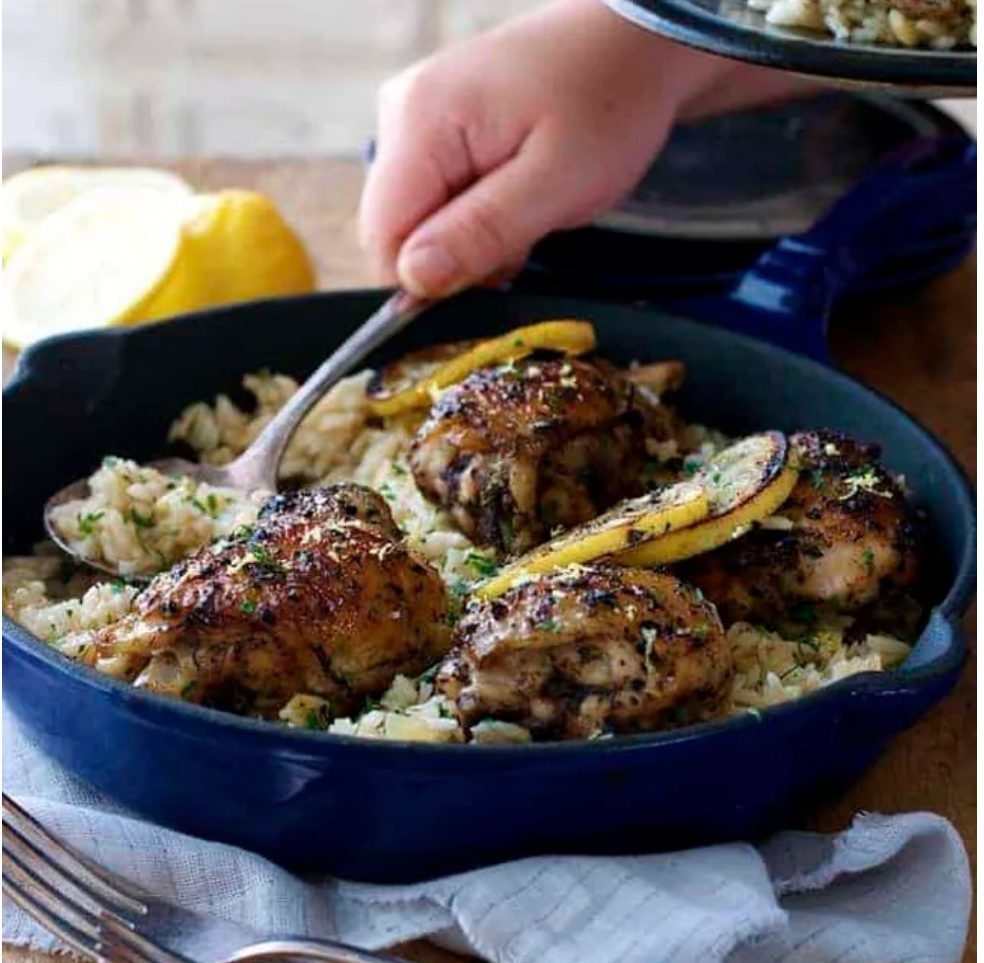
One Pot Greek Chicken and Lemon Rice - RecipeTin Eats
RecipeTin Eats’ One Pot Greek Chicken and Lemon Rice combines marinated chicken with lemony rice in a single pan. Add a tray of roasted cauliflower, carrots and red onion alongside it, finished with parsley and a spoonful of thick yoghurt. The result feels abundant, yet the plate still contains vegetables, protein and grains rather than a mountain of mash and gravy.
Likewise, Donna Hay’s Winter Herb Roasted Chicken Drumsticks offer another relaxed option. Drumsticks are economical, easy to serve and wonderfully forgiving. Pair them with a warm lentil salad, wilted greens or roasted pumpkin rather than creamy potatoes. Place everything on one large platter and let guests help themselves. Family-style serving instantly makes a simple meal feel more generous.
Add toppings for crunch and colour
Healthy food can fall flat when every component is soft and beige. Add contrast with toasted nuts, pepitas, fresh herbs, lemon zest, pomegranate seeds or a sharp little salad. These finishing touches bring colour and texture without adding much work.
Dessert can still be cosy
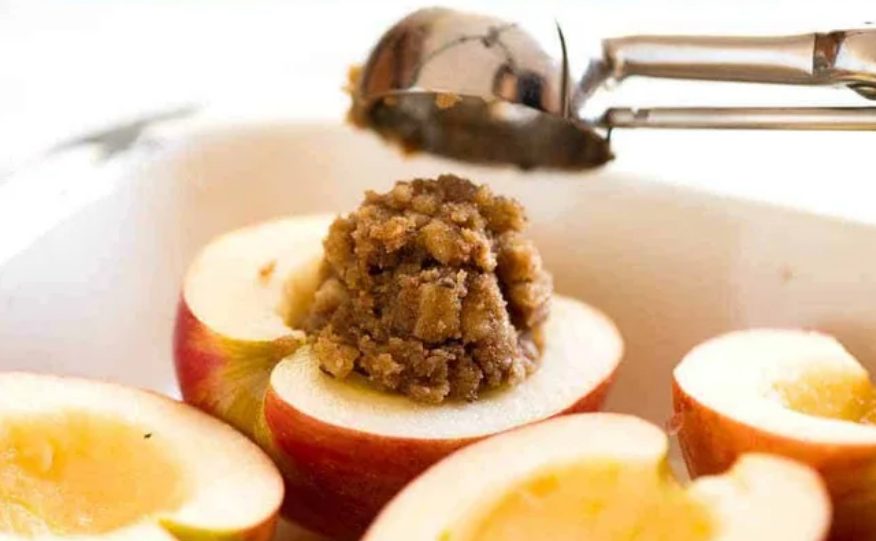
A healthier twist does not require ending the night with a lonely fruit platter. RecipeTin Eats’ Caramel Self-Saucing Baked Apples can be assembled ahead and baked while you eat. Reduce the sugar slightly, add extra cinnamon and serve with Greek yoghurt or a lower-calorie ice cream/frozen yoghurt for a dessert that still feels like a proper finale.
Baked Apples - RecipeTin Eats - RecipeTin Eats
Remember, impressive winter entertaining is less about the MasterChef-worthy culinary feats and more about creating warmth with loved ones lingering around the table.
Reply to this article
We welcome your response for publication in our next issue, edition #83. Please briefly introduce the point you are responding to so your reply makes sense to someone who has not read the original article (max. 400 words).
Things are changing. Australians have always had a complicated love affair with alcohol. We’re known for many things around the world, but our drinking culture is definitely one of them.
And look, that hasn’t disappeared. But something has changed.
Australians, particularly younger Australians, are drinking less than previous generations. Nights out are becoming less frequent, hangovers are less glamorous, and for many people, alcohol has shifted from being an everyday habit to something reserved for special occasions.
The question is: why?
Going out has become expensive
A night out used to be a fairly standard weekend ritual. A few drinks with friends, something greasy on the way home and a taxi if you were feeling responsible. These days, the maths looks very different. A couple of rounds at the pub quickly turns into dinner, rideshares and a bill that leaves you wondering whether the evening was really worth it. Alcohol prices in Australia have climbed steadily, while wages haven’t always kept pace. Add rising rents, mortgages and grocery bills into the mix, and something has to give.
For many younger Australians, alcohol simply doesn’t sit very high on the priority list anymore. When money is tight, people start asking themselves difficult questions. Would you rather spend $150 on a big night out or put it towards a holiday? A concert ticket? Your savings account? Increasingly, people are choosing the latter.
We live in a more health-conscious world
Cost is only part of the story.
The way we think about health has changed dramatically over the past decade. We’ve got fitness trackers, apps that monitor our sleep, and social media feeds which are filled with morning routines, gym sessions and protein breakfasts.
People are more aware of how drinking affects their energy, mood and mental health. They know that a few too many drinks on Saturday can spill into Sunday and, sometimes, Monday as well. It’s not a good feeling.
There has also been a broader shift in what people aspire to. Previous generations may have bonded over late nights and big weekends. Younger Australians are just as likely to bond over a run club, a Pilates class or a coffee after a morning rave. Yes, morning raves are now a thing.
Turns out people still want the music, the community and the fun. They just don’t necessarily want the headache that comes with it.
Cutting back doesn’t have to mean quitting
What’s interesting is that most people aren’t giving up alcohol altogether. Instead, they’re finding ways to drink less.
One trend gaining popularity is something called “zebra striping”, which involves alternating between alcoholic and non-alcoholic drinks throughout the night. It sounds simple because it is simple. For most people, it effectively halves their alcohol consumption and gives their body more time to process the alcohol they do consume.
Then there’s “damp drinking”, a term that sits somewhere between drinking normally and giving it up entirely. Going “damp” rather than completely “dry” means reducing your alcohol intake without cutting it out altogether.
For many people, drinking has become something reserved for birthdays, weddings and celebrations rather than an automatic part of everyday life. Some describe themselves as “99 per cent sober”; others identify as “sober curious”.
The common thread is moderation. Because for people who aren’t dependent on alcohol, cutting back often feels more realistic than cutting it out entirely.
Small changes are becoming cultural movements
Movements like Dry January and Sober October have helped shift the conversation around drinking. Choosing not to drink for a month no longer raises eyebrows in the way it once did. In fact, not drinking has become surprisingly ordinary. Bars now stock non-alcoholic beers and spirits. Restaurants proudly advertise alcohol-free cocktails. Ordering a sparkling water no longer requires an explanation.
For a long time, drinking was the default setting in Australia. You drank because everyone else was drinking. Saying no often meant having to justify yourself.
Today, fewer people feel that pressure. Less, but not gone
Of course, alcohol isn’t disappearing anytime soon. Many Australians, young and old, still enjoy a drink and always will, but there does seem to be a subtle shift taking place. Not towards prohibition or perfection, but towards moderation.
Reply to this article
We welcome your response for publication in our next issue, edition #83. Please briefly introduce the point you are responding to so your reply makes sense to someone who has not read the original article (max. 400 words).
Replies are subject to editorial approval.
3
AD
Advertisement
Sponsor Hold The News from $40
Are Google Ads Driving You Mad?
Advertising with Hold The News is simpler.
We don’t sell clicks or lock you into a subscription. Your advertisement remains permanently attached to the edition in which it appears, allowing it to be seen whenever those articles are read—weeks, months or years after publication.
Better still, your advertising helps pay Australian writers and journalists instead of sending more money to an overseas technology giant.
No subscription. No ongoing commitment. Advertise from just $40 + GST.
The ring became too loose after the years hollowed his hands and folded the skin around his knuckles like old paper left in the sun.
But there is still something on his wrist.
A faded line of blue-black ink.
Not poetry. Not scripture. Not a grand declaration of love.
Just her handwriting.
Milk, bread, apples, cheese & dental appointment.
The tattoo artist asked him twice if he was sure.
He nodded.
Because those six ordinary words were the last thing she ever wrote.
Not long after that, the dementia carried her away one memory at a time, like a slow tide stealing shells from a beach.
First went names.
Then places.
Then stories they had shared so often had become part of the furniture of their lives.
The house remained the same.
She did not.
One afternoon she looked at him with frightened eyes and asked when her husband would be coming home.
He told her he would be there soon.
Then he stepped into the bathroom and cried where she could not see.
The disease was not a thief in the night.
It was worse.
It stole in broad daylight, taking tiny pieces while leaving enough behind for everyone to witness the loss.
Until finally, even words abandoned her.
The woman who had filled rooms with conversation, who remembered birthdays, recipes, directions, the names of neighbours' dogs, could no longer find her way through a single sentence.
But the shopping list survived.
Found years later inside a kitchen drawer.
Written quickly.
Practical.
Forgettable.
A note made for a Tuesday that somehow outlived decades.
He stared at it for hours.
At the slant of her letters.
The way she looped the p in apples.
The hurried ampersand.
The slight wobble in the word appointment.
A map of her hand.
A fingerprint made of ink.
So now it lives on his wrist.
People notice it sometimes.
They expect a story grander than the truth.
They expect romance carved in elegant phrases.
Instead they find groceries.
Errands.
Life.
The small things that marriages are actually built from.
Not candlelit declarations.
But shared breakfasts.
Forgotten shopping bags.
Arguments over which cheese to buy.
The thousand ordinary moments that quietly become forever.
Sometimes he traces the words with a trembling finger.
Not because he needs to remember her.
He remembers.
The sound of her laughter in the garden.
The warmth of her shoulder beside him in bed.
The way she hummed while unpacking groceries.
The way she said his name.
No.
He traces the words because they are hers.
Because once those letters flowed directly from her mind to her hand.
Before the fog.
Before the silence.
Before goodbye stretched into years.
And when he walks through town, or sits alone on a park bench, or waits in line at the supermarket,
she comes with him.
On his wrist.
In her handwriting.
Still reminding him to buy milk.
Still asking him not to forget the dentist.
Still occupying a small corner of an ordinary day.
The way she always did.
And perhaps that is what love becomes when enough years have passed.
Not a monument.
Not a perfect memory.
Not even a photograph.
Just the decision to carry someone's smallest traces long after the world says you can put them down.
So he carries the list.
And through it, he carries her.
Every day.
Every errand.
Every mile.
Until one day, when his own memory begins to fade, and his own hand grows still,
those simple words will remain.
Milk, bread, apples, cheese & dental appointment.
A love letter disguised as a shopping list.
The last thing she wrote.
And the one thing he never forgot.
Reply to this article
We welcome your response for publication in our next issue, edition #83. Please briefly introduce the point you are responding to so your reply makes sense to someone who has not read the original article (max. 400 words).
Replies are subject to editorial approval.
5
AD
Advertisement
Un-Googled Advertising
Are Google Ads Driving You Mad?
Advertising with Hold The News is simpler.
We don’t sell clicks or lock you into a subscription. Your advertisement remains permanently attached to the edition in which it appears, allowing it to be seen whenever those articles are read—weeks, months or years after publication.
Better still, your advertising helps pay Australian writers and journalists instead of sending more money to an overseas technology giant.
No subscription. No ongoing commitment. Advertise from just $40 + GST.
It must have been the year 1967, the air was still fresh and remnants of snow were still melting on the ground.
Dad's old blue Mercedes did a bit of a skid on the snow before making it safely up the hill. Dad, for reasons which will become obvious, wasn't so good at driving on snow.
There it was - our new home. Well not exactly new - an old two-storey timber house, elevated above the main road to Trondheim, it had a big sign that read "Fjellheim Sports Kafe". Yes, it was a road-side diner with living quarters upstairs and a room to let.
Frankly, as recent migrants from Australia my younger brother Peter and I were rather more interested in seeing snow than the old house, but mum and dad seemed excited to get settled in, and there was lots to do.
Arnold - my dad - was quite handy and his priority was to get the old kerosene heaters working, because in Norway it sure gets cold when the sun goes down.
Not that I remember much of it, but I imagine both mum and dad would have spent the weekend cleaning, so they could get the shop opened for business on Monday morning. You see neither of them knew anything about the hospitality industry. Arnold was a freelance pattern maker and since Norway had no clothing industry to speak of, he figured the café would provide an income. Bodil, my mum's Norwegian name, well she was a bit of a sales person, she could sell anything.
Monday morning came and Bodil was up bright and early. Ready to start making sandwiches. No one walked in, but for a lonesome truck driver, he had brought his own sandwiches and just wanted a cup of coffee.
Business wasn't looking good, days were much the same, the odd car stopped but money certainly wasn't flowing.
As mentioned the place also had a room to let and one day a family of swedes stopped and wanted a room for the night, mum was excited and got up bright and early the next morning, hoping that the guests would at least stay for breakfast.
Mum greeted the guests in the morning in her best Swedish accent:
"Gomorron, är ni hungriga?"
Good morning, you must be hungry
The Swedes replied,
"Tack så mycket, men vi har ett Gräshoppan-kök, så vi har redan lagat vår egen frukost."
Thanks but we brought our own camping stove and cooked breakfast in the room
Mum always maintained that swedes were frugal, and this episode didn't change her mind.
A few weeks after opening some kids in their teens poked their heads in the door on the way home from school. Mum spoke with them, because she was the only one of us who spoke fluent Norwegian. The teenagers told her that the previous café owner had been mean to them and that they were not welcome.
Bodil was friendly to them and they started dropping in after school to buy an ice cream or a Coke. This carried on through the summer and although the café served the odd tourist heading up the E6 highway there wasn't much money in it, but the teenagers had pocket money and started bringing friends.
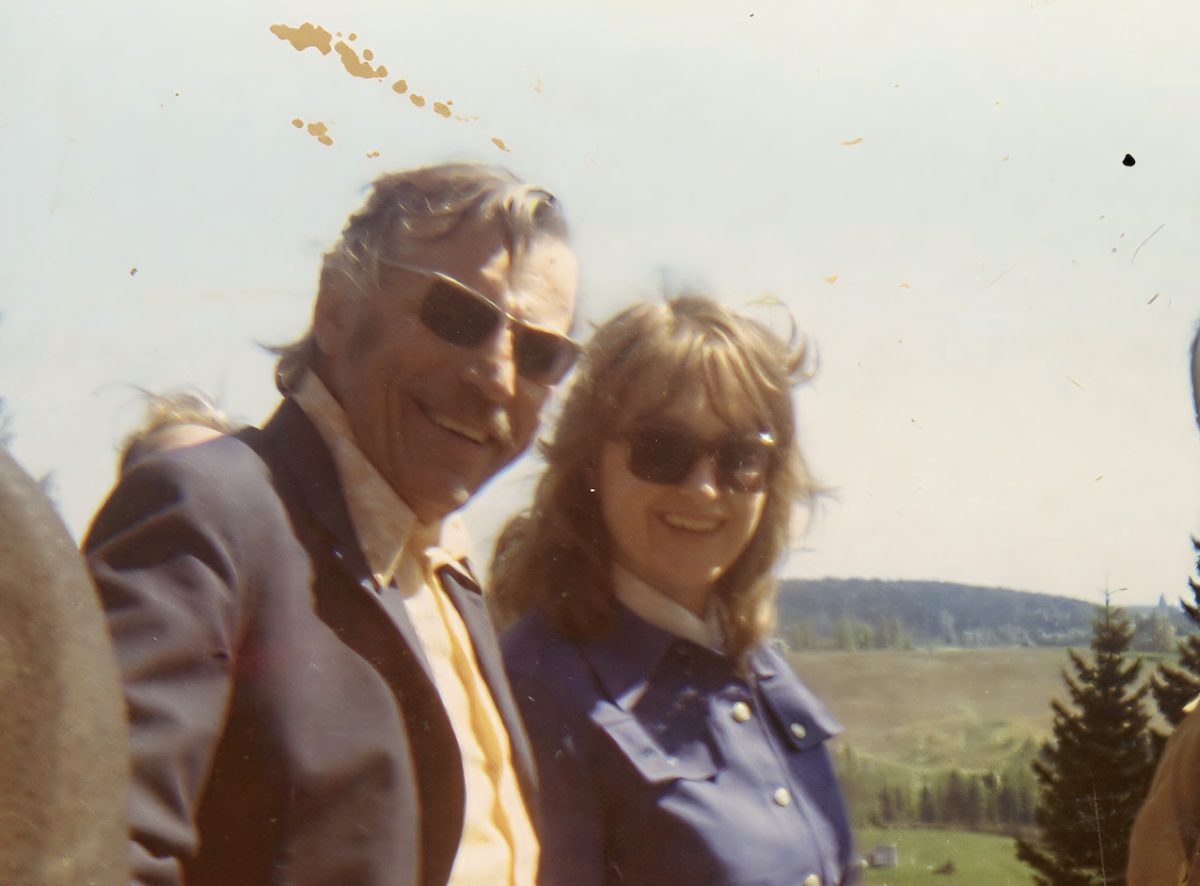
The kids liked my parents, you see unlike their own parents, Bodil and Arnold were "cool" - Arnold had long hair and pants with flares and Bodil had long blond hair and a hippy head band, so they looked nothing like other parents at the time.
Arnold who also did the bookkeeping was a strong lateral thinker, and soon figured he could make more money by closing the café during the day and only opening late afternoons.
During the day he could be creative and get lots of things done. No money in truck drivers anyway, he figured.
The transformation began. Out went the old cafe tables and chairs, in came a brand new Wurlitzer jukebox, with all the latest singles, Beatles, Dylan, Hendrix, Rolling Stones, etc.. and two pinball (flipper) machines.
The salesman from the Coca Cola company saw potential and offered to finance a new refrigerator and outdoor furniture. So too did the ice cream company, they provided a freezer and point of sale material. Hot dogs and hamburgers followed.
Arnold who now had the mornings free, turned the place into "hippie heaven" - he painted the walls red, ceilings black and white, built solid benches and tables with colourful cushions for the patrons who were now almost entirely teenagers and young adults.
Part of the main salon became a dance floor and of course there were red, blue and yellow 100 watt spotlights in the ceiling, with plenty of dark corners for teenagers to do what teenagers do.
Arnold was very creative and so were some of the patrons. One day after someone had scribbled on the bathroom wall, Arnold bought some coloured paints and asked one of the talented kids to decorate the bathrooms, I recall it as a fantastic piece of 1960's psychedelic art.
That same artist eventually painted the external wall (much to the disgust of our conservative neighbour). One thing is for sure, no one ever scribbled on the bathroom wall after that.
Another time someone had carved their name into a table with a pocket knife, vandalism you might think, so what did Arnold do?
He built a large table with a timber top and installed a soldering iron on the table so anyone could burn their name into the wood. The table became a piece of history.
The teenagers coined the place "Texas", it wasn't the official name but that's what they called it, yet despite drunkenness and fights with knives being rather common in our area, nothing like that ever happened at "Texas" - the kids had way too much respect for Arnold and Bodil.
Arnold and Bodil 1975 - Arnold and Bodil 1975
Bodil was not at all afraid of the kids even though some of the 19-year-old boys were bigger and stronger than her, she would command them to hand over the hip flask - which she knew was in their pocket, she would stow it safely behind the counter until they were ready to leave.
I bet many of the couples who carved their names in a heart with a soldering iron at Texas may be still be married today.
As for me and my brother who were only 10 and 5 at the time, falling asleep to Roy Orbison, Jimi Hendrix, Dylan and the sound of motorbikes vibrating through the house, was an experience that left a lasting impression.
We welcome your response for publication in our next issue, edition #83. Please briefly introduce the point you are responding to so your reply makes sense to someone who has not read the original article (max. 400 words).
Replies are subject to editorial approval.
7
AD
Advertisement
Un-Googled Advertising
Are Google Ads Driving You Mad?
Advertising with Hold The News is simpler.
We don’t sell clicks or lock you into a subscription. Your advertisement remains permanently attached to the edition in which it appears, allowing it to be seen whenever those articles are read—weeks, months or years after publication.
Better still, your advertising helps pay Australian writers and journalists instead of sending more money to an overseas technology giant.
No subscription. No ongoing commitment. Advertise from just $40 + GST.
As audiences debate the shrinking patience of the digital age, Christopher Nolan’s latest epic "The Odyssey" is defying the trend. Early critic reviews describe it as “a masterclass in sustained tension and visual storytelling,” with many praising its three‑hour runtime as “a reminder that immersion still matters.”
Reply to this article
We welcome your response for publication in our next issue, edition #83. Please briefly introduce the point you are responding to so your reply makes sense to someone who has not read the original article (max. 400 words).
Replies are subject to editorial approval.
9
Lifestyle & Culture
Kids’ Birthday Parties Don’t Have To Put a Hole in Your Credit Card
friends hugging at party - Pexels - credit Gustavo Fring - https://www.pexels.com/photo/girls-looking-at-the-camera-7155966/
Modern parents aren’t worried about keeping up with the Kardashians. They’re more concerned about keeping up with the Joneses as ordinary Australians spend thousands throwing the kinds of kids’ parties once reserved for major milestones. With premium party packages often exceeding $2,000 and magicians, DJs, and custom cakes becoming commonplace, it’s easy to see how costs climb. When every child’s birthday seems like a grand event, it’s also understandable that many parents feel pressured to spend beyond their budgets.
It's a myth that everyone’s spending a fortune on children’s birthday parties. A Choosi report published in 2023 found the average Australian family spends $320 on their child’s parties, so many parents aren’t falling for the marketing hype of party providers. Frugal families know that what you spend isn’t what makes a party special. Creating an experience that reflects your child matters more than the budget. So before you reach for your credit card, check out our tips for more affordable, memorable birthday parties.
Host at home With party experts suggesting families allocate around 40% of their budget for venues, hosting a party at home is an excellent way to save money. It’s not just affordable though; kids often feel more comfortable in their own space. Parties at home work best for people with large rumpus rooms or backyards, especially those with pools or playground equipment to keep kids entertained.
Visit a free public space If you have a small home or apartment, a free public space may be a better choice. Local parks, playgrounds, and beaches are all excellent free options with enough room for playing games and exploring. Check with your local council whether you need a permit or have to abide by any rules.
Limit the guests
guests with cake - Pexels - credit Thirdman - https://www.pexels.com/photo/kids-clapping-beside-a-birthday-cake-7600387/
Consider who you really need to invite, as every extra party guest costs more. An intimate gathering with your child’s closest friends can feel more special than a larger group event. If your school encourages inviting the whole class, then you could draw the line at siblings. You may also leave out any relatives your child isn’t especially close to.
DIY wherever you can Commercial decorations, packaged party food, and custom cakes all cost more than DIY alternatives. You’re paying for the convenience, so we recommend finding time to make your own. Themed backdrops and fancy balloon bouquets don’t really enhance the party experience for kids. Hit your local supermarket or department store for all you need to decorate your party space.
Simple food is always a winner with kids. Think budget-friendly treats like homemade sausage rolls, fairy bread, and fruit platters. Kids also care more about blowing out candles and enjoying a sugar rush than how much you’ve spent on the cake, so why spend hundreds on a custom option? They’ll love whatever you make, even if it comes from a packet. Decorate with their favourite lollies or ice it in their footy team’s colours to make it more personal.
Keep it short and sweet An all-day extravaganza might seem fun, but long parties often drag and cost more. Don’t plan a party longer than two hours to maintain kids’ interest. We recommend afternoon events that are over before dinnertime.
Spend smarter for a true celebration The best birthday parties often aren’t the most extravagant. They’re the ones that put your child at the centre, celebrating everything that makes them special rather than attempting to keep up with their peers or impress on social media. Before reaching for your credit card, consider what your child really wants. It might cost less than you expect.
Reply to this article
We welcome your response for publication in our next issue, edition #83. Please briefly introduce the point you are responding to so your reply makes sense to someone who has not read the original article (max. 400 words).
Replies are subject to editorial approval.
10
News
From Physical Ownership to Ephemeral Rights: Are We Giving Away Our Books, Music and Games?
Sony killing off PlayStation physical game discs is the latest reminder to us all that if you’ve paid for content, but can’t hold it in your hands, it can vanish into thin air at any time.
Society has long been moving from a culture of ownership to one of access. For generations, we owned the books we read, the movies we watched, the records we spun and the games we played. These precious collections could be kept, shared, sold or eventually passed down.
In the digital age, much of our entertainment comes through streaming subscriptions and digital licences rather than physical ownership. The shift to entertainment-as-a-service came in the guise of convenience for consumers, but in truth is more about corporate control and driving the profits of major rights owners.
More than 30 years after the first PlayStation hit the shelves, Sony recently announced that new games will soon be digital download only via the PlayStation Store, with production of physical game discs ceasing in January 2028.
Old discs will still be playable, but Sony says the move will enable it to “align more closely with how most of our community prefers to access and play games today”.
Sony fails to mention that the death of physical discs also gives the tech giant a monopoly on selling games for its consoles, while wiping out the second-hand game market, which inconveniently eats into new game sales.
Fighting Sony’s monopolistic tendencies is reason enough to push back against the latest demise of physical media, but this fight is not just for gamers – there is much more at stake.
Digital natives might scoff at those still attached to tangible media, only because they don’t appreciate what’s really been taken from them. Whether it be games, music, movies or books, the beauty of physical media is that once you’re holding it, it’s yours to do with as you wish.
Of course, technically, you don’t “own” the content, you’ve merely purchased a limited license to consume it privately. Even so, unless the rights owner breaks into your home in the dead of night to steal it back, they can’t delete your copy or stop you handing it to someone else.
Not so with digital content. As with most companies that sell digital downloads, Sony bans you from permanently giving your games to others or transferring ownership of your PlayStation account – so your games die with you.
Even worse, Sony can revoke a game at any time and remotely delete it from your console, so it can simply vanish in the night. Likewise, Amazon can delete purchased eBooks from your Kindle, Apple scrub music from your iGadgets and Adobe disable software on your computers.
This paradigm shift in the way intellectual property is traded is partly a push by the content giants to cut out retail middlemen and become the gatekeepers of everything we consume.
Making ownership intangible also makes it easier to encourage consumers to make the psychological leap from purchasing to subscribing.
Subscription services like Spotify, Netflix, Kindle Unlimited and Adobe Creative Cloud are less about consumer convenience and more about content giants chasing the new rivers of gold: the recurring revenues of as-a-service subscription models.
This shift also raises the question of economic equity; if you fall on hard times, you’re left with nothing once you stop paying the monthly bill.
This fear even extends to content that we really do own, such as our photographs and home videos. Once these precious memories are stored in the cloud, we must pay for access in perpetuity – still often without the right to bequeath the account and pass that content on to future generations.
The as-a-service model has been applied to everything from clothing to cars, targeting a new generation of “post-materialistic” consumers who are embracing the sharing economy.
Digital downloads and subscription models are painted as the way of the future, but never forget that anything you can’t physically hold can very easily slip from your grasp.
Reply to this article
We welcome your response for publication in our next issue, edition #83. Please briefly introduce the point you are responding to so your reply makes sense to someone who has not read the original article (max. 400 words).
July marks the start of a new financial year and the time to lodge your tax return. Rather than grumbling about it, remember paying tax is a privilege that comes with earning good money through the year. Tax time isn’t the time to complain about money garnished from your earnings or how the government’s spending it. It’s not the time for stress either, because our handy EOFY tax tips can help you meet your tax obligations and maximise your return.
Organise your essential information While every tax return is different, everyone needs some key details and documents. Organising this information before you start can streamline the filing process:
Tax file number
Income statement or payment summary
Receipts or statements supporting deductions, including expenses for home-based work, business travel, and charity donations
Private health insurance statement, if applicable
If you lodge your return online using myTax, some of this information may be pre-filled for you.
Only make legitimate deductions It can be tempting to boost your deductions to increase your return, but it’s just not worth the risk. You can only claim deductions for money you personally spent and haven’t been reimbursed for. You’ll also need receipts to prove your spending. Any claims for work deductions should directly relate to your income. The ATO’s occupation and industry guides are helpful resources for allowable claims.
When claiming expenses that overlap with personal use, such as home internet, only deduct the portion you used for work. If you’re using the Fixed Rate method for work-from-home claims, you can’t lodge separate claims for your electricity, gas, internet, stationery, and telecommunications.
Consider whether you need a tax agent
man with tax agent - Pexels - credit RDNE Stock Project - https://www.pexels.com/photo/men-sitting-at-the-table-7821681/
Tax agents can be helpful, but they aren’t right for everyone. The ATO’s myTax system makes lodging a tax return easy for anyone with a regular job and standard deductions. If your circumstances are a bit more complicated, hiring a tax agent may be worthwhile. Tax agents could be a good option if you:
Run a business
Have multiple jobs
Earn money from sources outside Australia
Own rental properties
Have an investment portfolio
They can also lodge your return after the October 31 deadline, so you might want to use one if you’re filing late.
Tax agents can often find extra tax deductions to increase your return, but there are no guarantees. You’ll also have to weigh up any gains with the hundreds you might spend in agent fees. These fees are tax-deductible, but you can’t claim them until the next financial year.
Understand your ABN obligations If you are a business owner or sole trader, you need an Australian Business Number (ABN). This number identifies your business and helps you avoid heavy tax withholding. Registering for an ABN is free, but you must meet the following obligations:
Pay tax on all business profits
Include your ABN on all invoices
Update the ATO on any business changes, such as new addresses, within 28 days
Register for GST if earning $75,000 or more. You will then add 10% to your prices for GST and report these charges to the ATO
Complete PAYG statements to prepay your tax in instalments through the year
Keep tax records for five years after filing
Reach out to the ATO for more advice If you’ve still got questions, the Australian Tax Office is an excellent resource. The ATO website has straightforward tax time advice for individuals, families, and businesses. You can also ask questions to the online ATO community or talk to ATO representatives over live chat or the phone. With so much help on hand, there’s no need for tax time stress.
Reply to this article
We welcome your response for publication in our next issue, edition #83. Please briefly introduce the point you are responding to so your reply makes sense to someone who has not read the original article (max. 400 words).
Replies are subject to editorial approval.
14
Opinion
Political screwballs and their satirical footballs
Screwball Political Candidates With Australian voters no longer endorsing our traditional two-party political system, the potential for screwball political candidates to fill the vacuum may soon be realised.
With acknowledgement to Wikipedia, let’s take a closer look at some of the screwball profiles of four political novelty candidates who have emerged in Western countries in recent years. These are candidates who run for political office in an election as a form of satire or protest, without seriously expecting to win. Despite their candidacy, they sometimes manage to achieve a degree of notability in the public media for their bizarre inclusions.
Vermin Supreme - Born Vermin Love Supreme, June 1961 - one of the best-known contemporary novelty candidates in the United States. Vermin is an American performance artist and activist who has run as a novelty candidate in various local, state, and national elections in the United States and has served as a member of the Libertarian Party's judicial committee.
A self-described Emperor of the New Millennium and friendly fascist Vermin ran on a platform of mandatory dental hygiene, zombie power and a pony for everyone, coming in third in the 2012 New Hampshire Democratic primary. He wears a distinctive outfit of lime green jacket and multiple neck ties and his headgear Is a large black rubber boot known as a wader. He often sports a green plastic Hulk fist holding an American flag as a cod piece. His campaign slogan is: "A vote for me is a vote truly wasted."
Captain Beany - Born Barry Kirk, September 1954, Beany is a British eccentric and charity fundraiser in South Wales. He has been a candidate in local and general elections throughout Wales. In 1986 Beany set a world record for the longest time sitting in a bath full of baked beans, which lasted over 100 hours. In 2000, he formed the New Millennium Bean Party, of which he was the sole member. In the 2024 UK general election he stood as an independent in the newly created constituency of Aberafan Maesteg, coming seventh out of eight candidates, then announcing he would not stand for any further elections. He began painting his face and bald head orange, donning a golden cape, pants, gloves and boots. To date, he claims to have raised over £100,000 for charity.
Lord Toby Jug - born Brian Borthwick, December 1965 was the leader of the Cambridgeshire and Huntingdonshire branch of the Official Monster Raving Loony Party, serving as the party's media officer and a prospective parliamentary candidate, until being expelled from the Loony Party in 2014. In January 2015 he founded "The Eccentric Party of Great Britain" in St Ives, after the Electoral Commission had rejected more than 30 suggested names, including the "Real Loony Party" and the "United Kingdom Independent Loony Party", for being too similar to those of other parties.
Count Binface – Born Jonathan David Harvey, May 1980, is a British scriptwriter, author, and novelty candidate who contests elections as the character Count Binface, an "independent space warrior" who wears a bin-shaped helmet. Harvey previously stood as a similar character, Lord Buckethead, but was forced to create a new character due to a dispute with the filmmaker Todd Durham, who owns the Buckethead character.
Binface claims to be an intergalactic space warrior in a black-and-grey uniform, with a long silver cape and a helmet shaped like a dustbin with a glowing strip in place of eyes. He describes himself as the leader of the Recyclons from the planet Sigma IX and claims to be over 5,900 years old. Binface has named his second-in-command as "General Waste". In an appearance on BBC’s Newsnight on 7 July 2026, when asked by presenter Paddy O’Connell to remove his mask, Harvey said that "nobody wants to know" what Recyclon's helmet is hiding, describing it as "absolutely putrefying".
Binface is currently the biggest rival to British Reform UK leader Nigel Farage at the coming Clacton byelection in London’s north-east. The SMH reports that he puts his appeal down to the fact that “I’m not Nigel Farage”. On social media, the SMH noted that Binface rated his chance of beating Farage as “Binevitable” and quoted British Chancellor of the Exchequer, Rachel Reeves’s comment to the effect that if Farage “wants to spend the summer arguing with a bin, I won’t stop him.”
Some of Binface’s more bizarre political policies include:
Nationalising model railways and Adele
introducing a minimum voting age of 16 and a maximum of 80
moving the hand dryer in the men's toilet at the Crown and Treaty pub, Uxbridge to a more sensible position
banning loud snacks from theatres
banning the use of the speakerphone function on mobile phones, with offenders forced to watch the - 2019 film “Cats” every day for a year
abolishing video assistant referees
building "at least one affordable house", referring to the housing crisis in London
reducing the price of 99 Flake ice creams to 99 pence, and
Inviting European nations to join the UK
You will have noted that of the above four screwball independent candidates, most are from the UK and all of them are men, although there is the odd British female satirical candidate, such as Mad Cow Girl, amongst the recent cohort.
As Australian politics often mimics its British counterpart, I imagine we can look forward to the emergence of whacky Aussie candidates with names like Bin Chicken Birdman, Budgie Smuggler Bloke, Chuck a Sickie Party or, for the ladies, Throw a Barbie for Barbie Party.
Reply to this article
We welcome your response for publication in our next issue, edition #83. Please briefly introduce the point you are responding to so your reply makes sense to someone who has not read the original article (max. 400 words).
Replies are subject to editorial approval.
15
Science & Tech
The worst plastic polluter is in your house right now, and it’s not what you think
Got any ideas about what the worst plastic polluter in your house is right now?
It's not the takeaway container you forgot in the fridge. It's not the shampoo bottle in the shower. And it isn't the mountain of soft plastics you've been meaning to take back for recycling.
According to environmental scientists, one of the biggest sources of household microplastic pollution is likely sitting right beside your kitchen sink: it's certain types of synthetic cleaning sponges, particularly melamine foam sponges.
Melamine foam sponges release millions of microplastics
Most of us don't give kitchen sponges a second thought. We buy them, scrub the dishes, throw them out when they start looking a bit questionable, and repeat the cycle.
Because they're soft and squishy, it's easy to assume they're made from something fairly natural.
They're not.
Most of the brightly coloured sponges lining supermarket shelves are made almost entirely from plastic.
The soft foam section is usually polyurethane, a petroleum-based material. The rough green scrubbing pad attached to the top is often made from polyester or nylon.
In other words, that innocent-looking little sponge is essentially a block of plastic designed to slowly wear away.
And that's exactly what it does.
Every time you scrub baked-on lasagne from a casserole dish, scour a greasy frying pan or give your favourite coffee mug an enthusiastic clean, tiny fragments break off the sponge.
You can't see them. You probably wouldn't notice them if you could. But they're there.
Because these fragments are smaller than five millimetres, they're classified as microplastics, and they don't just disappear down the drain.
For years, scientists suspected that household cleaning tools were contributing to plastic pollution, but they didn't know exactly how much. Then researchers decided to find out.
In a study designed to mimic everyday wear and tear, environmental engineers collected and counted the microscopic fibres released by melamine cleaning sponges. The numbers were astonishing.
For every single gram of sponge material that wears away (about the weight of a paperclip), roughly 6.5 million microplastic particles are released. Now, imagine multiplying that by millions of households washing dishes every day.
Suddenly, the humble kitchen sink starts to look less like a place where we clean up, and more like an unexpected pipeline carrying plastic into the environment.
So where does it all go?
When you rinse away the soap bubbles, the water travels to wastewater treatment plants.
These facilities do an incredible job removing larger waste, organic matter and many pollutants. But they weren't built with microscopic plastic fibres in mind.
As a result, many of these tiny particles slip through filtration systems, eventually making their way into rivers, estuaries and oceans.
Once there, they don't dissolve. Instead, they float through the water like tiny hitchhikers.
Researchers have found that microplastics can attract and carry other pollutants already present in the environment, although scientists are still investigating the extent of these effects. Small marine animals mistake them for food. Tiny shrimp eat them. Small fish eat the shrimp. Bigger fish eat the smaller fish. And, eventually, some of those seafood species end up back on our own plates.
It's one of those uncomfortable reminders that there really isn't an "away" when we throw things away.
There’s a really simple solution
The good news is that this is one environmental problem that's surprisingly easy to do something about.
You can simply change your sponge. Cellulose sponges, made from plant-based wood pulp, work much like conventional foam sponges but break down naturally at the end of their lives.
Natural scourers made from coconut husk fibres or sisal, which comes from the agave plant, can replace synthetic scrubbing pads.
Even loofahs, yes, the same plant many people associate with the bathroom, can be sliced into surprisingly effective kitchen scrubbers.
They're tough on baked-on food and compostable when they've reached the end of their usefulness.
None of these swaps will solve the plastic crisis on their own, but that's often how meaningful environmental change happens. Not through one grand gesture, but through millions of ordinary people making slightly different choices in ordinary moments.
We welcome your response for publication in our next issue, edition #83. Please briefly introduce the point you are responding to so your reply makes sense to someone who has not read the original article (max. 400 words).
I was getting a bit warm in the morning sun and could feel my face starting to glow; so I headed back indoors, put my sweater back on, turned up the heater and settled back down at my desk to work.
And I know I'm not the only person in Australia who sometimes feels warmer outside than in during winter.
Every year, Australians perform the same ritual. We dig out the extra blankets, complain about the power bill and spend three months wondering why our homes always seem cold.
Australia isn't a particularly cold country by global standards. In fact, it's seen as a warm haven by many. Yet visitors from Europe, North America and even parts of Asia are often surprised by how cold Australian homes feel once the temperature drops.
The problem isn't the weather. It's the buildings.
For decades we've accepted that winter means wearing a jumper indoors, keeping a blanket on the couch and avoiding certain rooms because they're simply too cold. Rather than asking why our homes lose so much heat, we've tended to buy another heater.
The Australian Government's [1] website argues that the most comfortable homes in winter aren't necessarily the ones with the biggest heating systems. They're the ones that keep warmth where it belongs. Good insulation, effective draught sealing and thoughtful design reduce the need for heating in the first place, making homes both more comfortable and cheaper to run.
It's an idea that's easy to overlook because the things that make a home energy efficient are largely invisible.
When Australians buy a house, they notice the renovated kitchen, polished timber floors and landscaped garden. They imagine summer barbecues on the deck.
Few people ask what sits above the ceiling.
Insulation is one of the least glamorous parts of a house. You can't photograph it for a real estate listing and it won't help sell a property on a sunny spring Saturday. Yet it may be one of the most valuable investments hidden inside the walls.
According to Your Home [1] insulation acts as a barrier to heat flow, helping homes stay warmer in winter and cooler in summer. Combined with sealing gaps around doors, windows and floors, it can significantly reduce the amount of energy needed to heat and cool a home throughout the year.
For homeowners, winter is often the best time to see where a house is letting them down. Does one bedroom never seem to warm up? Is there a noticeable draught under the front door? Are the curtains little more than decoration? These are often signs that warmth is escaping long before the heater has done its job.
The solutions don't always require a major renovation. Door seals, draught stoppers, heavier curtains, rugs on timber floors and topping up ceiling insulation can all improve comfort while reducing energy use. Your Home also recommends making the most of winter sunshine by opening curtains on north-facing windows during the day and closing them at dusk to trap the warmth inside.
Renters don't have the same freedom to renovate, but they're not powerless. Temporary weather seals, door snakes, thicker curtains and rugs can all make a noticeable difference without altering the property. They're inexpensive improvements that can pay for themselves over a single winter.
As electricity prices continue to rise, Australians are becoming more conscious of how much it costs to keep a home comfortable. Perhaps the bigger question is why so many houses still require so much heating in the first place.
I should say that, as an Englishman who has lived in Australia for 25 years, I've never lived in a Sydney house that was genuinely warm in winter. Yet I've never found an English house that stays cool in summer. If I visit my parents' home in England during winter, it's like walking into a sauna. Just like being warmer outside than in, I suppose that's one of life's little ironies.
We welcome your response for publication in our next issue, edition #83. Please briefly introduce the point you are responding to so your reply makes sense to someone who has not read the original article (max. 400 words).
There was not much point in trying to track down the beguiling Darna Del Rosario. But she had done us a favour. I got my PA Clarence Ironmonger to chase up the estate agents for Dana’s apartment. They were less than impressed with Darna’s midnight flit and agreed to hold the unit for a few days while we found a replacement tenant for them.
I put a call through to Cameron Miller at the Hilton and told him I’d found the perfect digs for him in Darwin. Within a day, he was lugging his belongings through the front door of Darna’s apartment which, thanks to Clarence, now boasted a new front door deadlock.
‘Langley is asking me some awkward questions,’ he announced to me, as I helped him into his next door apartment.
‘So what have you told them?’
‘Nothing yet. Can you help me out with this?’
We sat down over a house-warming single malt in my dining room and worked on a suitable pretext.
‘Your request to them can’t be traced back to us in any way Cameron,’ I began. ‘Otherwise, Langley will start firing off messages to Canberra and I will be faced with a ‘please explain’.’
‘Who then?’ he wondered.
‘It’s got to be CIA-centric and CIA-non-disclosable – especially to my people, because its on our turf.’
‘Go on.’
‘So we need to create a fictitious deep throat – a Darwin-based asset with some highly perishable intelligence about a potential threat to one of your key installations here, but one who also fears for their life if their intelligence is disseminated too broadly.’
‘Langley will need some details. What does the asset call him or herself.?’
‘Let’s go with ‘Catch-22’, gender is male.’
‘And what’s Catch-22 offering in the ‘Crown Jewels’ department?’
‘Evidence of a Russian intelligence network inside the US command at Robertson Barracks.’
Miller’s pupils dilated slightly.
‘So why contact me about this in Manila?’
‘Because the male who rang our office public line number asked to be put in touch with someone from the CIA and that’s when I rang you in the Philippines.’
Miller drained his glass and nodded for a refill.
‘So if someone wants to listen to the public line call from this Catch-22 guy what are you going to tell them?’
‘Jeez Cameron,’ I sighed, ‘haven’t you ever come across the situation before where tapes have been accidentally erased?’
‘Only in the White House,’ he smiled.
I emptied then refilled my own glass and we clinked.
‘Do you have an entrée to Robertson Barracks?’ I asked. ‘Will there be protocol problems for you?’
He signed.
‘Leave it to me,’ he suggested. ‘I may have to feed a cock and bull story – as our Brit friends say – to the CO out there, but let’s just say that’s really my problem, not yours.’
‘And the gear I’ve requisitioned?’
‘Might take a few weeks, but I should be able to get you what you want. Issue now is where to store it.’
‘I’ve thought about that Cam. We have a small tech room in the office next to mine. It should be safe enough there.’
He nodded.
‘There is one other thing you’ll need to think about Michael,’ he said. ‘Some of this equipment requires technical skills that neither you nor I has.’
‘So?’
‘Langley will almost certainly want its equipment to be accompanied out here by one or more of its technical team – which means that one or more of our people are going to be across your precious Operation Catch-22.’
‘Then so be it,’ I replied. ‘Seems like we may have to solve that problem when it presents itself.’
Cameron finished his second glass and pushed it towards me.
‘Let’s sleep on all this for the moment, Michael,’ he suggested. ‘I’m pretty beat and this little plot of your is starting to do my head in.’
‘You don’t know half of it,’ I sighed.
‘Maybe I should,’ he replied as he headed for my front door, jingling his new set of keys.
--- o0o ---
Miller kept himself busy and out of my hair for the next fortnight or so. This allowed me to begin crafting plausible scenarios for my two new investigators to make their acquaintance with members of the Cunningham family. First off, Celina Harrington needed a dummy identity. We settled on ‘Cecilia Hanson’- the 28-year-old daughter of a professional fisherman who’d grown up in the fishing town of Eden on the New South Wales southern coast. She’d worked as a deck hand on her old man’s boat after leaving school. Her parents were now dead and her older brother had married and was living overseas. The business was left to her and she’d recently sold it for a pretty penny.
Within a week, ‘Cecilia Hanson’ was fully documented – with a NSW driver’s licence, a cashed-up bankcard and Medicare and medical insurance cards. She used both the Internet and the local Darwin library to bone up on the Australian fishing industry, particularly the one located in Eden. She could soon recite what species of fish inhabiting that part of the world and began researching how she could begin experiencing the joys of barramundi fishing in the Top End – her new sea-change. She moved into a cheap room at The Cav and began mixing with the patrons there. We already knew Kurt Cunningham to be a regular at that pub. Now all we needed was for Cecilia to connect with him there.
As with so many of these scenarios, the connection came totally unexpectedly, and not how we would have envisaged.
We welcome your response for publication in our next issue, edition #83. Please briefly introduce the point you are responding to so your reply makes sense to someone who has not read the original article (max. 400 words).
Replies are subject to editorial approval.
20
News
Ukraine’s reverse psychology – what if it had reverse missile technology?
It is generally recognised that one of Russian’s few remaining advantages in its grinding 52-month war with Ukraine is its ballistic missile technology that has been taking out civilian targets in Kyiv and murdering a growing number of civilians there in recent weeks.
All except these attack weapons from Russia have been capable of interception by the Ukrainian military. As Ukrainian President Zelensky has admitted, ballistic missiles are now Russian President Putin’s only remaining edge in a war the Russian leader is otherwise losing on most other fronts.
But as we in the West are beginning to discover, the Ukrainians are nothing if not inventive.
They now lead the world in attack drone technology which has severely disabled key Russian naval and petroleum targets and facilitated Ukraine’s ground war campaign. And they have done it without much help from so-called allies they would have expected more from.
According to Wikipedia, Russia has heavily relied on its Iskander and Kinzhal ballistic missiles for conventional precision strikes against infrastructure targets. Because these ultra-fast missiles travel at several times the speed of sound and often feature evasive flight profiles, they pose significant challenges to conventional air defence systems.
But what if the Ukrainians could come up with a method of controlling the flight of these people-killers and turning them back from whence they came?
Sound improbable? Well, maybe not to the Ukrainians.
I’m no technocrat, and maybe I’ve seen too many Bond movies, but I would love to think that someone in Ukraine has been working on this problem.
So … what if the Ukrainians were able to figure out a way of reversing the trajectory of a Russian ballistic missile, u-turning it before it reached its target and sending it back to its sender?
Could you imagine the look on V.V. Putin’s face when he suddenly finds his people-killers hurtling back towards him, with little chance of being intercepted on the home front?
If ever the Ukrainians get to this point, I’m sure their war with Russian will take on new dimensions. Problem is that the Iranians and PRC would want to pinch this technology and use if for their own purposes – on Israel and US bases in the Middle East and, in China’s case, on Taiwan … down the track. By then, Russia may be reduced to a second-tier power and NATO boosted with several new geographic editions, including the Republic of Ukraine.
History is full of strange quirks.
Could this conceivably be one of them?
Reply to this article
We welcome your response for publication in our next issue, edition #83. Please briefly introduce the point you are responding to so your reply makes sense to someone who has not read the original article (max. 400 words).
Replies are subject to editorial approval.
21
Science & Tech
The future of clothing: Garments that think, heal, and may barely need washing
Take a look inside your wardrobe and you'll notice something surprising. Despite all the dramatic shifts in fashion over the last century, the basic blueprint of our clothing hasn't really changed. But, all that's about to change. Behind the doors of material science laboratories, researchers are quietly reimagining what clothing can be.
Clothes that wash themselves
Laundry is one of those household routines most of us barely question. Clothes get dirty, so we wash them.
Yet scientists are increasingly asking whether this endless cycle of washing, drying and replacing garments, is simply a consequence of outdated textile technology rather than an unavoidable fact of life.
One of the most promising developments involves something called photocatalytic nanotechnology.
Researchers have discovered ways to permanently bond microscopic particles of materials such as titanium dioxide, silver and copper to natural fibres like cotton and hemp.
When exposed to sunlight, or even certain forms of indoor lighting, these particles absorb energy and trigger chemical reactions that break down organic matter.
In practical terms, that means the fabric can begin dismantling the very things that make our clothes dirty.
Sweat-causing bacteria are reduced, odours are reduced, and stains from substances like grease or wine may gradually degrade.
Rather than relying entirely on detergents and repeated washing cycles, the garment itself becomes an active participant in keeping clean.
The implications stretch well beyond convenience. Skipping just one load of laundry each week could save thousands of litres of water over the course of a year for the average household, while also reducing detergent use and the chemical runoff that eventually finds its way into rivers and waterways.
The jacket that heals itself
Few things are more frustrating than snagging a relatively new jacket on a protruding nail or catching your sleeve on a rough edge, only to discover that the small tear you hoped would go unnoticed has somehow expanded into permanent damage.
In the future, however, damaged clothing may be able to repair itself.
Scientists are developing self-healing textiles using microcapsules embedded directly within the fibres of the fabric.
When a small puncture, abrasion or tear occurs, these capsules rupture and release specialised compounds into the damaged area.
Triggered by environmental conditions such as heat, light or simple exposure to air, the fibres begin reconnecting, restoring much of the material's original strength.
I mean, it’s like something out of science fiction, isn’t it?
Early prototypes have shown promising levels of recovery after minor damage.
Beyond saving us from replacing favourite pieces of clothing, the environmental benefits could be substantial.
When your T-shirt becomes a health monitor
Wearable technology has become so commonplace that many of us barely notice it anymore.
Watches count our steps, phones estimate our sleep quality, and fitness trackers monitor our heart rates throughout the day.
The next evolution of wearable technology may involve removing the gadget altogether.
Scientists are weaving conductive yarns and flexible fibres directly into textiles, creating fabrics capable of collecting health information while remaining soft, comfortable and entirely unremarkable in appearance.
Some of these fibres can even generate small amounts of electricity through ordinary movement, allowing them to help power the systems they support.
Because these sensors maintain continuous contact with the skin, they may provide more stable readings than devices worn loosely around the wrist.
Future garments could monitor heart rhythms, hydration levels, breathing patterns, muscle activity, and changes in movement that may signal fatigue or an increased risk of injury.
For patients recovering at home after surgery, this technology could allow doctors to receive ongoing clinical information without requiring constant hospital visits.
For athletes, it may help optimise performance and reduce injury risk.
For everyone else, it could simply offer a more seamless way to understand what's happening inside our own bodies.
What if clothes never became waste?
The fashion industry has a complicated relationship with waste. The rise of fast fashion has made clothing more affordable and accessible than ever before, but it has also created an enormous environmental burden.
Many garments are made using petroleum-based fibres such as polyester and nylon, materials that can persist in landfill for hundreds of years.
Designers and scientists are increasingly asking a different question: what if clothing didn't become rubbish at all?
Researchers are experimenting with bio-based alternatives derived from renewable sources. Seaweed is being transformed into stretchy fibres capable of replacing synthetic elastane. Mushroom mycelium, the intricate underground network that gives rise to fungi, is being developed into leather-like materials that require neither livestock nor fossil fuels.
Even more exciting is what happens when these garments eventually reach the end of their useful lives.
Instead of being thrown away, future textiles could be chemically broken back down into their original building blocks and transformed into entirely new fabrics.
Yesterday's jumper could become tomorrow's running shirt, which could eventually become another garment altogether.
A wardrobe that works harder
One day, getting dressed in the morning may involve slipping into garments that are quietly looking after themselves, supporting our health, and reducing their impact on the environment at the same time.
We welcome your response for publication in our next issue, edition #83. Please briefly introduce the point you are responding to so your reply makes sense to someone who has not read the original article (max. 400 words).
Replies are subject to editorial approval.
22
News
Weekly digest — stories relevant to Australia, 11–18 July 2026.
Hold The News is a magazine where Australian writers and journalists, inform, educate and entertain readers with well written five minute articles. It's not our intention to compete with the daily news services, however if you for whatever reason missed last weeks headlines, here is a summary of headlines.
Editor
Charges laid over Laos methanol deaths Lao authorities have charged a distillery owner following the methanol poisoning that killed six tourists in Vang Vieng in November 2024. The victims included Australian teenagers Bianca Jones and Holly Morton-Bowles.
The charges reportedly relate to selling harmful food products and operating an illegal business. Depending on the offences and how they are prosecuted, the owner could face between three months and four years in prison. The Australian government and the victims’ families have criticised the charges as inadequate. Special envoy Pablo Kang has travelled to Laos to convey Australia’s concerns.
Tasmanian minister criticised over response to journalist Tasmanian Police Minister Felix Ellis has been criticised for his public response to a journalist who questioned him about firearm ownership and gun control.
The question followed an alleged burglary at Coles Bay in which 15 firearms were reportedly stolen. The homeowner was allegedly assaulted and restrained before the house was destroyed by fire. Ellis responded by criticising the journalist on social media, prompting further criticism of the reporter from some of the minister’s supporters.
Child Protection employees stood down Twenty-seven employees of South Australia’s Department for Child Protection were stood down between July 2025 and February 2026, according to documents obtained through Freedom of Information laws.
The documents also showed that 12 investigations arising from care concerns remained open at the end of February. Child Protection Minister Alice Rolls said employees could be directed away from work for several reasons, including alleged misconduct, performance issues, medical incapacity or the loss of an essential qualification. Being stood down does not necessarily mean an employee has committed misconduct.
Sydney rents reach record level Sydney’s median weekly asking rent for houses rose by 6.3 per cent during the June quarter, increasing by $50 to a record $850 a week, according to Domain.
Results varied considerably between suburbs. Abbotsford recorded a 41.3 per cent annual increase in median house rents, while Milperra rose by 29.4 per cent and Monterey by 28.9 per cent. Other suburbs recorded falls, producing a mixed picture across the Sydney rental market.
Robodebt whistleblower alleges workplace threats
Robodebt whistleblower Jeannie-Marie Blake is suing the Australian government over her alleged treatment before and after giving evidence to the robodebt royal commission.
Blake alleges she was warned that giving evidence “could cost you your job” and that she subsequently experienced increased scrutiny and reduced workplace flexibility. The government denies that she was threatened or discouraged from appearing and is contesting her claims. The matter is now before the court.
Herbert equals major golf record Australian golfer Lucas Herbert shot an eight-under-par 62 during the second round of the British Open at Royal Birkdale, equalling the lowest round recorded in a men’s major championship.
Herbert birdied six of his opening nine holes and reached the halfway point of the tournament at eight under par. He narrowly missed a short par putt on the final hole that would have given him a record round of 61. American golfer Sam Burns also recorded a 62 later in the day.
Childcare worker faces 329 charges Sydney childcare worker Hamish Tait is facing 329 charges relating to the alleged abuse of 136 children over a 16-year period.
The charges include producing child abuse material, filming people engaged in private acts without consent and using children under 14 to produce child abuse material. Australian Federal Police investigators have contacted more than 120 families in Australia and overseas, and the investigation has expanded to locations outside New South Wales. The allegations have not yet been proven in court.
---
Weekly digest — stories relevant to Australia, 11–18 July 2026. Sources: ABC News Australia, Guardian Australia, BBC News Australia, Sydney Morning Herald
Reply to this article
We welcome your response for publication in our next issue, edition #83. Please briefly introduce the point you are responding to so your reply makes sense to someone who has not read the original article (max. 400 words).















_6a290ab81b5f38.27968599.jpg)


