It started out innocently enough. Just a weekly pub trivia night. No big deal. But before long, I started playing a monthly music trivia once a month. More themed trivias, every now and again, followed. The jackpot for another local pub climbed past $500, and soon I was playing there every week too. Now with every week involving two to four trivia nights, I’ve started to realise I may be an addict. Here’s why you should be one too.
Trivia encourages social interaction Only 53% of Australians see friends or family members outside their household on a weekly basis, according to the Bureau of Statistics, and I’m one of them thanks to trivia. When socialising becomes part of a routine, like playing pub trivia, it’s easier to make time for your loved ones. When you do, it boosts your mood, improves your confidence, and reduces stress.
Trivia nights don’t just help people connect with their existing circle. I’ve made countless friends with other trivia lovers as we chatted between rounds and bantered over answers. Our friendships have gone beyond the pub. They’re now some of the most important people in my life.
It breaks up your routine Before I discovered pub trivia, the 40-hour working week dragged on. Trivia nights break up the monotony and help me avoid the midweek slump. Stepping away from the responsibilities of the working week, indulging in a pub feed and some fun with my friends, makes me feel less overwhelmed and more excited about life. I’ve been playing trivia for years and I honestly look forward to it every week.
It keeps your brain active
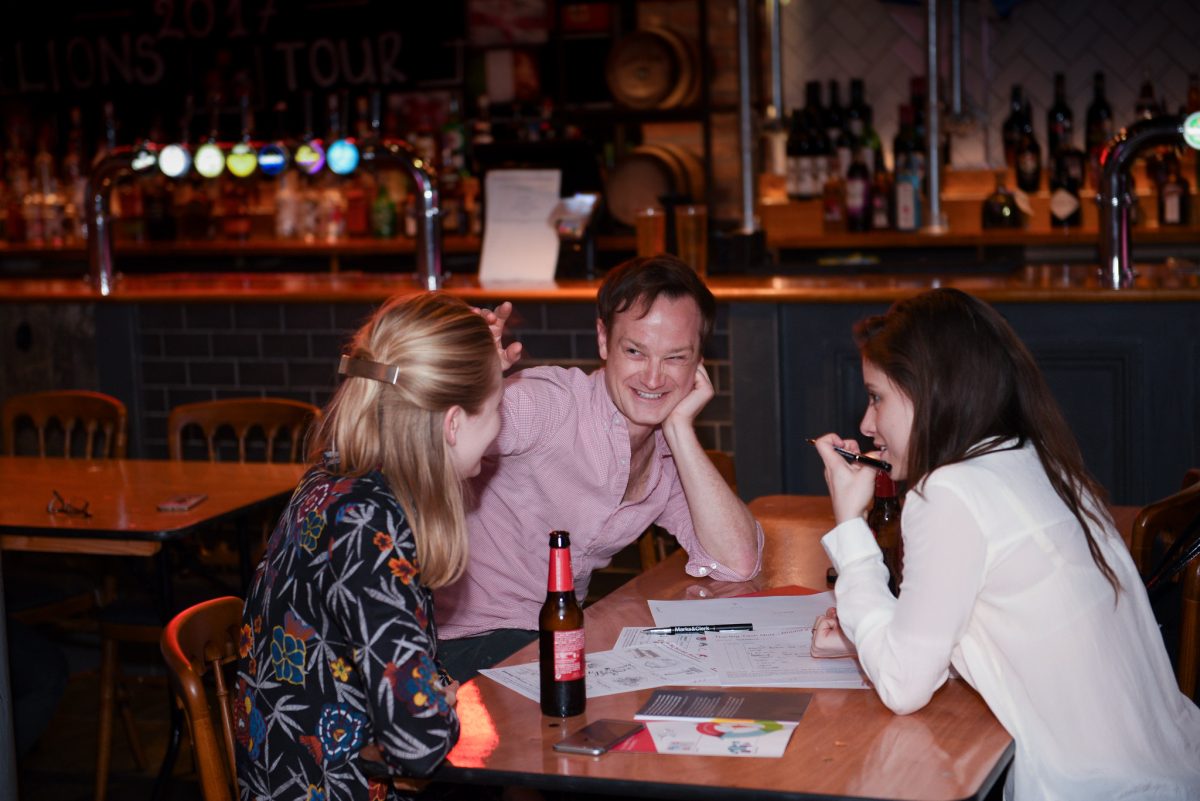
Friends playing trivia - Flickr - credit Mark Hakansson - https://www.flickr.com/photos/25383706@N00/34480890484/in/photostream/
Trivia gives your brain a real workout by encouraging it to recall facts, solve puzzles, and learn new information. It’s a great way to improve your memory and focus, especially compared to typical nights in watching TV. Your brain also receives a delicious dopamine hit whenever you correctly answer a tricky question.
It gets you off your devices Nearly half of us resolved to cut our screen time in 2026, according to 7News, yet many of us still spend our evenings scrolling and binge-watching TV. Attending pub trivia breaks that habit. Most trivia nights ban phone use to prevent cheating, but that rule brings some unexpected benefits. Attendees are more present, engaging with one another instead of their online contacts and using their brains, rather than Google, to come up with the answers.
It supports your local pub Pubs typically hold trivia on their quietest nights. While these events are usually free, most people purchase drinks and a meal. The money you spend helps pubs pay their staff and keep the lights on. Most pubs are independent businesses, so your support keeps money and jobs in your local community.
I’m not saying you have to structure your social life around trivia nights as I do, but I encourage you to get out there and check out the trivia night at your local. You’ll test your grey matter, get off the phone, and maybe even make some new friends. Just don’t be surprised if you can’t stop at just one.
Reply to this article
We welcome your response for publication in our next issue, edition #80. Please briefly introduce the point you are responding to so your reply makes sense to someone who has not read the original article (max. 400 words).
Replies are subject to editorial approval.
2
Humour & Satire
Early Census Results suggest most elaborate ‘piss take’ yet
Peta 'The Cretin' Credlin - Created by Gwynn Earl for HOLD THE NEWS
The Australian Bureau of Statistics has proudly announced that this year’s census has delivered “a rich dataset for informed policy decisions”
(which is public‑service speak for ‘we know you're all still giving ridiculous answers to these questions, but we can’t prove anything’.)
In spite of early tantrums by right wing comedy Sky News pundits like Peta Credlin, (Who started an erroneous social media outrage that ‘Judaism’ had been removed from the census form this year in blatant anti-semitism, only to later realise and confess it had always been under ‘other’), this year gave the average Australian more opportunities than usual for charlatanry and larrikin shenanigans.
With new categories like ‘gender assigned at birth’ and ‘gender I currently identify as’ -- those who see census night as an opportunity to troll the federal government had ample opportunity to describe their assigned gender as ‘average man with a small penis complex’, and the gender they currently identify as ‘man with a BMW to compensate’ , and other hilarious variations.
The usual thrill of Melbourne student share houses, who decided to hold census night parties, so they could see how many people they could fit into their house on August 11, just to make the government’s job more confusing.
Certainly, a reasonable proportion of Jedi, Sith and flying spaghetti monster worshippers will be recorded across the inner city suburbs.
Some other cracking responses to ambiguously sounding questions like ‘Where Did The Person Usually Live Five Years Ago?‘ will attract the usual array of sardonic responses such as “At the pub”, or “Wherever the cheapest rent was that week”
Other fun questions which caused an outburst of husband/wife arguments and spats of domestic violence whilst reading over “In the last week did the person spend time doing unpaid domestic work for their household?”.
Other questions like “In the last two weeks did the person spend time looking after a child, without pay?”, had many parents shocked to learn, and questioning whether they could theoretically invoice their own children?
'I can get paid for this?'
Tawdry jokes in response to sexual orientation such as ‘I do missionary position towards the North. Does that count?’ were recorded in the usual numbers.
Hopefully this information will be enough to fix the potholes in our roads?
Reply to this article
We welcome your response for publication in our next issue, edition #80. Please briefly introduce the point you are responding to so your reply makes sense to someone who has not read the original article (max. 400 words).
Replies are subject to editorial approval.
3
AD
Advertisement
Advertise with us from $40.00 per week.
The Perfect Storm For generations, Australian businesses advertised their products and services in the local press, thereby funding the industry.
Today, most of that advertising revenue goes to Google, Meta and X, global tech. companies who channel most of their profits out of Australia.
As if that wasn't bad enough, the internet is being flooded with AI-generated articles that few people genuinely want to read.
Hold The News publishes original, human-written articles by talented Australian writers - offering a read you won't regret.
If you have a product or service and you would like to advertise to our readers, become a sponsor - you’ll reach a local audience and feel good about supporting Australian journalism.
Ads start from $40.00 Click the button below to become a sponsor.
There was a time when booking a cheap flight apparently required the kind of strategy normally reserved for a casino heist. Search on a Tuesday. Clear your cookies. Open an incognito browser. Book exactly six weeks before departure. Never buy on the weekend. Wait until midnight. Sacrifice a luggage tag under a full moon.
Okay, perhaps not that last one.
But airfare folklore has been passed around for years, and plenty of us still follow at least some of it. The trouble is that airline pricing has changed considerably, and many of the tricks we swear by are either outdated, oversimplified or simply not true.
So, which travel myths still deserve a place in your trip-planning toolkit?
Myth: Tuesday is the cheapest day to book
This may be the grandparent of all airfare myths.
The idea dates back to an era when airlines tended to release fares and specials on particular days, meaning Tuesday could genuinely be a good time to go bargain hunting.
These days, fares move constantly, responding to demand, availability and a whole tangle of automated pricing systems. There is no universally magical booking day.
In fact, Expedia's Australian 2026 Air Hacks data says Thursday is currently the cheapest day for Australians to book, although the more interesting point is how much this advice can change from year to year. Expedia's 2025 Australian report named Sunday as the cheapest booking day.
Which rather proves the point. Tuesday isn't sacred, and neither is Thursday.
Verdict: Mostly myth. Don't organise your week around buying plane tickets.
Myth: You should always fly midweek
This one has a little more life left in it, although again, there is no single rule for every route.
Historically, flying when fewer people want to fly has often meant paying less. Often Monday, Tuesday and Wednesday departures are cheaper on average than weekends. But Australia's latest Expedia data throws an interesting spanner into the overhead locker, finding Friday the cheapest day for international travel in 2026, around 12 per cent cheaper than Sunday.
The better rule is therefore not to fly on Tuesday, but to be flexible with your departure date.
When searching, move your trip forward and backward by a day or two. Google Flights' date grid and price graph are designed specifically to show how much fares change across different departure dates.
Verdict: Sometimes true, but flexibility beats loyalty to a particular weekday.
Myth: Airlines know you've been searching and put the price up
You search Melbourne to Tokyo. It costs $850. You return later and suddenly, boom, $917.
Clearly the airline knows you want to go to Japan and is now personally tormenting you.
However, the advice is to delete your cookies, switch browsers, go incognito and perhaps assume an entirely new online identity before daring to search again; actually offers little evidence of price savings.
According to Skyscanner, prices on its platform remain the same whether you search normally or in incognito mode. It attributes fare changes to the much less sinister explanation of dynamic pricing, including changing demand and availability. That doesn't mean prices aren't changing while you're looking. They absolutely can. It just doesn't mean you're being punished for checking three times during lunch.
Verdict: Myth. You may use incognito mode if it makes you feel better, but don't expect it to magically unlock secret fares.
Myth: The earlier you book, the cheaper the flight
Booking early can be smart, particularly for school holidays, Christmas, major events or routes where you have very little flexibility.
But booking as early as possible isn't automatically cheapest. For Australian domestic economy fares, Expedia's 2026 data puts the most affordable booking window at roughly four to six weeks before departure.
Google's international data also shows that the sweet spot varies considerably depending on destination and travel period. Its 2025 analysis found international fares were generally lowest 49 days or more before departure, while domestic fares reached their low point around 39 days out.
The takeaway? There is no universal 'book six months ahead' rule.
Verdict: Half true. Early is generally safer, but earliest isn't necessarily cheapest.
Myth: Last-minute flights are cheap
Anyone old enough to remember standby fares may still harbour dreams of arriving at the airport with a toothbrush and scoring a wildly discounted seat somewhere fabulous.
Unfortunately, airlines generally know that someone booking tomorrow's flight is more likely to need to travel tomorrow. Business travellers, family emergencies and fixed commitments aren't usually price-sensitive customers.
There can certainly be last-minute bargains when airlines want to fill seats, but counting on one is less travel strategy and more roulette wheel. If you have fixed dates or a particular destination in mind, waiting until the final few days can leave you choosing between an expensive fare and telling everyone you never really wanted to go to Fiji anyway.
Verdict: Occasionally true, but spectacularly unreliable.
Myth: There is one secret trick to finding cheap flights
Probably the biggest myth of all.
Cheap airfare hunting is less about discovering one clever trick and more about giving yourself options.
Check nearby dates. Compare airports. Consider a stopover. Track fares rather than checking them obsessively. Google Flights, for example, lets travellers set price alerts for specific dates or even flexible dates and will notify them when fares change.
And perhaps most importantly, know roughly what a reasonable fare looks like for the route you want. Because while there may be no magical Tuesday afternoon when airline websites suddenly fling bargain fares at anyone clever enough to turn on incognito mode, there is still one travel hack that refuses to become obsolete:
Being flexible.
Not quite as exciting as outsmarting an airline algorithm, but considerably more effective.
Reply to this article
We welcome your response for publication in our next issue, edition #80. Please briefly introduce the point you are responding to so your reply makes sense to someone who has not read the original article (max. 400 words).
Replies are subject to editorial approval.
5
AD
Advertisement
Sponsor Hold The News from $40
Are Google Ads Driving You Mad?
Advertising with Hold The News is simpler.
We don’t sell clicks or lock you into a subscription. Your advertisement remains permanently attached to the edition in which it appears, allowing it to be seen whenever those articles are read—weeks, months or years after publication.
Better still, your advertising helps pay Australian writers and journalists instead of sending more money to an overseas technology giant.
No subscription. No ongoing commitment. Ads from $40 + GST.
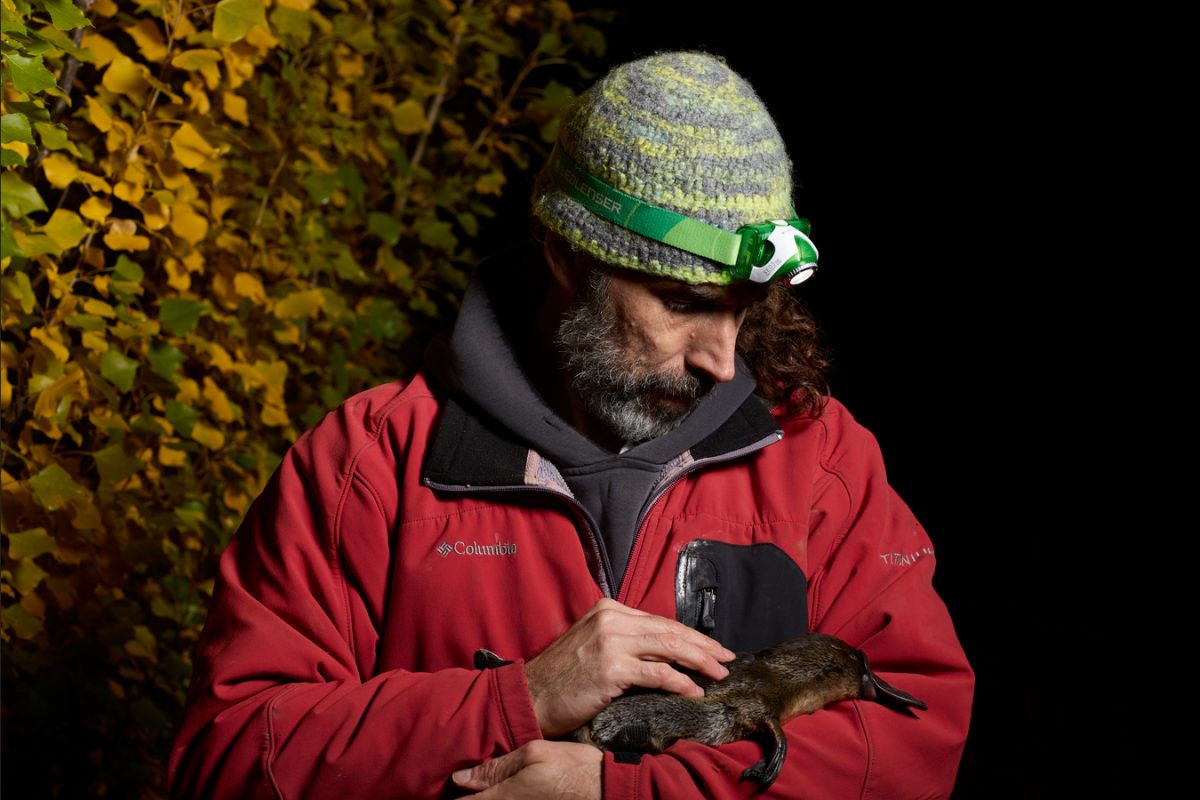
Five drought-rescued platypuses have proven they're not just odd-looking; they're spectacularly resilient too.
Back in 2019, the Tidbinbilla Nature Reserve near Canberra turned to dust as drought tore through the ACT, killing eight platypuses and forcing rescuers to scoop up the seven survivors for a recovery stint at Taronga Zoo. Five months of pampered zoo life later, five were released back into the wild, and researchers had no idea if the cushy captivity would leave them bumbling, disoriented duck-billed strangers in their own backyard.
UNSW-Platypus - Associate Professor Gilad Bino. Image: UNSW/Richard Freeman.
Turns out, no such luck (or drama). New UNSW-led research tracking the animals for up to 18 months found they quickly re-established home ranges, resumed normal movement patterns and settled back into familiar parts of the waterway within days of their release. Four of the five stuck around the reserve for 10 to 18 months afterwards.
Even their personalities snapped straight back: the females stuck loyally to their favourite ponds, while the lone male confidently wandered wherever he pleased, because of course he did.
Lead researcher A/Prof Gilad Bino says it's a big tick for emergency rescue as a genuine conservation strategy, not just a stopgap. It's good news given climate change is only going to serve up more droughts, and more platypuses in need of a Taronga holiday.
Moral of the story: you can take the platypus out of the river, but apparently you can't take the river out of the platypus.
Reply to this article
We welcome your response for publication in our next issue, edition #80. Please briefly introduce the point you are responding to so your reply makes sense to someone who has not read the original article (max. 400 words).
Replies are subject to editorial approval.
7
AD
Advertisement
Have Your Articles Published
Every writer wants to have their work published and read. This is your chance to make the Internet a better. Join our team or writers at Hold The News and write engaging articles that entertain, inform or trigger feelings in the reader. Give it structure, give it meaning and make it worth reading.
We publish on almost any topic as long as it's well written, human written and truthful.
Readers Judge Articles sort by reads within each edition, simple and easy to see what gets read.
More than a decade after social stigma banished Google Glass from the streets, will the more discrete Ray-Ban Meta AI smart glasses soothe privacy fears or drive the backlash against digital harm?
While virtual reality was the Next Big Thing for a few years, augmented reality has a lot more long-term potential. That’s why it was always going to be more controversial once it went mainstream.
Virtual reality headsets cut you off from the world around you, whisking you away to a land of make-believe. Meanwhile, augmented reality “smart” glasses blend the physical and digital worlds, meaning you can wear them while walking down the street.
The primary benefit of augmented reality is that it can overlay digital information on your view of the real world, a bit like a fighter pilot’s heads-up display. This can be genuinely useful, from providing directions when walking through town to identifying boxes in a warehouse or overlaying schematics while repairing an engine.
Of course, augmented reality glasses need a camera, so they can see what you can see. With this typically comes the ability to record the world around you, along with real-time visual analysis and perhaps even facial recognition.
The ability to surreptitiously record what you can see is far from augmented reality’s most useful feature, but naturally it’s the one that has gained the most attention because of its potential to violate the privacy of people around you.
When Google Glass launched back in 2013, the swift privacy backlash saw wearers dubbed “Glassholes”, and the product was abandoned after only two years.
These early smart glasses featured a tiny screen in the corner of one eye to display useful information, making them easy to recognise in public. They also took advantage of bone conduction technology to quietly talk to the wearer.
Of course, the ability to record video is what drove disdain, even though they were useful for much more.
Five years ago, Facebook’s owner Meta decided it was time for smart glasses to come back in fashion. After a few iterations, we now have Ray-Ban Meta AI smart glasses, along with cheap knock-offs like the $89 Anko Camera Glasses which recently sold out at Kmart.
They look a lot more like normal glasses, but what’s really telling is these new glasses can’t overlay digital information on your view of the world. With this omission, they’ve abandoned augmented reality’s primary feature.
Instead, these new glasses – not surprisingly dubbed “pervert glasses” – are simply designed to record video and whisper in your ear. Defending them by pointing to the small light which indicates recording is meaningless when it can easily be taped over.
To be fair, the more expensive Meta Ray-Ban Display features a digital overlay. They’re only available in the US, whereas Ray-Ban Meta AI smart glasses are sold across Australia, North America and much of Europe.
When recording becomes their primary feature, it's little wonder there’s a renewed push to banish smart glasses from public places. As with Google Glass, many venues such as restaurants, theatres and courts have already banned the likes of Meta AI’s Ray-Bans.
The backlash is not just because this new generation of smart glasses are more subtle, but also because they come at a time when we’re increasingly conscious of the digital harms that such technology can cause.
From normalising surveillance to enabling physical and digital harassment by sexual predators, these smart glasses make every face-to-face interaction a potential threat.
Other surveillance technology has gradually worn us down, with little resistance to the spying capabilities of smart phones, AI assistants, televisions and even doorbells.
With these potentially intrusive technologies, people reluctantly, or even unknowingly, trade their own privacy for convenience. This exchange grants them a de facto social license to operate.
Yet smart glasses see the wearer trading other people’s privacy, offering nothing in return except the potential for harm. Rather than further wearing down the public’s resistance to surveillance technology, hopefully they will bolster our resolve to stand firm against it.
Reply to this article
We welcome your response for publication in our next issue, edition #80. Please briefly introduce the point you are responding to so your reply makes sense to someone who has not read the original article (max. 400 words).
Replies are subject to editorial approval.
9
Lifestyle & Culture
Why Are So Many Aussies Obsessed With Ooshies?
Mother and daughter with Ooshies - Woolworths Group
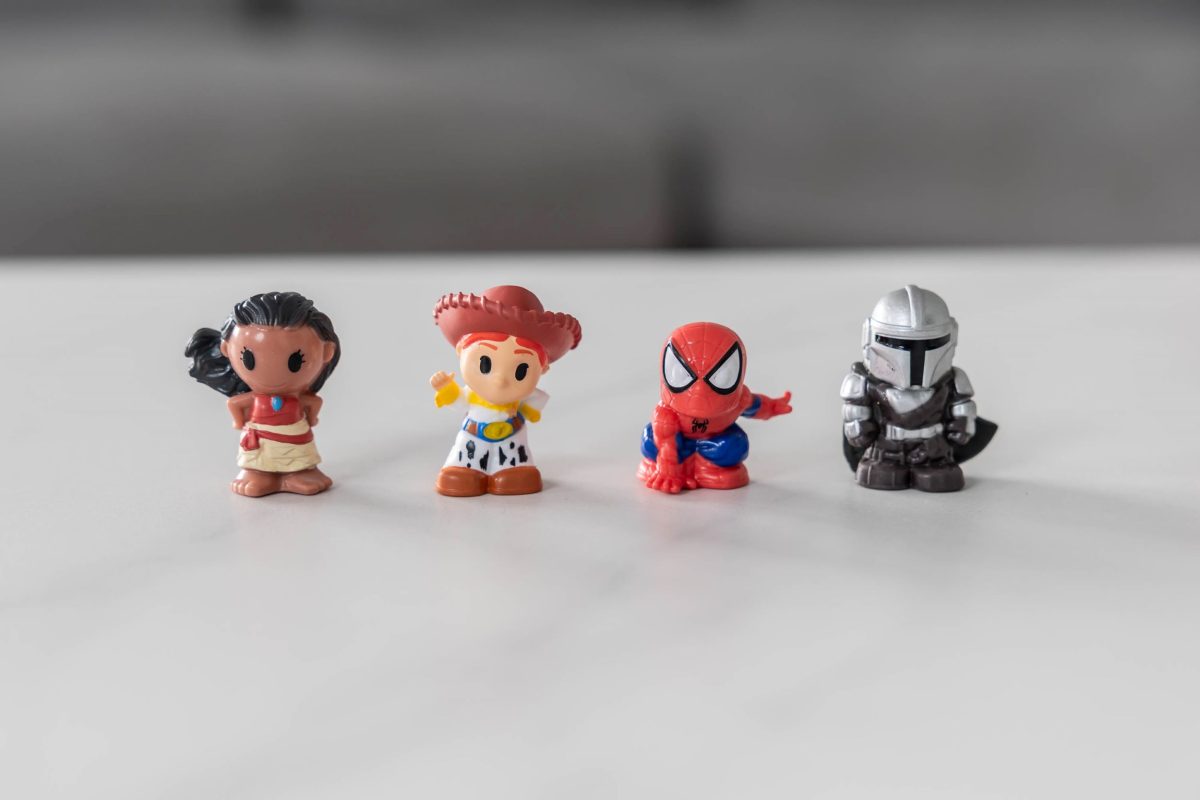
Ooshies fever has gripped Australia, and it’s not just the kids clamouring for the Woolworths Group’s tiny rubber figurines. Adults across the country have sounded off online about stock shortages and sparked online bidding wars for the rarest figures. So why are so many people obsessed with Ooshies? We take a closer look at what’s driving the collecting craze that’s captivated the nation.
They play on nostalgia It’s no coincidence that the Ooshies promotions always feature characters beloved for generations. This time around it’s an expanded Disney collection, which includes figures from Pixar, Marvel’s Spiderman, and Star Wars. Adults often feel as connected to these characters, and as driven to collect them, as children do. Ooshies may take adult collectors back to simpler times, when they could enjoy new toys rather than worrying about grown-up responsibilities.
Opening blind packets is fun Shoppers receive a blind packet containing a single Ooshie for every $30 they spend at Woolworths or Big W. Just one tiny figurine doesn’t sound like a great payoff for that kind of spend, but fans feel they’re getting much more. The blind packets create mystery, as shoppers aren’t sure whether they’re hiding a rare Ooshie or yet another Moana. Anticipation builds until they open the packet and experience a surge of dopamine with the surprise of the new figurine reveal.
It's tied to our everyday habits We all need groceries and household goods, so collecting Ooshies seems less extravagant than investing in trading cards or action figures. It feels essentially like getting something for nothing, because you’d spend that money anyway. For the many adults who struggle to indulge themselves, the simple pleasures that come with collecting Ooshies can be easily justified.
Completing sets is satisfying
Ooshies - Woolworths Group
Humans are wired to feel satisfied when they complete something. That might be as significant as a major project at work or as minor as completing an Ooshies set. There are eight standard Ooshies sets, so fans get to enjoy that feeling every time they find a family of characters, not just when they find the final piece of the collection.
Rare and limited edition Ooshies keep customers coming back If collecting all the Ooshies was easy, consumers would quickly lose interest. So the Woolworths Group released just 125 flocked Bullseye Ooshies in Australia and a Platinum Buzz Lightyear, available only to Rewards members for three days. Searching for rare and limited-edition items is exciting, and there’s a massive dopamine hit waiting for anyone who finds them.
Collecting encourages social connections From connecting with their friends to track down elusive figures or meeting new people at organised swap sessions, there’s an alluring social element to the Ooshies craze. People enjoy collaborating to complete their collections and a little prestige if they eventually do. When so much of what we do feels disconnected from others, it's easy to see the appeal of a trend that brings people together.
The Ooshies promotion officially runs until August 25, but many stores have already exhausted their supplies. That means many Aussies won’t get to complete their sets, but they needn’t worry. These promotions spike sales so dramatically that retailers are sure to announce the next one soon.
Reply to this article
We welcome your response for publication in our next issue, edition #80. Please briefly introduce the point you are responding to so your reply makes sense to someone who has not read the original article (max. 400 words).
Replies are subject to editorial approval.
10
News
Survival of the Adequate: Why We Don't Have to Be the Best
“Survival of the fittest” is one of the most misunderstood phrases in the English language. It has become shorthand for a world where only the strongest survive, the smartest succeed and those who can't keep up are left behind. It sounds harsh, competitive and unforgiving. And, quite frankly, it’s a lot to live up to.
But that isn't what the phrase means.
The expression was coined by philosopher Herbert Spencer after reading Charles Darwin's work, and over time it became associated with an idea Darwin never intended: that nature rewards the strongest, most intelligent or most talented. In reality, biological “fitness” has much less to do with being the best and much more to do with being suitably adapted to your environment. Nature isn't searching for perfection. It settles for what works.
Perhaps, if we were to translate the idea into modern language, a better phrase would be: survival of the adequate. I don’t know about you, but that sounds a lot more doable.
Nature doesn't require perfection
Let’s think about the cars we see on our roads. Not every car has the elegance of a Ferrari or the engineering pedigree of a Porsche. In fact, most cars are completely ordinary. Some are, if we're being honest, downright unattractive. Yet millions of them are sold every year because they do what their owners need them to do. And for most of us, that’s all we need. They do what we need them to do: to go from point A to point B.
The same is true of music, writing, business and almost every other area of life. Not every singer sounds like Aretha Franklin. Most never will. Most authors aren’t going to write like Stephen King. And that’s okay. Think of your favourite song and your favourite book, and I bet they’re riddled with imperfections. You still love them, don’t you?
The world doesn't reserve success exclusively for the exceptional. And neither should we.
Perfection is a terrible gatekeeper
Perhaps one of the biggest obstacles to doing anything meaningful is our belief that we need to be good at it before we begin.
We want the perfect business idea before launching the business. We want to be confident before putting ourselves forward. We want to know exactly what we're doing before taking the first step. We compare our first attempt with someone else's tenth, and decide that because we aren't as good, there is little point in trying.
The problem is that perfection doesn't exist, and there will always be something that could be improved. If we wait until everything is perfect, there is a very real chance we will never start at all.
We learn by starting
The only way to discover whether something works is to try it.
We learn by doing, not by waiting until we know everything. A new business owner learns by running the business. A writer becomes better by writing. A runner becomes stronger by training. A parent learns through experience. A child learns to ride a bike by getting on the bike, wobbling, falling off and trying again. Mistakes are not evidence that we shouldn't have started, but usually, the reason we get better.
Stop comparing
The problem is that we rarely see the beginning of someone else's journey. We see the finished book, but not the terrible first draft. We compare ourselves to picture perfect Instagram reels without seeing the bigger picture.
But there will always be someone better than us at something. There will always be someone more experienced, more talented or further along the road.
That doesn't make what we have to offer insignificant. In fact, I wouldn’t be surprised if you are someone else’s idea of perfection.
So, perhaps the question we should be asking ourselves isn't whether we're exceptional enough to begin. Perhaps it is simply whether we're good enough to start. Because sometimes, good enough is exactly where everything begins.
Reply to this article
We welcome your response for publication in our next issue, edition #80. Please briefly introduce the point you are responding to so your reply makes sense to someone who has not read the original article (max. 400 words).
Darwin – Mid Autumn 2006 Enzo met Miller and myself at Darwin Airport. He was brimming with news but had to wait to offload it until we had dropped Miller off at our apartment block, after which Enzo and I continued on to the office.
‘We’ve secured the rental I was telling you about – a few blocks down from Christ Church Cathedral,’ said Enzo. ‘Portia and I move in there next week.’
‘Then we must have a flat-warming party,’ I suggested.
‘Except it’s a house,’ replied Enzo.
‘All the better for entertaining your soon to be new best friends,’ I said. ‘The Cunninghams.’
‘Er … could be a slight hitch with that,’ Enzo sighed. ‘Portia is insisting on attending the local Catholic church.’
‘Can you persuade her otherwise, Enzo?’
He shook his head.
‘Then we may need to revert to Plan B,’ I declared.
‘Which is?’
‘Devising a work-related reason for persuading her otherwise, without showing our true hand in any way.’
The young man did not seem convinced.
Portia’s a pretty smart cookie,’ he said. ‘She might start asking some awkward questions.
I was tired, uncomfortable and suddenly out of patience.
‘Look mate,’ I began, ‘you’re the trained intelligence cadre, not Portia. ‘Anticipate your wife’s questions and deal with them like the professional you are. Briefing her on Catch-22 is not an option for us. Worst case scenario, she goes to the Catholic church and you head to the Cathedral. Got it.’
‘Sure.’
We pulled into the office carpark and I suddenly had a pang of regret about hitting the roof. I pulled him to one side in our office building car park.
‘Look, Enzo, you, Celina and I are at the butt end of something that potentially may turn this Organisation’s fortunes around if we start opening the right doors. In the meantime,’ I added, ‘I’m dog-tired, in desperate need of a shower and have to make a very important phone call to our deputy director-general in about five minutes.’
He responded with a half-smile.
‘I get you, boss,’ he managed, as we made our way to the upper level. ‘I just don’t want to undermine my marriage, that’s all.’
I placed a hand on his shoulder.
‘I’m scarcely a good role model for you in that department,’ I confessed.
--- o0o ---
My Director-General was not available that morning so I caught up with Celina for a progress report.
‘Cecilia Hanson has found a two-bedroom apartment near Nightcliff in Coconut Grove, a few hundred metres from the beach. I’m moving there in a few days,’ she nnounced.
‘Need any help with the move?’
‘No thanks Boss. Cecilia a pretty independent chick who doesn’t carry much baggage,’ she smiled. ‘But I will miss the Cav.’
‘Speaking of which, were you lucky enough to catch up with young Kurt Cunningham there.’
She blushed slightly.
‘We’ve actually been on a date,’ she managed.
‘Oh?’
‘I was sitting at a table in the bar of the Cav on my own when he gave me his opening line.’
‘Which was?’
‘Geez love. Haven’t seen you here before!’
Her mimicking was clever and drew laughter from both of us.
‘Pretty bloody Aussie for an alleged Russian guy,’ I suggested.
‘Not too different actually from most of the other young Darwin blokes I’ve spoken to at the Cav. But he is kinda good looking … and …’\
She shifted awkwardly on the spot.
‘Out with it!’
‘Nicely toned as well. I’d put that down to all the exercise he gets helping his dad with the family fishing charter business.’
‘So where did he take you for your date?’ I asked.
‘The Deckchair Cinema just down on the Darwin foreshore. We saw ‘Wolf Creek’ the Aussie horror flick.’
I smiled.
‘How romantic!’
‘Kurt told me all about his family fishing charter business and I made him aware of my deep interest in things piscatorial, especially things barramundi. Within minutes he was inviting me on one of his old man’s charters.’
We were chatting next to Celina’s workstation. Suddenly, her cell phone started playing what I later discovered to be a popular 1989 fishing song called ‘Five Pound Bass’. She answered it then looked across at me with a nod.
Kurt was on the line.
It seemed like my star ‘ínsider’ was using the right bait.
--- o0o ---
Our Deputy Director-General, Rufus Delaney, returned my call around five that afternoon. By this stage, I could barely stay awake and my own body odour was making me slightly nauseous.
At my request, Rufus and I switched to a secure phone line. I’d scribbled a few cryptic notes to ensure the main points were being covered. I anticipated a fairly angry response from him for keeping him in the dark about ‘Catch-22’, and he did not disappoint me.
‘What were you thinking of, Michael?’ he hissed, as I took him through Zorkov’s proposal for excluding everyone from his one-on-one ‘relationship’ with me.
‘Zorkov knew enough about my movements in and out of ASIO to lead me to suspect a penetration of this Organisation at the highest level,’ I replied. ‘It was only yesterday he told me they’d been tracking me through my cell phone.’
‘You KNOW me?’ Rufus was now shouting. ‘How could you imagine I’d betray this agency?’
‘ASIO’s track record,’ I replied.
I heard an audible sigh from him.
‘So you decided to bring the CIA into this little conundrum before you brought me into it?’
‘Not the CIA. Just Miller.’
‘So what’s made you decide to finally decide to inform me about it?’ he asked, or rather growled.
‘Miller told me on the plane trip back from Singapore he’s been obliged to inform his own director of ‘Catch-22’.
‘And why is that?’
‘We’ve had to bring in an Agency technician who is helping train me to use some of the Agency’s equipment I need for ‘Catch-22’. The techo told his boss about our ‘Catch-22’ plans and the boss told Miller’s director.’
‘So, your Agency confrere – Mister Miller - is in as much shit as you now are, Michael?’
‘The stakes with this operation are potentially higher than they were than with the Petrov saga,’ I replied.
‘So you finally decided to trust me?’ Rufus persisted. ‘Once you realised you had no choice in the matter, since the CIA director would immediately be on the phone to me?’
‘Has he been?’
A slight pause.
‘Not yet.’
‘So can we move on please, boss?’
After a momentary silence.
‘I’m flying to Darwin tomorrow, but before then, I want you to do one thing,’ said Rufus.
‘Of course, if I still have a job.’
‘I want you to change the operational name of this ‘high stakes’ exercise,’ he replied. ‘Catch-22 is not appropriate.’
A further pause, then …
‘And yes, so far you do have a job with us.’
An email hit my computer screen a short time later with details of the boss’s arrival time in Darwin - around midday the following day.
Had I damaged my professional relationship with my Deputy? Let alone our personal relationship? And would he be briefing the Director-General on this operation before leaving Head Office? And others?’
If so, would Zorkov get wind of all this and disappear?
My career was about to plateau. I needed to sleep on all this.
We welcome your response for publication in our next issue, edition #80. Please briefly introduce the point you are responding to so your reply makes sense to someone who has not read the original article (max. 400 words).
So I talk to my dog.
Not because I have nothing to say,
but because sometimes
there is nobody left to listen.
He lies beside me
with his head resting on my knee,
watching the world through those quiet eyes
that seem to understand
the things I cannot explain.
I tell him about my day.
The disappointments.
The little victories nobody noticed.
The people who came into my life
and the ones who quietly walked away.
He never interrupts.
He never tells me
that I am talking too much.
He simply listens.
And somehow,
that is enough.
There are nights
when the house feels enormous
and the silence has a weight to it.
The kind of silence
that reminds you how alone
a person can be
even when the world is full of people.
Then I hear his breathing.
Steady.
Gentle.
Certain.
And I remember
I am not entirely alone.
A dog does not care
how successful you were today.
He doesn't care about your mistakes,
your failures,
your bank balance,
your bad decisions
or the things you wish you could undo.
He remembers only
that you came home.
And that is enough
for him to love you.
Completely.
Without conditions.
Without keeping score.
Without asking
what you can give him in return.
He gives you his whole heart
and somehow trusts you
not to break it.
Sometimes I think
we spend our lives searching
for the kind of love
a dog gives freely.
A love that does not need explanations.
A love that sits beside you
when the world becomes unbearable.
A love that follows you
into your sadness
and waits there patiently
until you find your way back.
And yes,
sometimes I swear
he talks back.
Not with words
that other people would understand,
but with a tilt of his head,
a sigh,
a soft whimper,
a look that says,
Really?
You're worrying about that again?
And I laugh.
Because somehow
he has said exactly
what I needed to hear.
Perhaps that is the secret.
Perhaps dogs have always known
that loneliness is not cured
by filling a room with people.
Sometimes it is cured
by one faithful soul
who chooses to stay.
So I talk to my dog.
I tell him things
I would never tell another person.
And he tells me things too.
He tells me
that tomorrow will come.
That there is still sunlight
on the other side of the curtains.
That a walk is always worth taking.
That sitting together in silence
can be a conversation.
And that love
does not always need a voice.
Sometimes it has four paws.
Sometimes it has doleful eyes.
Sometimes it places its head
in your lap
and simply stays.
And when the years begin to steal
the strength from those legs
and the brightness from those eyes,
I know I will still talk to him.
Because by then
we will have spent a lifetime
learning each other's language.
And when one day
he can no longer answer,
I will probably keep talking.
Because some conversations
are too precious to end.
So I talk to my dog.
And perhaps
he talks to me.
Perhaps that is why
the silence never feels quite so empty
when he is beside me.
Perhaps love,
in its purest form,
is simply this:
Someone who stays.
Someone who listens.
Someone who never asks you
to be anything other than
the person you are.
And when the whole world
has forgotten your name,
there is still one small heartbeat
beside yours,
quietly saying,
I know you.
I love you.
I'm here.
And for tonight,
that is enough.
Reply to this article
We welcome your response for publication in our next issue, edition #80. Please briefly introduce the point you are responding to so your reply makes sense to someone who has not read the original article (max. 400 words).
OK writers – listen up! A few days ago, the Sydney Morning Herald penned an article captioned “The email many authors dream of getting – and why it’s a trap.”
So how many of you, like me, have been caught in a writers’ scammer’s trap? Which of you has received an email from a would-be publisher or literary agent gushing over your written work and offering you a publishing and promotional contract beyond your wildest dreams ? No? Not yet? Well, batten down the hatches!
The SMH article advises of “a new wave of AI-generated scam emails targeting authors internationally, offering publishing or promotional opportunities in exchange for money. In the past year, the Australian Society of Authors (ASA) has been inundated with messages from writers seeking advice and sharing their experiences, some of them receiving multiple scam emails a day.”
The SMH article admits that scams targeting writers is not a new phenomenon, except it’s now being “turbocharged by AI”. Increasingly, it seems, hapless authors who have the audacity to represent their work in public, especially online, are receiving high-priced publishing offers or bogus promotional junkets or film and television production deals, it claims, often beyond their wildest dreams.
My personal dealings with scammers - as an author of multiple written works – has been with overseas-based publishing companies, plus an Australian-based publishing company, plus an Australian-based so-called Literary Agent (LA) All of them wanted a sizeable amount of money from me up front to publish or (in the case of the LA) just promote my work. All of them gave my writing glowing reports, but in the end only one – the LA – managed to extract money from me.
The SMH quotes ASA Chief Executive Lucy Hayward in relation to a “far more sophisticated” form of writer scams these days coming from a new breed of crooks. According to Ms Hayward: “It’s not just that they might be impersonating people from the book industry, it’s that they’re able to provide detail and give the impression that they have read an author’s work, which makes the email convincing. And they can do that because the author’s work has either already been ingested [by AI companies], or it can be ingested by these AI tools and then summarised.”
Like romance scams, author scams target vulnerability and play on emotions. “They’re trying to capitalise on an author’s genuine desire to have their work published, to have their work promoted, to have their work adapted,” Hayward says. The tactic has proved remarkably lucrative for its perpetrators. In a recent case, says the SMH, the US government determined that just one of these publishing scam operations, based in the Philippines, defrauded nearly 800 writers of more than $48 million over six years.
According to the SMH article, some of the initial emails mention money, but most don’t. Instead, they lead with flattery and promises, waiting to hook the author before they raise the issue of fees. These kinds of scams are sometimes referred to as “pig butchering” operations, a term that originated with romance scams and graphically evokes the process of fattening up a prospective victim with flattery before draining them financially.
Authors who have been inundated with these kinds of emails have, unsurprisingly, become far more adept at identifying them. “The AI-generated copy is its own genre now and you can spot it once you’ve seen a few,” says one SMH commentator. The emails also have telling similarities: “same terms, same logic, same sentence structures”.
The SMH article quotes US author Victoria Strauss, who has covered author scams since 1998 via the website Writer Beware. She says these scams have proliferated over the past decade, fuelled by outfits based in the Philippines, Pakistan and India. The more recent AI-driven scams come from a different location, however – Nigeria.
“I see them as kind of a descendant of the ‘Nigerian prince’ scams of old,” she says.
Hayward says sifting the real emails from the fake has become a problem in itself. “[At this point] it’s not so much that authors are falling for these scams and handing out money, it’s the volume of the emails that they are receiving. It becomes very difficult to determine what might be a legitimate offer and what is a scam.” One of the key ways to check is looking at the email address, she says, “but for Australia, we have a smaller market, and where book clubs and podcasts are concerned, you might not have someone with a professional email address”.
So … don’t trust anyone you don’t know who appears from out of the blue and announces that your and your writing is headed for stardom. Check the email address, then make a targeted phone call.
Sudo NYM
Reply to this article
We welcome your response for publication in our next issue, edition #80. Please briefly introduce the point you are responding to so your reply makes sense to someone who has not read the original article (max. 400 words).
Replies are subject to editorial approval.
16
Lifestyle & Culture
How meditation changed my life without me even noticing
Whenever I tell people I meditate, I almost always get the same response:
"I'm hopeless at meditating."
My answer is always the same.
"Like most things in life, you don't need to be good at it. You just need to do it."
That simple idea completely changed the way I thought about meditation. My teacher – yes, guru – explained that how you feel during meditation is largely irrelevant. Some days your mind races. Other days you feel peaceful. Most days are somewhere in between. None of that really matters.
Meditation doesn't change your life overnight. It changes your life so gradually that one day you realise you've become a different person.
My teacher compared it to eating spinach or blueberries. You don't feel healthier while you're eating them. But eat them every day for a year and your body quietly changes. Meditation works in much the same way. It quietly reshapes your mind without asking for your attention. You don't notice it happening while it's happening. One day you simply realise you're calmer than you used to be.
Two words that solve life: Let go
I came to meditation for a simple reason. I was hurting.
After the breakdown of a relationship, I found myself anxious, overwhelmed and struggling to quieten my mind. Friends suggested meditation, and one recommendation kept coming back to me. A friend's wife taught Vedic meditation, having trained with Thom Knowles, one of the world's best-known teachers of the technique. For the uniniated, Vedic is essentially a form of transcendental meditation, but can’t use the T-word as it’s trademarked. No, really.
I'll admit, paying $1,000 for four afternoons of instruction felt like a leap of faith. There was a traditional ceremony, I was given my own personal mantra and introduced to a completely different way of approaching meditation. The aim wasn't to empty my mind or force myself not to think. Quite the opposite.
The advice was simple: meditate for 20 minutes every morning and another 20 minutes in the late afternoon. I don't always manage that. Life gets busy, routines slip and sometimes I simply don't make the time. But I always notice the difference when I come back to it.
Although there is a famous saying that goes: Meditate for 20 minutes every morning, unless you’re crazy busy - in which case mediate for 40 minutes…
You’re probably almost a guru without realising
If I'm honest, during a typical 20-minute meditation my mind probably spends 14 or 15 minutes ricocheting from one thought to another. Sometimes 19 minutes.
What's for dinner? Did I pay that bill? What should I have said in that conversation yesterday? Why does my left foot suddenly feel uncomfortable? Before I know it, I'm mentally planning next week's shopping or replaying something that happened years ago.
The strange thing is, none of that means I'm meditating badly.
My teacher never told me to fight those thoughts. She encouraged the opposite. She said to keep a gentle awareness of my mantra but never cling to it. If I noticed my mind had wandered, I should simply drift back.
She compared it to wandering back to your partner at a party. You don't panic because you've spent five minutes chatting to somebody else. You simply smile, wander back and carry on where you left off.
That image has stayed with me ever since.
I've learnt that meditation isn't about stopping your mind from wandering.
It's about gently bringing it home.
Again.
And again.
Without judgement.
The change you don't see coming
Three years later, meditation has become something I genuinely look forward to.
When I close my eyes and gently begin repeating my mantra, I feel warmth and familiarity. Sometimes I experience a deep sense of peace. Sometimes I don't. Sometimes I even feel connected to something much bigger than myself – call it the universe if you like. I know that sounds a little "out there", but it's the best way I can describe it.
The real surprise, though, wasn't what happened during meditation.
It was what happened everywhere else.
Without really noticing, I became less anxious. Less reactive. More patient. More comfortable in my own skin. Looking back, I can clearly see the difference. I just couldn't see it while it was happening.
I still don't think I'm particularly good at meditating.
My mind still wanders.
I still get distracted.
I still wonder whether I'm doing it properly.
But I've stopped judging the meditation.
Because I can see what it's done to the person doing it.
Meditation didn't change my life overnight.
It changed my life so gradually that one day I realised I'd become a different person.
Reply to this article
We welcome your response for publication in our next issue, edition #80. Please briefly introduce the point you are responding to so your reply makes sense to someone who has not read the original article (max. 400 words).
Replies are subject to editorial approval.
18
News
Indonesia Earthquake, Bird Flu Concerns, and Political Reckoning Dominate Australian News Week
Hold The News is a weekly magazine featuring informative articles by Australian writers and journalists. It's not our intention to feature breaking news or compete with the daily press, however if you missed last weeks news here is an AI generated, fact checked summary of last weeks Australian headlines.
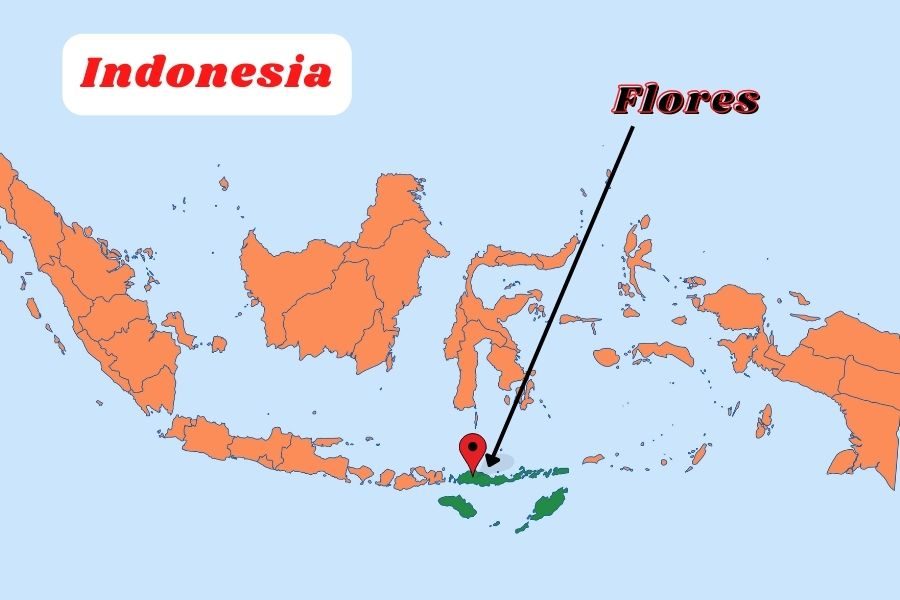
Flores - Indonesia - veryhungrynomads.com
Powerful Earthquake Strikes Indonesia’s Flores Region A powerful magnitude-7.7 earthquake struck off the Indonesian island of Flores early Saturday, damaging buildings and sending thousands of residents to higher ground. Indonesian authorities issued a tsunami warning after the shallow undersea quake, but lifted it after waves of only 19 to 30 centimetres were detected. Several strong aftershocks followed, including one above magnitude 6. No deaths had been reported, although at least one person was injured. Australia’s tsunami warning centre confirmed there was no threat to the Australian mainland, islands or territories. The quake is significant because Flores lies in one of the world’s most seismically active regions and was devastated by a deadly earthquake and tsunami in 1992.
Australia to Vaccinate Threatened Birds as H5N1 Spreads Australia will begin vaccinating vulnerable native birds against the highly pathogenic H5N1 strain of bird flu as the virus spreads through wild bird populations. First detected in a migratory seabird in Western Australia in June, it has since been found in several states and in native as well as migratory species. The initial vaccination program will focus on endangered and other high-priority birds held in captivity, where two doses can be administered and the animals monitored. H5N1 has caused mass deaths among birds and marine mammals overseas, raising fears for Australia’s unique wildlife. Authorities say the risk to people remains low, and no infections have been detected in Australian poultry or humans.
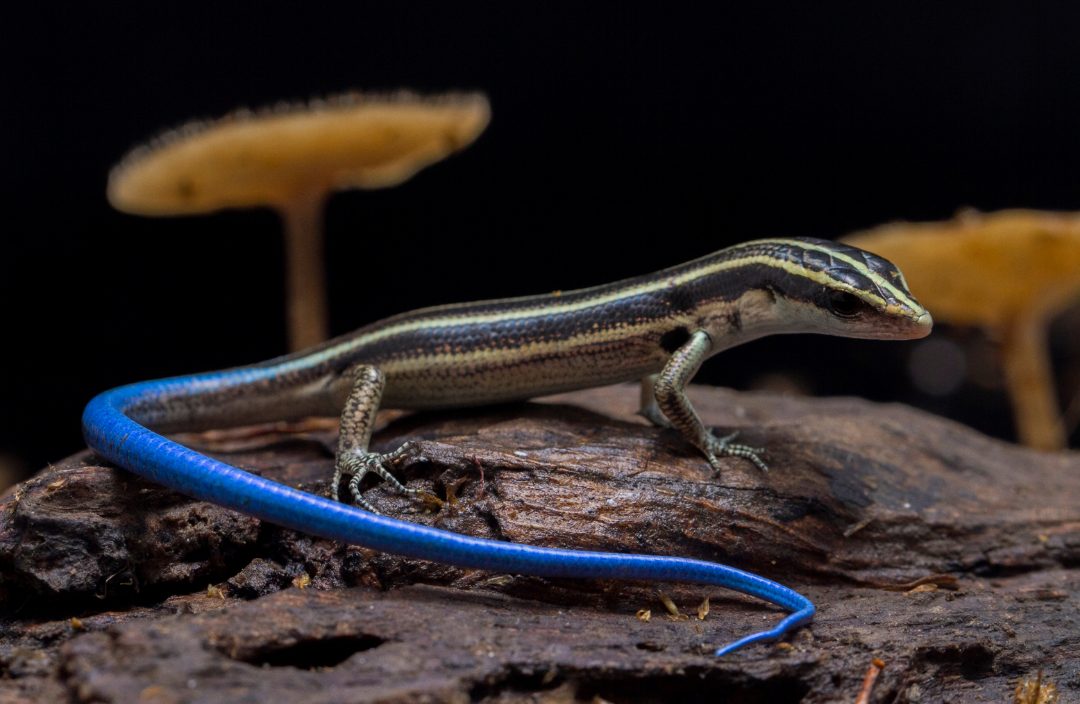
Blue Tailed Skink - reptilecymru.co.uk
Rare Blue-Tailed Skinks Released on Remote Island A new wild population of one of Australia’s rarest reptiles is being established on Horsburgh Island in the Cocos (Keeling) Islands. Conservationists released 545 captive-bred Christmas Island blue-tailed skinks on the remote island, where the invasive predators responsible for their disappearance from Christmas Island are absent. Once common, the species vanished from the wild after predation by introduced Asian wolf snakes and giant centipedes reduced its numbers to just 66 rescued animals. Those survivors founded a successful captive-breeding program. Horsburgh Island, around 50 times larger than two nearby islands where skinks have already been introduced, offers room for a much larger self-sustaining population and another safeguard against the species becoming extinct.
Productivity Commission Urges Overhaul of WA GST Deal The Productivity Commission has branded the 2018 reforms to Australia’s GST distribution system a “costly mistake” and recommended that they be scrapped or substantially redesigned. Introduced after Western Australia’s share of GST revenue collapsed during the mining boom, the reforms guarantee WA at least 75 cents for every dollar of GST collected per person. The commission found that the arrangement had achieved almost none of its objectives, made the system less equitable and more complicated, and cost federal taxpayers almost $23 billion by 2024–25. It recommends moving back towards the pre-2018 system while introducing targeted measures to address WA’s reliance on mining royalties. Reform remains politically difficult because both Labor and the Coalition have promised to preserve WA’s guaranteed share.
Powerhouse - powerhouse.com.au
Powerhouse Parramatta to Open on November 7 The $915 million Powerhouse Parramatta will open to the public on November 7, becoming western Sydney’s first NSW state cultural institution and the state’s largest museum. Built on the banks of the Parramatta River, it will provide 18,000 square metres of exhibition and public space across seven exhibition areas. Its opening program will include Task Eternal, described as Australia’s largest exhibition devoted to space exploration. The project is the biggest NSW investment in cultural infrastructure since the Sydney Opera House and represents a major effort to shift more of Sydney’s cultural activity and public investment westward, closer to the city’s growing population.
Global Menang Collections Reunited in Albany Cultural and scientific collections connected to the Menang people have been brought together from museums in London, Edinburgh, Melbourne and Sydney for a major exhibition in Albany. Kalyagul: Connections to Menang Country includes historical objects, botanical samples, preserved fish and records containing Menang names and knowledge shared with European collectors during the 19th century. Led by Menang curators and elders, the exhibition restores recognition to Indigenous people whose contributions were often overlooked in colonial accounts. Its return to Country allows the community to reconnect with knowledge dispersed among institutions around the world. The exhibition forms part of Albany’s bicentenary program and will remain at the Museum of the Great Southern until February 21, 2027.
Former Tasmanian Minister Questioned Over Election Conduct Former Tasmanian Liberal minister Jane Howlett has faced a parliamentary hearing over two controversies involving government resources during election campaigns. Labor and the Greens questioned inconsistencies between a statutory declaration tabled by Howlett and emails suggesting her former chief of staff knew about a Tasracing message promoting the Liberals’ TasInsure policy before it was distributed during the 2025 election campaign. Howlett said there was no evidence that the declaration was false. She was also questioned over a former staffer’s allegation that she performed campaign work for Howlett in 2024 while employed as a taxpayer-funded adviser. The government disputes that claim, which is now being investigated by the head of Tasmania’s state service.
NDIS Reforms Raise Mark Butler’s Political Profile Health and NDIS Minister Mark Butler is increasingly being discussed within Labor as a possible future leader as he oversees the government’s contentious overhaul of the National Disability Insurance Scheme. The government plans to slow the scheme’s annual spending growth and reduce its projected cost in 2030 from more than $70 billion to about $55 billion. At least 160,000 people are expected to leave the scheme under tighter eligibility rules, prompting strong criticism from disability advocates. Cabinet colleagues quoted by Guardian Australia said Butler’s handling of the politically difficult reforms had demonstrated sound judgment and a collaborative style. Butler has played down speculation about succeeding Anthony Albanese, while maintaining that changes are necessary to preserve the NDIS over the long term.
Proserpine Nursing Home - pnhome.com.au
Proserpine Nursing Home Members to Vote on National Takeover Members of Queensland’s community-owned Proserpine Nursing Home will vote on September 7 on whether to transfer the facility to national not-for-profit provider Respect Aged Care. The home was built through community fundraising and donated land four decades ago and remains the only aged-care facility in the town of about 3,600 people. Its board says rising costs, stricter regulatory requirements and difficulty recruiting senior staff have made independent operation increasingly challenging. Residents’ families, former employees and union representatives fear the transfer would end local control and alter the home’s character. Respect, which operates 47 aged-care homes nationally, says existing residents will be unaffected and current employees will be offered continuing work.
Military Whistleblower David McBride Released on Parole Former Australian Army lawyer David McBride has been released from a Canberra prison after serving the full 27-month non-parole period of his five-year-and-eight-month sentence. Attorney-General Michelle Rowland granted parole on August 13, the first day he was eligible, and McBride will serve the remaining three years under supervision in the community. He pleaded guilty to stealing classified Defence documents and giving them to journalists. The material helped inform the ABC’s Afghan Files investigation into allegations of unlawful killings by Australian special forces in Afghanistan. McBride’s prosecution has fuelled debate over whether Australia’s whistleblower laws adequately protect people who disclose government wrongdoing in the public interest.
---
*AI-generated weekly digest — stories relevant to Australia, 8 August 2026 – 15 August 2026.
Sources: ABC News Australia, Guardian Australia, BBC News Australia, Sydney Morning Herald
Reply to this article
We welcome your response for publication in our next issue, edition #80. Please briefly introduce the point you are responding to so your reply makes sense to someone who has not read the original article (max. 400 words).
Elton John was right: Saying sorry can be purgatory. The conversational equivalent of going to the dentist - so much fear and resistance in advance. And yet sometimes the hardest word is also the most liberating.
Most of us have experienced the uncomfortable tension of knowing something isn't right with another person. We replay conversations in our minds, rehearse arguments we'll never have and convince ourselves they were just as much to blame. Pride can become a prison. A genuine apology has the power to unlock the door. It can lift a weight we may have been carrying for months or even years, freeing us from guilt, resentment, pride and the exhausting burden of unfinished business.
Making Amends
The importance of apology is recognised in many areas of life, but nowhere more clearly than in Steps 8 and 9 of the Twelve Step recovery programme. After making a list of those that they have harmed, people in recovery are encouraged to make direct amends wherever possible. This isn't about humiliating themselves in some self-flagellating way, or about forcing other people to forgive them. It's about taking responsibility for past actions and becoming willing to put things right.
Recovery is about far more than stopping drinking or using drugs; it's about becoming a different person. Making amends is often one of the hardest parts of the journey because it asks people to put aside ego and accept responsibility. Yet it is also one of the most liberating. Rather than carrying the weight of the past indefinitely, people take ownership of it and, where possible, begin to repair the damage they have caused.
For anyone, an apology can also be the first step in rebuilding a relationship. Someone once told me that if something feels wrong between you and another person, you really only have two choices: forgive them or apologise yourself. Even if you're not convinced you're entirely at fault, choosing humility over pride sends a powerful message. It says that the relationship matters more than your need to be right.
The key though, is to apologise without defending yourself. There is no room for, "I'm sorry, but..." A real apology doesn't justify the hurt or explain it away. It simply acknowledges it. Ironically, those two simple words - “I'm sorry” - often open a conversation that months of silence never could.
Freedom from Limbo
Of course, an apology doesn't guarantee reconciliation. The other person may accept it warmly, reject it completely or need time before they can respond. But whatever happens, something important changes. The emotional limbo disappears.
The greatest burden isn't always guilt. Sometimes it's the uncertainty of unfinished business. Once you've apologised sincerely, you've done what you can. The next move belongs to the other person, not you. Whether they accept your apology is their decision. Whether you offer it is yours.
“An apology doesn't guarantee peace between two people. But it almost always brings peace to one of them.”
Perhaps that's the real gift of saying sorry. It doesn't always restore a relationship, but it often restores something within ourselves. We no longer have to carry the argument, the regret or the endless "what if?" We are free to move forward with honesty and self-respect.
And perhaps the final person we need to forgive is ourselves. Once we've apologised sincerely and made every reasonable effort to put things right, continuing to punish ourselves serves no purpose. We cannot rewrite the past, but we can choose the kind of person we become because of it. Saying sorry isn't an admission of failure; it's an act of courage and humility. Elton John may have been right that "sorry" is one of the hardest words to say - but it may also be one of the most liberating.
Reply to this article
We welcome your response for publication in our next issue, edition #80. Please briefly introduce the point you are responding to so your reply makes sense to someone who has not read the original article (max. 400 words).
Replies are subject to editorial approval.
21
Science & Tech
Right-handed? Here is why. Lefties? You were fighters.
If you're reading this, there's a 90% chance you're holding your phone, scrolling with your thumb, or reaching for a coffee using your right hand.
It's one of those everyday things you probably never think about. But have you ever wondered why almost everyone seems to favour the same hand?
Humans are actually a bit of an evolutionary oddity. Around 90% of people are right-handed, a level of dominance that's unusual in the animal kingdom.
A new study tracing the history of handedness suggests the answer lies in two major evolutionary shifts that changed the way bodies and brains work together.
Step 1: Standing up changed everything The story begins millions of years ago, when your distant ancestors started walking on two legs.
Once they no longer needed their front limbs for getting around, their hands were suddenly free to do something entirely different. They could carry food, throw objects, make tools, possibly make rude gestures and definitely create weapons.
As those tasks became more complex, the brain faced a choice. Rather than making both hands equally skilled at everything, it became more efficient for one hand to specialise in delicate, high-precision work; while the other played more of a supporting role.
Step 2: Your brain picked a favourite This is where the wiring gets really interesting.
Your brain is cross-wired, meaning the left hemisphere controls the right side of your body, while the right hemisphere controls the left.
Over time, the left side of the brain became more specialised for language and fine motor skills. Because the left side controls the right side of the body, most people naturally began relying on their right hand for detailed work.
Over countless generations, right-handedness became the default setting for our species.
So why do left-handed people exist? If evolution pushed most people towards being right-handed, why didn't left-handedness disappear altogether?
One of the leading explanations is something known as the fighting hypothesis.
Throughout much of human history, survival often depended on hand-to-hand combat. Because most people were right-handed, fighters became accustomed to facing right-handed opponents.
Then, along came a lefty.
Their movements were less predictable, making them more difficult to defend against. That surprise advantage may have helped left-handed people win more confrontations, survive long enough to have children, and well, pass on their lefty genes.
Interestingly, the advantage only works because left-handed people are relatively rare. If everyone were left-handed, the element of surprise would disappear. That may help explain why left-handedness has remained remarkably stable at around 10% of the population.
Let's put our hands together for… Most of us never give our dominant hand a second thought, but whether you're a righty or a lefty, it's quietly carrying the story of how our ancestors stood up, learned to make tools, and ultimately became human.
We welcome your response for publication in our next issue, edition #80. Please briefly introduce the point you are responding to so your reply makes sense to someone who has not read the original article (max. 400 words).
Replies are subject to editorial approval.
22
Science & Tech
When the queen disappears, the females declare war
Paper Wasp - Image Credit: By Alvesgaspar - Own work, CC BY-SA 3.0, https://commons.wikimedia.org/w/index.php?curid=4102435
If you've ever watched a corporate shake-up or a political power struggle, you know how messy things can get when a leader suddenly steps down.
But if you think human office politics are brutal, you'll want to see what happens inside a tropical paper wasp colony when its queen disappears or dies.
It's not a smooth, orderly transition. Instead, it's a full-blown, chaotic battle where rival females violently fight to claim the empty throne.
A fascinating behavioral biology study published in Animal Behaviour in late May 2026 pulled back the curtain on this exact natural drama.
By tracking colonies of tropical paper wasps, researchers from University College London discovered that the moment a queen disappears, the nest's social order completely shatters.
The battle for the throne Unlike some social insects where workers are entirely sterile, female paper wasps actually have the biological hardware to reproduce. Under normal conditions, the reigning queen uses targeted aggression to keep everyone else in line and stop them from laying eggs.
But once she's gone, the reproductive floodgates open.
Almost immediately after the queen disappears, physical violence erupts throughout the nest. Many of the colony's females abandon their normal duties to launch into a frenzy of biting, stinging and aerial wrestling. It's a high-stakes battle where each female fights to establish reproductive dominance and claim the vacant throne.
The unsung heroes keeping the colony alive With forty percent of the colony busy trying to destroy each other, you'd expect the whole nest to quickly collapse from starvation and neglect. Surprisingly, that doesn't happen.
While the ambitious fighters are busy brawling, a quiet, parallel group of wasps steps in to save the day.
Researchers call these insects "compensators" or "hidden workers". Rather than joining the violent power struggle, they completely avoid the drama. They step up their efforts, working overtime to forage for food and feed the defenseless larvae so the community doesn't starve.
What's even more fascinating is that there's no obvious biological difference between the fighters and the peacekeepers. They aren't born into these roles. Instead, the researchers believe the behaviour may represent alternative evolutionary strategies rather than fixed roles.
Some wasps decide their best shot at evolutionary success is to fight for the throne. Others decide it's smarter to protect the existing family genes by keeping the nursery alive.
Bee empowered So, next time you're watching a dramatic leadership battle unfold in the news, just remember that nature got there first. For wasps, surviving a power vacuum isn't about having a perfect succession plan, it's about having enough quiet, dedicated workers who are willing to keep the lights on while everyone else fights for the crown.
We welcome your response for publication in our next issue, edition #80. Please briefly introduce the point you are responding to so your reply makes sense to someone who has not read the original article (max. 400 words).
Replies are subject to editorial approval.
24
Lifestyle & Culture
Wrong Jovi, Elton Jack, Fred Zeppelin… and the Rise of the Tribute Band
The names alone are enough to raise a smile, but behind the clever wordplay lies one of the fastest-growing areas of live entertainment.
There was a time when tribute bands were little more than enthusiastic pub cover acts with questionable wigs and forgiving audiences. These days they're genuine theatre productions, complete with spectacular lighting, authentic costumes, note-perfect musicians and devoted fan bases of their own.
For many music lovers, a tribute band isn't a poor substitute for the real thing. It's a chance to relive the soundtrack of their youth, introduce their children to timeless music or simply enjoy a fantastic night out without paying arena prices. Tribute bands have grown up - and audiences have embraced them.
COVID changed the game
The rise of tribute bands had already begun, but the COVID pandemic accelerated the trend.
When live music returned after lockdowns, there was an enormous appetite for concerts. Fans had spent months stuck at home and were desperate to experience live music again. The problem was that many major artists simply weren't touring. International schedules took years to rebuild, while ticket prices for those who did return reached record highs.
Tribute bands stepped into the gap.
Instead of paying hundreds of dollars to see a major act from the back row of a stadium, audiences discovered they could enjoy a high-quality theatre show featuring all the songs they loved for a fraction of the price. Many younger fans also realised this was the closest they would ever get to seeing legendary bands like Queen, ABBA, Fleetwood Mac or The Beatles perform live.
Far from being second best, the leading tribute acts became entertainment experiences in their own right, attracting loyal followers who return year after year.
[Subhead] Australia’s best tribute acts
Australia has produced some of the world's finest tribute bands, with many enjoying international success.
Leading the way is Björn Again, the Melbourne-based ABBA tribute that has become one of Australia's biggest entertainment exports. Touring more than 120 countries, they've helped keep ABBA's music alive for generations of fans.
The Bee Gees are celebrated by The Australian Bee Gees Show, whose success has taken them from Australia to a long-running residency in Las Vegas.
Fleetwood Mac fans are replicated by Dreams, a polished theatre production recreating the sound and style of the Rumours era with uncanny accuracy.
Australian rock is represented by The Australian INXS Show, while High Voltage continues to celebrate the music and energy of AC/DC.
Beatlemania remains alive thanks to The Beatnix, regarded as one of the world's longest-running Beatles tribute bands, while Queen fans flock to The Killer Queen Experience, recreating Freddie Mercury's extraordinary stage presence.
Rock fans can also catch The Australian Bon Jovi Show, experience the spectacular visuals of The Australian Pink Floyd Show, or spend an evening with Elton Jack, whose costumes and piano performances capture the spirit of Sir Elton John.
Whether your taste is disco, classic rock, progressive rock or Australian pub rock, there's now a tribute show to match.
The names that deserve an encore
Of course, half the fun is in the names.
Some tribute bands have become almost as famous for their titles as their performances. The Clone Roses is probably the gold standard, while Noasis, Definitely Mightbe, Wrong Jovi, Fred Zeppelin, The Faux Fighters and The Fillers all deserve points for creativity.
Australia has contributed one of the greatest tribute names of them all. Björn Again isn't just a clever play on words - it's become a global entertainment brand in its own right.
Whoever came up with that deserves a standing ovation.
Whether you grew up with ABBA, AC/DC, Queen, Fleetwood Mac or Bon Jovi, tribute bands have become much more than nostalgic pub entertainment. They're polished productions, talented musicians and a celebration of songs that refuse to grow old. The originals may always be the originals - but for one unforgettable Saturday night, the tribute bands come remarkably close.
Reply to this article
We welcome your response for publication in our next issue, edition #80. Please briefly introduce the point you are responding to so your reply makes sense to someone who has not read the original article (max. 400 words).
Replies are subject to editorial approval.
25
Politics
Parliament debates medicine shortages, mobile coverage and aged care oversight as winter sitting continues
Federal Parliament sitting week: Tuesday 11 August
Bills Introduced
Restoring human judgment in aged care assessments Aged Care Amendment (Restoring Human Override for Aged Care Needs Assessments) Bill 2026 This bill would allow aged care workers to override automated assessments of what care an older person needs. It introduces a manual review process to ensure human judgment can override computer-based decisions. The change affects aged care providers, older Australians, and their families who may dispute automated care decisions.
Bills Passed
No bills completed passage through both chambers this sitting week.
Worth Watching
Fixing shortages of critical medicines Therapeutic Goods Amendment (Medicines Shortages and Other Measures) Bill 2026 Parliament debated measures to address recurring shortages of essential medicines in Australia's supply chain. The bill creates new powers for the regulator to manage shortages and improve medicine availability. This affects patients who rely on consistent access to prescription and over-the-counter medicines.
New charges for therapeutic goods regulation Therapeutic Goods (Charges) Amendment Bill 2026 Parliament discussed changes to how the government funds the regulation of medicines and medical devices through updated fee structures. The bill adjusts charges paid by manufacturers and sponsors to the regulator. This indirectly affects consumers through potential changes to medicine and device costs.
Faster biosecurity processing at borders Biosecurity Amendment (Improving Operational Efficiency) Bill 2026 Parliament considered streamlining how biosecurity officials process incoming goods and travellers to reduce delays. The bill removes certain approval steps and increases inspector authority to speed up clearance. This affects importers, travellers, and agricultural industries relying on timely border clearance.
Mobile coverage obligations for remote areas Telecommunications Legislation Amendment (Universal Outdoor Mobile Obligation) Bill 2025 Parliament debated requirements for telecommunications companies to provide mobile network coverage in remote and regional Australia. The bill sets new obligations on carriers to expand outdoor coverage in underserved areas. This affects people in regional and remote communities currently without reliable mobile signal.
Wine industry regulatory changes Wine and Other Legislation Amendment Bill 2026 Parliament discussed technical amendments to wine labelling and export regulations. The bill updates standards for wine classification and international trade compliance. This affects wine producers, exporters, and consumers purchasing Australian wine domestically and internationally.
New framework for cash distribution Cash Distribution Framework Bill 2026 and Cash Distribution Framework (Consequential Amendments and Transitional Provisions) Bill 2026 Parliament examined a new system for how cash flows through Australia's financial system and ATM networks. The bills establish new rules for cash handling and distribution between banks and ATM operators. This affects everyday Australians withdrawing cash, regional communities reliant on ATMs, and financial institutions.
Crime legislation overhaul in early stages Crimes and Other Legislation Amendment (Omnibus No. 1) Bill 2026 The Senate began debating a broad package of amendments to various criminal laws. Parliament has not yet detailed the specific offences or penalties being changed. This affects the criminal justice system, law enforcement, and potentially penalties for multiple crime categories.
Anti-money laundering rules under review Anti-Money Laundering and Counter-Terrorism Financing Amendment Bill 2026 A parliamentary committee has completed its review of proposed changes to financial crime detection rules. The bill awaits further debate in the House after committee feedback. This affects banks, financial institutions, and Australia's efforts to detect proceeds of crime and terrorism financing.
Weekly Federal Parliament Briefing — sourced from Hansard via OpenAustralia API. Parliamentary material Copyright Commonwealth of Australia. This is a summary only.
Reply to this article
We welcome your response for publication in our next issue, edition #80. Please briefly introduce the point you are responding to so your reply makes sense to someone who has not read the original article (max. 400 words).