WEEKLY
August 24, 2026
Edition #74
Showing all topics � Login to filter
Fiction  ·  Science & Tech  ·  Lifestyle & Culture  ·  Opinion  ·  News  ·  Humour & Satire  ·  Fiction  ·  Science & Tech  ·  Lifestyle & Culture  ·  Opinion  ·  News  ·  Humour & Satire  ·  
1
Fiction
The Other Panopticon
Original
Chapter 4b

Earlier Chapters:
Synopsis
Chapter 1
Chapter 2
Chapter 3


I collected Rufus from Darwin Airport the next day and took him to lunch at the City’s picturesque Jetty Restaurant. He’d brought an overnight bag, anticipating spending – he told me – the best part of two days in Darwin Office.
In one sense, I was relieved to have him on board with our operation – now appropriately renamed ‘Spider’. In another sense, I wanted ‘Spider’ to be safeguarded more closely than ASIO normally safeguards its ‘crown jewels’.
‘I know you think you’re an army of ‘one’,’ Rufus reminded me, as I drove us from the airport carpark. ‘And I know it’s because of your counter-intelligence ‘bent’…’
‘… not to mention what used to be called our ‘Need to Know’ dictate.’
‘No need to lecture me on that subject,’ he barked. ‘My point is that you and I have a long history of mutual trust – and yet it was a foreign agency you turned to for assistance first, instead of me.’
‘Zorkov was giving me every indication that his people had an extremely well-placed insider in ASIO,’ I reiterated.
‘And the CIA didn’t?’
‘It may have,’ I replied. ‘But that wasn’t the point. I knew Miller well enough to know he would keep Catch-22 … er … Spider as close to his chest as I was keeping it.’
‘Until it got leaked to his Agency head.’
‘Not by him though, boss.’
‘Or so he claims.’
‘Besides, by then Zorkov was telling me I was being tracked electronically and not by one of his moles.’
‘And you believed him?’
‘Miller’s people are checking my cell phone for evidence of tracking. I can’t make a call until that check is completed.’
‘And if they don’t find that evidence?’
‘Then that needs to be thrown back in Zorkov’s face.’
‘By you?’
‘Of course.’
We reached my workplace and Enzo and Celina joined Rufus and myself in my office – huddling around my small round conference table.
Beyond my closed office door, I figured my two support staff - Clarence Ironmonger and our linguist, Intan Wenda, may have been taking bets about what had brought ASIO’s DDG to our town at short notice. The look on Clarence’s face suggested as much when he delivered afternoon tea to the four of us at around 3.30 that day. Intan, however, I knew would be hunkered down at his desk. Trouble was brewing in nearby East Timor and Intan had told me he was translating some very interesting ASIS intelligence reports emanating from that part of the world.
After I’d walked the three of them through my encounters with Zorkov and Miller during the course of my Singapore visit, Cecilia briefed the DDG on the progress of her undercover encounter with Kurt Cunningham.
‘The prospect of uncovering a Russian illegal network here takes me back over forty years ago in Canberra,’ said Rufus. ‘The KGB had a special talent for training and deploying its Line X illegals but this is the first indication we have that they may have recruited both parents and children to operate as the one unit.’
‘We can soon work out if Kurt and his adult sister, Kylie, were part of the Cunningham biological family in Russia, just by sampling their DNA,’ I suggested.
‘And if there is no match?’ asked Celina.
‘Well then we should establish if the parents legitimately adopted the two of them and if so, what records exist in Australia of those adoptions.’
‘And if there is a match?’ Enzo wondered.
I leant back in my chair.
‘Then we view them as a self-contained unit – and start retracing their ancestry and other bone fides. Celina will need to start probing Kurt Cunningham and Enzo the parents.’
‘And the daughter – Kylie? Do I need to transfer another hotshot up here, Michael, to get a closer handle on her?’ asked Rufus.
‘That would certainly be a positive for us,’ I replied.
‘There’s no use sending a young male up herE to schmooze her,’ replied Celina. ‘Kurt told me a few days ago that his sister Kylie is gay.’

--- o0o ---

That evening, Rufus and I met with Miller in Miller’s apartment next door. To keep our meeting ‘in-house’ we ordered in pizzas. Miller supplied the drinks.
‘Been a while Cameron,’ said Rufus, shaking the American’s hand and depositing himself onto one of the American’s sofa chairs.
‘Has my director touched based with you yet, sir,’ Miller asked him.
Rufus shook his head.
‘Not with me but maybe with our Director-General who is now also familiar with this operation, thanks to me. I’ll find out tomorrow morning when I call the boss.’
‘I’m sorry about all the secret squirrel stuff Mister Delaney,’ said Miller, occupying a seat opposite us. ‘Michael and I decided to keep the matter strictly entre-nous – if you know what I mean.’
‘I’ve already had my say on that subject,’ replied Rufus. ‘To your ‘secret squirrel’ colleague here.’
Miller half-smiled – politely.
‘So two things going forward,’ the DDG continued, pulling a notebook from his coat pocket. ‘First off, both of our agencies need to keep what will surely be very, very short indoctrination lists on what we are now referring to as Operation ‘Spider’. Secondly, whatever resources are needed to resolve ‘Spider’ can now be provided by our Organisation, with the exception of the technical assistance your people have kindly organised for Michael and his team, Cameron.’
He turned in Miller’s direction.
‘Can you trust everyone at your end who is across this operation?’ he asked the American.
‘As much as everyone at your end who is across it,’ Miller replied.
I supressed a smile, but Miller was not finished.
‘Zorkov’s a bloody big fish, sir,’ he added. ‘So we would like an early crack at him if or when he comes across to you.’
‘Goes without saying, Cameron,’ replied the DDG.
He glanced again at his notes.
‘It does strike me as unusual, however, that his preference is to eventually settle right here, in Darwin, rather than under your umbrella.’
‘We have extremely limited barramundi fishing options in the US,’ Miller said. ‘And even fewer akubra hat vendors.’
The pizzas arrived and Miller acted as drinks waiter.
‘One thing that needs to be worked out still,’ said Rufus, ‘is Michael’s welfare in all this, given he’s been under some fairly close-quarter attention throughout the course of this exercise.’
‘I suspect this was Zorkov deploying his resources to make sure I was on track with what he was proposing,’ I suggested.
‘Which brings us back to the sixty-four-thousand dollar question, I guess,’ Miller noted. ‘Are we being played, or is Lvov Dmitriyevich Zorkov the real deal?’


Continued next week
2
Science & Tech
Instagram: A Harmless Photo-Sharing App or Sophisticated Information-Harvesting Machine?
Instagram logo
Unsplash - credit Brett Jordan - https://unsplash.com/photos/black-and-purple-computer-keyboard-fmqhTMu4IVU
Nearly two-thirds of Australians use Instagram to share photos and videos and consume content. Users love feeling connected as they post and scroll through their friends' and favourite influencers' content. But what cost do we pay for our online interactions? We take a closer look at the darker side of one of the world’s most popular social media platforms.

Information harvesting starts at sign-up
Instagram waves its first red flags when you sign up. It doesn’t just want your basic personal details. It wants you to upload your contacts and grant access to your microphone, your camera, and your images. Large continue buttons aim to funnel you through the process. Back buttons are nowhere to be seen. Sharing so much will enhance your experience on the platform, Instagram claims, but what’s really going on?

Instagram is owned by Meta, the global power behind tech’s biggest names including Facebook, Messenger, and WhatsApp. It keeps its social networking and messaging apps free to lure in as many users as possible. Because it’s not just collecting users, it’s collecting vast amounts of information about them. Meta makes most of its money selling advertisements based on your interests and habits. The more it knows about you, the more targeted ads it can deliver, and the greater its ad revenue.

All this information gathering also improves the performance of Meta’s algorithms. These algorithms customise your feed so you see content, including advertising, that's relevant to you. When you’re interested in what you see, you’re likely to keep scrolling. The longer you’re on the platform, the more information Meta can glean, and the more money Meta makes.

Meta is always watching
You’re probably not surprised to learn Meta tracks the Instagram posts you see, accounts you follow, and ads you engage with. You might not even be shocked to learn Meta cross-references this data with your activity on Facebook and its other apps. But did you know Meta collects your data even when you’re not using Instagram or its other apps?

Meta can track your location, even when you’re not using its apps, by analysing your IP addresses and GPS data. This can tell it even more about you, from the cities you visit regularly to your favourite fast-food eateries.

But the use of Meta Pixel is perhaps even more concerning. This sophisticated tracking tool is embedded in millions of websites and apps, including 30% of the world’s most popular websites. Here at home, a 2024 study from the Office of the Australian Information Commissioner found that 96% of 50 health websites investigated used Meta Pixel to share user details with Meta. Through Meta Pixel, Meta learned incredibly intimate details about its users, from their mental health concerns to their use of medications and support services.

Your Instagram account is training the next generation of AI
Person scrolling Instagram
Unsplash - credit Gabrielle Henderson - https://unsplash.com/photos/white-android-smartphone-bmUa09zy2ZQ

Meta isn’t just in the social media and messaging game. It’s building the artificial intelligence of the future with Meta AI. And it’s doing it with your help. Since 2007, Meta has used the text, photos, and reels of Instagram and Facebook users with public profiles to train its AI models. All this data helps make Meta’s chatbot and image generators more accurate and realistic. Meta allowed people to opt out of providing AI training materials in mid-2024, but there’s nothing Aussies can do about the way Meta uses content published before this time.

What can you do about it?
All Instagram users agree to share some information with Meta when they sign up for the platform. However, there are some ways to limit what Meta monitors. If you’re an Instagram user concerned about Meta’s information-harvesting practices, we recommend taking the following steps:
  • Restrict Instagram’s permissions for location services, contacts, camera, and microphone when you’re not using the app via your phone’s system settings.
  • Adjust your information and permissions settings via Instagram’s account centre to prevent Meta from using data about the way you interact with advertisers and tracking your web use off the platform.
  • Set your Instagram profile to private to prevent Meta from scraping your posts for AI training.
  • Deactivate “sharing and reuse” in your interaction settings so people can’t repurpose your content using AI.

When you’re scrolling past stunning selfies, food porn, and cute pet videos, it’s easy to forget Instagram is a business that cares more about making millions than the privacy of millions of users. If you’re one of them, remember you don’t need to accept the default settings designed to collect as much of your data as possible. Adjust your phone and app settings to take back some control and reduce Instagram’s ability to harvest your information.
3
AD Advertisement
Advertise in Hold The News - from $40.00 p/w
Advertisement image
Australia has a leak.
Billions of dollars are being transferred overseas by foreign media companies every year, most of it is advertising revenue.

Advertise Locally.
Consider ways to advertise locally and put the money back into your customers pockets.


Contact us to put another finger in the dike.

Hold the News is an Australian company featuring articles by Australian writers.
4
Lifestyle & Culture
What Type Of Creative Are You?
Creative
Own image
Spend enough time around creative people and you’ll quickly notice that no two creative processes are quite the same. Some people seem to have an idea and immediately want to bring it to life. Others can sit with the same idea for weeks, months or even years before they are ready to show anyone what they have created.

I noticed this recently when comparing my own creative process with my husband’s. We are both creative, but the way we approach our work could hardly be more different.

And it made me wonder whether there are, broadly speaking, two types of creatives: the thinkers and the doers.

Of course, most of us probably sit somewhere in between. But understanding which side you naturally lean towards might explain a lot about how you create, why you sometimes get stuck, and perhaps even why other creative people can drive you slightly mad.

The thinker

The thinker doesn't rush an idea.

When something catches their attention, they sit with it. They turn it over, look at it from different angles and consider what it could become. They might research it, make notes, leave it alone for a while and then return to it with a completely different perspective.

For the thinker, the creative process begins long before anything is actually made.

And even once the work is finished, it may not be ready to leave the safety of the studio. The thinker wants to check it again. Is it good enough? Could it be better? Have they missed something? Should they change that one little detail?

There is a certain strength in this approach. Thinkers tend to be considered and deliberate, and because they spend so much time refining their ideas, the finished product can be incredibly polished.

But there is a downside.

Sometimes the thinker can spend so much time preparing to create that they never quite get around to releasing the work at all.

The doer

Then there is the doer.

The doer has an idea and immediately wants to see where it goes. Rather than spending weeks thinking about every possibility, they start making. They learn as they go, solve problems when they appear and often discover what the idea actually is somewhere in the process of creating it.

The doer is driven by momentum.

One idea leads to another, and before one project is finished, they are already thinking about the next. Their desk might be covered in half-finished projects, notebooks filled with ideas and things that seemed like a brilliant idea at two o'clock in the morning.

The advantage is that things actually get made.

The doer is less likely to wait for the perfect moment or the perfect version of an idea. They put their work into the world, see what happens and learn from the response.

Of course, this approach has its drawbacks too. Moving quickly can mean missing details, rushing decisions or eventually having to go back and fix something that probably should have been fixed before it was released.

Neither is necessarily better

It would be easy to assume that one approach is better than the other, but I don't think that's true.

The thinker can become trapped in perfectionism. The doer can become trapped in impatience.

One may create beautiful work but struggle to let anyone see it. The other may create an enormous amount of work but constantly feel as though they are trying to catch up with themselves.

Perhaps the real challenge for creative people is learning when to think and when to do.

I know this because I'm very much a doer.

I have more ideas than I have time to pursue them, and that excitement can sometimes make me rush the process. I want to get started immediately, and once I am, I want to finish immediately. Sometimes that means I have to go back afterwards and fix things that I would have noticed if I'd simply slowed down.

But being a doer has also meant that I've created a lot of things I'm genuinely proud of. They haven't always been perfect when they first appeared, but they have given me something to work with, improve and build upon.

My husband, on the other hand, is very much a thinker. His process can be frustrating for me because I want people to see what he has created long before he is ready to show them. While I'm thinking, Just put it out there!, he is still considering whether it could be better.

And then, eventually, he releases it.

And usually, it is very, very good.

Finding the balance

Perhaps the sweet spot sits somewhere between the two.

Creativity needs both action and reflection. We need the courage to start something before we know exactly how it will turn out, but we also need the patience to step back and ask whether it could be better.

The doer can learn to slow down.

The thinker can learn to let go.

Neither needs to completely change the way they work. Sometimes we simply need to borrow a little from the other side


Image by Warren Bernard
5
AD Advertisement
Have Your Articles Published
Advertisement image
Every writer wants to have their work published and read.
This is your chance to make the Internet a better. Join our team or writers at Hold The News and write engaging articles that entertain, inform or trigger feelings in the reader. Give it structure, give it meaning and make it worth reading.

We publish on almost any topic as long as it's well written, human written and truthful.

Readers Judge
Articles sort by reads within each edition, simple and easy to see what gets read.

Join our team of writers today.

register here: [Register][https://holdthenews.com/register.php]
6
Lifestyle & Culture
10 Struggles Only Writers Will Understand
writer
Canva
There are certain things about being a writer that are difficult to explain to anyone who isn't one. From staring at a blank screen for an hour to becoming irrationally attached to a sentence that your editor later deletes, writing can be a strange combination of creativity, self-doubt, persistence and, occasionally, wondering why you ever decided to do this in the first place.

The funny thing is that most writers experience the same struggles. We might approach writing differently, write completely different genres and have very different goals, but there are certain universal truths that seem to follow us around.
And if we don't laugh about them, we might cry.

1. Writer's block

Every writer knows the feeling. You sit down with the intention of writing, perhaps even with a good idea in your head, and then nothing happens. The screen stays blank. The cursor continues blinking, almost as though it is deliberately mocking you.
The more you try to force the words, the harder they seem to become. Eventually, you start questioning everything: the idea, your ability to write and, sometimes, your entire decision to become a writer.

Writer’s block is completely normal. Sometimes the best thing you can do is walk away. Go for a walk, make a coffee, clean something or simply do anything that doesn't involve staring at the same blank page. The words will often come back when you stop demanding that they appear.

2. Finding the time to write

Most writers don't spend their entire day sitting at a desk writing. There are jobs, families, errands, appointments, housework and approximately seventeen other things that somehow need to be done before lunch.
Finding time to write can be difficult enough, but finding the motivation when you finally do have that time can be even harder.
Perhaps you have a full-time job and write in the evenings. Perhaps you have young children who have decided that your writing time is exactly when they need you most. Or perhaps you work for yourself and have discovered that being your own boss simply means you have an impressive ability to give yourself more work.

The reality is that nobody is going to magically find the time for you. Sometimes you have to create it.

3. Dealing with criticism and rejection

Choosing to become a writer is, in many ways, choosing to open yourself up to criticism.
It doesn't matter how good you are. Someone won't like your book. Someone won't like your writing style. Someone will leave a review that makes you wonder whether they even read the same book you wrote.

And that's because writing is subjective.

We've all read books that everyone seems to love, only to finish them wondering what we were missing. We like different things, respond to different characters and interpret stories in completely different ways.

Unfortunately, it's easy to forget that there is a real person behind the book when we're leaving a review. Writers can be incredibly vulnerable when they put their work into the world, and criticism can hurt.

But even the most successful writers receive terrible reviews.
A one-star review doesn't necessarily mean you've failed. Sometimes it simply means you weren't writing for that particular reader.

4. The pressure to constantly come up with new ideas

There is a strange expectation that writers should constantly be producing something completely original. Eventually, it can start to feel as though every story has already been told.
But perhaps originality isn't necessarily about inventing an idea nobody has ever thought of before.
Give the same premise to two different writers and you will almost certainly end up with two completely different stories. Our experiences, personalities, voices and perspectives shape what we create.

You don't necessarily need a brand-new idea. You might simply need your own way of telling an old one.

5. The financial uncertainty

There is a romantic idea that being a writer means sitting in a beautiful room, drinking coffee and writing novels all day while the royalties quietly roll in. For most writers, that isn't reality.
Many authors have other jobs, freelance, teach, ghostwrite or find other ways to supplement their income. Writing can be incredibly rewarding, but it isn't always financially predictable.

6. Trying to balance writing with real life

One of the hardest things about being creative is that your brain doesn't always understand office hours.
An idea can arrive while you're cooking dinner, driving the car or trying to fall asleep. Suddenly, the story you've been working on is all you can think about.

7. Imposter syndrome

This is one that probably deserves its own article.

Imposter syndrome has a strange way of appearing even when things are going well. You can receive a compliment, finish a book, get a great review or achieve something you've worked incredibly hard for, and still wonder whether you actually deserve it.
You look at other writers and assume they know what they're doing. You look at your own work and see every flaw.
The reality is that most writers feel like this at some point.

We are particularly good at seeing the weaknesses in our own work because we know how it was created. We know about every mistake, every abandoned idea and every moment when we weren't sure what we were doing.
Other people only see the finished product.

Sometimes you simply have to remind yourself how far you've come. Look at the things you've actually achieved rather than everything you think you should have achieved.

You probably deserve more credit than you give yourself.

8. The never-ending editing process

I love writing.
Editing is another story.

There is something wonderful about getting an idea onto the page for the first time. Editing requires you to go back and question every sentence you've just spent hours writing.

Is that word necessary? Does that paragraph work? Why did I use the same word four times? Did I really need that sentence?
And then, after all that, someone else comes along and suggests cutting your favourite paragraph.
It's painful.

But editing is part of writing. The first draft is rarely the finished product, and learning to separate yourself from the words on the page is an important part of becoming a better writer.
Sometimes the sentence you love most really does need to go.
Unfortunately, your editor is probably right.

9. Comparing yourself to other writers

It's almost impossible not to compare yourself with other writers.
You read a book and think, I wish I'd thought of that.
You see someone's sales figures and wonder why you're not selling as much.
You look at their reviews, their followers, their awards or their beautifully written prose and suddenly your own work doesn't seem quite as impressive.
The comparisons can become endless.

But what we often forget is that we're comparing our entire journey with one small part of somebody else's. We don't know how long they've been writing, how many books they've published, how many failures they've experienced or how much work happened before the success we can see.

And while you're busy comparing yourself to another writer, there is probably someone else looking at your work and wishing they were where you are.
It's worth remembering that your voice is the one thing nobody else can replicate.

10. Having to promote your own work

Writing the book is difficult, but trying to convince people to read it can sometimes feel even harder.
After spending months or years pouring your thoughts, imagination and energy into a book, you're suddenly expected to become its salesperson. You have to post about it, talk about it, ask people to buy it and somehow make all of that sound natural rather than desperate.

It can feel incredibly uncomfortable.

But unfortunately, writing the book is only part of the job. If nobody knows it exists, even the most wonderful story can disappear into the enormous number of books being published every year.

Ten struggles.
Ten common struggles.

There’s comfort in knowing that almost every writer is navigating some version of the same struggles. The blank page, the bad review, the unfinished manuscript, the self-doubt, the endless editing and the occasional question of whether anyone is actually reading what we write.

We laugh about it because sometimes that's the only sensible response.

And then, usually, we sit back down and write another sentence. Because that’s what writers do. We overthink. Then we write.
7
AD Advertisement
Advertise in Hold The News - from $40.00 p/w
Advertisement image
Advertise Locally.
Billions of dollars are being transferred overseas by foreign media companies every year, most of it is advertising revenue.

Consider ways to advertise locally and put the money back into your customers pockets.

Contact us to put another finger in the dike.

Hold the News is an Australian company featuring articles by Australian writers.
8
Lifestyle & Culture
Relax and Recharge on a Digital Detox Holiday
Coffee in a laptop-free zone
Unsplash - credit Bradley Andrews - https://unsplash.com/photos/a-mug-of-coffee-with-a-plant-and-sign-M5Zw-63VacE
The average Australian spends six to seven hours every day staring at screens. They’re checking emails and using company software during the day, then binge-watching TV and scrolling through social media on their time off. When they do put their devices down, the familiar ping of an alert quickly draws them back in.

Is it any wonder that when we plan to take a break, many of us want to leave technology behind too? Digital detoxes have become one of the year’s biggest travel trends as more people discover the benefits of going back to basics.

Reasons to Unplug
The idea of a digital detox can seem a little scary when we’re so used to being connected to our contacts and the world around us. But staying plugged into technology actually undermines our travel goals. We can’t properly relax because we’re always on high alert, listening out for the next notification. With every ping, our focus shifts away from the moment we’re living.

A digital detox encourages you to be truly present. Without technology distracting you, you fully share in moments with your travel companions and appreciate the beauty around you. Without the negativity and information overload of the endless news cycle, you can avoid the overwhelm that plagues daily life.

Australia's Best Digital Detox Destinations
When technology seems so integrated into daily life, you might wonder where you could escape it. Head off the beaten track and you’ll find plenty of beautiful places that make disconnecting easy.

Tjoritja/West MacDonnell Ranges, Northern Territory
With its wide-open landscapes and remote location, the Australian Outback is a natural choice for many travelers escaping the trappings of modern life. One of our favourite spots is West MacDonnell Ranges, or Tjoritja, a sprawling national park 15 minutes’ west of Alice Springs. You may get a few bars of mobile coverage on the ridges or mountaintops, but it’s so limited that you’ll soon resist checking. Instead follow the Larapinta Trail to local sites including Simpsons Gap and Mount Sonder. After a day on your feet, enjoy a leisurely soak in one of the local gorges before retiring to your campsite.

Yorke Peninsula, South Australia
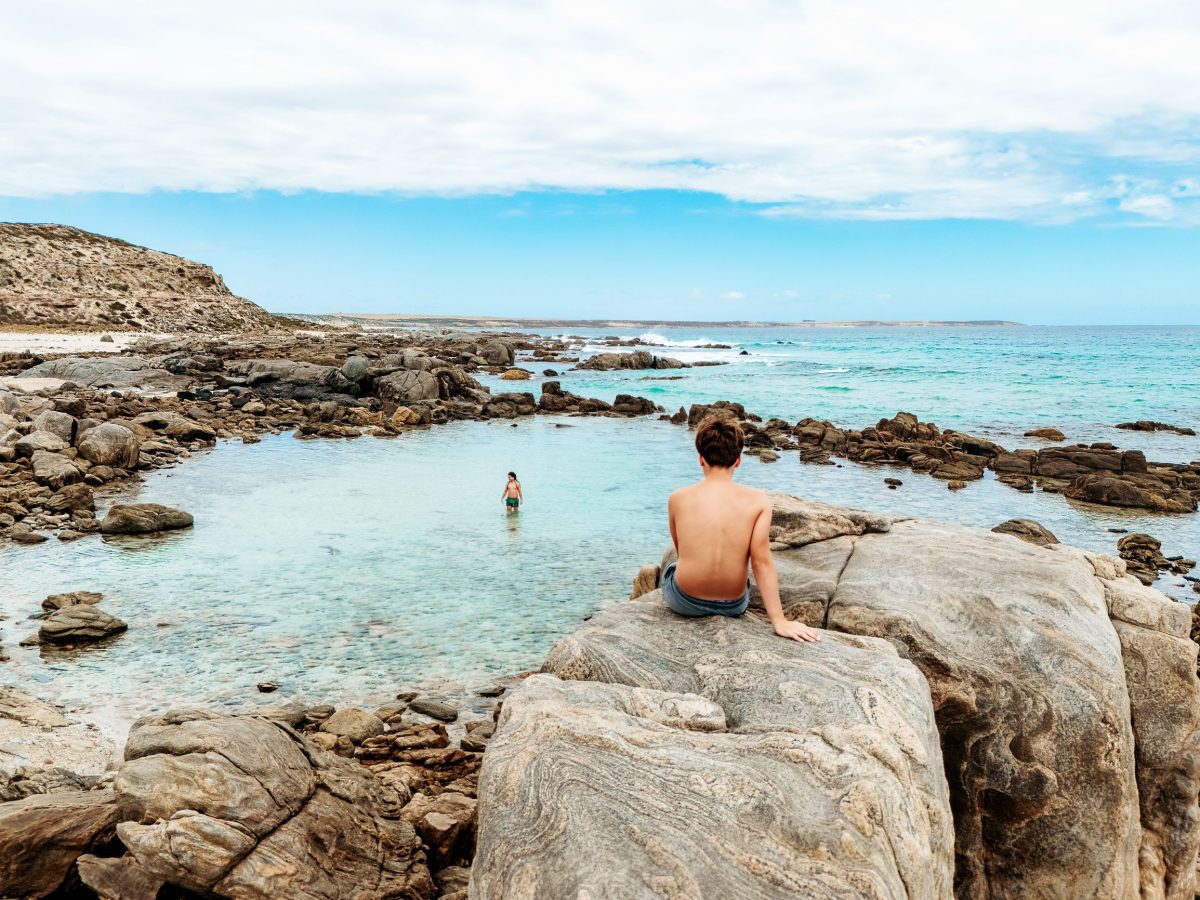
Corny Point, Yorke Peninsula
South Australia Media Gallery - credit Kristy Billing @gypsyandherwild

For an idyllic coastal getaway, head to the Yorke Peninsula, four hours’ drive from Adelaide. With spotty mobile reception and reduced speed limits, this seaside area encourages you to slow down. There's a variety of accommodation options, from campsites and caravan parks to beachside villas and hotels. Surfing at Pondalowie, swimming at Corny Point, or hiking in Dhilba Guuranda-Innes National Park will help you reconnect with nature. Yorke Peninsula is also home to art galleries, breweries, and eateries that celebrate fresh local produce.

Scenic Rim, Queensland
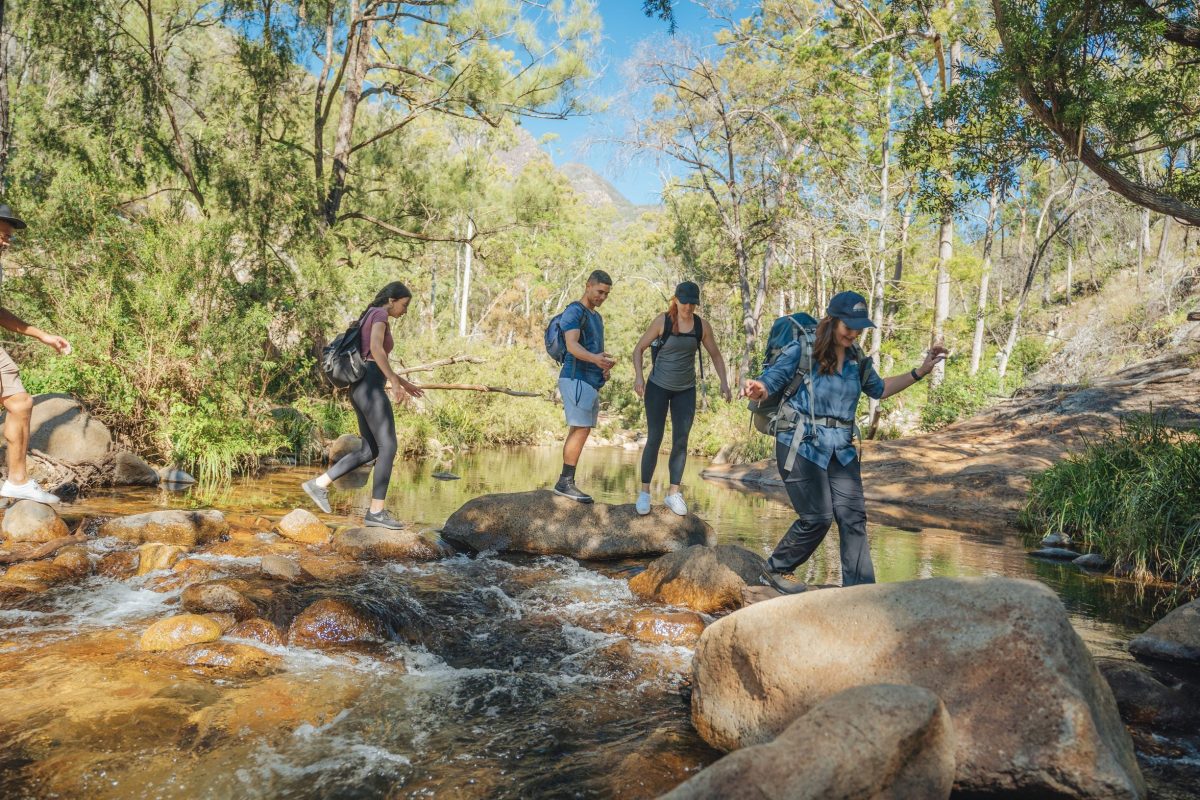
Bushwalkers at Mount Barney National Park, Scenic Rim
Tourism and Events Queensland - credit Reuben Nutt

You don’t need to travel too far from the big cities to enjoy a digital detox. The Scenic Rim is just 40 kays east of the Gold Coast, but its limited phone reception makes it feel much further. You won’t miss your phone when you’re admiring the lush hinterland of Mount Barney National Park or majestic falls at Tamborine National Park. Hit the trails or get a bird’s-eye view with a scenic helicopter or hot air balloon ride. The Scenic Rim's low-tech accommodation options include sites for camping and glamping, farm stays, charming bed and breakfasts, and luxury eco-retreats.

Make the Most of Your Time Away
A digital detox holiday can be a restorative experience that helps you return to your regular routine refreshed and recharged. Here are our tips for making the most of your unplugged break:
  • Share accommodation details. When you know your employer, family, and close friends can reach you in an emergency, it’s easier to stop stressing about what might happen at home.
  • Set clear boundaries. Make sure people understand you're taking a break from technology and they should only get in touch if there's a real emergency.
  • Leave your devices at home. Leaving your devices behind, if you can, reduces the temptation to use them.
  • Plan tech-free activities. With a clear itinerary, you’re less likely to miss technology.
  • Pack tech-free entertainment. Books, board games, puzzles, and journals can help evenings fly by without screens.

Your digital detox will reset your system, but stress and overwhelm may quickly return if you resume your old habits. While technology is unavoidable in the modern world, regularly scheduling device-free time can help you enjoy the benefits of your digital detox long after you arrive home.
9
Lifestyle & Culture
Connections to a Local Legend
Bush Friendship
My own
It is a cool August morning and we have made the three hour drive to Kogan, a sleepy town in Queensland that lies 252km West North West of Brisbane. Kogan only has 211 residents and is serviced by one pub and one general store with the pub, the Kogan Hotel, being one of the reasons we have made the trek to Kogan.

My mum, Carol Murray, is linked to the history of the Kogan Hotel and to Kogan itself as it was her Uncle Nelson ‘Darkie’ Dwyer, or Uncle Darkie as she fondly remembers him, and her Aunt Beryl who built, and were the first publicans, of the Kogan Hotel. It was also a place where my mum spent some of her teenage years when she would go to stay with Uncle Darkie and Aunt Beryl.

Nelson has another claim to fame in this tiny Western Downs town as he is also remembered there for his friendship with renowned painter Hugh Sawrey and was the man, who over many games of cards, gave Sawrey his first big break.

Sawrey, a World War II Veteran who served in New Guinea, and later in life would be the Founder of the Stockman’s Hall of Fame in Longreach always cherished his friendship with his mate ‘Darkie’ and the Town of Kogan pay homage to this bond between the two men with a sculpture titled Bush Friendship depicting the two men playing cards. The sculpture is in a park situated across the road from the Kogan Hotel.

It was a combination of the Hotel and the Sculpture that drew us to Kogan so Mum could have lunch once more in that unassuming pub and sit with her Uncle Darkie one more time at the sculpture depicting him and Sawrey playing one of their many games of cards.

Apart from the memories it bought back to Mum as she wandered around the pub and sat with Uncle Darkie we took the opportunity to have lunch at the Hotel and were delighted with both the food and the service and I highly recommend that if you are in the Western Downs area of Queensland make sure you drop into Kogan, have some lunch at the Hotel, and pay respects to two old Aussies who forged a friendship over cards.
10
Opinion
Should Every Australian Have a Government Email Address?
Person emailing
Unsplash - credit Glenn Carsters-Peters - https://unsplash.com/photos/person-using-macbook-pro-npxXWgQ33ZQ
Over time, the Australian government has enhanced its public infrastructure to serve its people better. When Aussies without public health insurance struggled to afford essential care in the ‘80s, the government introduced Medicare. In the ‘90s, the government issued tax file numbers so we could pay less tax, grow our super, and access benefits like JobSeeker payments and the aged pension. Since then, the world has undergone a digital revolution, yet the government hasn’t made substantial public infrastructure changes to reflect it. In 2005, ten years before he became prime minister, Malcolm Turnbull proposed issuing all Australians with an email address, but nothing ever came of it. Is it time to revisit the idea?

The current state of email in Australia
While Australia has some independent email providers like Fastmail and Shieldbox, as many as 99% of us rely on global giants like Gmail and Yahoo for our email needs. With the nation sending more than 8 billion emails every day, that’s a lot of local data heading offshore.

Switching to government-issued accounts for our digital communication would keep that data in Australia. That would be a key step towards strengthening our digital sovereignty. Controlling our data, rather than relying on foreign tech firms, would give us more control over our digital destiny.

How government-issued email could benefit you
Turnbull’s proposal focused on helping governments and official bodies communicate with Australians. They’d know where to send everything from bank statements to traffic infringement notices, without you ever needing to tell them or keep them updated.

Using a government-issued email account would also keep your personal information here in Australia, where it would be protected by local privacy laws. Global email providers aren’t subject to these laws, so if you use them your data can be compromised. For example, providers based in the United States like Outlook and Gmail must hand over any electronic data that American law enforcement agencies request under the U.S. CLOUD Act. These providers also infringe on your privacy by scanning your emails so they can show you targeted ads.

If you’ve ever had issues with your emails, you know how hard accessing tech support can be. Phone support is typically reserved for paying customers, so most of us have to muddle through support guides and community forums. The Australian government historically provides helpful support for its digital services like eTax and myGov, so it would probably continue this tradition if it introduced email addresses.

While email addresses are typically free, many users pay for extra features like custom domains, more cloud storage, and end-to-end encryption. When users make payments to global email providers, money leaves Australia and strengthens foreign economies. If the government offered similar add-ons, any money users spend would be reinvested to make this country better.

What would it cost?
Mail icon
Unsplash - credit CHUTTERSNAP - https://unsplash.com/photos/message-icon-SgrHcBpexys

Turnbull claimed that implementing and maintaining his email proposal would carry a “relatively modest cost.” He felt this would be money well spent, as the government already invested “hundreds of millions of dollars sending paper communications to Australians,” which were often lost, mislaid, or never read.

However, much has changed since Turnbull floated his proposal in 2005. The population has grown by 7.5 million. That means the government would need to spend a lot more money on email hosting drives and ongoing support than originally planned. The government also sends fewer paper statements and more electronic notifications through its myGov system these days, so there’s less of the financial waste that concerned Turnbull decades ago. The online landscape has also shifted, with more cybercrime putting data at risk. Any government email servers would need to meet the Australian Cyber Security’s strictest standards to keep sensitive data safe, which would further escalate costs.

Would it be worthwhile?
When Turnbull suggested giving all Aussies a government-issued email address in 2005, only around 13.6 million Australians, or two-thirds of the population, were using the internet, according to the ACCC. Today there are 26.2 million Aussie internet users, which amounts to more than 97% of the population, and most of them already have at least one email address. If this scheme was implemented in 2005, the government would have given many Australians their first email address, but that’s not the case today.

Given that most Australians already have one or more email addresses, it would be much harder to convince people to use a government-issued email address today than in 2005. Many people may simply reroute any mail for their government-issued address to their existing inbox overseas, as Estonians did when their government introduced a similar scheme, and that would undermine many of the benefits.

There’s a lot to like about a government-issued email rollout, but we may have missed the boat on this one. Most Australians are already committed to email addresses they’ve used for years and expecting them to switch would be a big ask. Without confidence in its success, it’s probably worth looking to the future and investing in more cutting-edge tech solutions.
12
Science & Tech
Watermarks threaten to expose businessfolk who ask AI to write their homework
Boy struggling with homework
magnific.com
Will the artificial intelligence boom go bust if we can’t hide the fact we’re using Generative AI to write everything from executive insights to government reports?

While the tech giants are working hard to convince us that the AI revolution is inevitable, the technology still has a major trust problem which threatens to derail wider adoption.

Do we trust AI not to steal our jobs? Not to make harmful decisions? Not to consume all our resources? These are all vital questions, but the latest fear is whether we can trust AI not to betray that fact that it’s already ghostwriting so much of the so-called work that many people churn out.

The issue extends far beyond cheating students hoping to pass off ChatGPT’s second-hand insights as their own. The corporate world is also rife with examples of high-flying executives outsourcing their homework to AI.

Last year, consulting giant Deloitte Australia was forced to provide the Federal government a partial refund after AI-generated errors and hallucinated references were uncovered in a welfare compliance report.

Rivals KPMG, PwC and EY have also been caught passing off AI-generated content as authentic “thought leadership”.

The quality of Generative AI will certainly improve over time, and those who use it surreptitiously will presumably get better at covering their tracks. Meanwhile, regulators have drawn a line in the sand.

The European Union has decreed that all AI-generated content must bear a watermark so it can be easily identified as such. It is part of a global push for “Responsible AI”, which is not only fair and accountable but also transparent.

The EU’s ruling doesn’t just apply to multimedia. Tech giant Anthropic recently announced plans for its AI assistant Claude, a darling of the business world, to lace text with invisible patterns to betray that it was written by a machine. ChatGPT developer OpenAI has agreed to do the same.

Large Language Models like Claude generate one word at a time, based on the preceding text. The watermark leaves a subtle pattern in Claude’s word selection. Not enough to change the meaning of a sentence, or even for human readers to notice, but enough that AI detectors can assign a probability that the text was generated by Claude.

The internet is already choking on so much AI slop that tech giants can no long trust what they find online when training new AI models. You could be forgiven for thinking that companies like Anthropic have a vested interest in ensuring the ability to weed it out.

The vocal backlash in some circles against Anthropic’s decision to watermark text is rather telling, with opponents taking to social media and reportedly even cancelling their Anthropic subscriptions.

Google already lowers the search ranking of poor quality AI-generated content. Opponents of watermarking fear that publicly outing all AI-generated text will become a modern “scarlet letter” which dooms that content to illegitimacy, presumably along with the real person who put their name to it.

Some people argue that subtle tinkering with word selection will hamper Claude’s ability to write elegant prose, but this feels like pretext for their real concern: they don’t want us to know they’re passing off AI’s work as their own.

Once again, it comes back to trust. These people want their readers to trust in what they say, and they fear that exposing their use of Generative AI will undermine that trust. I’d say those fears are well-founded.

If they’re so concerned about their reputation, why are they using Generative AI in the first place? Especially to write content that they know will be shared with the world.

If they’re short on time, short on ideas or simply short on writing talent, perhaps they should go back to the old-fashioned method of paying human ghostwriters like me to do their homework and keep their secrets.
14
Lifestyle & Culture
Why Are We Putting Protein in Everything?
Protein Brownie Unsplash
James Breenton for Unsplash
Once upon a time, protein belonged to steak, eggs and the suspiciously enormous tubs of powder found in gym bags. Now it appears to have staged a supermarket coup.

Protein yoghurt. Protein cereal. Protein bread. Protein bars. Protein chips. Protein ice cream. There are even soups proudly advertising their protein credentials, which raises an important question: What was wrong with ordinary soup?

Protein has become nutrition’s current star employee, promoted from useful macronutrient to full-blown personality trait. And to be fair, it deserves some applause. Protein helps build and repair tissue, supports muscle maintenance and performs a lengthy list of important jobs throughout the body.

But does everything we eat need a muscle-building makeover?

For most Australians, probably not.

According to the Australian Nutrient Reference Values, adult men (19-70) are recommended a daily intake of around 64 grams of protein a day. While women of the same age bracket are recommended 46 grams, with requirements increasing after 70.

And despite the endless parade of high-protein labels currently flexing at us from supermarket shelves, protein deficiency isn't exactly sweeping the nation. In March of 2026, data from the Australian Bureau of Statistics (ABS) found 99 per cent of Australians met their estimated protein requirements, although older adults were more likely to fall short.

Victorian-based dietician Kylie Sommers says some people genuinely benefit from eating more protein, particularly older adults, athletes and people doing regular resistance training. But for the average person eating a reasonably healthy and varied diet, protein already turns up in plenty of places without needing to be sprinkled into every available snack.

"Meat, fish, eggs and dairy are obvious sources," she says, "but so are tofu, lentils, beans, nuts and seeds. Even bread and cereals contribute." In fact, ABS data shows protein already accounted for around 18 per cent of Australians’ dietary energy intake in its national nutrition survey.

The bigger trap, she adds, may be assuming the word protein automatically transforms a packaged food into a health food.

"A protein brownie is, after all, still a brownie," she jests. "You still need to look at the label for things like high sugar content."

So by all means enjoy the protein yoghurt if you like it. Grab the protein bar when it’s genuinely convenient. Add extra protein to meals if your lifestyle or nutritional needs call for it, but your breakfast cereal does not necessarily need biceps.
15
News
Foreign Owned Media: How it's hurting our economy
Steven
Hold The News
Mateship, a fair go, egalitarianism, sport and the great outdoors are the first things that come to mind when we think of Australians. These traits form part of a culture that has served us well for over 200 years.

As a country of vast distances, local media has played an important role in keeping that culture alive. Writers, Jornalists, radio and TV presenters, have connected people across the continent, from Perth to Sydney or Melbourne to Brissy. The footy, the GG's, politics and business all reinforce a shared culture.

Most people take media for granted, but it's an important industry. Writers, journalists, publishers, broadcasters all need to be paid. Directly or indirectly, that money has traditionally come from advertisers, the ABC being the obvious exception.

As editor of Hold The News, I see that the Australian media landscape is at risk of being lost to foreign influence.

We have already lost a great deal, over the past decade Australian television advertising revenue has fallen from about $3.4bn to $2.5bn. Once inflation is taken into account that's about 40%. Print media advertising is down a staggering 67% over the same period.

Advertising revenue matters because it tells us the size of the industry.

You don't need a degree in economics to see that the media industry is under threat.

Why is foreign media a problem?

As is usually the case - follow the money.

In 2023–24, Australia imported $6.64 billion worth of services classified by the Australian Bureau of Statistics as “advertising, market research and public opinion polling”. The corresponding value of services produced locally was around $1.84 billion.

According to the ABS figures, imported advertising and related services increased sixfold in just eight years.

Foreign media is directly hurting our economy

What many Australian businesses fail to realise is that billions of dollars spent on advertising in foreign media should have circulated back into the pockets of their own customers.

Money that once went to Australian writers, jornalist and creative arts is redirected overseas leaving the local industry high and dry.

Last but not least, global media companies aren't here to preserve our Australianness, They are typically optimised for profit, and almost certainly does not have our interests at heart.

Can we solve the problem?

Yes.

With a little mateship, a fair go, some egalitarianism and perhaps a bit of sport we can start supporting local media again. The revenue will in turn develop local talent and keep Australianism alive.

Government can play a role by encouraging Australian startups to compete with the big online technology companies.

Google, Meta, Amazon, Alibaba, Ali Express are all extracting billions, that could otherwise be making life better for Australians.

By reading this article right to the end, you have already supported Australian media.

Like the little Dutch boy with his finger in the dike, it may seem like a very small contribution, but every little bit counts.


Subscribe here to get Hold The News Weekly, it's free.

Steven Sesselmann
Editor - HTN

Sources
ABS digital services balance payments
ABS Australian National Accounts
16
News
Last Weeks News: From Debauchery and Free Dental Care in Victoria to Stargazing in the NT
Masthead
Australia joins allies condemning Israel over aid worker deaths
Australia, the United Kingdom and Canada have condemned Israel’s decision not to pursue criminal investigations into the April 2024 drone strikes that killed seven World Central Kitchen aid workers in Gaza. The victims included Australian Zomi Frankcom.

In a joint statement released on Friday, the three governments called the decision “shameful” and said the victims and their families deserved justice and accountability. Israel’s military previously acknowledged serious operational failures but concluded there was no criminal liability for those involved.

The countries said they would continue pressing Israel for answers and urged it to protect humanitarian workers and comply with international humanitarian law.


Nick Kyrgios suspended after positive cocaine test
Australian tennis player Nick Kyrgios has been provisionally suspended after testing positive for a metabolite of cocaine.

The 31-year-old provided the sample during an ATP tournament in Mallorca on 22 June. A World Anti-Doping Agency-accredited laboratory confirmed the result on 17 July, and his suspension took effect on 4 August.

Kyrgios admitted making a “huge mistake”, accepted responsibility and apologised to his family, sponsors and supporters. He has not appealed the provisional suspension.

The final penalty has not been determined. Kyrgios said years of injuries had taken a physical and mental toll and that he was struggling to accept that his career may be nearing its end.

Police investigate alleged assault at Swans team hotel
Victoria Police are investigating a reported sexual assault at an East Melbourne hotel where Sydney Swans players gathered after Sunday’s match against Essendon.

The club has suspended Isaac Heeney, Chad Warner, Nick Blakey, James Jordon and Riley Bice for the remainder of the AFL season for breaching club standards. The five apologised for their conduct and accepted the sanctions.

The suspensions are separate from the police investigation. No player has been charged, arrested or formally interviewed, and it has not been alleged that any of the five suspended players committed the reported assault.

Three women connected with the gathering have obtained legal representation, with potential civil claims under consideration.

Patterson cites jury hotel error in murder appeal
Erin Patterson is appealing her convictions for murdering Don and Gail Patterson and Heather Wilkinson, and attempting to murder Ian Wilkinson.

Among seven grounds of appeal, her lawyers argue that the trial was compromised because the sequestered jury spent most of its deliberations at the same hotel as the police officer who charged Patterson and two members of the prosecution team. The defence described the accommodation failure as “catastrophic”, while prosecutors said there was no evidence of improper contact.

In a separate appeal, prosecutors argue Patterson’s life sentence with a 33-year non-parole period is “manifestly inadequate”. They are seeking life without parole or, alternatively, a substantially longer minimum term.

The Court of Appeal has reserved its decision.

Body of missing hiker Lily Hooper recovered
The body of 18-year-old bushwalker Lily Hooper has been recovered from Nattai National Park in the NSW Southern Highlands after an eight-day search.

Hooper left home on 12 August for a solo hike and was found off the walking trail, a significant distance from her parked car. Nearly 1,000 police, emergency personnel, defence force members and volunteers participated in the search.

NSW Police and Premier Chris Minns apologised after an initial report that Hooper had been found alive was passed to her family and announced publicly. The information was corrected about 10 minutes later.

Her cause of death has not been determined, and a report will be prepared for the coroner.

British rapper Yung Filly to face retrial on three rape charges
British YouTuber and rapper Yung Filly will face a retrial in Western Australia on three charges of sexual penetration without consent.

The 30-year-old, whose legal name is Andrés Felipe Valencia Barrientos, was tried last month over an alleged 2024 encounter with a woman in a Perth hotel room. The jury acquitted him of three rape charges, one choking charge and one assault charge, but convicted him of two counts of assault occasioning bodily harm.

Jurors could not reach verdicts on three further rape charges, which prosecutors have now decided to retry. Barrientos denies the allegations and remains on bail.

Sentencing for the two assault convictions will be postponed until after the retrial.

Karlu Karlu in the NT named international dark sky sanctuary
Karlu Karlu Conservation Reserve in the Northern Territory has been designated an International Dark Sky Sanctuary, becoming the Territory’s first, Australia’s third and only the 24th worldwide.

Located about 100 kilometres south of Tennant Creek, the reserve is renowned for its granite boulders and exceptionally dark, unpolluted skies. Almost all its 1,800 hectares is a registered sacred site with significance to Kaytetye, Warumungu, Warlpiri and Alyawarra Traditional Owners.

The designation followed a year-long assessment led by the NT Department of Tourism and Hospitality, including six months of night-sky measurements. Future development must follow lighting guidelines intended to preserve the site’s darkness, wildlife and cultural landscape.

Victorian Labor promises free walk-in dental clinics
Victorian Labor has promised to establish 10 free, walk-in public dental clinics if re-elected in November.

Premier Ben Carroll announced $230 million over three years for seven clinics in Melbourne and three in regional Victoria. Every Victorian would be eligible, with no appointment required and urgent cases given priority.

The clinics would provide check-ups, fillings, root canals and extractions, with capacity to treat more than 100,000 patients annually. Some could begin operating from July 2027, although the government has not confirmed when all 10 would open.

Labor describes the proposal as an Australian-first universal dental service operated by a state government and as long-term cost-of-living support.

Mundi Mundi festival invites rain-affected fans back for free
Mundi Mundi Bash organisers have invited ticket-holders who were turned away earlier in the week to attend the festival’s final day free of charge.

About 75 millimetres of rain fell around the festival site near Broken Hill over 11 days, leaving 25 to 30 per cent of its campground unusable. Thousands of the event’s 15,000 ticket-holders were denied entry, although about 10,000 people reached the site and the scheduled music program continued.

Affected patrons have been offered full refunds. After two drier days improved conditions, those still staying around Broken Hill were invited back for Saturday’s performances.

US slaps a 50% tariff on Canadian goods
The United States has imposed 50 per cent tariffs on about $20 billion worth of Canadian goods after last-minute trade negotiations ended without an agreement.

The tariffs affect products including wine, furniture, clothing, cement, dairy products, fishing equipment and hockey gear. They cover about five per cent of Canadian exports to the US and, unusually, do not exempt goods complying with the existing North American trade agreement.

Canadian Prime Minister Mark Carney suspended negotiations and promised to retaliate “dollar for dollar”. Canada’s tariffs will begin on 8 September and target US steel, dairy products, appliances, agricultural equipment, paper and electronics.

The measures deepen uncertainty for businesses operating across the closely integrated North American market.

---
AI-generated weekly digest — stories relevant to Australia, 15 August 2026 – 22 August 2026.

Sources: ABC News Australia, Guardian Australia, BBC News Australia, BBC News World, Sydney Morning Herald
18
Humour & Satire
The Tooth Fairy is coming to Victoria!
Ben Carrol the Tooth Fairy
Created by Gwynn Earl for HOLD THE NEWS
New Victorian Premier Ben Carroll has fluttered elegantly into election season promising ten free dental clinics for every Victorian with a mouth.

Carroll’s pitch, (delivered in his dulcet tones) “Open wide, Victoria, lets take a look at those chompers!”

And the cost to the taxpayer is allegedly a mere $230 million, tossed onto a state budget already groaning under $199 billion of debt.
Matter of fact, Treasury may need a root canal more urgently than the public. Labour has a history of free handouts close to election time, and after stalling Allan's controversial 'work from home' laws until 2027, it seems Mr Carrol needed another wildcard coming in to the state vote.

Health Minister Ingrid Stitt says some clinics could open by 2027, which is perfect timing: just after the election, and just before the debt collectors come knocking.

Whilst, like all handouts, when it comes along, you won't see me turning the dentist away.
However, I have to confess, Victorian Labour's policies do sound a little like the enthusiastic kid running for captain in school, who promised free coke in the coke machines, and weekends starting on Fridays.
20
Science & Tech
Do you dislike someone you used to like? New brain research explains why.
Enemies
Canva
Have you ever had a friend, classmate or colleague who suddenly did something so off-putting that your entire opinion of them changed in an instant? Yesterday you were happily sharing jokes, but today, perhaps just looking at them makes your stomach turn?

It turns out you aren't just being petty. Neuroscientists at the University of Tokyo have successfully mapped the exact neural pathway responsible for this sudden emotional flip. In a study published in July 2026, researchers revealed the precise brain wiring that updates social memories when a relationship turns sour.

Your brain re-wires
To understand how this works, we have to look at how your brain files away information. Your brain has a specific region called the hippocampus, which acts like a social rolodex to store the identities of the people you know. It also has the amygdala, which acts as your emotional processing centre.

Before this discovery, it wasn't fully clear how these two areas talked to each other to change your feelings about someone. The Tokyo team identified a highly specific, physical pathway of neurons connecting the ventral hippocampus directly to the amygdala.

When someone you know suddenly behaves aggressively or breaks your trust, this pathway fires up. It strengthens and reshapes the neural connection, updating the brain's record of that person from "safe" to "threat."

It's almost like the brain is performing its own neurological vibe check.

Why targeted dislike keeps you safe
One of the most striking findings was just how selective this pathway is.

In layman's terms, if someone startles you unexpectedly, your brain may briefly put you on high alert. But when someone you know repeatedly behaves in a way that feels threatening or betrays your trust, your brain can update its response to that specific person instead.

This means your brain doesn't make you paranoid about the entire world, instead, it surgically updates its file on the wrongdoer to keep you safe, while allowing you to remain perfectly happy and social with everyone else.

Sure, trust your gut, but trust your brain too
We often talk about trusting our gut. But this research suggests something just as important: trust your brain too. It's quietly learning from every interaction, updating your social map, and helping you make better decisions about who belongs in your circle.

SOURCES
Study into brain wiring
21
Science & Tech
Is Wi-Fi secretly mapping you? Err, yes, it is.
WiFi
Canva
You finally did it. You left your phone at home. No GPS. No Bluetooth. No smartwatch. No apps quietly collecting your location. For one glorious moment, you're convinced you've beaten the system.

Unfortunately... your Wi-Fi may have other ideas.

Scientists in Germany have demonstrated that ordinary Wi-Fi networks can identify people simply by analysing how their bodies disturb invisible radio waves. You don't need to carry a phone, wear a smartwatch or have any electronic device on you. If there are active Wi-Fi devices nearby, your body alone may be enough.

It sounds like science fiction, but the research is very real.

Your body leaves a radio-wave signature
Every second, Wi-Fi routers send radio signals bouncing around homes, offices, cafés and airports. As those signals pass through walls, furniture and people, they're subtly distorted.
Those tiny distortions aren't random. Each person's height, build, posture and movement changes the radio waves in slightly different ways, creating a unique pattern.

Researchers at the Karlsruhe Institute of Technology realised those patterns were distinctive enough that artificial intelligence could learn to recognise them.

Using ordinary Wi-Fi equipment, their system correctly identified people with almost perfect accuracy, even when they approached from different directions or changed the way they walked.

In other words, their bodies became part of the signal.

You don't need to be carrying anything
Most tracking technologies rely on something you're carrying, like your phone, your smartwatch or another connected device.

This doesn't.

Instead, a passive "listening" device in the room intercepts the unencrypted signals your devices naturally send back to your Wi-Fi router to optimise your connection. These signals, called Beamforming Feedback Information (BFI), change ever so slightly as you walk through the room. The listening device picks up those changes and feeds them into an AI.

Turning your phone off won't help because your phone isn't the thing being detected in the first place.

The privacy question nobody saw coming
The researchers aren't suggesting your local café is secretly tracking every customer who walks through the door.

But they are warning that the technology already exists, requires no specialised hardware, and uses information that many Wi-Fi networks already collect as part of their normal operation.

As AI becomes more sophisticated, today's innocent networking data could become tomorrow's powerful surveillance tool. That's why the researchers say privacy protections need to evolve alongside the technology.

The invisible observer
For most of us, Wi-Fi has always been something we barely think about. It's simply the invisible connection that gets Netflix onto the television and emails onto our phones.

Now, scientists have shown it can do something else entirely.

It may be quietly recognising the people moving through its signals.

Which means the next time you think you've disappeared by leaving your phone at home, you might want to think again.

SOURCES
German study: WIFI Networks