WEEKLY
August 31, 2026
Edition #75
Showing all topics � Login to filter
Science & Tech  ·  Opinion  ·  Lifestyle & Culture  ·  Fiction  ·  Other  ·  News  ·  Science & Tech  ·  Opinion  ·  Lifestyle & Culture  ·  Fiction  ·  Other  ·  News  ·  
1
Science & Tech
The doorway effect: Why your brain forgets why you walked into a room
doorway
doorway - Canva
You stand up from the couch with a clear mission. You walk down the hallway, step through the doorway into the kitchen, and then stop dead in your tracks.

You have absolutely no idea what you came in here for.

You open the fridge. Nothing inside reminds you. You stare at the bench. Nothing. Frustrated, you give up and walk back to the couch. The second your backside hits the cushion, it hits you. You wanted a glass of water.

Don't worry, you aren't losing your mind. It turns out there's a genuine psychological reason for this awkward phenomenon, and scientists call it the doorway effect.

The boundary line in your brain
Researchers at the University of Notre Dame decided to test why our memory seems to reset the moment we walk through a door.

They published their findings in the Quarterly Journal of Experimental Psychology, and the results are both fascinating and a little bit comforting.

Your brain processes the world by chunking your day into manageable scenes, almost like chapters in a book. When you stay in one room, your brain keeps all the information relevant to that specific space readily available in your short-term memory.

However, the moment you pass through a doorway, your brain treats that physical threshold as an event boundary.

It decides that whatever happened in the previous room is officially old news. It files those thoughts away to make space for whatever might happen in the new location.

Why walking back actually works
In one experiment, participants were asked to carry objects from room to room in a virtual reality setting.

Sometimes they walked across a large room, and other times they walked through a doorway into a new room of the exact same size.

The researchers discovered that passing through the doorway caused people to forget what they were carrying far more often than simply walking the same distance across a single room. The physical door acted like a reset button for the brain.

This also explains why returning to the original room suddenly brings the thought back. By stepping back into the previous environment, you are giving your brain the original context it used to create the thought in the first place.

How to beat the doorway effect
While you can't completely disable your brain's natural event boundaries, you can outsmart them with a few quick tricks.

Say your goal out loud
As you walk down the hallway, physically say what you're doing. Saying "I am getting my keys" keeps the thought alive in your active memory bank.

Carry a physical reminder
If you are going into another room to get something, grab a related object first. Looking down at an empty mug in your hand will remind you that you went to get a refill.

Visualise the end goal
Instead of thinking about the walk down the corridor, picture yourself actually holding the object you need.

So the next time you find yourself staring blankly into the kitchen pantry, don't be too hard on yourself. Your brain is simply trying to keep its files organised, even if it happens to wipe your short-term memory in the process. And also, close the fridge, you were probably looking for your keys.

SOURCE
Study on walking through doorways
2
Science & Tech
A 245-million-year-old fossil with its stomach intact has been found. Here’s what we know.
prehistoric-marine
prehistoric-marine
Finding a fossilised skeleton is exciting.

Finding one with its stomach, liver and intestines still intact? That's the palaeontology equivalent of finding a smartphone buried inside an Egyptian pyramid.

It sounds impossible, but an international team of scientists has revealed that a remarkable fossil from China has preserved its digestive system for an astonishing 245 million years. The marine reptile has become the oldest reptile ever found with soft internal organs preserved, offering researchers an unprecedented glimpse inside an animal that lived long before dinosaurs ruled the Earth.

Wait. Shouldn't that have rotted away?
Normally, yes.

Bones are hard and durable, so they have a reasonable chance of fossilising under the right conditions. But soft organs like the stomach, liver and intestines are a different story. They usually begin breaking down within days of an animal dying, long before fossilisation can even begin. That's why almost every fossil we find is little more than a skeleton.

This one somehow beat the odds.

Meet one very successful fish hunter
The animal is called Austronaga minuta.

It wasn't a dinosaur, but a small marine reptile measuring around 60 centimetres. With its long neck, narrow snout packed with fang-like teeth for grabbing slippery fish, large front flippers for steering, and a powerful tail that did most of the swimming; it was built for speed rather than brute strength.

Scientists even found its last meal
Wondering what it had for brunch? You'd be forgiven for picturing some weird prehistoric sea monster. Instead, tiny fish scales preserved inside its digestive tract showed this ancient predator had been enjoying a perfectly ordinary meal, of well, fish.

Researchers also found something they never expected.

The liver had retained traces of haemoglobin, which is the oxygen-carrying protein in our blood that makes it red. Finding evidence of that in a fossil that's 245 million years old is extraordinarily rare.

Why this tiny fossil matters
This spectacular fossil is helping scientists answer a much bigger evolutionary question. How did the digestive systems of modern vertebrates evolve?

You see, modern birds and crocodiles have a more complex, two-part stomach. This ancient reptile didn't. Instead, it had one simple, sac-like stomach, suggesting that the more sophisticated digestive systems seen in their descendants evolved much later than previously thought.

Sometimes the biggest discoveries come in small packages
Austronaga is hardly the most fearsome prehistoric creature ever discovered.

But nearly a quarter of a billion years after its final swim, it's quietly rewriting what scientists know about the evolution of reptiles, and showing that every now and then, nature preserves far more than just the bones.

Somewhere inside that little fossil is the closest thing we'll ever get to opening a prehistoric lunchbox.

Sources
Science.org study
University of Bonn
Reuters
3
AD Advertisement
Advertise in Hold The News - from $40.00 p/w
Advertisement image
Advertise Locally.
Billions of dollars are being transferred overseas by foreign media companies every year, most of it is advertising revenue.

Consider ways to advertise locally and put the money back into your customers pockets.

Contact us to put another finger in the dike.

Hold the News is an Australian company featuring articles by Australian writers.
4
Science & Tech
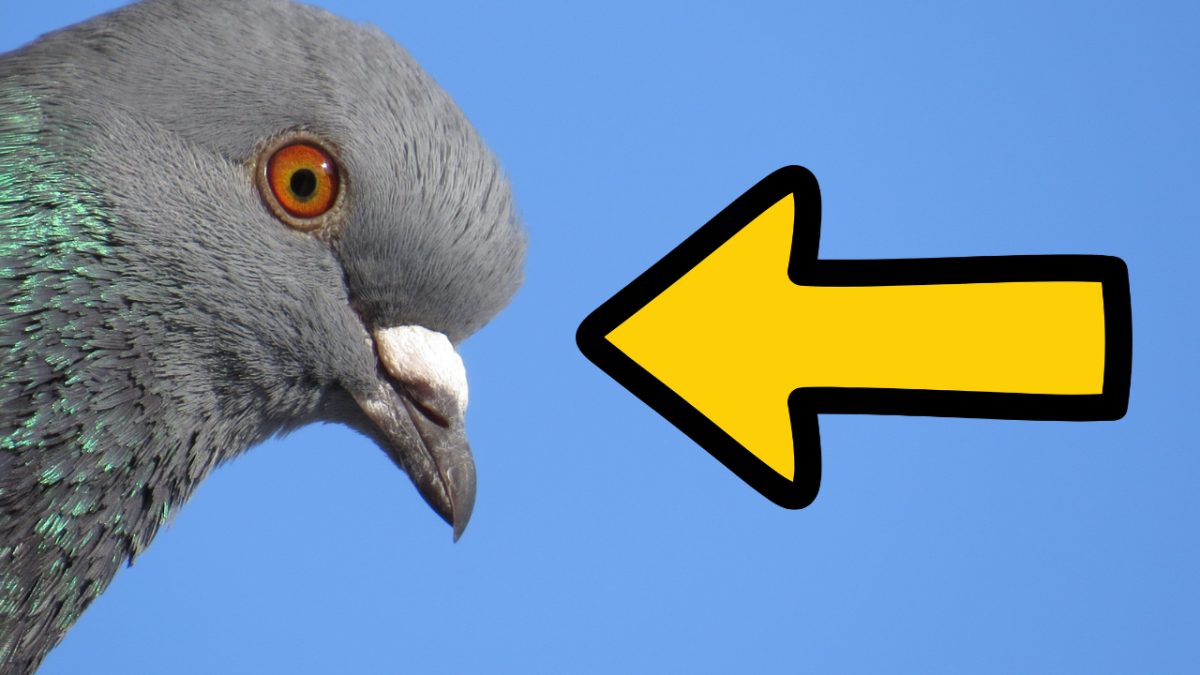
Why do we only see adult pigeons? Am I right?
Pigeons
Pigeons - Created in Canva
Take a look around your local shopping centre, train station or city street.

Pigeons everywhere.

Big pigeons. Small pigeons. Fat pigeons. Scruffy pigeons.

But baby pigeons?

Almost nowhere to be seen.

It's such a common mystery that some people have jokingly suggested pigeons simply appear one day as fully grown adults. Thankfully, science has a much less bizarre explanation.

Baby pigeons are homebodies
Unlike ducklings or chickens, baby pigeons don't leave the nest a few hours after hatching.

Instead, they spend around four to five weeks tucked safely away in nests, usually hidden on building ledges, under bridges, inside roof cavities or other places most people rarely look.

Their parents bring food directly to them, so there's no reason for them to wander around footpaths or parks while they're growing up.

By the time they're finally ready to leave the nest, they've already reached almost their full adult size.

They don't look like babies for long
This is the part that surprises most people.

Young pigeons, known as fledglings, don't emerge as tiny, fluffy birds. After spending weeks growing in the nest, they leave looking remarkably similar to adults.

Their feathers are usually a little duller, their eyes slightly darker and the shiny iridescent feathers around the neck haven't fully developed yet.

Unless you know exactly what to look for, you'd probably walk straight past one without realising it had only just left home.

Pigeons are surprisingly private
There's another reason baby pigeons seem so rare.

Feral pigeons are descended from rock pigeons, which naturally nested on cliffs. Cities just happen to provide perfect substitutes. Tall buildings, bridges and rooftops offer safe places to raise chicks well away from foxes, cats and curious humans.

Because the nests are hidden high above us or tucked into inaccessible spaces, most people never get close enough to see the chicks.

In fact, many lifelong city dwellers have never seen a pigeon nest at all.

So where have all the baby pigeons been?
Right above your head.

While you've been walking beneath them, they've been quietly growing in hidden nests until they're almost fully grown. By the time they make their public debut, they already look like they know exactly what they're doing.

SOURCE
Cornell Lab of Ornithology
National Audubon Society
5
AD Advertisement
Advertise in Hold The News - from $40.00 p/w
Advertisement image
Australia has a leak.
Billions of dollars are being transferred overseas by foreign media companies every year, most of it is advertising revenue.

Advertise Locally.
Consider ways to advertise locally and put the money back into your customers pockets.


Contact us to put another finger in the dike.

Hold the News is an Australian company featuring articles by Australian writers.
6
Opinion
Lock Up Your Fourteen-Year-Old Before ASIO Does
Street Art
Street Art - Alamy.com (Sabena Jane Blackbird)
Almost without a whisper, ASIO legislation passed through our Senate a week or so back, expanding our spy agency’s erstwhile questioning warrant powers to include sabotage, the promotion of communal violence, attacks on Australia’s defence system and serious threats to Australia’s territorial and border integrity.

Under the Australian Security Intelligence Organization Act 1979 these powers now allow ASIO, with a warrant, to compel a person to answer questions, produce documents and give information if ASIO reasonably believes this will substantially assist in collecting intelligence about espionage, sabotage, politically motivated violence (including terrorism), acts of foreign interference, communal violence and attacks on defence or border infrastructure.

ASIO may obtain three types of warrants under Division 3 Part 3 of the Act and it is an offence not to comply with these warrants. The three types are (1) A questioning warrant which requires an adult to attend and answer questions (2) A questioning and detention warrant that allows ASIO to detain an adult for questioning for up to 168 hours over a period of seven days - which may be extended by ASIO, although not indefinitely, and (3) A minor questioning warrant that allows ASIO to compulsorily question a young person between the ages of 14 and 18. ASIO does not have the power to compulsorily question a child under 14. Persons detained under this legislation may also be subject to a strip search by a police officer.

The new ASIO legislation contains a number of offences relating to non-compliance with ASIO’s compulsory questioning powers - these being a failure to appear for questioning under a warrant, refusing to answer questions or produce material under a warrant, giving false or misleading information during questioning and destroying or tampering with material requested under a warrant. All of these offences carry a maximum penalty of imprisonment for five years.

According to the online site https://www.gotocourt.com.au/, the legislation has been controversial in that these new permanent powers now available to ASIO are widely viewed as being an unjustifiable infringement on human rights.

In a much more contained form, ASIO questioning warrants have been en situ since 2003. They were enacted in the light of the 9/11 terrorist attacks in the USA and were designed to detain for questioning persons suspected of involvement in serious counter-terrorist and foreign interference activities or planning.

Interestingly, our current Prime Minister, as a young Labor Party parliamentarian at the time, spoke out vehemently against the 2003 legislation which has existed on the basis of having a three-year sunset clause forcing it to be reviewed every 36 months. It was then seen as being a ‘last resort’ power and has been implemented on around a score of occasions by ASIO since 2003.

Post the December 2025 Bondi terrorist shootings, however, ASIO – thanks to bi-partisan Labor, Liberal, National Party support – has been able, in the words of Greens senator, David Shoebridge, to effect a “ramming though of laws that are going to supercharge the ability of ASIO to literally pluck you off the street, hold you in secret detention for 24 hours, interrogate you and force you to answer every question with a threat of going to jail if you don’t. You don’t even have to be suspected of anything. You just might be someone they want to talk to,” he said.

A particularly disturbing element of this legislation is that some of it now applies to children aged 14–17; in that ASIO can issue a questioning warrant requiring a person as young as 14 to give information or produce material that may assist in an investigation relevant to politically-motivated violence. No wonder two Liberal senators crossed the floor and voted against it in mid-August, joining One Nation, the Greens and independent senator David Pocock.

Potentially reminiscent of the ICE enforcement campaign across the United States a year or so ago, this legislation is in place, as dissenting Liberal Senator Andrew McLachlan pointed out, because “Governments of any persuasion come up with a security law and oppositions are too scared to oppose. There needs to be a greater and wider debate on where civil liberties begin and end, and where the power of the state is necessary.”
Yes, the dissenting senator stopped short of labelling this ASIO legislation a potentially serious ‘police state’ weapon. But those of us with 14-year-old children or grandchildren may care to ponder a situation where, under this new broadbrush ASIO legislation, someone with a personal vendetta contacts ASIO and anonymously dobs in a teenage minor as being involved in or planning an act of politically motivated violence. The child is suddenly detained and interrogated even though – as often happens with teenagers – the youngster may merely be the victim of a prank or a social media vendetta.

Yes, ASIO needs powers, as it noted in its October 2025 parliamentary submission, which are “particularly critical in an environment where traditional distinctions between threats are blurring”. But do the democratic and individual rights, indeed potential livelihood of Australians, especially Australian minors, need to be put at risk, by overreacting without conducting a more measured form of investigative response?

Sudo NYM

(“Sydney Morning Herald” article of August 25, 2026 refers)
7
AD Advertisement
Write For Hold The News
Advertisement image
Have something worth saying?

Do you feel compelled to write? Have a story to tell or a message you want to share with fellow Australians?

Join Hold The News as a volunteer or professional freelance writer and give it a fair go.

We publish articles across a wide range of topics and let readers decide what is worth reading. A new edition is released every Monday, with articles ranked according to the number of reads they receive.

Register here to become a writer, or contact us if you have any questions.

Not ready to write just yet? Subscribe here and follow Hold The News to see what others are writing.
8
Lifestyle & Culture
Is Queue Jumping the New Business Class?
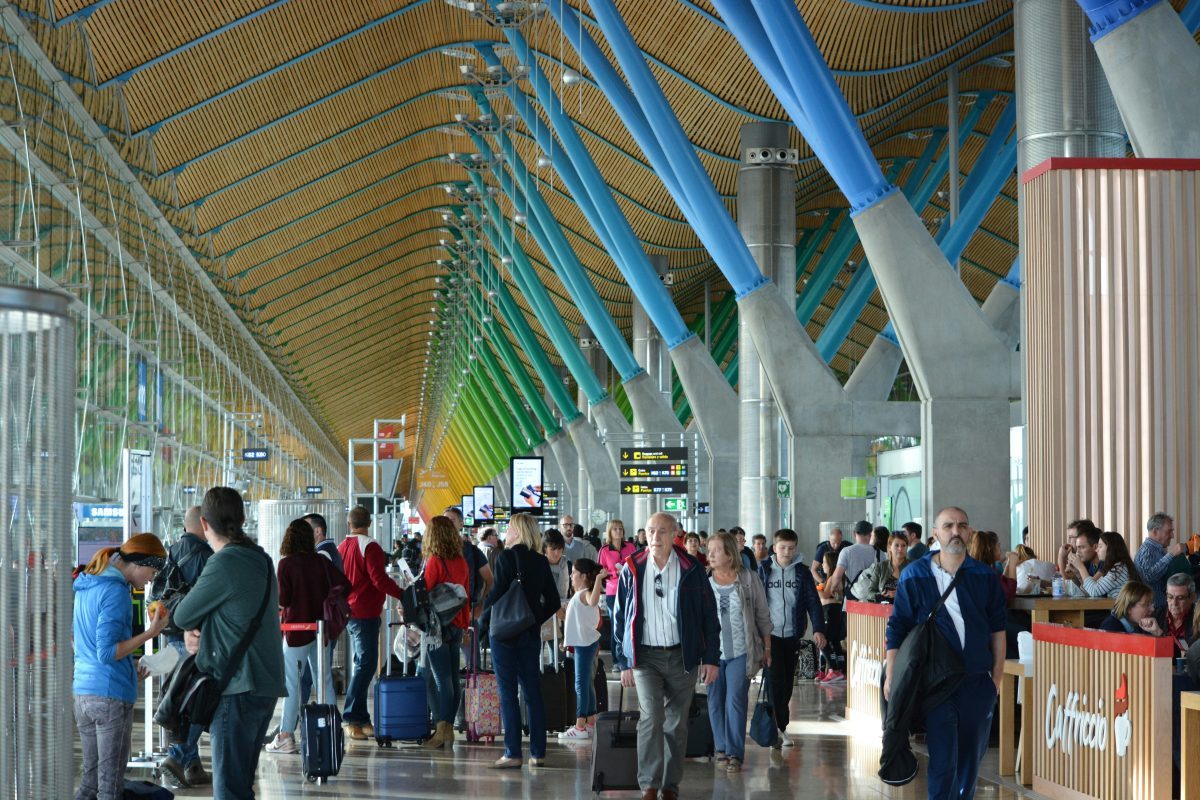
Airports
Airports - John Oswald for Unsplash
Once upon a time, airport luxury meant champagne before take-off, a lie-flat bed and perhaps someone calling you by name while presenting you with a hot towel and an amenities pack.

Now there’s another travel perk creeping rapidly up the wish list: not standing in a queue.

Priority check-in, fast-track security, priority boarding and express immigration are increasingly becoming products in their own right, rather than privileges reserved exclusively for business-class passengers and top-tier frequent flyers. And after you’ve spent 40 minutes inching towards airport security behind a large family unpacking six water bottles and nail clippers, paying to make the queue disappear can suddenly seem very reasonable.

Sydney Airport launched its new Fast Track service in July 2026, allowing any international passenger departing Terminal 1 to pay $20 for access to a priority security queue. You don’t need airline status, a business-class ticket or a wallet full of frequent flyer cards. You simply buy your way into the shorter line.

Sydney isn’t inventing the concept. Heathrow sells departure Fast Track access from £12.99 per person, providing dedicated security lanes, while Dubai’s marhaba service offers paid fast-track airport services that can include immigration, security and an airport escort.

Airlines are also increasingly bundling time-saving perks into products below traditional business class. Virgin Australia’s Economy X, for example, includes priority boarding and, where available, priority check-in and security screening, alongside the more obvious benefit of additional legroom.

Premium passengers have been quietly enjoying this advantage for years. Business-class fares frequently include dedicated check-in counters and priority boarding, while high-tier oneworld frequent flyers can access Fast Track security lanes at selected airports regardless of which cabin they’re flying in.

But selling these perks separately changes the equation. Instead of asking whether an extra few thousand dollars is worth it for a flat bed and better meal/wine, travellers can increasingly cherry-pick the bit of premium travel they value most. For some, that may be the seat. For others, the lounge. For a growing number of travellers, however, the ultimate upgrade might simply be getting through the airport faster.

There is an obvious catch. Fast Track usually means access to a priority queue, not a magical teleportation device. Sydney Airport, for example, makes it clear that its service doesn’t necessarily guarantee faster processing through security or border control.

Still, perhaps the definition of luxury travel is changing.

Champagne is lovely. A flat bed on a 14-hour overnight flight is lovelier. But walking past an enormous security queue knowing you don’t have to join it? That may be the most intoxicating airport perk of all.
9
Opinion
Public Infrastructure Should be Functional and Beautiful
Sydney skyline
Sydney skyline - Flickr - credit John Cooke - https://www.flickr.com/photos/john-cooke-uk/14822815376/
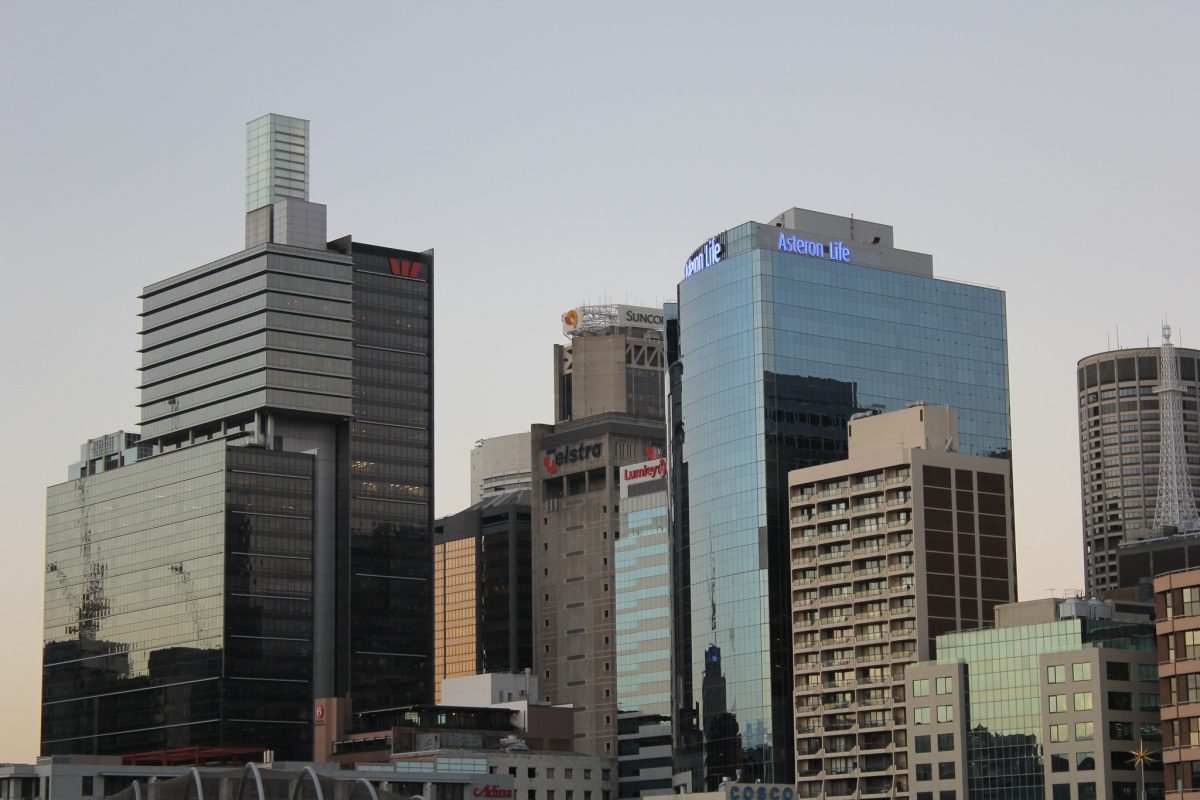
Australia has a grand tradition of creating public infrastructure that’s as striking as it is serviceable. Think the Opera House and Harbour Bridge in Sydney, Flinders Street Station in Melbourne, and the Old and New Parliament Houses in Canberra. But somewhere along the way we lost our mojo. Practicality became the driving force and aesthetics became a distant concern.

Our tax-paying dollars fund these public works, so why are we settling for infrastructure that leaves our cities drab and devoid of personality? Surely it’s time we demanded more. New public infrastructure shouldn’t just get the job done. It should be functional and beautiful.

Why do governments focus on function-first design?
Like so many government decisions, the recent focus on function-first design comes down to dollars and cents. History has taught us that beautiful infrastructure rarely comes cheaply. In 1957, the NSW Government originally budgeted $7 million for the Sydney Opera House. If it stuck to function-first design principles and developed a building to simply host performances it probably would have come in under budget, but it had grander plans.

Reinforcing the site and creating Jørn Utzon’s complex sail-like roof presented significant engineering challenges. The custom clay and crushed stone tiles he wanted to reflect the sunlight also didn’t come cheaply. The relationship between the government and Utzon soured and he quit in 1966. This caused further delays as the government scrambled to find a new team to complete his work. Construction that was supposed to take four years actually took 14, and the budget blew out to a whopping $120 million.

Function-first design avoids the issues that plagued the Opera House. Designs are kept simple to avoid engineering challenges that can delay projects and increase costs. Basic materials are cheaper than more decorative ones. There are no artistic flourishes to increase labour costs and add weight, which could compromise structural integrity. Functional designs can also be easily replicated, which is why so many new buildings in cities across the country have the same industrial feel.

Finding the middle ground
Vienna Metro station
Vienna Metro station - Flickr - credit Sandor Somkuti - https://www.flickr.com/photos/somkuti/54134574084/

No one is suggesting that every new piece of infrastructure has to be as elaborate as the Sydney Opera House. There is a middle ground somewhere between function-first design and groundbreaking aesthetic-led design which would allow for works that are visually appealing, functional, and relatively affordable.

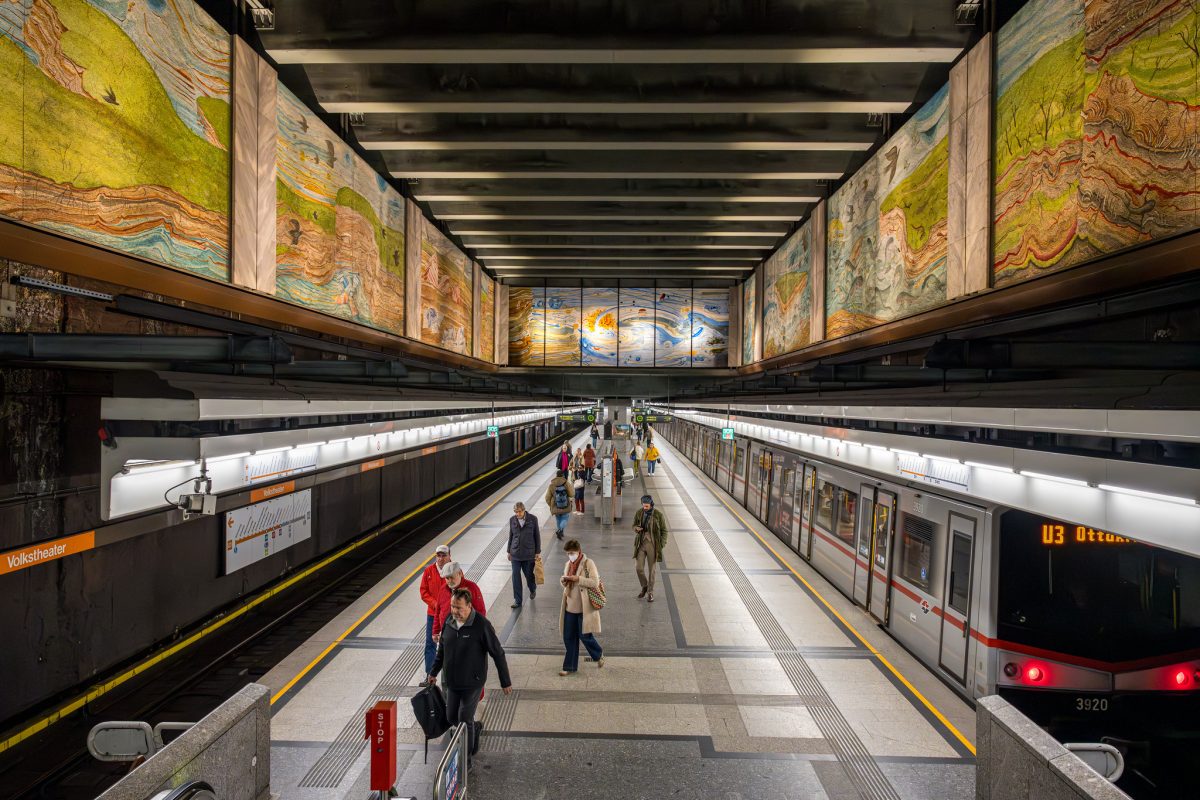
Although more beautiful infrastructure would cost more, examples around the world show it’s worth the investment. When Vienna added artworks to its Metro stations in the 1990s, the number of people using the service doubled and crime rates halved. Bilbao was transformed from an overlooked industrial shipping town to a thriving and beautiful city featuring the Frank Gehry-designed Guggenheim Museum, the striking Zubizuri Bridge, and new parkways and promenades. In 1996, before the development began, just 169,000 people visited Bilbao. Today it’s one of Spain’s most-visited cities, welcoming 1.1 million tourists annually. This has had a dramatic impact on the city’s economy and employment figures.

There’s no better time to beautify
Saving money by building practical but dull infrastructure is incredibly short-sighted. Cities around the world have demonstrated what’s possible when public infrastructure is both visually appealing and functional. But local change will only come when we advocate for better design standards. If you care about this issue, I encourage you to stay abreast of new developments in your state and community and use your voice. Speak up at public meetings and participate when governments ask for opinions on their projects online. Your feedback can help shape a more beautiful Australia.
10
Fiction
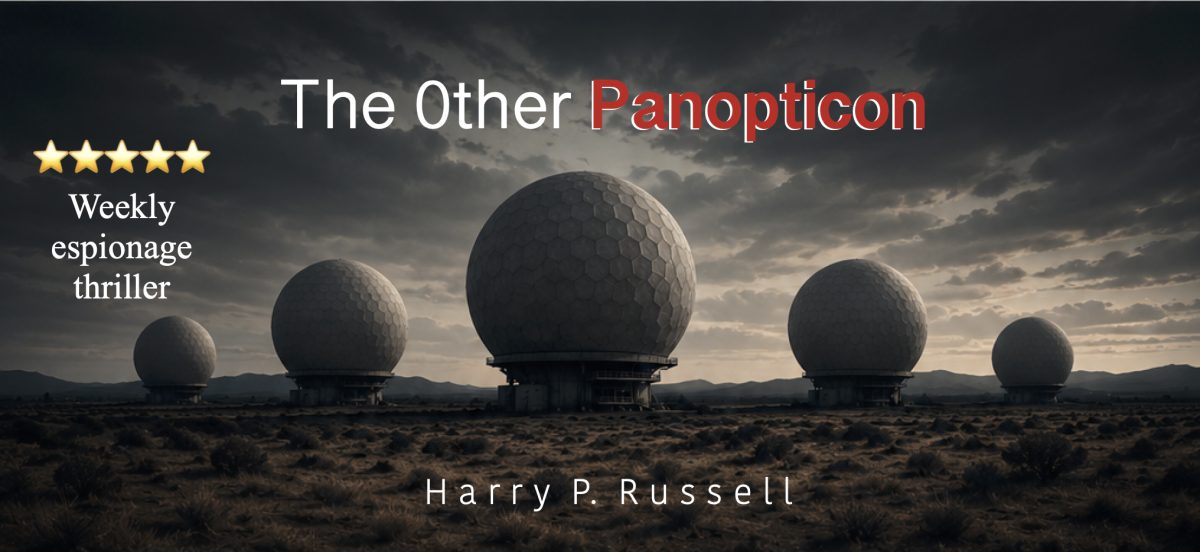
The Other Panopticon
The Other Panopticon - Original
Chapter 5a

Earlier Chapters:
Synopsis
Chapter 1
Chapter 2
Chapter 3
Chapter 4

Darwin – Mid-Late Autumn 2006

The civil unrest that had been fermenting in East Timor for the past six months finally reached boiling point on 24 April, when that fledgling Country’s former soldiers and civilian supporters marched through the streets of the capital Dili in protest. The march turned violent then continued over the next several days, until on 28 April the former soldiers clashed with Government forces who fired on the crowd. Five people were killed, more than 100 buildings were destroyed and an estimated 21,000 Dili residents fled the capital.

My linguist, Intan Wenda, was now in constant demand and email traffic into and out of our office was climbing to unmanageable heights.
In the second week of June, Rufus made good his promise of providing backup for Operation ‘Spider’ by cross-posting Hannah Dooley - the experienced former 2IC of our Canberra Office - to Darwin office as my co-director.

Hannah’s rise to stardom within ASIO over the past fifteen years or so had been more spectacular than mine. A contemporary of Rufus’s, she’d been appointed, in the early 1990s, to an assistant-director role in ASIO Head Office, choreographing the Organisation’s live asset operations nationally. By the late nineties she was the director in charge of that remit. In 2000 she was cross-posted to Sydney Office, stage-managing ASIO’s threat assessment program during the Sydney Olympics. Three years later, following her husband’s death, she was posted on exchange to MI-5, a posting which had been extended until a few months ago when she returned to ASIO Head Office from some well-deserved long service leave.

Hannah’s first career – in the early 1960s - had been with ASIS – the Australian Secret Intelligence Service – and had involved at least one small stint in East Timor, just after it had achieved, in 1960, the right to self-determination as a Non-Self-Governing Territory, with Portugal as the administering State. Australia, at that time, was contributing an Infantry Battalion Group force to the western border region of East Timor with the object of preventing insurgency operations by pro-Indonesia Aitarak Militia forces.

I knew Rufus Delaney had selected Hannah specifically to work alongside me and my team in Darwin not just because of her ASIS background, which would keep us on top of the East Timor crisis, but because she would be a substantial contributor to Operation ‘Spider’.

I collected Hannah from Darwin Airport after lunch on Monday 5 June, just as Australian and Malaysian defence personnel where being deployed in a peacekeeping role in East Timor. It had been over a decade since I’d seen Hannah Dooley. Still tall and willowy, she was now slightly more stooped in her sixties, but the sharp pointed nose and cultivated smile was still very much part of her ‘signature’.

‘I’ve been absorbing the SI material, some of which your man Intan has kindly translated for us,’ she announced. ‘Yet I am told this is not the only reason for my sudden cross-posting to the Top End.’

‘You’ll get the full briefing from us, Hannah, after we’re back in the office,’ I replied. ‘Has Rufus given you any indication of what his expectations of you up here are?’

‘Not much at all, Michael. Other than we need to be on top of the growing unrest in East Timor and start working more closely on that particular remit with our sister service.’

‘Have you heard of Operation ‘Spider’?’

The cultivated smile reappeared.

‘Rufus mentioned it once,’ she replied. ‘’then told me he’d have to shoot me.’

‘You and he worked on that celebrated KGB illegals network case in Canberra in the early 1960s, didn’t you Hannah?’

‘Rufus worked on it. I was wheeled into ASIO pretty well after it was all over.’

‘But you were fully briefed on it?’

She nodded.

‘Mandatory reading, you might say. Why – is that what Spider is all about?’

‘Partly,’ I replied. ‘There’s a very good reason why you’ve been posted to my office Hannah. And it’s not just about East Timor.’

ASIS secret intelligence reports. i.e. ASIS.


Continued...
12
Science & Tech
Can AI-powered Dr Google outsmart your doctors?
Dr Google
Dr Google - Magnific.com
After 15 years and a dozen doctors, Google’s conversational AI, Gemini, claims to finally have a cure for my mystery ailments. Can I trust its diagnosis?

They say a little knowledge is a dangerous thing, but having all the world’s knowledge at your fingertips can be even more dangerous. Especially when it comes to your health.

Hypochondriacs have been consulting Dr Google for years, fearing that every little ache and pain is some undiagnosed death sentence. Even worse, some people trust every miracle cure they find online, based on dubious science or even dangerous outright lies.

That said, Dr Google can be the last resort when real doctors struggle to give you answers or, worse yet, refuse to take your concerns seriously.

Anyone with chronic health issues will tell you that you need to advocate for yourself. This includes asking the right questions, pushing for better answers, taking lots of notes and getting second opinions.

Sometimes, stumbling across someone in an obscure subreddit with similar mystery ailments can be the breakthrough you’ve been looking for. Other times, you might simply come across a new medical term that takes your research in a new direction.

I’ve been on that journey for the last 15 years, ever since I stopped taking steroids to manage inflammatory bowel issues, which saw the rise of a whole mess of other health problems.

After very little help from my first gastroenterologist, I discovered by a long process of trial and error that my body doesn’t tolerate carbohydrates, dairy, amines or glutamate – turning them into a crippling mix of inflammation and anxiety.

All of this leaves me with very little to eat, along with a wild mix of symptoms that no-one can fully explain.

Along the way I’ve seen two more gastroenterologists and three dietitians, along with chiropractors, naturopaths, reflexologists and a few GPs. Some helped more than others, but no-one had all the answers.

Advocating for myself has involved keeping food diaries and other copious notes. This is where Dr Google has been extremely helpful with devising new theories to test and put forward to my doctors.

Recently, a midnight Google search turned into a two-hour chat with Google’s Conversational AI, Gemini. Unlike a normal search query, Conversational AI remembers your previous questions and answers, so you can dive much deeper into topics.

More than this, Gemini also asks follow-up questions to tease out different ideas.

Gemini and I covered my full medical history, including symptoms, medications and various test results, along with my own learnings along the way.

With each new piece of the puzzle, Gemini honed its theories until we had a single grand theory that seems to explain everything. Even why I can’t tolerate some medications that should help.

In short, my issues are seemingly not due to a specific illness, but rather (as I suspected) the impact of various medications I’ve taken over the years – with some fixing one problem while secretly causing another. Gemini says I need to stop taking a few of my current medications, but is sensible enough to recommend I do it gradually and consult a doctor first.

I’ve always said the only way I would find true answers was to gather a range of specialists in the one room. Gemini seemingly did the next best thing, calling upon research from a wide range of disciplines to develop a grand theory of everything.

Thankfully, as a technology journalist, I know far better than to blindly trust AI. It’s a chronic people-pleaser that will spout complete nonsense with absolute confidence, rather than admit it is unsure.

Gemini’s theory seems to make perfect sense but, without a medical degree, I don’t know enough to recognise whether it contains gaping holes.

An email from AI search optimisation company Algomizer recently landed in my inbox, with Marketing Director, Meriem Aousaji, posing five great follow-up questions before trusting AI’s advice:

1. What sources support this answer?
2. When was each source last updated?
3. What credible alternatives did you leave out?
4. Which part of this answer are you least certain about?
5. What details should I verify independently?

Question 3 offered the most telling answers in terms of alternative diagnoses and treatments. The fact Gemini refused to answer 4 and 5 – instead linking to online resources to consult when asking such questions – was also very telling.

So now I need to find a specialist who can explain to me whether Gemini’s diagnosis is a genuine breakthrough or simply another AI hallucination. I know firsthand that some doctors can be just as stubborn as AI when it comes to insisting they know best, so it’s difficult to know who to trust.
14
Other
Only the Lonely
Only the lonely
Only the lonely
There is a particular kind of silence
that only the lonely understand.

It is not the silence of an empty room,
or the quiet after midnight,
when the world has finally gone to sleep.

It is the silence
of having something to say
and nobody to say it to.

The lonely become experts
at talking to themselves.

We give names to the shadows,
make friends with the kettle,
ask the old clock how its day has been
and pretend not to notice
that it never answers.

Sometimes we sit beside a window
and watch strangers walking together.

Two people sharing an umbrella.
An old couple moving slowly through the rain.
A child holding tightly to a parent's hand.
Little scenes of belonging
passing by like trains
that were never meant to stop.

Loneliness is a strange country.
There are no borders,
no passports,
no warning signs.

You can live in a crowded city
and still feel like the last person
left on Earth.

You can sleep beside someone
and wake in a universe
where nobody knows your name.

And emptiness is stranger still.
It doesn't always arrive
with sadness.
Sometimes it comes dressed as routine.

You wake.
You shower.
You make coffee.
You answer the phone
when it rings.
You smile when you're supposed to.
You say,
"I'm fine."

Yet somewhere inside you
a small room remains locked.

Perhaps that is why lonely people
notice things others overlook.

The moon caught between buildings.
A dog waiting outside a shop.
The smell of rain on hot pavement.
The single light burning
in an upstairs window.

We understand the language
of things that wait.

Perhaps loneliness teaches us
that everything carries
a little emptiness.

The old tree with a hollow heart.
The abandoned house
still remembering laughter.
The ocean
always reaching for the shore
and never quite keeping it.

Maybe we are all
a little lonely.

Maybe the spaces inside us
were never meant to be filled completely.

Perhaps they are there
to remind us
that we need each other.

That a hand on a shoulder
can sometimes say more
than a thousand words.

That being remembered
is its own kind of shelter.

And sometimes,
when the night feels endless,
a stranger will smile at you
for no particular reason.

A dog will rest its head
against your knee.

Someone will ask,
"Are you alright?"

And for one brief moment
the walls come down.

The silence becomes softer.
The emptiness
makes room for hope.

Because perhaps the opposite
of loneliness
is not being surrounded by people.

Perhaps it is simply
being seen.

Really seen.

And knowing,
for just a little while,
that somewhere in this enormous,
beautiful, bewildering world,
someone knows
that you are here.
15
Lifestyle & Culture
The Lazy Person's Guide to Spring Cleaning
Woman vacuuming
Woman vacuuming - Unsplash - credit Vitaly Gariev - https://unsplash.com/photos/a-woman-vacuuming-a-bright-modern-living-room-u8knk6Hl8JA
I’ve got a confession to make: when it comes to household chores, I’m pretty lazy. I can find all the motivation in the world to meet my professional deadlines and socialise with my friends. But when it comes to keeping my house in order, I just don’t have the drive. But I know it needs to be done. As clutter and dust pile up, I can feel my stress levels rising and my nose twitching. So over time I’ve learned a few tricks. My spring cleaning hacks will help you work smarter, not harder, this season.

Upgrade your cleaning supplies
If you find yourself vacuuming the same spot or scrubbing hard to clean your fixtures, it’s time to upgrade your cleaning supplies. The best cleaning supplies work so efficiently that they can halve your cleaning time. From surface sprays to cloths and appliances, it all makes a difference. While the old saying that you get what you pay for holds some weight, the most expensive products aren't always the best. Review CHOICE articles and customer reviews to find supplies that really work.

Work in short bursts
You’ve got the whole season to work with, so why try to knock your spring cleaning out all at once? You'll be more focused and productive in shorter bursts. Knowing you're not cleaning for too long also makes starting easier. You’ll be surprised what you can achieve in 30 to 60 minutes. Don’t have that long to spare? See what you can tackle in just 10 minutes.

Deal with clutter first
You can’t clean efficiently if you’re cleaning around clutter. I like to go through each room with a garbage bag and my empty washing basket. Rubbish goes in the garbage bag; items that belong in different parts of the house go in the basket. I return everything staying in the room to its proper place and hey presto, I’ve got clean surfaces that I can quickly wipe clean. I then return the basket items to their proper places and move on to the next room.

Let your cleaners do the hard work
Spray bottle
Spray bottle - Unsplash - credit JESHOOTS.COM - https://unsplash.com/photos/person-holding-yellow-plastic-spray-bottle-__ZMnefoI3k

Most cleaning products work best if you give them some time. Rather than just spraying and wiping, let them sit on tough surfaces like shower recesses and stovetops for around 10 minutes. After they work their magic, it takes less scrubbing to remove stubborn grease, gunk, and grime.

Make your dishwasher and bath work double-duty
Dishwashers aren’t just for dishes and baths aren’t just for people. These household fixtures can help you clean plenty of household items in a fraction of the time. Most small plastic and metal items are dishwasher-safe, so pop items like oven knobs, toothbrush holders, and dustpans in for a cycle. They’ll come out pristine without you putting in any effort. The bath is also the perfect place for soaking any big, hard-to-clean items. Filled with warm water and gentle dishwashing liquid, it's ideal for soaking fridge shelves, plant pots, oven racks, and brooms. Leave them for an hour or so and they’ll be much easier to wipe clean.

Forget about perfection
Spring cleaning doesn’t need to mean making every surface passes a white-glove inspection. Once you stop aiming for perfection, you can be a lot kinder to yourself. When I spring clean, I have a much simpler goal: my home should feel fresher than before I started. Do the jobs that matter to you and make a real difference to your home. Then let the rest go. I promise what you’ve done is good enough.

When the spring sun is shining, the last thing any of us want to do is spend time indoors scrubbing. But spring cleaning doesn’t need to be an arduous job. My tips will help you do the job in a fraction of the time, so you can put down your cleaning supplies and start enjoying the season sooner.
16
News
Australian rescue teams deploy to Nepal as flood death toll exceeds 580; Northern Territory approves assisted dying laws
Masthead
Masthead - Hold The News
Australians among nearly 2,000 missing in Nepal floods

A devastating flash flood across Nepal and Tibet has killed at least 580 people, with nearly 2,000 still missing as of late Friday. The disaster has directly affected Australians in the region: at least 41 Australians are among those unaccounted for, including an Australian Defence Force member. The Prime Minister has authorised the deployment of additional rapid response team members to Kathmandu to assist with relief efforts and search operations.

The scale of the catastrophe remains difficult to assess fully. Entire communities remain unreachable due to destroyed roads and bridges, and official casualty figures are expected to rise as rescue teams gain access to more remote areas. The International Federation of Red Cross has noted that the region's hundreds of high-altitude lakes are prone to releasing enormous volumes of water suddenly, explaining the ferocity of the flooding event.

Families of those unaccounted for are conducting desperate searches through hospitals and relief camps. Australian authorities are working to account for citizens in the affected area, while the Nepali diaspora in Australia has begun organising vigils and fundraising efforts to support recovery operations.

Northern Territory legislates voluntary assisted dying

The Northern Territory has passed new voluntary assisted dying laws, marking another significant shift in end-of-life care across Australian jurisdictions. The legislation allows terminally ill patients to access medical assistance in ending their lives, a practice first legalised anywhere in the world in the Northern Territory 30 years ago.

However, questions remain about how the scheme will operate in practice. Dr Philip Nitschke, who facilitated the world's first voluntary assisted dying process three decades ago, has welcomed the new laws but raised concerns about how medical prognosis will be assessed and applied. The uncertainty centres on how doctors will determine with sufficient confidence that a patient will die within a specified timeframe, a judgment inherently difficult to make with precision.

Tasmania's conversion therapy ban sparks internal tensions

Tasmania's Deputy Premier Guy Barnett has written to an anti-trans feminist group labelling the Greens' proposed ban on conversion practices as "fundamentally flawed". His public criticism potentially puts him at odds with Premier Jeremy Rockliff on an issue of social policy. The legislation aims to prohibit practices claiming to change a person's sexual orientation or gender identity, a measure increasingly adopted across Australian states and territories.

Victoria's bird flu outbreak tests racing event protocols

A wildlife advocacy group has expressed concern that a pigeon racing fundraiser scheduled to proceed in Victoria's west could spread H5 bird flu from coastal to inland regions of the state. The event raises questions about how public health authorities balance disease containment with community activities and fundraising efforts during an active outbreak.

AI-generated songs banned from Australian charts

The Australian music industry has moved to exclude songs created entirely by artificial intelligence from national music charts. The decision follows an incident weeks earlier in which a DJ admitted using AI to remix a Madonna song that topped the Australian charts. The ban reflects growing concerns about the role of artificial intelligence in music production and questions about artistic authenticity and fair competition.

Live music venues closing amid rental market pressures

Another Sydney music venue, Lazy Thinking, is closing its doors as Australia's grassroots live music scene faces mounting pressure from rising rental costs. The venue's operator has four days to hand keys back to his landlord. The closure adds to a pattern of independent music venues shutting across the country, with the precarious rental market increasingly difficult for small operators to navigate.

US assumes control of Venezuelan oil reserves

Donald Trump announced that the United States has negotiated an agreement giving the US "majority control" of more than 65 billion barrels of Venezuelan proven oil reserves. The arrangement has sparked immediate controversy, with Venezuelan opposition figures condemning the move as "predatory" and "unconstitutional". Trump characterised the deal as historic, while Venezuela's interim president Delcy Rodríguez said the arrangement would help revive her country's economy.

The agreement could affect Australian trade dynamics in energy markets, though the supplied material does not specify immediate implications for Australian oil, gas or energy policy. The deal represents a significant shift in US-Venezuelan relations and reflects broader patterns of American policy toward the region.

---
AI-generated weekly digest — stories relevant to Australia, 22 August 2026 – 29 August 2026. Review and edit before publishing.

Sources: ABC News Australia, Guardian Australia, BBC News Australia, Sydney Morning Herald
18
Opinion
To Do or Not To Do
Thoughtful Teddy Bear
Thoughtful Teddy Bear - Alamy.com (Olga Yastremska)
When you look back at your life, which decisions genuinely changed its course? How did you perceive the risks at the time, and, knowing what you know now, would you make the same choices again?

Reflecting on my own decisions, the most life-changing decisions carried significant risk. But with the confidence and poverty of youth, the upside appeared brighter than the downside. Plenty to gain and not much to lose.

Of course as we get older and accumulate more assets, our risk profile changes - more to lose and less to gain. The danger is - we become conservative, boring and possibly miss out on great opportunities.

Minor decisions
Sometimes even a seemingly insignificant decision can change the course of one's life. Like the time I asked a gentleman in an elevator, someone I knew who had a business in the same building:

How is your manufacturing business going?

Well, my brother and I saw an opportunity and ended up buying his business which served us both well for many years.

Planned decisions
While random opportunities happen, they are not the norm.

Well-executed pre-planned decisions are ones where risks and benefits have been carefully considered. Education, career, marriage, home purchase, family planning etc.

These are all big decisions, but the risks are usually well understood and in the case of buying a home, banks to a certain degree control the risk.

Unplanned decisions
From time to time everyone is presented with opportunities, which sometimes means making a quick decision - take it or not?

Will it turn out to be something you regret or the greatest lifechanging event?

A word of caution. While genuine opportunities do exist, be wary of anyone selling an, Opportunity not to be missed, as it is almost certainly their opportunity - not yours.

Learn to recognise a genuine opportunity and leave the final decision until the last reasonable moment. This gives you optimum time to consider the pros and cons without missing the opportunity.

The decision
Predicting the future is, at best, an inexact science. Every decision carries an element of risk.

Wisdom is not about avoiding risk, but recognising which risks are worth taking.

What is your tolerance for risk - and how exciting do you want your life to be?

To do or not to do? That is the question.