WEEKLY
September 7, 2026
Edition #76
Showing all topics � Login to filter
Science & Tech  ·  Fiction  ·  Lifestyle & Culture  ·  News  ·  Science & Tech  ·  Fiction  ·  Lifestyle & Culture  ·  News  ·  
1
Science & Tech
Betelgeuse: Astronomers just solved a century-old mystery
star
star - Chatgpt
Humans have been looking at Betelgeuse, one of the brightest stars in the night sky for thousands of years, thinking it was a lone star.

Yet somehow, it managed to keep one enormous secret.

Astronomers have now captured the clearest direct evidence that Betelgeuse isn't alone after all. That's right, orbiting this giant star is a much fainter companion.

A cosmic game of hide and seek
Finding Betelgeuse’s companion was a huge feat. Imagine trying to spot the glow of a firefly while someone shines a stadium floodlight directly into your eyes. That's essentially what astronomers were up against.

Betelgeuse is so enormous and so dazzling that any nearby companion is almost completely overwhelmed by its light.

Using the European Southern Observatory's Very Large Telescope in Chile, researchers finally managed to photograph the elusive companion.

Although it's estimated to be about three times the mass of our Sun, it is tiny compared with Betelgeuse, which is hundreds of times larger in diameter.

Why does this even matter?
Well, Betelgeuse is nearing the end of its life. One day it will explode as a spectacular supernova, briefly becoming one of the brightest objects visible from Earth.

Knowing it has a companion helps astronomers better understand how Betelgeuse has evolved, why it behaves the way it does, and what might happen in the lead-up to that dramatic finale.

It may also help solve another long-standing puzzle. Every six years or so, Betelgeuse's brightness changes in a subtle but noticeable cycle, and astronomers have never been completely sure why. The newly photographed companion also appears to orbit the giant star about once every six years, suggesting it could be responsible for that repeating pattern.

Perhaps the most amazing part...
If a star we've been watching for thousands of years can still surprise us, imagine what else the universe has up its sleeve.

Sources
European Southern Observatory
Observatoire de Paris
2
Science & Tech
Can forests reduce your cancer risk? Science says yes.
forest
forest - Canva
Imagine your doctor handed you a prescription that said: Spend more time in the bush.

It sounds almost too simple to take seriously. Yet a growing body of research suggests that spending time among trees may do far more than lift your mood. Scientists have found it can reduce stress, lower blood pressure, improve aspects of immune function, and may even help your body identify and destroy abnormal cells.

In Japan, there's a practice called Shinrin-yoku, which literally translates to "forest bathing". It involves slowing down and immersing yourself in the sights, sounds and smells of a forest. Researchers have been studying its effects on the human body for more than three decades, and the findings have been surprisingly compelling.

The hard science
Trees aren't just standing around looking pretty. They're constantly releasing natural compounds called phytoncides, which help protect them from insects, fungi and disease.

When we breathe these compounds in, our bodies appear to respond in some fascinating ways.

Several clinical studies have found that spending time in forests can increase both the number and activity of Natural Killer (NK) cells. These specialised white blood cells patrol the body looking for virus-infected cells and abnormal cells, including some tumour cells.

Even more remarkable, some studies found that this boost in NK cell activity lasted for more than a week after people left the forest.

That doesn't mean forest bathing prevents or cures cancer. The research simply suggests that spending time in nature may support one of the body's natural defence systems, which is a pretty compelling reason to swap the shopping centre for a bush track every now and then.

Why forests make us feel so good
The benefits aren't limited to the immune system. Researchers have also found that spending time in natural forests can lower stress hormones and help calm the nervous system.

Part of that may come down to something called fractals. These are the repeating patterns found throughout nature, from tree branches and fern leaves to coastlines and snowflakes.

Scientists believe our brains have evolved to find these patterns calming, which may explain why a walk through the bush often leaves us feeling noticeably more relaxed than an hour spent surrounded by traffic, concrete and phone notifications.

Forest bathing is easier than you think
The good news is you don't need to disappear into the wilderness for a week to experience the benefits. A local bush track, nature reserve or even a heavily wooded park can be enough.

If you'd like to give it a try, leave the headphones at home, put your phone on silent and slow your pace. Stop occasionally and notice something you've never seen before. Listen for the furthest bird call. Feel the breeze on your face. Forget your step count for half an hour and simply let the forest do what it's been doing for millions of years.

Modern life spends a lot of time pulling our attention towards screens. Forest bathing gently pulls it back towards the natural world. And while scientists are still learning exactly how it all works, the evidence so far suggests your body rather likes the change of scenery.

Sources

Forest Bathing and Human Natural Killer Activity (PubMed)
Forest Trips vs. City Trips on NK Activity (PubMed)
Forest Bathing Trips and Human Immune Function (National Institutes of Health)
Oncotarget: Forest Environments and Physiological Stress
3
AD Advertisement
Advertise in Hold The News - from $40.00 p/w
Advertisement image
Advertise Locally.
Billions of dollars are being transferred overseas by foreign media companies every year, most of it is advertising revenue.

Consider ways to advertise locally and put the money back into your customers pockets.

Contact us to put another finger in the dike.

Hold the News is an Australian company featuring articles by Australian writers.
4
Fiction
The Other Panopticon(5b)
The Other Panopticon
The Other Panopticon - Original
Chapter 5b

Earlier Chapters:
Synopsis
Chapter 1
Chapter 2
Chapter 3
Chapter 4


We dropped Hannah’s luggage off at Darwin’s stylish Hilton Esplanade Hotel then headed to my office. I’d scheduled a briefing session for Hannah with my team for 3:30 that afternoon and all four team members were waiting for us when we arrived.

After introductions, we took tea, coffee and some of Clarence’s delicious home-made cheesecake into my office, squeezing around the small circular table and balancing our cheesecake wedges on flimsy paper plates.

‘For your sins,’ I began, eyeing off my four team members, ‘you now have two directors to cope with. I’ll be looking after all operational and administrative matters regarding this office, and Hannah will be attending to all matters East Timor.’

‘Will Hannah be doing my staff report then?’ Intan asked.
‘I’ll be seeking her input for that Intan – so, yes.’

‘Does that mean you don’t want to receive any more of my reports relating to ET?’ he persisted.

‘No Intan, it just means that Hannah will be across your reporting in the first instance and will confer with me on anything ET if needs be.’

‘What about me,’ Clarence piped up.

‘What about you?’ I replied.

‘Who’s going to be across my work?’

I shot a quick glance across the room in Hannah’s direction.

‘Me in the first instance and Hannah in the second, Clarence,’ I replied.

For the next eighty minutes or so, the six of us focussed on the burgeoning East Timor situation, with Intan being the main contributor. Enzo pulled on some facts from his past period of service in ASIO’s Perth office when he was involved in several operations focussing on Indonesia. Celina, on the other hand, was whisper-quiet. I knew she had nothing to contribute on the ET front but she would save the best of her contribution for ‘Spider’.

The Timor briefing concluded just before 5 and I could see Clarence furtively eyeing his watch. Intan, too, appeared keen to call it a day and I wasn’t about to stop either of them.

‘We just need to bring Hannah up to speed on a few other bits and pieces,’ I announced. ‘So you two can go,’ I said turning in Clarence and Intan’s direction.

‘Thank you both for all your good work so far,’ said Hannah. ‘And Clarence, thank you for booking me into what looks to be pretty swish accommodation.

The old fellow gave a self-conscious nod than followed Intan out of my room, closing the door behind him.

‘Let’s take a quick breather before we launch into ‘Spider’ I suggested, reaching for my mini-fridge and removing a bottle of sparkling water and four glasses from it.

The water seemed to refresh us because our discussion was soon gathering pace.

Continued...
5
AD Advertisement
Write For Hold The News
Advertisement image
Have something worth saying?

Do you feel compelled to write? Have a story to tell or a message you want to share with fellow Australians?

Join Hold The News as a volunteer or professional freelance writer and give it a fair go.

We publish articles across a wide range of topics and let readers decide what is worth reading. A new edition is released every Monday, with articles ranked according to the number of reads they receive.

Register here to become a writer, or contact us if you have any questions.

Not ready to write just yet? Subscribe here and follow Hold The News to see what others are writing.
6
Lifestyle & Culture
Didn't take a gap year after school? Take one in your 50s
The Gap Year
The Gap Year - Credit: Rob Pegley
I’m writing this from my parents’ house in England. I’m currently on a three-month sabbatical between jobs; doing some freelance writing to keep the bills ticking over, studying for a change of career, and fitting in as much travel as I can.

I’ve just got back from a week travelling around Italy with one of my daughters, and I’m already looking for cheap weekends in Europe to make the most of having a UK base.

I’m not retired, or overwhelmingly financially secure - I have plenty of working years ahead - and I’m certainly not travelling in luxury.

The original reason for spending extended periods in England was that, as my parents got older, I made a conscious decision that I wanted to spend more time with them. But that decision came with an unexpected benefit.

At 58, I appear to be taking my gap year.

I didn’t take one at 18. I dropped out of university, got an office job - think Tim from the UK Office - and eventually went back to university. By the time I graduated at 24, I felt I was already playing catch-up and needed to get on with building a career.

Looking back now, I should probably have gone travelling. At 24, I thought I was too late. At 58, I realise it was still ridiculously early.

Why should 18-year-olds have all the fun?

The traditional gap year occupies a very specific window in life. You finish school, stuff some clothes into a backpack, go somewhere exotic and return with questionable facial hair and stories your parents would rather not hear.

Miss that opportunity and the next approved period for extended travel seems to be retirement.

But life doesn’t work quite like that anymore. We’re living longer and working longer. Children grow up and leave home. Relationships change. Careers get interrupted or reinvented. Remote and freelance work means some of us no longer have to be in the same place every Monday morning.

I’m single, my children have left home and much of my work can be done remotely. That has created a freedom I didn’t have for decades. I used to have a Lotto dream to split my time between England and Australia - I haven’t had the Lotto win, but I’m having a crack anyway.

And I’m not alone. More people in their 50s are taking extended trips, sabbaticals and career breaks - whether they’re wealthy, retired, both or neither.

Perhaps we need to stop thinking that adventure belongs at the two ends of adulthood: before real life begins and after the work is finally done.

Why not somewhere in the middle?

The joy of travelling slowly

I’ve also discovered that travelling in your 50s feels different.

This summer I travelled by train through Italy, walked for hours around Rome and Naples, ate extraordinary pasta in Bari and Matera, spent time on the coast in Puglia and stopped in places simply because I wanted to see what was there.

I’m less interested in ticking attractions off a list than I once was. Give me a train journey, a long walk through an unfamiliar neighbourhood, a good local restaurant and an hour sitting outside a café watching people and I’m happy.

At 18, travel is partly about discovering who you are going to become.

At 58, I have considerably less interest in finding myself. I am, however, extremely interested in finding a decent coffee.

And perhaps there’s freedom in reaching an age when you realise you don’t need to have everything mapped out. I don’t know exactly what my next job will be. I’m studying something new. I’m writing. I’m spending time with my parents and my children. And occasionally I’m getting on a plane or train and seeing where it takes me.

We’re living longer. We’re working longer. So why should the adventurous, uncertain bit of life all happen at the beginning?

I didn’t take a gap year at 18.

I was just 40 years late.
7
AD Advertisement
Advertise in Hold The News - from $40.00 p/w
Advertisement image
Australia has a leak.
Billions of dollars are being transferred overseas by foreign media companies every year, most of it is advertising revenue.

Advertise Locally.
Consider ways to advertise locally and put the money back into your customers pockets.


Contact us to put another finger in the dike.

Hold the News is an Australian company featuring articles by Australian writers.
8
Lifestyle & Culture
Why do we keep buying books when we already have books we haven’t read?
Book Buying
Book Buying - Credit: Rob Pegley
I can’t walk past a bookshop. I just can’t.

If I’m at a shopping centre with a Dymocks, Berkelouw or Harry Hartog, I simply have to take a look. Currently in England, the same applies to any Waterstones in my vicinity. And on a recent trip to London, there was absolutely no possibility of walking past the huge Foyles on Charing Cross Road.

I tell myself I’m just looking, because I already have a stack of books at home - plenty of them yet to be read.

There is always the same pattern to my visit. You’ll probably have your own version: Mine starts in front of new fiction and the top 10 bestsellers, then moves past the various tables of recommendations before arriving at the crime section. Here, I scan methodically from top left - A - to bottom right - Z - pausing at favourite authors and checking whether they’ve somehow published a new book without telling me.

Sometimes I just have to buy something. Occasionally, I have to stop myself buying something I already own.

And it turns out I’m not alone.

My new favourite word

Clearly, I love reading. It follows that I love words; so I was delighted to discover a word that describes exactly this behaviour.

Tsundoku is a Japanese term for acquiring books and allowing them to pile up unread.

Better still, it doesn’t necessarily carry the sense of failure or guilt we might associate with that teetering pile beside the bed. There can actually be pleasure in simply having books waiting for you.

Which raises an interesting possibility: perhaps buying books and reading books aren’t quite the same hobby.

Obviously, we usually buy books because we intend to read them. But I think there’s something else happening too. When we buy a book, we’re sometimes buying an idea of our future self.

We buy the serious history book because Future Me is going to become better informed. The literary classic because Future Me will finally read Dostoevsky. The cookbook because Future Me apparently spends Sunday afternoons preparing elaborate casseroles rather than wondering what can be delivered within 30 minutes.

There are books about learning languages, getting fit, understanding politics, travelling to places we may never visit and mastering hobbies we may never actually begin.

Which means an unread bookshelf can become strangely autobiographical. It doesn’t just contain things that interest us. It contains versions of the people we once imagined we might become.

And perhaps that’s why getting rid of books can be surprisingly difficult. Throwing out a novel we loved is one thing. But getting rid of an unread book can feel like admitting that Future Me is never actually going to get around to understanding the Roman Empire.

Perhaps the pile is the point

Rather than feeling guilty about all those unread books, maybe we should see them differently.

A home filled with unread books represents possibility. There are adventures you haven’t taken, subjects you don’t yet understand, writers you haven’t discovered and stories waiting for exactly the right moment.

Even choosing the next book is part of the pleasure. Standing in front of a shelf containing 20 unread books and deciding which one you fancy is very different from having nothing to read.

And for me, the physical books matter.

An unread Kindle library doesn’t stare accusingly at you from beside the bed. You don’t notice its cover as you walk past. It doesn’t become part of a room in quite the same way. Bookshelves tell visitors something about us - although, given how much crime fiction I own, I’m not entirely sure what mine are saying.

Then there’s the bookshop itself.

For people who love books, buying one isn’t simply a transaction. There’s pleasure in browsing the tables, picking up unfamiliar books, reading the covers and first pages, spotting a favourite author and occasionally discovering somebody completely new.

The experience of finding the book is part of the pleasure of owning it.

So perhaps we should stop feeling guilty about books we haven’t read.

Buying a book isn’t signing a contract promising to read it next Tuesday. You’re buying it because one day you might want to.
And there’s something rather lovely about living in a house containing more stories than you currently have time to read.

I have plenty waiting for me at home.

And I’ll almost certainly buy another one before I’ve finished them.
9
Lifestyle & Culture
The comfort of strangers: Take out your EarPods and say hello
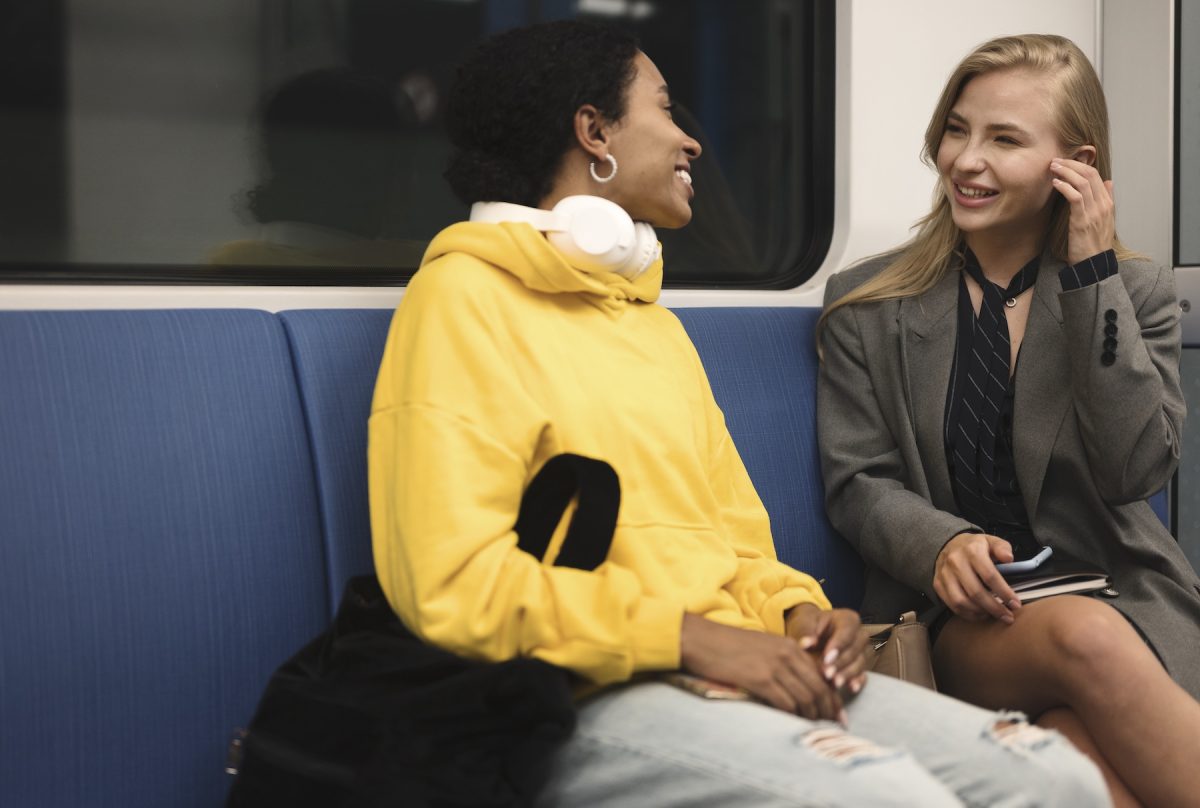
Commute with headphone
Commute with headphone - https://www.magnific.com
As soon as I get on a bus or a train - and I’m doing a lot of travelling at the moment - I put in my EarPods. You do the same, right?

I’ll go a step further: I try not to catch people’s eyes, looking instead at my phone or a book. And I know my body language says: “Please don’t talk to me.”

I know I’m not alone, because on the occasions when I do stop and look up, almost everyone else on the journey seems to be doing exactly the same thing. Heads down and isolated in a crowd.

Which is a little sad, because research suggests we might actually be happier if we occasionally did the opposite.

In a series of experiments with commuters on trains and buses, University of Chicago behavioural scientist Nicholas Epley and psychologist Juliana Schroeder asked some passengers to talk to a stranger, while others were instructed to remain disconnected or simply travel as normal.

The result? Those who talked to a stranger reported a more positive journey - and it didn’t make their commute feel any less productive. The really interesting part was that another group, asked to predict what would happen, expected precisely the opposite. They thought they would enjoy solitude more.

In other words, we may be deliberately avoiding something that could make our day a little better.

We’ve become very good at avoiding each other

Think about how easy it is now to go through a day without speaking to somebody you don’t know.

We use self-service checkouts and contactless payments. We order food through apps. We shop online. Many of us work from home. We can book an Uber without speaking to anyone beforehand and collect a takeaway without having a conversation.

And then there are our phones and headphones. EarPods are a Do Not Disturb sign you can stick in your ears - they certainly are for me.

None of this is necessarily bad. Most of it makes life easier. But in making everyday life more efficient, perhaps we’ve accidentally removed some of the human contact that was quietly doing us good.

Psychologists Gillian Sandstrom and Elizabeth Dunn have studied what they call our “weak ties” - people outside our close circle of friends and family. Their research found that people reported greater happiness and a stronger sense of belonging on days when they had more interactions with these peripheral members of their social networks.

They also conducted a wonderfully simple experiment involving coffee.

Customers were divided into two groups. One was encouraged to make their transaction as efficient as possible. The other was asked to interact with the barista - smiling, making eye contact and having a brief conversation.

Those who made the effort to interact subsequently reported more positive feelings.

Perhaps efficiency isn’t always everything.


Talking on commute
Talking on commute - https://www.magnific.com


The conversations we didn’t know we needed

I think travel makes you particularly aware of these small interactions.

Ask somebody where they’re from. Make a comment about the delayed train. Talk to the person serving your coffee. Ask someone what they’ve ordered in a restaurant. Suddenly, for 30 seconds, you’re hearing a tiny part of somebody else’s life.

And the research suggests one reason we don’t do this more often is because we assume the other person doesn’t want us to. Epley and Schroeder found that people underestimated strangers’ interest in connecting with them.

Of course, I’m not suggesting we all become that terrifying person who sits next to you on an otherwise empty train and immediately launches into their life story.

Sometimes people really do want to be left alone.

But perhaps we could make ourselves slightly more available to the world.

We’re rightly told about the importance of maintaining friendships, spending time with family and building meaningful relationships. But not every human connection has to be meaningful.

Some can last five minutes.

Some can happen while you’re waiting for a coffee.

Some can begin because two people are standing on the same platform wondering why the train hasn’t arrived.

So next time you’re waiting somewhere, perhaps resist the automatic urge to reach for your phone.

Take out your EarPods. Look up. Say hello.

You never know. There might just be some comfort in a stranger.
10
News
Live for Free and Work for Fun
Luxury Life
Luxury Life - Alamy.com
Do you ever feel as though you are running on a treadmill—that your money disappears almost as quickly as you earn it?

The landlord or bank takes the biggest slice. Groceries, the car, fuel and household bills swiftly take care of the rest.

It’s almost payday and you have just received another $83 phone bill.

Wouldn’t it be nice if you owned a phone company?

Well, the truth is that you can. Not an entire phone company—just enough of it to recover the cost of your phone bill.

Shares in a typical Australian telecommunications company such as Telstra (TLS) currently trade at around 23 times annual earnings. This is known as the price-to-earnings ratio, but all it really means is that Telstra earns about $1 annually for every $23 worth of shares you own.

Your $83 monthly phone bill works out to approximately $1,000 a year. Therefore, if you invested around $23,000 in Telstra—or similar telecommunications shares—the company would theoretically earn back the cost of your phone bill every year.

A phone for free. I bet that would feel good.

But why stop there? How about your electricity bill?

AGL currently trades at approximately 7.6 times earnings. If your electricity costs $2,000 annually, around $15,000 of AGL shares would theoretically earn back the cost of your bill.

I bet by now you are wondering what else you could get for free.

How about some groceries?

An Australian family might spend around $275 a week, or $14,000 annually, at the supermarket.

Woolworths (WOW) and Wesfarmers (WES) currently trade at roughly 25 to 32 times earnings, meaning you might need to invest around $400,000 in supermarket and consumer-staples shares before feeding the family for free.

If that sounds like a stretch, start with enough to pay for one trolley.

Since we are dreaming, let’s take it to the limit.

Every time you receive a bill, ask yourself a ridiculous question:

How much of this company do I need to own to get my money back?

Here are a few examples:

Rent: approximately $50,000 a year
$1,000,000 invested in banks and property-related companies at 20 times earnings.

Groceries: approximately $15,000 a year
$450,000 invested in consumer-staples companies at 30 times earnings.

Car: approximately $10,000 a year
Buy a $50,000 electric car and invest another $100,000 at 20 times earnings. The investment would earn around $5,000 annually towards replacing the car after five years, with its resale value covering part of the balance.

Healthcare and insurance: approximately $8,000 a year
$128,000 invested in insurance and healthcare companies at 16 times earnings.

Electricity and gas: approximately $3,000 a year
$30,000 invested in energy companies at 10 times earnings—or considerably less if you invest directly in solar panels.

These examples are deliberately simplified. Company earnings are not the same as dividends paid into your bank account: businesses retain some of their profits, earnings fluctuate and share prices fluctuate. The purpose is not to recommend particular shares, but to demonstrate the power of gradually becoming an owner rather than a customer.

With diversified investments of around $1.75 million, an average family today could theoretically earn back most of its annual living costs.

The practical takeaway is that you don’t need to win the lottery. You need to start acquiring small pieces of the companies - that you buy products from.

With vision, hard work and time, the flow of money gradually reverses. Instead of working to pay the companies, the companies begin working to pay you.

Once your investments are earning enough to cover your living costs, you are effectively living for free—and work becomes something you do for fun.

Then you can spend your pay on a good holiday instead.

You have definitely earned it.

A final word of caution
If you have never owned shares before, don’t respond to unsolicited offers, social-media tips or anyone promising guaranteed returns. Buy shares only through a reputable Australian stockbroker or trading platform, and confirm that the provider holds an Australian Financial Services licence on ASIC’s register. If in doubt, stop and check before transferring any money.

Disclaimer: This article provides general information only and does not constitute personal financial advice. The examples are simplified illustrations, not investment recommendations.
12
Lifestyle & Culture
5 Books That Might Accidentally Decide Your Next Holiday
kourosh-qaffari-book-unsplash
kourosh-qaffari-book-unsplash - Kourosh Qaffari for Unsplash
Sometimes travel inspiration arrives via a glossy Instagram reel, and sometimes it arrives 40 pages into a book, when you suddenly realise you’ve stopped reading and started checking airfares.

The best books don’t just tell you about a place. They give you the smells, meals, streets, weather and tiny details that make you wonder why you aren’t already there. So, if your next holiday destination remains stubbornly undecided, these five books published within the past five years may provide the nudge. Just don’t blame us when your reading list turns into a booking confirmation.

The Paris Novel Reichl Ruth
The Paris Novel Reichl Ruth - The Paris Novel by Reichl Ruth


The Paris Novel by Ruth Reichl
Destination temptation: Paris, France

If Paris needed any assistance convincing people to visit, Ruth Reichl certainly provides it. Published in 2024, The Paris Novel follows Stella, who receives an unusual inheritance from her estranged mother: money and instructions to go to Paris. What follows is part coming-of-age story, part treasure hunt and part extremely persuasive argument for eating your way around France. Food writer Reichl fills the novel with restaurants, markets, fashion, art and wonderfully French indulgence. Read it with caution. Side effects may include buying baguettes, researching Left Bank hotels and deciding that Paris is suddenly urgent.


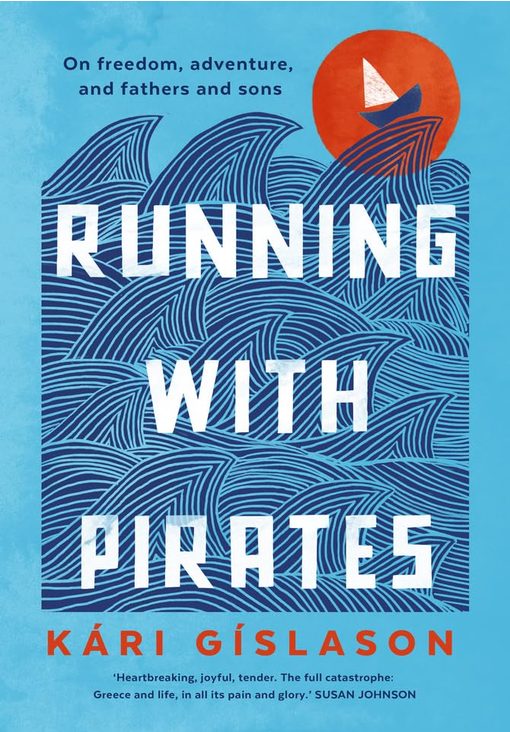
Running with Pirates
Running with Pirates - Running with Pirates by Kári Gíslason


Running with Pirates by Kári Gíslason
Destination temptation: Corfu, Greece

Australian-based writer Kári Gíslason first arrived in Corfu at 18, where an encounter with a mysterious local known as “the Pirate” helped shape his young adulthood. In this 2024 memoir, he returns three decades later with his own family, revisiting both the island and the person he once was. Corfu provides the gorgeous backdrop, with villages, olive groves, beaches and Greek island life woven through a much bigger story about youth, fatherhood and memory. It’s thoughtful rather than postcard-pretty, but good luck finishing it without looking up flights to Greece.


The Covenant of Water
The Covenant of Water - The Covenant of Water by Abraham Verghese


The Covenant of Water by Abraham Verghese
Destination temptation: Kerala, India

At more than 700 pages, The Covenant of Water isn’t exactly carry-on friendly, but it might be responsible for your next long-haul booking. Published in 2023, Abraham Verghese’s sweeping historical novel follows three generations of a family in Kerala, on India’s Malabar Coast, from 1900 to 1977.

Medicine, faith, family secrets and dramatic social change all run through the story, but Kerala itself is almost a character: lagoons, waterways, monsoons, villages and tropical landscapes filling the pages. For travellers who like a little history with their holiday inspiration, this one has serious pulling power.

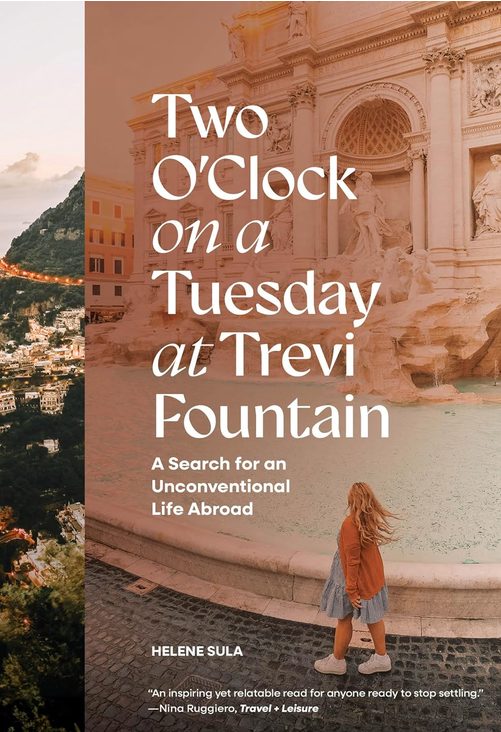
Two OClock
Two OClock - Two O’Clock on a Tuesday at Trevi Fountain by Helene Sula


Two O’Clock on a Tuesday at Trevi Fountain by Helene Sula
Destination temptation: Europe, broadly

Travel memoirs can occasionally make abandoning your job and buying a backpack sound suspiciously easy. Helene Sula takes a more practical approach. Published in 2024, her memoir charts how she gradually built a life that allowed her to travel and live abroad while retaining some stability. Germany features heavily, but adventures range from the Baltic to the Black Forest and beyond. It’s less “sell everything immediately” and more “perhaps I could actually do this”, which may be considerably more dangerous. Expect spontaneous Google searches involving European rail passes and apartments with balconies.

The Half Known Life
The Half Known Life - The Half Know Life by Pico Iyer


The Half Known Life by Pico Iyer
Destination temptation: Everywhere

Pico Iyer has spent decades travelling, so his 2023 book asks a slightly bigger question than where we should go next: what exactly are we searching for when we travel? In pursuit of different ideas of paradise, Iyer journeys through places including Iran, North Korea, Belfast, Jerusalem and Japan, finding beauty alongside contradiction, conflict and complexity. This isn’t breezy beach reading so much as travel writing that makes you rethink why you want to see the world at all. Ironically, that may result in wanting to see considerably more of it.


The only real problem with books about irresistible places is that they’re considerably cheaper than the holidays they inspire. One minute you’re innocently reading before bed; the next you have six browser tabs open, your passport on the desk and a surprisingly strong opinion about which Greek island you should visit first.
14
Science & Tech
Airbus vs. Boeing: Same Physics, Very Different Philosophy
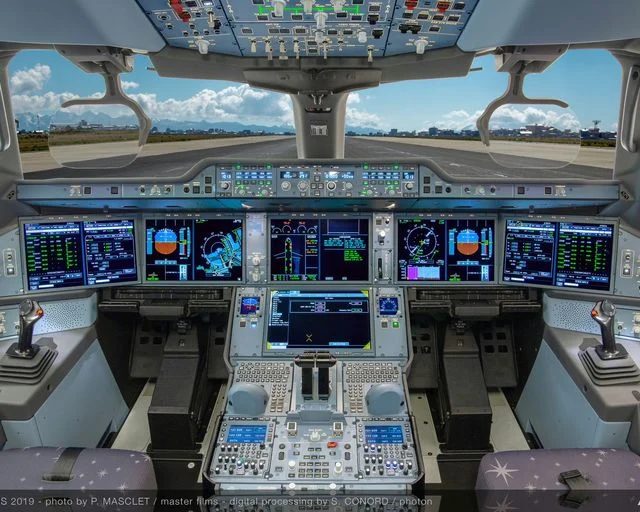
Airbus A350 Flight Deck
Airbus A350 Flight Deck - https://www.airbus.com/
At 35,000 feet, an Airbus and a Boeing have more in common than their fans might like to admit.

The air doesn't care which company built the airplane. Gravity doesn't care whether the pilot is holding a sidestick or a control yoke. And the laws of aerodynamics work exactly the same way on both.

Both airplanes must generate enough lift to support hundreds of thousands of pounds. Both fight drag, rely on thrust, manage enormous amounts of energy, and operate within aerodynamic limits that cannot be negotiated away.

Yet sit in the cockpit of each airplane and you find two noticeably different ideas about how humans should interact with those laws of physics.

That is where the Airbus-versus-Boeing debate gets interesting.

The Physics Is the Same

Every airliner is balancing four basic forces: lift, weight, thrust and drag.

Weight pulls the aircraft toward Earth. Lift generated by the wings opposes it. The engines provide thrust, while drag resists the airplane's motion through the atmosphere.

A wing produces lift by changing the pressure and direction of the airflow around it, effectively accelerating air downward while generating an upward aerodynamic force.

But creating lift comes with a cost.

Air spilling around the tips of a wing creates vortices and induced drag, which wastes energy. That is one reason modern airplanes use elaborate wingtip designs. Airbus often calls theirs sharklets, while Boeing uses winglets and highly swept or raked wingtips.

Different shapes, same goal: reduce drag and burn less fuel.

At cruise altitude, another problem appears. Airliners usually travel at more than 80 percent of the speed of sound, meaning airflow over parts of the wing can become locally supersonic. Shock waves can form, increasing drag and changing how air behaves around the wing.

That is part of the reason airliner wings are swept backward.

Again, Airbus and Boeing may design those wings differently, but neither company gets to rewrite the laws of fluid dynamics.

Where the Difference Begins: Fly-by-Wire

The more interesting distinction begins between the pilot's hands and the airplane's control surfaces.

Older aircraft used mechanical systems of cables, rods, pulleys and hydraulics to connect cockpit controls to the elevators, ailerons and rudder.

Modern airliners increasingly use fly-by-wire.

In a fly-by-wire airplane, the pilot's control input becomes an electrical signal. Flight-control computers interpret that input and then command hydraulic or electrical actuators to move the control surfaces.

This is where one of the most common Airbus-versus-Boeing myths appears.

People often say Airbus airplanes are controlled by computers while Boeing airplanes are controlled by pilots.

That isn't really true.

The Boeing 777 and 787 are both highly sophisticated fly-by-wire airplanes. Modern Boeing aircraft use computers extensively to process pilot inputs, manage stability and help keep the airplane within its operating envelope.

The important difference isn't whether computers are involved.

It's what the computers are allowed to do.

Airbus: Command the Result

Airbus A350 Flight Deck
Airbus A350 Flight Deck - https://www.airbus.com/


Airbus pushed commercial fly-by-wire into the mainstream with the A320.

One of its biggest innovations was changing what a cockpit control input actually means.

Move the sidestick in a modern Airbus and you aren't necessarily telling the elevator to move a specific number of degrees. Instead, you're asking the airplane to produce a certain response.

The flight-control computers determine how to make that happen.

Under normal operating conditions, Airbus also uses what are known as flight-envelope protections.

These protections monitor things such as angle of attack, airspeed, bank angle, pitch attitude and structural load.

Why?

Because airplanes have physical limits.

Consider a stall. An airplane doesn't technically stall because it reaches a particular speed. It stalls when the wing exceeds its critical angle of attack and airflow can no longer remain sufficiently attached to the wing.

If the computers know the airplane's angle of attack and understand where that limit is, engineers can design the system to prevent the pilot from simply commanding the airplane beyond it under normal conditions.

That represents a major philosophical shift.

The pilot is still flying the airplane, but the commands pass through a computer system that understands the aircraft's aerodynamic boundaries.

Boeing: Preserve the Feel of Flying

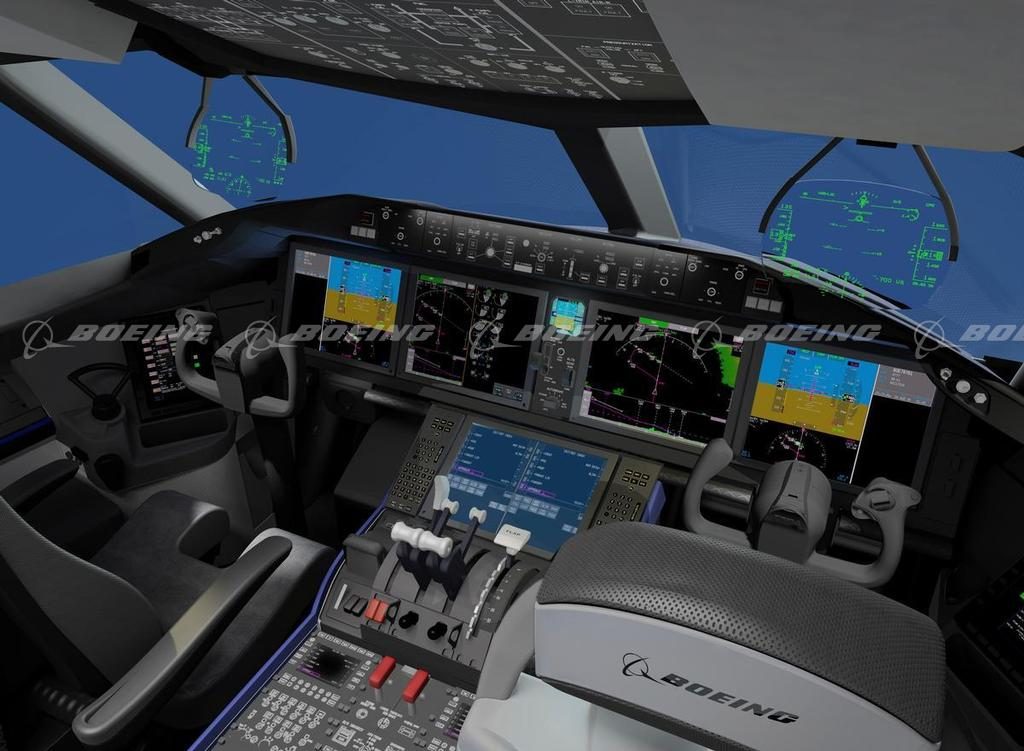
Boeing 787 Flight Deck
Boeing 787 Flight Deck - https://secure.boeingimages.com/


Boeing took a somewhat different approach when designing fly-by-wire aircraft such as the 777.

It kept a conventional control column and wheel rather than replacing them with sidesticks.

That wasn't simply tradition.

It was a human-factors decision.

Boeing designed the system so that, despite sophisticated computers operating behind the scenes, the aircraft would retain much of the feel pilots associated with conventionally controlled airplanes.

The 777 also uses flight-envelope protections, but Boeing has historically leaned more toward providing resistance, feedback or warnings while preserving greater pilot authority in certain situations.

That highlights the philosophical difference between the two manufacturers.

Airbus can be thought of as asking:

If the airplane knows a command will exceed a safe aerodynamic boundary, why should it obey it?

Boeing's traditional philosophy asks something slightly different:

What if an unusual situation arises where the pilot needs authority beyond that boundary?

Neither question is unreasonable.

And that is why pilots can debate the two approaches endlessly.

Even the Controls Tell the Story

Perhaps nothing symbolizes the difference better than the Airbus sidestick and Boeing control column.

In many Airbus aircraft, the captain and first officer each have their own sidestick, and the sticks are not mechanically connected.

If one pilot moves a sidestick, the other pilot's stick does not physically move with it.

Airbus instead uses cockpit indications and warnings to communicate simultaneous inputs.

Boeing has generally retained physically interconnected controls on aircraft such as the 777, meaning one pilot can see and feel what the other is doing through movement of the control column.

That might seem like a minor ergonomic difference, but it reflects something deeper.

Humans rely heavily on tactile feedback.

A steering wheel tells a driver something about the road. A control column can tell a pilot something about the airplane.

Airbus chose to move more of that communication into computers, displays and warnings.

Boeing chose to preserve more of it through physical controls.

This is as much a question of psychology as aerodynamics.

Both Are Really Just Managing Energy

Regardless of manufacturer, an airplane is constantly managing energy.

Altitude represents potential energy.

Airspeed represents kinetic energy.

Engines add energy. Drag removes it.

An airplane can trade altitude for speed or speed for altitude.

Get too high and too fast, and the airplane may have more energy than it can easily dissipate.

Get too slow at a high angle of attack, and the aircraft may no longer have enough aerodynamic margin to maintain its flight path.

No amount of automation changes that.

An Airbus cannot program its way around conservation of energy.

A Boeing cannot overpower the physics of a stalled wing.

Automation can help pilots avoid undesirable situations, but it cannot repeal the laws governing flight.

So Which Philosophy Is Better?

There isn't a simple scientific answer.

Physics can tell engineers when a wing will stall, how much load a structure can tolerate and how an airplane will behave at a given speed.

But deciding what a computer should do when the aircraft approaches those limits is partly a question of philosophy.

Should the computer prevent an unsafe command?

Should it warn the pilot but allow the command anyway?

How much information should be communicated through physical controls?

How much should automation handle automatically?

Those questions extend far beyond aviation. Modern cars, spacecraft and autonomous machines are increasingly confronting the same issue.

When humans and computers share control, who should have the final word?

Airbus and Boeing have spent decades developing different answers.

Yet underneath those differences, both aircraft are doing exactly the same thing.

Lift must still overcome weight. Thrust must still overcome drag. Wings can still stall. Energy must still be managed.

And gravity remains completely unimpressed by the name painted on the tail.
15
Science & Tech
Why do people speed up when you try to overtake them?
The-unwelcome-overtake
The-unwelcome-overtake - Canva

You're driving along behind a slower car. You wait patiently for a safe overtaking lane, indicate, pull out... and suddenly the other driver decides now is the perfect time to speed up.

It's one of the most frustrating experiences on the road, and if you've ever wondered whether people do it on purpose, researchers have some interesting answers.

Sometimes it's to adapt
One possibility is surprisingly simple.

Many drivers don't maintain a perfectly steady speed. Instead, they unconsciously adjust it in response to what's happening around them.

When another vehicle moves alongside them, they suddenly become more aware of their own speed and may instinctively press a little harder on the accelerator without ever intending to block the overtake.

Traffic researchers have observed this kind of speed adaptation, and it's one reason drivers may unintentionally change speed during an overtaking manoeuvre.

For others, it can be psychological
Not every explanation is accidental.

Researchers studying driver behaviour have found that some people respond to being overtaken in a more competitive or defensive way. Being passed by another vehicle can trigger a subconscious desire to maintain position, making some drivers speed up even when they hadn't intended to moments earlier.

Other studies have found evidence of what psychologists call social influence. In one experiment, drivers were significantly more likely to accelerate after another vehicle overtook them than when they were simply driving on their own.

That doesn't necessarily mean they're trying to race. It may simply reflect the way humans naturally respond to the behaviour of people around them.

Why it feels like it happens every time
There's another reason this behaviour seems so common.

Our brains are excellent at remembering frustrating experiences.

If another driver maintains a steady speed while you overtake them, you'll probably forget about it within minutes. But the one driver who speeds up, forcing you to stay alongside them longer than expected? That moment sticks in your memory.

Psychologists call this selective attention. We naturally remember unusual, emotional or irritating events far more vividly than ordinary ones, making them feel much more common than they really are.

The safest response
Regardless of why another driver speeds up, road safety experts agree on one thing: don't turn it into a contest.

If an overtaking manoeuvre no longer feels safe because the other vehicle has accelerated, the safest option is to abandon the overtake if it's safe to do so. A few extra minutes is always a better outcome than taking unnecessary risks.

So the next time someone speeds up just as you begin to overtake them, try not to assume they're deliberately trying to annoy you. They might be. Or they might simply be responding to another vehicle beside them without even realising it. Either way, traffic psychology suggests there's often more going on than meets the eye.

SOURCE
Haglund & Åberg (2000) Study
Contagion models of speeding
16
News
‘Click here for your $457.82 ATO refund’ and other insidious tax time scams
Scammer with laptop
Scammer with laptop - magnific.com
Rather than promises which seem too good to be true, like winning the lottery, today’s most cunning scams appear too mundane to be fake or too scary to ignore.

Emails from Nigerian princes bearing gifts land in our inboxes less often these days, promising riches if you’ll only pay a few upfront fees to cover the paperwork.

There are plenty of variations on these advance-fee scams, from deposed dictators to long-lost uncles. The story changes, but it always ends with them disappearing into the sunset with your money.

Some scammers are even bold enough to double-dip, ripping you off and then posing as the police and asking for an "administrative fee" to speed up their investigation.

While these long cons still exist, these days scammers have discovered that boring-looking emails are far more effective. Rather than just targeting the gullible, they’re targeting anyone who doesn’t stop to question to validity of every seemingly innocent message.

Today’s scam emails often arrive disguised as an unpaid invoice, overdue bill, undelivered parcel or unsigned e-document. They’re hoping that you’ll click on the malicious link or open the infected attachment without thinking twice.

From here they might attempt to trick you into handing over money, steal your sensitive information or even encrypt your hard drive and hold your data to ransom.

This time of year scammers might also try to tempt you with a minor windfall, such as a small tax return that would certainly come in handy in these challenging economic times.

A few extra zeros on the end would raise suspicions, but a random amount like $457.82 seems perfectly believable – just click here to claim it. They’re hoping it’s believable enough that you’ll drop your defences for just a moment.

“Trust no-one” is the best defence when it comes to such messages, as the ATO will never send you a link to click. It’s safe to assume any such email or text is a scam.

A different approach is for scammers to call and threaten you with drastic consequences if you don’t comply, such as paying an outstanding tax bill on the spot or face jail time.

They quickly become intimidating and aggressive, even insisting that the police are already on their way to your house. The more aggressively they threaten you with scary consequences, the more you know it's a scam.

This might raise immediate red flags for many of us, but these scammers are very good at targeting vulnerable people. Particularly the elderly and those who don’t have English as their first language.

Even if you'd never fall for these kinds of scams, it's important to word up your less tech-savvy friends and relatives who might not view such calls, emails or texts with a healthy degree of scepticism.
18
Lifestyle & Culture
More Than Bingo and Buffets: Why Modern Cruise Ships are Much More Than Floating RSLs
Ship in Sydney Harbour
Ship in Sydney Harbour - Flickr - credit Kristina D.C. Hoeppner - https://www.flickr.com/photos/4nitsirk/6451156409/
For decades, cruise ships have been dubbed floating RSLs for their tendency to appeal to retirees who enjoy buffet dining and bingo. But the face of cruising is changing as modern lines do all they can to shed the stereotype and appeal to travellers of all demographics. As Australia’s main cruise season approaches, I’ll bust the myths and take a look at what the ships heading our way really offer.

There are so many dining options
When many people think of cruise food, they automatically think of tired old all-you-can-eat buffets. However, cruise lines have reinvented their dining options in recent years. I love the main dining rooms, where attentive waiters serve delicious three-course meals and drinks to your table. Some ships still have buffets, but they’re much more like the lavish spreads you’ll find in high-end resorts than your local RSL. Others swapped the buffets for casual food court-style eateries with stations specialising in different cuisines. Many ships also have takeaway eateries by the pool serving up fast food favourites like hot dogs and fish and chips.

All these options are usually included in your fare, but you can also pay extra for fine dining experiences at the many specialty restaurants. Options vary, but you can often find quality steakhouses, sushi bars, and restaurants specialising in French, Italian, Asian Fusion, and Modern Australian cuisine. Many cruise lines work closely with leading chefs like Jamie Oliver, Curtis Stone, and Daniel Boulud to deliver the best experience for diners. Although these restaurants incur a surcharge, it’s usually a fraction of what you’d pay for these chefs’ restaurants on land.

The entertainment is awesome
Cruise ship performers
Cruise ship performers - Royal Caribbean Group

If you thought cruise ship entertainment was limited to bingo and lounge singers, think again. Since cruising attracts such a wide range of travellers, the lines have diversified their options to make sure there’s something for everyone. As a seasoned cruiser, I love spending my days wine tasting, catching movies on the big screens, and testing my knowledge at trivia competitions. As the sun sets, you can catch me at a comedy show or musical performance. Depending on my mood, I might chill with an acoustic duo in the lounge or dance past midnight with a party band on the deck. There are also Broadway-style productions and musical revues every night to give theatre fans their fix.

The décor is so stylish
Cruise ships are regularly revamped in dry dock to ensure they always look their best. Especially at the top end of the market, strolling around a cruise ship feels more like spending time at a high-end resort than an RSL. Many ships feature modern sculptures and art installations that would look at home in any museum. Beautiful indoor and outdoor areas encourage you to unwind. The attention to detail continues in the staterooms, which are a far cry from the tiny shoeboxes many expect. Although I always book the cheapest cabins, I’ve stayed in rooms with large glass-walled showers and plush king-sized beds.

Forget what you thought you knew about cruising. Modern ships offer an all-inclusive travel experience that appeals to much more than the blue-rinse set. While you’ll still find bingo and maybe even a buffet, they’re much more than floating RSLs. In fact, they might just be what you’re looking for on your next holiday.
20
News
Whose drones are buzzing our sensitive military bases?
Drone
Drone - Magnific.com
Figures from our Defence Department reveal 147 unauthorized drone incursion breaches of restricted airspace at Australian military and air force bases across New South Wales, Queensland, and South Australia in the past financial year, more than double the previous FY. Judging by the spate of sightings of fly-over drones across our RAAF bases in recent months, the 2026-27 FY breach figure could well exceed the 150 mark.

Research shows that the Williamtown RAAF critical fighter pilot training base, located near Newcastle - home to Australia's F-35A fleet - experienced multiple high-profile incursions in July and August this year. During those sightings, base personnel were advised to close window blinds to protect sensitive information from potential aerial photography.

The airspace around all Australian military aerodromes (like RAAF Williamtown or Amberley) is tightly regulated by the Civil Aviation Safety Authority (CASA). Standard drone rules dictate that you must never fly a drone, weighing more than 250 grrams, within a 5.5-kilometre radius of a controlled airport or military aerodrome without prior explicit permission from CASA and air traffic control. CASA can issue an immediate on-the-spot fine of up to $1,820 per individual offence and if a severe breach is escalated and prosecuted in a court of law, fines can surge up to $18,200.

If an operator flies a drone in a manner that becomes a hazard to other aircraft, interferes with military flight lines or compromises critical aviation infrastructure, that person faces criminal conviction and up to two years in prison. Up until recently, the ADF has been heavily restricted by Australian domestic wireless telegraphy laws. Local military base commanders did not automatically have the domestic legal authority to fire kinetic weapons or initiate RF jamming over civilian zones surrounding their runways. Because of this, the ADF often had to rely on state police counter-drone units to respond to local incursions.

Lawmakers and security analysts,however, have increasingly raised alarms over potential intelligence harvesting, risks to landing aircraft and the ADF's lack of deployed counter-drone neutralization capabilities at these sites. The federal government has labelled the flights illegal and dangerous, though officials have not publicly confirmed whether the operators are local hobbyists or foreign actors.

Earlier this year the Federal Government announced it was accelerating efforts to develop cutting-edge counter-drone technology, teaming with industry to drive innovation, while also updating Defence regulations to keep Australians safe. A new industry panel was established to advise Defence and other Australian Government agencies on countering small uncrewed aerial systems (CsUAS) services, enhancing Australia’s ability to detect, deter and respond to emerging drone threats.

The Government has also enacted the Defence Amendment (Counter-UXS Measures) Regulations 2025 to strengthen our national security by protecting ADF personnel, assets and facilities. More recently, Defence Minister Richard Marles has announced new legislative reforms designed to bypass traditional restrictions. These laws aim to legally empower the ADF to actively intercept or neutralize drones approaching secure defence perimeters without relying on local civilian police. The ADF is now actively trialling a layered ecosystem of detection, tracking and mitigation systems with names like DroneBuster, DroneShield and KeyOptions Sky Control.

As things on the drone front here continue to heat up, perhaps we could learn a thing or two from the real experts in small uncrewed aerial system deployment - the Ukrainian Zbroini syly Ukrainy. Worst case scenario – if the drones are being deployed by hostile foreign actors, then we need to know who those actors are.
21
News
Infrastructure strain worsens as water crisis halts South Australian housing and fire response falters in Melbourne
Tobacco
Tobacco - Magnific.com
South Australian housing stalled by water shortage

More than 300 homes in a fast-growing South Australian region have been put on hold as the state's water system faces severe constraints. The South Australian Housing Minister described the system as "severely constrained", forcing a major residential development to pause. The halt highlights the tension between population growth and the state's capacity to supply essential services, with implications for housing supply in a state already grappling with affordability pressures.

Melbourne fire response deteriorates in growth areas

Outer Melbourne residents are experiencing worsening emergency response times to fires, according to an ABC analysis of Fire Rescue Victoria data. Residents in fast-growing outer suburbs report concerning delays to fire responses at a time when population density is increasing in these fringe areas. The deterioration in response times poses a direct risk to community safety and suggests emergency services are struggling to keep pace with expansion into these regions.


Tobacco
Tobacco - Magnific.com

Tobacco excise debate intensifies
The Coalition's push to cut tobacco excise by 80 per cent has come under scrutiny, with health experts arguing the proposal lacks merit. The industry has lobbied for decades to reduce excise, and calls have intensified with the explosion in illegal cigarette sales. However, experts contend that tougher border enforcement and better monitoring of products coming into Australia should be considered before lowering taxes. The debate reflects competing pressures between tackling illicit tobacco markets and managing legal sales of a harmful product, with significant implications for public health policy and government revenue.


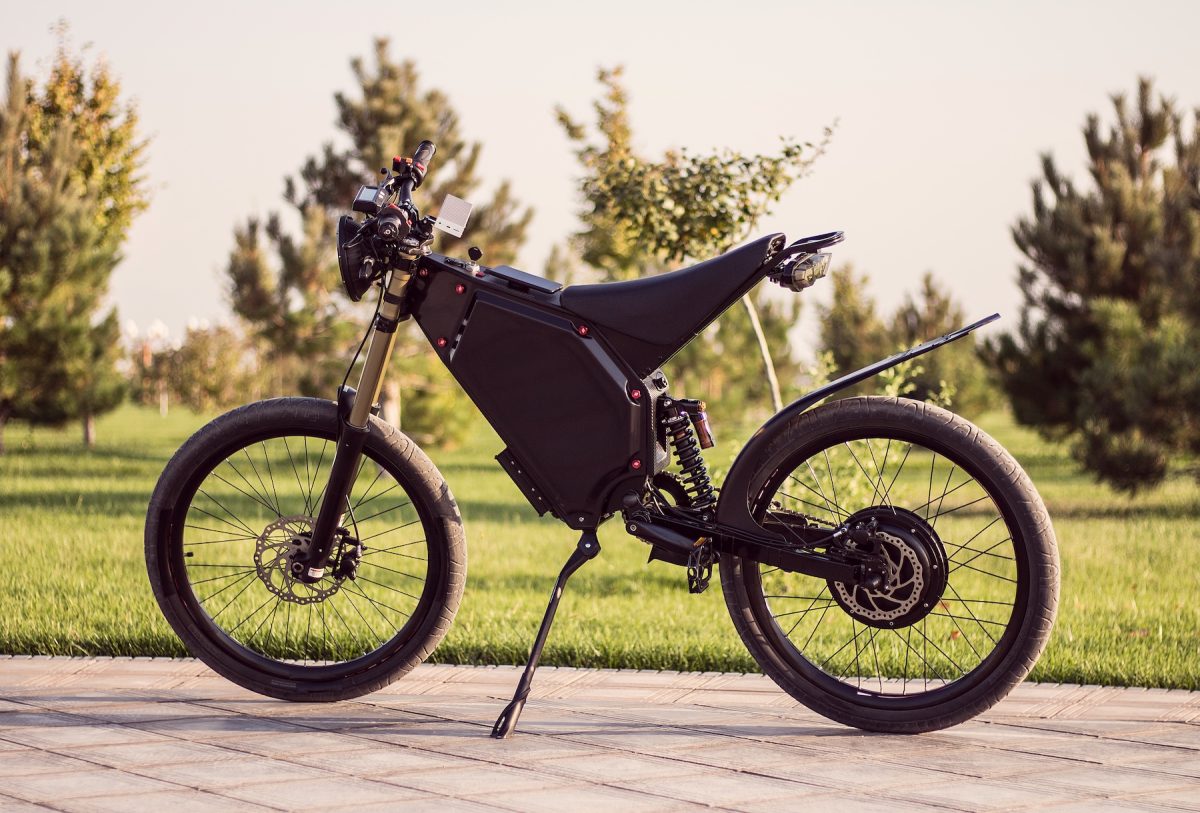
e-Bike
e-Bike - Magnific.com

Queensland imposes driver's licence requirement for e-bikes
Queensland has introduced nation-first laws requiring all e-bike riders to hold a driver's licence, a move that may bar some older riders from the roads. Some older Australians who rely on e-bikes for mobility could be forced to stop riding entirely if they do not possess or are ineligible to hold a driver's licence. The requirement restricts the freedom of movement for a demographic that has increasingly adopted e-bikes as a means of independent transport.


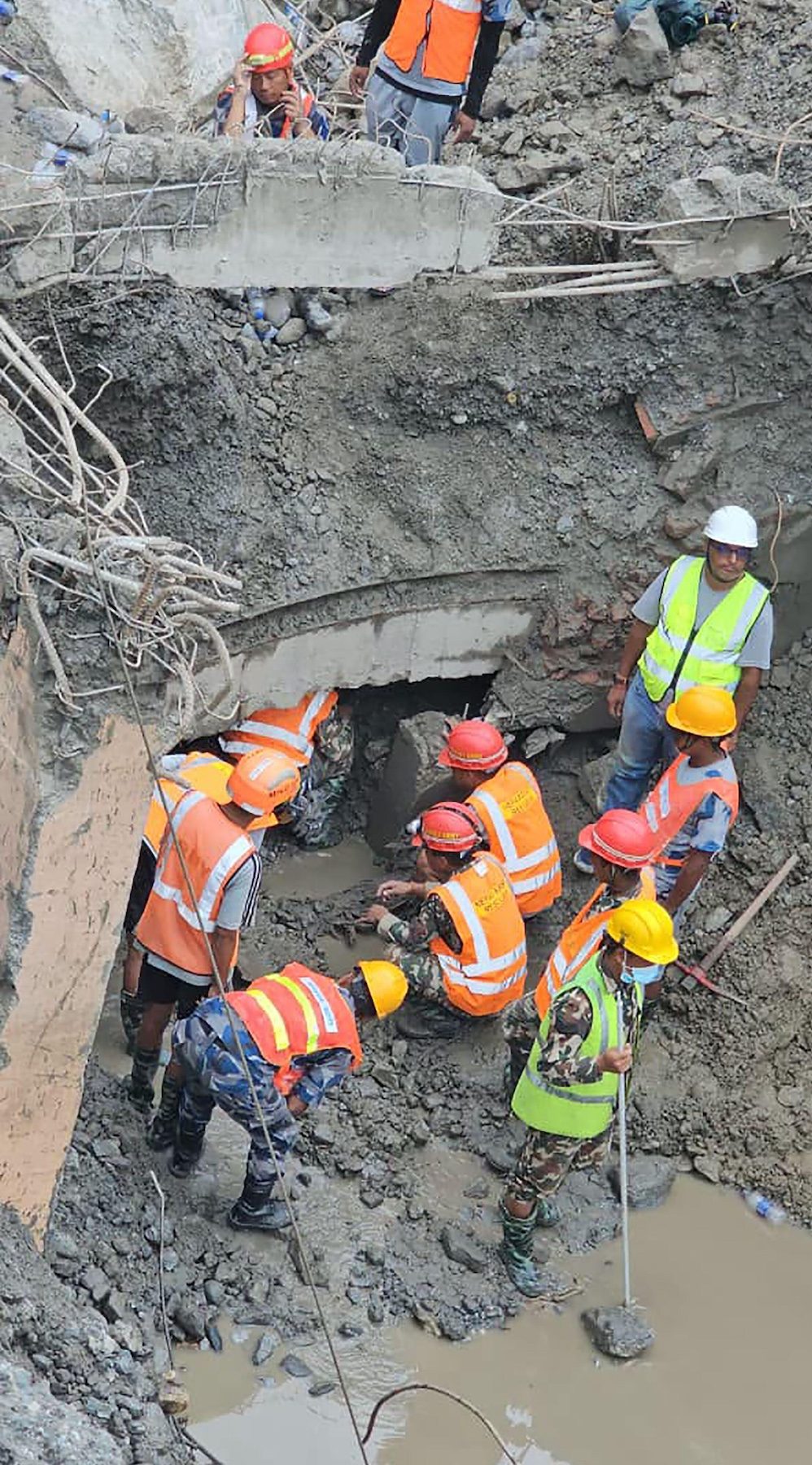
Nepal Rescue
Nepal Rescue - Alamy.com

Nepal flood survivors rescued after 10 days
A Chinese national and a local woman have been rescued alive from a tunnel in Nepal, ten days after a catastrophic flash flood struck the Himalayan valley on 26 August. The flood killed more than 1,300 people across Nepal and Tibet, with more than 5,000 still missing. The rescues offer modest hope amid a massive humanitarian crisis that has stretched rescue operations and left thousands unaccounted for. Australia's Minister for Development and Disaster Preparedness, Chris Bowen, indicated he would meet with members of the Nepali Australian community to discuss the disaster and its impact on Australians with ties to the affected region.

AI shopping agents arrive but remain years from mainstream

Australia's largest retailers are investing in autonomous AI agents that can shop for customers, a technology that could reshape retail and potentially impact consumer affordability. However, experts caution that the technology remains expensive and years away from mainstream adoption. The push toward AI-driven retail comes as debate continues about whether such automation benefits consumers or simply increases operational costs that may be passed on to shoppers.

---
AI-generated weekly digest — stories relevant to Australia, 30 August 2026 – 6 September 2026. Review and edit before publishing.

Sources: ABC News Australia, Guardian Australia
22
News
The subtle art of Low Friction Extraction
Low Friction Extraction
Low Friction Extraction - Created by Gwynn Earl for HOLD THE NEWS
You’ve probably never heard the term, but you’ve almost certainly fallen a victim to it.

But what is ‘Low Friction Extraction?’

It's the subtle and sinister art of extracting millions of dollars from consumers by imposing small fees on thousands of customers. A minor inconvenience that adds up over the year, whilst the executive who came up with it lines his pocket with shiny bonuses.

Whilst the average consumer struggles with the cost of living, and wondering why they seem to have more and more expenses each month, company revenues grow by millions.

There’s now a hundred of these little tricks and traps, which you probably don’t even notice, and maybe you should start paying more attention. Here are just a few subtle ways they are skimping dollars everywhere they can reach.

The Introductory-rate expiry: A cheap first-year plan automatically reverts to a much higher default price.

Insurance renewal increases: The premium rises annually, while an identical policy is offered more cheaply to new customers.

Foreign-exchange spreads: “No commission” is advertised, but the provider quietly uses an unfavourable exchange rate.

Payment-processing fees: A small percentage is taken from every transaction and ultimately incorporated into retail prices.

Automatic subscription renewals: A free trial or discounted subscription converts into a paid plan without meaningful prompting.

Difficult cancellation: Joining takes one click; cancelling requires menus, telephone calls or waiting for an agent.

Unused account fees: Monthly charges continue on dormant accounts because closing or transferring them requires effort.

Minimum account or transaction fees: A small fixed fee disproportionately affects low-value purchases and small balances.

Late-payment fees: A minor delay produces a charge far greater than the provider’s actual administrative cost.

Credit-card interest traps: Losing the interest-free period can cause interest to be calculated from an earlier date or across the full balance.

Reward-point expiry: Benefits already earned disappear after an inactivity period or an obscure program change.

Delivery and service fees: A low headline price grows through handling, platform, booking or “service” charges at checkout.

Preselected extras: Insurance, donations, tips or premium options are added unless the customer actively removes them.

Small package reductions: The price remains unchanged while the quantity quietly falls—effectively a concealed price increase.

Unclaimed refunds and credits: Small positive balances remain with the company because claiming them takes more effort than they are individually worth.

Refund friction: Store credit is offered automatically, while obtaining an actual cash refund requires additional steps.

Bill smoothing and estimates: Overestimated usage gives the provider an interest-free loan until the account is eventually reconciled.

Paper-statement and payment fees: Customers are charged for receiving a bill or paying it through particular channels.

Default charitable “round-ups”: Individually tiny amounts are collected through prompts designed to make refusal feel awkward.

Price escalation through personalisation: The company estimates each customer’s likelihood of switching and increases prices accordingly.

If you are suddenly feeling a lot poorer, and searching through bank statements with a look of horror on your face. Don’t worry. That only indicates you are still sane.