How much food does your family waste? According to EndFoodWaste Australia, it’s probably twice as much as you think. The average Aussie family wastes 265 kilos of food every year, which is like throwing around $2,500 straight in the bin. As the cost of living bites, reducing food waste is an easy way to slash your household bills. Here are some of the simple strategies I’ve found that really work.
Seek out supermarket alternatives Fresh produce goes on a real journey before it arrives on supermarket shelves. Most fruits and root vegetables take one to three weeks to travel from the farm to the supermarket, but imported products can take months. That’s why much of the fresh produce from supermarkets doesn’t last long.
These days I visit supermarkets for my pantry staples and use alternatives for fresh produce like farmers' markets and delivery services that get food from the farm to you sooner. Their food isn’t just less likely to spoil. It also tastes a lot better, so no one is tempted to toss it.
Meal plan before shopping I spend time on weekends planning meals that use up foods prone to spoiling. If a dinner recipe calls for half a carton of cream, for example, I’ll find a recipe to use the other half the following night. When I buy fresh herbs, I’ll plan several meals to use them up rather than spending a few dollars on just a couple of leaves.
The internet makes searching for recipes featuring key ingredients easy. When I’ve chosen the week's dishes, I check what ingredients we’re missing and add them to my shopping list. Only then do I shop. If it’s not on my list, it doesn’t go in my trolley. Along with reducing my food waste, I eliminate those “What’s for dinner?” headaches. Making meals is a breeze because I know I always have exactly what I need.
Quality food storage slows bacterial growth and chemical changes that lead to spoilage. Investing in smart storage solutions pays off with less waste in the long run. I use a vacuum sealer to package up leftover cheeses and smallgoods for my fridge and meat I intend to freeze. Leftover meals go in airtight snap-lock containers. Silicone pods are ideal for storing cut citrus fruits, onions, and tomatoes.
Use your freezer to extend shelf life Your freezer can add months to the life of all kinds of perishables, not just meat. I regularly freeze fresh salad leaves, bread, and egg whites after using the yolks. I also store my flour in the freezer to prevent it turning rancid. Regular flour stored at room temp may spoil after a few months, but in the freezer it can last for a couple of years. Good storage matters in the freezer too. My vacuum sealer comes in handy here, because removing all the air around food before freezing prevents freezer burn.
Groceries are too expensive to toss out. Make the most of what you buy and enjoy the savings that come with reducing your food waste. If you’ve learned something today and would love to read more of my writing, click the subscribe button below to get notified every time I publish a story on Hold the News.
2
Science & Tech
When ChatGPT adds lies to your resume to impress AI recruitment software, what hope does a real person have of landing a job?
A chronic people-pleaser, generative AI tells recruiters exactly what they want to hear. So how can honest jobseekers make it through to the interview stage?
The freelance writing game isn’t what it used to be, so I’ve been checking out the job market for the first time in a long time. A very long time.
Let’s just say, the last time I sat for a job interview, Titanic was in the cinemas and Yahoo! reigned as the search engine king.
A lot has changed in the last few decades, but a few things remain the same.
Potential employers still want to see a resume and potential employees are still tempted to bend the truth – especially if things get desperate.
I don’t know if you’ve checked out the job market lately, but things are getting desperate. Not just because there’s a dearth of good jobs in some industries, but also because it’s so hard to cut through the noise when employers are swamped with hundreds of AI-generated applications.
Recruiters are understandably fighting back by using their own AI to sift through this mountain of AI-generated resumes. Of course, it’s hard for AI to spot the genuine diamond in the rough when it has to wade through so many perfect lies.
As an applicant, the frustration is not knowing whether your rejected resumes are even making it past these AI gatekeepers and into the hands of an actual person.
Am I not good enough? Am I underqualified? Overqualified? Did I not do a good enough job of selling myself? Or am I simply not bending the truth enough to compensate for the fact others are telling outright lies?
Trying to appeal to a person but also appease a machine is a delicate balance. Most AI recruitment software starts by blindly checking resumes for keywords, so it’s important to cram in all the key phrases from the job advertisement.
Of course, if you parrot the job ad too blatantly, you come off sounding like AI rather than a real person – which is a problem if, by some miracle, an actual person reads your resume.
Frustratingly, you never know how far you got and why you fell short. These days, employers don’t even bother saying “thanks, but no thanks” if you don’t make the cut. It’s especially frustrating because it denies you the opportunity to get some constructive feedback on where you could improve.
After not hearing back on so many jobs where I was confident I’d at least make the short-list, I swallowed my pride and asked AI for advice on polishing my resume.
It made some valid points in terms clearly identifying the key job requirements and addressing them up high in your cover letter and resume. Don’t spend too much time talking about your perceived strengths while burying the details they actually care about.
What caught me by surprise was how AI insists on adding all the job’s key requirements to my resume, even areas in which I have zero experience. Some are blatant lies which would quickly unravel if I made it through to an interview.
I shouldn't be surprised, because I know that generative AI doesn’t care about the truth. Its only job is to produce the best-sounding answer to your query – in this case, the perfect resume which exactly matches the job description.
Of course, many great job candidates often lack some of the skills or experience called for in the advertisement. Even so, a good recruiter can spot their potential.
So if hundreds of unqualified people submit AI-written resumes – falsely painting themselves as a perfect match – and AI recruitment software laps it up, then what hope is there for those of us who are genuinely a near perfect match?
I’ve never sat on a job interview panel, but a colleague who has interviewed hundreds of job applicants over the years tells me that “frankly, most of them lie”.
It might be about their skills and experience, why they left their last job or about how passionate they really are about this new role. A good interviewer takes this into account when weighing the merits of the person sitting on the other side of the table.
Perhaps AI recruitment software also needs to be a bit more cynical when it comes to believing everything it reads in a resume.
The perfect resume should be treated with a little suspicion, because odds are it’s full of lies. Meanwhile, if someone openly admits they lack 5 per cent of what’s required for the role, it’s far more likely they’re actually telling the truth about the rest.
If AI learns to look past candidates who seem too good to be true, it’s more likely to find those fantastic real people who are a bit rough around the edges. Competent people who can easily pick up those final few skills on the job, rather than those trying to fake it until they make it.
3
AD
Advertisement
Write For Hold The News
Have something worth saying?
Do you feel compelled to write? Have a story to tell or a message you want to share with fellow Australians?
Join Hold The News as a volunteer or professional freelance writer and give it a fair go.
We publish articles across a wide range of topics and let readers decide what is worth reading. A new edition is released every Monday, with articles ranked according to the number of reads they receive.
Register here to become a writer, or contact us if you have any questions.
Not ready to write just yet? Subscribe here and follow Hold The News to see what others are writing.
Imagine swallowing a pill that doesn't deliver medicine. Instead, it quietly travels through your digestive system, taking tens of thousands of photographs before naturally leaving your body a day or two later.
It sounds like something straight out of science fiction, but doctors have been using tiny camera capsules for years. Now, thanks to advances in artificial intelligence, these remarkable devices are becoming even smarter.
Rather than replacing traditional procedures altogether, they're giving doctors another powerful way to look inside the body without the need for long tubes, sedation or surgery in many patients.
A camera the size of a vitamin Known as capsule endoscopy, the technology is surprisingly simple.
Each capsule is about the size of a large vitamin pill and contains a tiny camera, a light source, a battery and a miniature transmitter. Once swallowed, it naturally moves through the digestive tract, capturing tens of thousands of images that are wirelessly sent to a recorder worn by the patient.
Doctors later review the images to look for signs of bleeding, inflammation, Crohn's disease, polyps, tumours and other conditions; particularly in the small intestine, an area that's traditionally been difficult to examine.
The capsule isn't steered by doctors or controlled remotely, it simply follows the body's natural digestive process before being passed naturally.
Now AI is joining the journey One of the biggest challenges with capsule endoscopy is the sheer number of images it produces. A single examination can generate more than 50,000 photographs, all of which traditionally had to be reviewed by specialists.
Researchers are now using artificial intelligence to help analyse those images, highlighting areas that may contain bleeding, polyps or other abnormalities for doctors to examine more closely.
The goal isn't to replace specialists, but to help them review scans more quickly and reduce the chance of subtle abnormalities being overlooked. Early studies suggest AI can significantly improve both the speed and accuracy of image analysis.
A glimpse of the future of medicine Scientists are already developing even more advanced capsule technologies, including devices that may one day deliver medicines directly to specific parts of the digestive system, collect tiny tissue samples, or provide even more detailed images.
Many of those innovations are still being tested, but the tiny camera capsule itself is already part of everyday medical care in hospitals around the world.
So the next time someone says they're having a medical scan, don't automatically picture a giant machine or an invasive procedure. Increasingly, it could be as simple as swallowing a tiny camera, waiting for it to finish its journey, and letting thousands of photographs tell the story from the inside.
The Prime Minister is in hot water again, and this time it’s not just another round of shoot, shag or marry.
PM Anthony Albanese has denied any awareness of being a member of Marrickville Golf Club, despite an invite‑only grants program conveniently allocating millions to marginal Labor seats… including the very club he was apparently “never aware” he belonged to.
So now we have the PM somehow discovering he’s a member of a golf club he swears he never joined. Marrickville locals are laughing their asses off, because the place sits practically on his old walking route, and Labor’s campaign materials have been plastered across the fairway like a sponsored tournament.
Labor donated generously, the club promoted the vote, and taxpayers footed the bill for what looks suspiciously like political advertising with a handicap.
When asked, the PM insisted he had “no knowledge” of the membership.
But maybe... just maybe... we should give him the benefit of the doubt.
In our last issue, we introduced readers to the subtle corporate art of low‑friction extraction:
click here
After all, millions of Australians have memberships they never asked for:
Streaming trials
Gym sign‑ups
Insurance add‑ons
And now, apparently… golf clubs.
So is the PM truly a victim of hidden memberships?
Or is this a case of a political golf wink that would put Trump’s clubhouse theatrics to shame?
7
AD
Advertisement
Advertise in Hold The News - from $40.00 p/w
Australia has a leak. Billions of dollars are being transferred overseas by foreign media companies every year, most of it is advertising revenue.
Advertise Locally. Consider ways to advertise locally and put the money back into your customers pockets.
Listening to “Gold,” the latest single from Leslie D. King, feels like stepping back in time. From the moment the bold horn intro kicks in, this song transports listeners to a simpler time when music was created organically through jam sessions rather than studio wizardry or AI generation. Its nostalgic blend of soul and rock marks a welcome return for an artist who’s spent the last few years away from the industry.
When Leslie released his self-titled EP with his band the Trembling Shakes in 2001, they seemed destined to become the next big thing. They played shows with Joe Camilleri, Ross Wilson, Ash Grunwald, and Amyl and the Sniffers and entertained crowds at Port Fairy Folk Festival and Bendigo Blues & Roots. Most musicians would have continued riding the wave, but instead Leslie took a step back.
“I had done a run of shows with the band and I got to the end of it and my last show; I got so unwell and burnt out that I barely got through that show,” he told Hold the News. “After a very long discussion with my now-wife, we decided that along with plans of getting married and starting a family, I needed to take some time for myself to allow all of this to happen.”
Leslie made the most of his time away from the industry, marrying his sweetheart, “being very private and quiet,” and travelling without the pressure of playing shows. While visiting Europe, Leslie and his wife discovered they were expecting their first child. Knowing he wanted music to be part of his child’s life, he began thinking about a return to the stage.
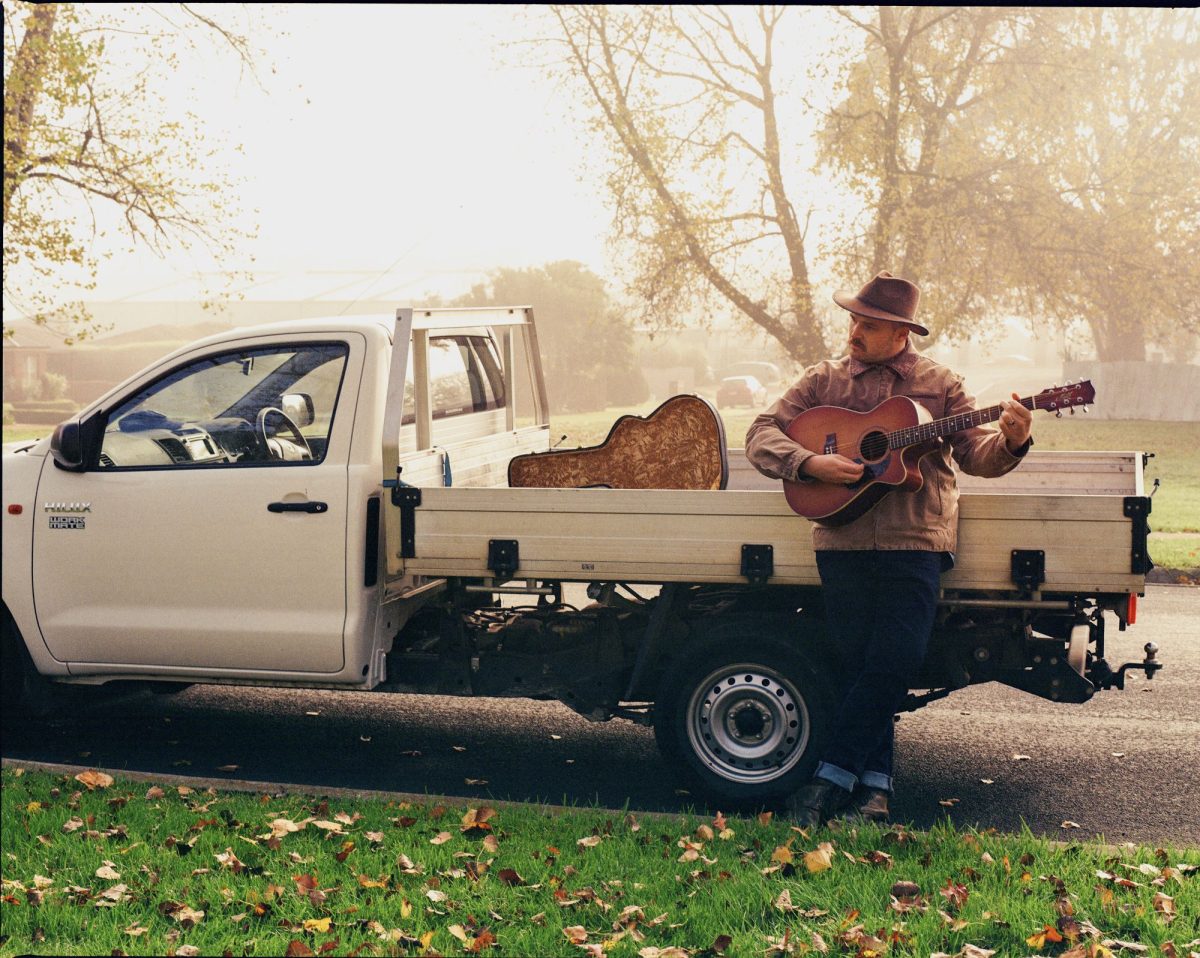
Leslie D. King and ute - Oily Rag Records
After spending time focusing all his energy on being a husband and father, Leslie says there’s “a combination of feeling excited and terrified” coming back to the music scene.
“A lot has changed for the greater good in these past few years,” he explained. “I feel refreshed and like I have something to offer. As much as I have everything I could ever need in my life right now, the picture just wouldn’t be complete without some sort of music in there … my son is obsessed with it; I think I’d break his heart if didn’t [make music]!”
Leslie is throwing himself into this new musical chapter, with “Gold” being the first single lifted from an original album he hopes to release next year.
“It’s the first time ever I’ve got everything in my brain onto an album, so I feel I have already won with it,” he enthused. “But it’s come out beautifully, and I’ve already had some special moments with everyone involved over the last couple years of recording it, so I’m really excited to show you.”
Leslie has also just announced a regional tour which will see him headlining shows and playing festivals around his home state of Victoria. He says music lovers “can expect a very large dose of high-energy Rock ‘N’ Soul. I’ve got a fantastic band of musicians who I’m honoured to call my friends.”
“Gold” is currently streaming on Spotify and other popular platforms. You can see Leslie D. King and his talented friends at one of the following shows.
2 October 2026 – Martians Saloon, Deans Marsh
3 October 2026 – Old Church on the Hill, Bendigo
17 October 2026 – Patchewollock Music Festival @ Patchewollock Hotel, Patchewollock
25 October 2026 – Young Street Tavern, Frankston
20 November 2026 – Whalers Hotel, Warrnambool
21 November 2026 – Birre Rec Revival @ Birregurra Hall, Birregurra
22 November 2026 – Bell’s Beach Brewing, Torquay
Tamworth will turn up the rhinestones in January, with some of Australia’s biggest country music names coming together for a one-night tribute to Dolly Parton.
Remembering Dolly – A Tribute to the Queen of Country will be staged during the 55th Toyota Tamworth Country Music Festival on Wednesday 20 January at the Tamworth Regional Entertainment and Conference Centre.
It’s a fitting venue for the celebration, with Dolly herself performing there during her Blue Smoke tour in February 2014.
Led by Brendan Radford and backed by the Golden Guitar Awards Band, the concert will bring together a hefty line-up of Australian country favourites including Adam Harvey, Beccy Cole, Catherine Britt, Darren Coggan, Denvah, Dylan Wright, Ellie Hannah, Fanny Lumsden, Felicity Urquhart & Josh Cunningham, Hayley Jensen, Kevin Bennett, Kirsty Lee Akers, Lyn Bowtell, Melinda Schneider and Tia Hannah, with more artists still to be announced.
Produced by Peter Ross, the show will celebrate both Dolly’s music and the personality that made her one of country music’s most recognisable and enduring stars.
Expect the songs, the stories and, naturally, plenty of sparkle. Audiences are being encouraged to arrive dressed in denim or diamonds in a nod to Dolly’s unmistakable style. But the evening will have a purpose beyond the stage.
A portion of ticket sales will be donated to Tamworth’s Dolly Parton Imagination Library, the early childhood literacy program founded by Parton in Tennessee in 1995. The program provides participating children with a free book every month from birth until the age of five, helping families build their own home libraries from the earliest years.
In Tamworth, the program is supported through local funding from Tamworth Regional Council, clubs, businesses, organisations and individual donors. It means the tribute will celebrate not only the music Dolly left behind, but also the legacy of a program that continues to put books into the hands of young children.
Remembering Dolly – A Tribute to the Queen of Country will be held at 7.30 pm on Wednesday 20 January at the Tamworth Regional Entertainment and Conference Centre. Tickets go on sale Thursday, 10 September through Entertainment Venues Tamworth.
We often think of learning as something that happens when a child is sitting down, paying attention and being taught. A worksheet. A book. A lesson. Someone asking questions and expecting the right answers. But children don’t necessarily learn best that way.
We learn through doing. Through experimenting, making mistakes, trying again and, importantly, through experiences that actually hold our attention. That is one reason gamification has become so popular in education and why play is such a powerful learning tool.
So, when you look over and see your child playing, don’t automatically think they’re wasting time. They may be learning far more than you realise.
They’re learning how to socialise
When children play together, they are constantly practising the skills they will need to navigate relationships throughout their lives. They’re learning how to share, negotiate, communicate and take turns. They are working out what happens when someone doesn’t want to play the same game, when another child changes the rules or when they have to compromise.
Even imaginary games can involve an enormous amount of communication. Who gets to be the superhero? Who decides what happens next? What happens when someone says, “That’s not how we play it”? These might look like ordinary childhood disagreements, but they are opportunities to practise social skills in a relatively safe environment.
They’re learning through mistakes
One of the wonderful things about play is that there usually isn’t much pressure to get it right. A tower falls down. A puzzle piece doesn’t fit. The game doesn’t go according to plan. The cardboard box they turned into a spaceship collapses halfway through their mission. So, they try again.
Through play, children can experience frustration, problem-solving and persistence without necessarily realising they are developing those skills. They learn that mistakes aren’t always the end of something. Sometimes they are simply information about what to try next.
They’re learning how the world works
Children are naturally curious. Play gives them a chance to test their theories about the world around them. What happens if I put this here? Will it fit? What happens if I push this? How high can I build it? Why does the water spill when I tip the cup? They are developing early mathematical, scientific and spatial concepts without necessarily knowing that is what they are doing.
They’re learning how to use their imagination
Play also gives children something that can be difficult to teach directly: the opportunity to imagine. A blanket becomes a fort. A cardboard box becomes a car. A stick becomes a wand. A few stuffed animals become an entire classroom of students.
This kind of imaginative play allows children to create their own stories, solve their own problems and explore different perspectives. It gives them space to be in charge of something in a world where most of their day is directed by adults.
And sometimes, that freedom is exactly what they need.
They’re learning to be independent
Not every game needs an adult standing nearby explaining what to do. When children have the opportunity to play independently, they have to make decisions for themselves. They decide what they want to do, how they want to do it and what happens when something doesn’t work.
That independence can be easy to overlook, particularly when we feel we should constantly be teaching, helping or entertaining our children. But sometimes the best thing we can do is step back.
Maybe play isn’t wasted time
We live in a world that increasingly asks children to be productive. There are lessons, activities, homework, sport and endless opportunities to learn something new. But childhood doesn’t have to be productive every minute of the day.
Sometimes learning looks like a child sitting on the floor surrounded by Lego. Sometimes it looks like running around the backyard pretending to be a dinosaur. Sometimes it looks like making a terrible drawing, losing a board game or spending an hour turning a cardboard box into something completely unrecognisable. They may think they’re just playing. And perhaps that’s exactly why they’re learning so much.
*Christine Bernard works as a facilitator and Allied Health assistant at Charlotte's Playroom. The playroom was designed by a speech pathologist to encourage communication through play. Come say hi. Instagram
Beyond the last station. Beyond the dry riverbeds that remember rain. Beyond the salt pans that glitter like forgotten oceans. In the oldest heart of the desert there is a single tree.
No one planted it.
The Elders say it was already ancient when the first footprints crossed the red earth. It watched continents drift inside the memory of stone. It listened while mountains wore themselves into dust. It counted time not in years, but in sunsets.
Its roots do not search for water.
They search for stories.
Every sorrow ever whispered into the wind is said to find its way beneath that tree. Every goodbye. Every unanswered prayer. Every name spoken for the last time. The roots gather them gently, carrying them into the darkness where nothing precious is ever truly lost.
Its branches reach so high that even the stars seem to rest there before dawn.
Travellers who stumble upon it never arrive by intention. The desert chooses who is ready.
Some come carrying grief too heavy for their shoulders. Some have forgotten who they are. Some have wandered so long that hope has become another distant horizon.
The tree asks no questions.
It simply offers shade.
Not the shade that cools the skin, but the kind that quietens the soul. The silence beneath its branches feels older than language. It is a place where regret finally grows tired of speaking.
People leave things there.
A wedding ring. A child's drawing. A soldier's medal. A weathered photograph with faces softened by time. Letters that were never posted. Promises that could never be kept.
By morning they are gone.
Not stolen.
Accepted.
The desert keeps no receipt for love.
They say if you press your hand against its bark you will hear voices. Not ghosts. Not echoes.
Memories.
The laughter of those who believed they had been forgotten. The gentle songs of mothers whose children have grown old. The courage of strangers who once carried another person's burden without asking for thanks.
Everything survives somewhere.
The Faraway Tree remembers because we cannot.
Its trunk bears scars deeper than any axe could carve. Lightning has split it. Fire has blackened it. Centuries of wind have twisted it into impossible shapes.
Yet every season it grows another leaf.
As if reminding the world that endurance is not the absence of suffering. It is the quiet decision to keep living beside it.
Perhaps that is why the tree has never revealed itself to crowds.
Wonder has never belonged to those who arrive with certainty.
Only to those prepared to kneel before something they cannot explain.
One day the last traveller will walk into that endless desert. The last story will be spoken. The final tear will fall upon the ancient earth.
Even then, I like to believe the Faraway Tree will remain.
Waiting.
Holding every life that ever mattered inside its immeasurable roots.
Standing alone beneath an endless Australian sky.
Not lonely.
Simply keeping watch over a world that is forever searching for its way home.
14
Lifestyle & Culture
Why is it so hard for men to make friends as we get older?
I've been back in the UK recently and caught up with my three oldest mates.
I've known them for about 45 years, since we were at school together. I now live on the other side of the world and can go a long time without seeing them, but whenever we meet we seem to drop straight back into things.
There is no awkward getting-to-know-you-again period. Within minutes we're talking about the football and other people we know as though I’ve never been away.
It made me think about friendship as we get older. Because while I've accumulated plenty of acquaintances over the past four and a half decades - people I've particularly liked through work, sport and different periods of my life - my really close friendships seem to come from two places.
My youth.
And Alcoholics Anonymous.
Which is quite an odd combination.
Apparently, we need to ‘do’ not ‘be’
I have a tight-knit group of about ten male friends in Australia who I've met through AA. A couple I've known for nearly 20 years; others perhaps five. It largely depends on how long each of us has been sober.
And one of the unexpected things I can say after many years in recovery is that I actually feel lucky to be in AA because of the friendships it's given me.
Research suggests men often build friendships around shared activities. We play sport together, join clubs, work alongside each other or develop mutual interests. In other words, we don't necessarily meet another man and think: He seems nice. I'd like him to become one of my closest friends.
We do something together for seven years and eventually realise he's the bloke we'd ring if our marriage fell apart.
Perhaps there's safety in the activity. You don't have to announce that you're looking for friendship or emotional connection. You can just ask if someone fancies a game of golf.
Research into loneliness among older people also suggests men can be more reluctant than women to actually describe themselves as lonely, even when other measures suggest they are experiencing loneliness.
I can understand that.
There is something oddly vulnerable about a grown man saying, "I'd like some new friends."
AA rather turns that process on its head.
You're put in a room with a group of strangers and, if you're going to recover, eventually expected to start talking about things you might have spent years desperately trying to hide.
Fear. Shame. Relationships. Failure. The things you've done. The things that have been done to you. The things that keep you awake at one in the morning.
Research into friendship tells us that self-disclosure, trust and emotional support help create and sustain close relationships.
AA doesn't give you much choice.
Perhaps that's why those friendships can become so strong. We've shared secrets and fears because we've had to. Somewhere along the way, the strangers in the room became my mates.
Who do you call at 1am?
There is a more serious side to all this.
This isn't an article about male suicide, and something as complex and serious as suicide should never be reduced to whether somebody has enough mates.
But you can see how some of the seeds of isolation might be sown.
We get older. Work gets busier. Children come along. Friendships drift. Sometimes a wife or partner gradually becomes the person we talk to about almost everything that matters.
Then imagine the relationship ends.
Suddenly the question isn't how many people are stored in your phone or how many people you could meet for a beer.
It's: who can you call at 1am and say, "I'm not doing very well"?
That's a very different measure of friendship.
Perhaps that's also why I increasingly appreciate the friends I've got.
Some knew me when I was a schoolboy in Portsmouth and somehow still want to have dinner with me 45 years later.
Others met me during one of the most significant periods of my adult life. They've watched me change, and I've watched them change too.
There have been others along the way. Workmates I've particularly clicked with. Friends through sport. People who appeared during one chapter of life and, occasionally, stayed for the next one.
Maybe making friends as an older man isn't impossible at all.
Perhaps the difficult bit is creating the circumstances in which we're prepared to let somebody know us properly.
My school friends knew me before most of the armour went up.
My AA friends came along when circumstances required me to take it down.
They're very different friendships, formed on opposite sides of the world and at opposite ends of my life.
But perhaps that's ultimately what a close friend is.
Someone who doesn't just know you.
They know you properly.
15
Politics
Parliament Passes Social Media Age Rules and Tax Crackdown; Childcare Pay Deal Advances
Federal Parliament sitting week: Monday 7 September, Tuesday 8 September, Wednesday 9 September, Thursday 10 September
Bills Passed Social media platforms must enforce minimum age rules Online Safety Amendment (Strengthening Enforcement for the Social Media Minimum Age) Bill 2026 Social media companies will face tougher requirements to stop under-age users accessing their platforms. The bill gives the eSafety Commissioner stronger enforcement powers, including the ability to issue compliance notices and seek court orders against platforms that fail to verify users' ages. This affects all social media platforms operating in Australia and their users under 16.
Tax advisers face stricter accountability Treasury Laws Amendment (Strengthening Accountability for Tax Adviser Misconduct and Other Measures) Bill 2026 Tax advisers who give bad advice or engage in misconduct will face harsher penalties and oversight. The bill strengthens the Tax Practitioners Board's powers to discipline advisers, increases penalties for breaches, and improves reporting requirements. This affects tax agents, accountants, and anyone relying on professional tax advice.
Childcare worker pay support extended Wage Justice for Early Childhood Education and Care Workers (Special Account) (Extending Support and Strengthening Safety) Bill 2026 The government will continue funding wage increases for childcare and early childhood education workers beyond the initial support period. The bill establishes a special account to administer ongoing payments to boost worker pay in the sector. This affects childcare centres, early learning services, and their staff across Australia.
Wine export and biosecurity rules modernised Wine and Other Legislation Amendment Bill 2026 and Biosecurity Amendment (Improving Operational Efficiency) Bill 2026 Two bills passed to streamline regulations for wine exports and improve biosecurity operations. The wine bill removes outdated export requirements; the biosecurity bill gives regulators more flexible tools to manage import risks. These affect wine producers and agricultural importers.
Mobile coverage expansion mandated Telecommunications Legislation Amendment (Universal Outdoor Mobile Obligation) Bill 2025 Telecommunications companies must now provide mobile coverage to outdoor public spaces not currently served by the market. The bill sets obligations for carriers to invest in regional and remote coverage, funded through industry contributions. This affects mobile phone users in areas with poor coverage and regional Australians.
Bills Introduced New student ombudsman scheme with levy National Student Ombudsman Levy Bill 2026 and Tertiary Education Quality and Standards Agency Amendment (National Student Ombudsman Levy) Bill 2026 Parliament is considering a new independent ombudsman to handle student complaints about universities and tertiary providers, funded by a new levy on institutions. Universities will pay a compulsory fee to fund the office, which will investigate complaints about academic decisions, fees, and misconduct. This affects university students and all registered tertiary education providers.
Knox class action claims process Knox Class Action (Facilitation) Bill 2026 The bill creates a streamlined process for people affected by the Knox Group collapse to claim compensation through a structured claims scheme. Rather than individual lawsuits, claimants will lodge claims through a single administrator with set criteria for assessment. This affects individuals who lost money in the Knox Group financial collapse.
Illegal tobacco enforcement modernised Customs and Other Legislation Amendment (Illicit Tobacco Enforcement Modernisation and Other Measures) Bill 2026 Customs and border authorities will get stronger powers to detect and seize illegal tobacco products entering Australia. The bill updates enforcement tools, increases penalties for tobacco trafficking, and improves intelligence-sharing between agencies. This affects tobacco smugglers and legitimate tobacco retailers competing against illegal imports.
New sports integrity offences established Criminal Code Amendment (National Sport Integrity Offences) Bill 2026 Parliament has passed new criminal offences targeting match-fixing, spot-fixing, and integrity breaches in Australian sport. The bill creates specific criminal penalties for deliberately manipulating sporting outcomes or betting on contests they participate in. This affects athletes, coaches, officials, and organised crime groups involved in sports corruption.
Money laundering and terrorism financing rules tightened Anti-Money Laundering and Counter-Terrorism Financing Amendment Bill 2026 New requirements will improve detection of money laundering and terrorism financing through financial institutions. The bill strengthens reporting obligations, increases penalties for non-compliance, and expands the types of transactions that must be reported. This affects banks, money changers, cryptocurrency exchanges, and other financial service providers.
Private health insurance rebate modernised Private Health Insurance Amendment (Modernising the Private Health Insurance Rebate) Bill 2026 Changes to the private health insurance rebate system are being debated to modernise how rebates are calculated and distributed. The bill adjusts the rebate framework, though specific changes are still being considered in parliament. This affects people with private health insurance and health funds.
Foreign terrorist fighter protections strengthened Protecting Australians from Foreign Terrorist Fighters Bill 2026 New powers will allow authorities to prevent Australians fighting overseas from returning to Australia or to manage their return and rehabilitation. The bill introduces mechanisms for stripping citizenship, travel bans, and reintegration monitoring for those involved in foreign terrorist conflicts. This affects Australians involved in overseas terrorist activities and national security agencies.
Regulatory red tape reduction Regulatory Reform Omnibus Bill 2026 Parliament is considering a package of regulatory changes aimed at reducing compliance costs across multiple sectors. The bill removes or streamlines outdated regulations affecting business and government agencies. This affects businesses across all sectors currently subject to the affected regulations.
Worth Watching Passenger arrival fees review — Passenger Movement Charge Amendment Bill 2026 is being debated; expect decisions on whether Australia's departure and arrival fees will change.
Social media age enforcement rules — Watch how platforms implement the age verification rules now passed — technical, cost, and privacy issues may emerge in coming months.
Tax adviser discipline outcomes — Monitor how the Tax Practitioners Board uses new enforcement powers to discipline misconduct — will show whether penalties deter poor advice.
Weekly Federal Parliament Briefing — sourced from Hansard via OpenAustralia API. Parliamentary material Copyright Commonwealth of Australia. This is a summary only.
16
Science & Tech
Why your phone battery dies faster in winter, and what to do about it
You've charged your phone overnight, walked out the front door on a freezing morning, and somehow your battery is already down to 70% before you've even had your first coffee.
Is your battery dying? Well, according to engineers, your phone isn't actually running out of power faster, it's just struggling to access the power that's already there.
The good news is, there are a few things you can do to preserve its charge.
First, we need to talk about lithium Almost every smartphone today uses a lithium-ion battery.
Inside, tiny lithium ions constantly move back and forth between two electrodes, creating the electricity that powers everything from your alarm clock to your favourite apps.
When temperatures drop, those ions slow down. The chemical reactions inside the battery become less efficient, and the battery's internal resistance increases. That makes it harder for your phone to deliver power as quickly as it normally would.
The result? Your battery percentage can plummet surprisingly fast, even though much of the energy is still sitting inside the battery waiting to be used.
It's usually temporary Before you rush out and buy a new phone, there's something reassuring to know.
As your phone warms back up, the chemical reactions speed up again and the battery often recovers much of its normal performance.
That's why a phone that suddenly drops to a low percentage outdoors can appear to "gain" battery life once you're back indoors.
That doesn't mean cold weather is good for batteries, but it usually isn't causing permanent damage either. In fact, battery experts say excessive heat is a much bigger enemy when it comes to shortening the long-term lifespan of lithium-ion batteries.
A few simple ways to help If you're heading out on a chilly day, keeping your phone in a pocket close to your body rather than an outside bag can help it stay warmer. If possible, avoid leaving it in a freezing car for long periods, and let it warm naturally before charging.
A battery is a bit like us in winter If your phone seems to lose half its battery during a winter morning, don't blame your charger just yet. Chances are your battery is fine, it's just moving a little slower until it warms up … like the rest of us!
My dad has a garage full of things that might come in handy.
Tools. Screws. Nails. Bits of wood. Half-empty tins of paint. Electrical things. Mechanical things. Things whose purpose I don't entirely understand but which apparently must never be thrown away because there may come a day when they're needed.
It's a good garage, actually.
He built it himself.
Which tells you almost everything you need to know about the difference between my dad's generation and mine.
My dad could change the gearbox on his car.
I sometimes pay someone to clean mine.
He grew up in a world where people made things, maintained things and, crucially, repaired things. When I was a kid, a hole in my jeans didn't necessarily mean I got new jeans. Someone sewed a patch over the hole and I continued wearing them.
When my own children were growing up, I might have made the occasional emergency attempt at repairing a school uniform.
But patching their everyday clothes?
I don't think it would even have occurred to me.
That might come in handy
There are historical reasons for some of this.
My parents' generation grew up in post-war Britain, when scarcity was still part of everyday life. Rationing and shortages continued into the 1950s, with the final food rationing not ending until 1954.
The wartime government's famous instruction had been to "Make Do and Mend". People were actively encouraged to repair worn clothes and even turn old garments into new ones rather than throw them away.
My parents grew up in the shadow of that culture.
My generation grew up as consumerism accelerated and things became increasingly easy to replace.
And somewhere along the way, our first response to something breaking seems to have changed from:
Can I fix it?
to:
How much is a new one?
Research into clothing repair found some fairly predictable reasons we don't mend things more often: lack of skills, the way products are designed and the cost of professional repairs.
In other words, sometimes replacing something really is easier and cheaper.
You can see the results where I live in Australia whenever there's a council clean-up.
Suddenly the streets are lined with discarded furniture, televisions, electrical appliances, children's toys and mysterious exercise equipment purchased during a brief period when somebody apparently believed they were going to use it every morning for the rest of their life.
Our possessions increasingly seem to have finite lifespans.
My dad's garage doesn't operate on that principle.
My dad's garage isn't full of rubbish.
It's full of potential solutions to problems that haven't happened yet.
The things we're really keeping
My parents also watch The Repair Shop, a television programme I've gradually grown to love. I’ve seen it sporadically in Australia on the ABC - my parents almost have it on constant rotation on a channel way down the list.
People bring in damaged or broken possessions and extraordinarily skilled craftspeople restore them.
The skill involved is mesmerising.
Watch someone painstakingly repair a clock, piece of furniture or mechanical toy and you realise how many practical crafts most of us no longer possess.
But there's something else that makes the programme so moving.
Often the object being repaired isn't particularly valuable.
At least not in money.
It belonged to someone's father. Or grandmother. They remember playing with it as a child. It sat in a particular room in the family home. Someone important gave it to them.
And there's actually some interesting research behind that.
Studies of older people and their possessions have found that treasured objects can connect us with past versions of ourselves, important relationships and particular moments in our lives. Research into possessions and memory suggests objects can help us preserve and recall personal memories.
Which made me wonder whether I've sometimes misunderstood my parents' reluctance to throw things away.
I walk into their house and see stuff.
They might see their lives.
The holiday when they bought something. The person who gave it to them. The house they lived in then. Their children when we were young.
Of course, I'm not letting them completely off the hook.
Their house really is crammed with, well, stuff.
And I'm fairly confident some of the contents of Dad's garage could be disposed of without triggering a family heritage emergency.
But perhaps their generation understood something we've gradually lost.
Things didn't arrive instantly and cheaply. You saved for them. You looked after them. When they broke, you tried to repair them.
And because you kept them for longer, perhaps they had time to become something more than just things.
They became part of your life.
So maybe I'll be a little less dismissive next time Dad refuses to throw away an unidentified screw he's apparently been keeping since 1983.
After all, I've known him long enough to understand the system.
I love my hammer, I have owned it for years. With my hammer I make useful things. After using it, I clean it and hang it back on its hook. It is a good hammer well balanced and perfectly suited for purpose. I treat it with a sense of respect.
Okay you might wonder what the 18th-century German philosopher Immanuel Kant has to do with my hammer.
In 1785 Immanuel Kant proposed a remarkably simple and broad test for ethical behavior. In his original German text he wrote as part of what he called The Categorical Imperative;
„Handle so, daß du die Menschheit, sowohl in deiner Person, als in der Person eines jeden andern, jederzeit zugleich als Zweck, niemals bloß als Mittel brauchest.“
Literally translated into English means,
“Act so that you use humanity, whether in your own person or in the person of every other, always at the same time as an end, never merely as a means.”
In modern English we might say "Never use another person as a mere means to an end".
The word mere carries a special meaning in this sentence. Kant is not saying it's wrong for people to serve one another's purposes. He is saying it's wrong when a person is treated solely as an instrument for achieving one's own ends.
This remarkable statement from the 1700s is equally relevant today - one should never use another person as a mere means to an end without respecting that person's wishes.
Back to my hammer. In Kant's time, simple objects like my hammer represented considerable value and naturally commanded people's respect. Not so today. Cheap mass-produced products have lost much of their perceived value.
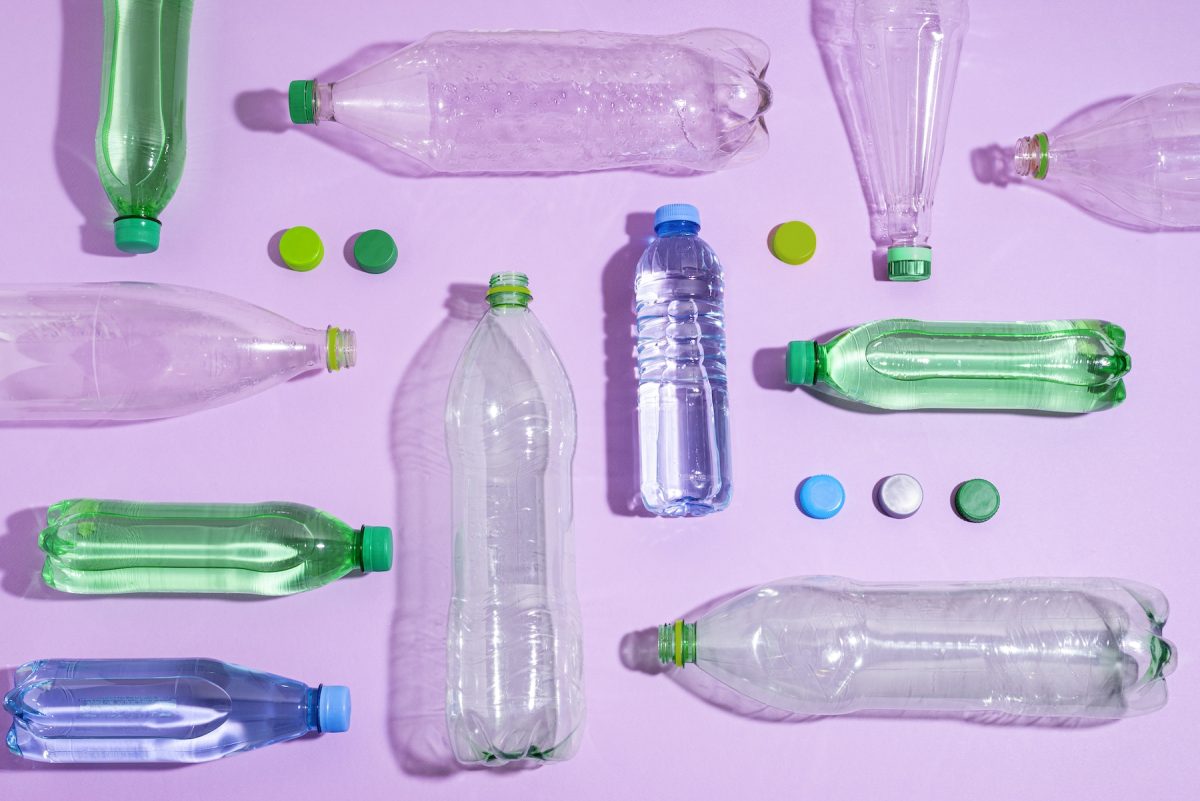
Water bottles - Magnific.com
Plastic water bottles are used once and disposed of, which begs the question: Could we extend Kant's imperative to non-living objects?
Never treat a person, or the product of another's work, as a mere means to an end.
This statement does not mean we need to respect a lump of iron simply because it is. But if that lump of iron has been worked into a useful tool, the labour embodied deserves some respect.
A hammer has no feelings, but the person who made it does.
And perhaps our habit of treating the products of human labour as disposable has consequences beyond the waste itself. Once we become accustomed to valuing everything solely by what it can do for us, it becomes dangerously easy to apply the same thinking to people.
So I will keep cleaning my old hammer and hanging it back on its hook.
I took Hannah through the narrative now known as Operation ‘Spider’. Enzo and Celina listened patiently to my account, being more than familiar with it.
Hannah listened actively, without interjections or questions. By the time the narrative was up-to-date, at least on my front, she was in deep thought.
‘Bet you got a bollocking from Rufus when he found out you’d gone to the Agency with this case and not him.’
‘I hadn’t really seen him that angry before,’ I replied.
All three smiled. Hannah’s, as always, was cultivated.
‘I imagine you have a number of questions to fire at me,’ I continued, ‘but let’s get an update first on Enzo and Celina’s progress in this operation.’
Enzo led off.
‘I’ve made good progress with the Cunninghams thus far,’ he began. ‘The fact that my wife Portia insists on attending the local Catholic Church rather than the Anglican Christ Church Cathedral has rather played into my hands. Bruce and Beryl have told me they feel kind of sorry that our Christian worship has been split between two churches and they seem to have taken me under their wing.’
‘And what have you learned about the Cunningham parents to date, Enzo,’ Hannah asked.
‘Still early days,’ he replied, ‘and I’m careful not to probe too hard, but Bruce has talked a lot about his fish chartering business and has offered to include me on a forthcoming trip he’s organising to the Mary River before the barramundi run-off finishes.’
‘Will you go?’ she asked.
Enzo glanced in my direction.
I nodded.
‘Best he goes now, before the barra season closes down for the year.’
‘The Cunninghams have also had me around to their home where we’ve met the whole family, although the daughter has recently moved out,’ Enzo continued.
‘Enzo despatched his report on that event to your email account lunchtime today,’ I added.
‘Will your wife also go on the charter, Enzo?’ Hannah asked.
He shook his head.
‘Actually Beryl Cunningham has offered to introduce Portia to Beryl’s local bridge club,’ he said. ‘So I’m hoping the two eventually hit it off, socially.’
‘When is the charter happening?’ asked Hannah.
‘In a few days’ time,’ Celina chimed in. ‘And I’ll also be on it.’
Celina outlined her progress in the undercover role of the fish-loving Cecilia Hanson from the New South Wales south coast. She ended her story as darkness began enveloping the Darwin skyline.
Kurt Cunningham, she said, has become a permanent fixture in Cecilia Hanson’s life. They were now meeting each morning on the Nightcliff foreshore and jogging to a nearby café for breakfast.
Kurt had confided to Cecilia that he was hoping to take over his father’s fish charter business as soon as his old man had put enough superannuation away for a comfortable retirement and once Beryl had finished work at Christ Church Cathedral.
‘My alter-ego,’ chimed in Celina, ‘is now a frequent visitor to the Cunningham home where I’ve been able to squirrel away cigarette butts discarded by the two parent smokers.’
She paused slightly.
‘Also,’ she continued, ‘I’ve managed to pilfer a sample of Kurt’s dark curly locks after accidentally ruffling his hair during one particularly passionate morning we spent recently on Nightcliff Beach.’
Hannah sat back in her chair and seemed to be stifling a titter.
‘The DNA outcomes from all this should be with us shortly,’ I announced, anticipating a follow-up question from my fellow director.
‘And the daughter – Kylie?’ Hannah finally asked.
‘Work in progress at the moment,’ I replied. ‘But we’re kind of hoping you might be able to provide us with an opportunity on that front.’
‘Oh?’
I leant across the table, attempting a cultivated smile of my own.
‘How would you like to revisit your tertiary studies as a mature-aged student?’ I asked her.
Continued
22
Opinion
Perishable Intelligence can help win the un-winnable
It would appear the Trump administration has chosen to adopt a ‘no war, no peace’ approach to its conflict with Iran - employing a strategy of periodic strikes with sustained economic pressure rather than returning to high-level combat operations or a full ceasefire. If this is now the new norm in its Mexican standoff with the Iranian regime, then consider how critical the collection of ‘perishable’ or vital real time intelligence could prove to be in light of this strategy.
Intelligence - in a military context - is essentially “information that provides a comparative advantage” to someone over their opponent. So then, how important would perishable intelligence be to the Trump administration in its aims to achieve an outcome with its ‘no war, no peace’ strategy? This, at a time when the world, including a growing percentage of the US population, has had enough of this trumped up no-win conflict (pun intended).
Iran, like Ukraine, has shown the world that it can cope quite easily with ‘attrition’ – the odd missile site wiped out, the odd Iranian tanker bombed and sunk and even the odd glorious Leader assassinated. All of those actions, one would imagine, depended on the US obtaining perishable intelligence in some shape or form. And yet, none of it appears to have provided the US with a comparative advantage. Indeed, it has mostly resulted in a substantial pushback on a range of fronts, not just across the Middle East but also globally.
Was this then an intelligence failure on the Trump administration’s part, or merely the misdirection of a key US intelligence focus at the time? One wonders - would not a better US intelligence penetration of the Iranian governance, military and intelligence apparatus have told President Trump that Iran is not going to lay down and die because of a few US missile and drone attacks on its territory? Similarly, would not a more effective intelligence reading of the pro-Iranian sector of that Country’s populous have produced a more accurate reading of the anti-US sentiment that we now see occupying the streets of Tehran.
Easier said than done, you might say. After all, there has been a ground swell of strong anti-Iranian sentiment both within and beyond the shores of Iran. Problem is, those involved in that sentiment from within have been ‘neutralised’ in some shape or form by the Regime and those involved outside Iran have had little power to do much more than demonstrate against it from their adopted safe haven countries.
If most of the above sounds like wisdom in hindsight, it probably is. What sticks in my cruet, however, is that we don’t seem to learn from history. Or in this case – Middle Eastern history. Consider, for instance, the Iraqi War that kicked off in 2003 because the US Government of the day concluded – in spite of intelligence to the contrary – that Iraq possessed weapons of mass destruction. That senseless war cost Iraq, the US and its partners-in-arms at the time many casualties and much credibility. And Iraq remains a less than stable country - politically and militarily - to this day.
Then, earlier this year, on the same geographic front – a similar scenario erupts in Iran and in goes the US. But this time, that Country’s erstwhile ‘partners-in-arm’ must have listened to history and maybe read their intelligence reports more carefully than their US counterparts.
Back in 2003 there were few drones, robotics and artificial intelligence platforms to complicate a war strategy. But there was intelligence - and especially perishable intelligence - and much of that was spilling forth from human asset reporting. That intelligence product was credible, but perhaps not to those who chose to ignore it.
So, the Trump administration will continue to take out the odd Iranian missile launcher, ship and aircraft, but will it be able to disable those launching sites and craft that are continually retaliating across the broader Middle East – and, by extension, impacting economically on the rest of us?
Non-human intelligence sources, thus far at least, seem incapable of pinpointing the real military targets across Iran for the US to effectively disable that adversary. But it would take only one well-placed human anti-Regime ‘insider’ in Iran to produce perishable intelligence that could.
24
News
Bird flu reaches Australian wildlife as oil supply fears grip global markets
First bird flu case confirmed in Australian sea lion South Australia has recorded its first confirmed case of bird flu in an endangered sea lion, found at Seal Bay on Kangaroo Island. The detection marks a significant development in the spread of the virus through Australian wildlife and raises concerns about the health of marine mammal populations along the southern coast.
Oil Rig - Magnific.com
Middle East conflict threatens global fuel prices Saudi Arabia has shut down its vital East-West pipeline after it came under attack in escalating Middle East tensions. The 1,200-kilometre pipeline serves as a major route for global oil supplies, and its closure threatens to push fuel prices higher worldwide. The shutdown comes as Houthi militants have seized the strategic Mayun Island in the Red Sea and intensified attacks on shipping infrastructure. Analysts warn that sustained disruptions to Middle Eastern oil supply could drive up petrol, diesel and jet fuel costs for Australian consumers and airlines in coming weeks.
Boy with Ipad - Magnific.com
NSW implements screen time limits in schools New South Wales will introduce mandatory caps on screen time in classrooms from 2028 as part of a push to increase use of pen and paper learning. The federal education minister has indicated that students may need a "digital detox", signalling a shift in education policy towards reducing classroom technology use. The policy will require schools to set strict limits on how much time students spend on screens during the school day.
Melbourne man charged with extremist offences Federal police have charged a 30-year-old Melbourne man with possessing violent extremist material. The man was arrested at Melbourne Airport as he attempted to fly to the Middle East. Australian Federal Police allege he is linked to a network that has been sharing online content including ISIS propaganda.
WorkSafe investigates Kalgoorlie mining incident WorkSafe Western Australia is investigating a workplace incident at the Kalgoorlie Super Pit, one of Australia's largest gold mines, where the operator of an $18 million heavy-duty mining shovel escaped a fire that engulfed the driver's cab. The incident highlights safety risks associated with large-scale mining operations in remote locations.
Prime Minister defends mother against political attack Prime Minister Anthony Albanese has strongly defended his late mother against criticism from One Nation leader Pauline Hanson. Hanson had made remarks about Maryanne Albanese's use of public housing, prompting the Prime Minister to label her comments "nasty and spiteful". Liberal frontbencher Andrew Hastie also criticised Hanson's remarks, saying she was out of line. The exchange reflects escalating tensions within Australian politics as One Nation continues to gain prominence in the political landscape.
Australian surfers' murder trial underway in Mexico The trial of three men accused of killing Australian brothers Jake and Callum Robinson and their American friend Jack Carter Rhoad has commenced in Mexico. The brothers' father testified in court, describing the impact of identifying his sons' bodies. The case drew international attention when the three men's bodies were found at the bottom of a well with gunshot wounds in Ensenada two years ago. The trial represents one of the few significant developments in a case that has gripped public attention in Australia for the past two years.
---
AI-generated weekly digest — stories relevant to Australia, 6 September 2026 – 13 September 2026. Sources: ABC News Australia, Guardian Australia, Sydney Morning Herald, Al Jazeera, BBC News Australia, France24