WEEKLY AUSTRALIAN READ
September 21, 2026
Edition #78
Science & Tech  ·  Fiction  ·  Lifestyle & Culture  ·  News  ·  Humour & Satire  ·  Music  ·  Politics  ·  Science & Tech  ·  Fiction  ·  Lifestyle & Culture  ·  News  ·  Humour & Satire  ·  Music  ·  Politics  ·  
1
Science & Tech
Why do we get songs stuck in our heads?
music-stuck
music-stuck
It happened to me the other day.

I woke up singing a Madonna song I hadn't heard in years. I didn't even know the title, only a few words from the chorus.
After a quick Google search, I discovered it was called Gone, a song I thought had completely “gone” from my memory.

But it hadn’t, and furthermore, it refused to leave.

It played over and over in my head for the rest of the day.

Science has an explanation.

Meet the earworm
Researchers have a name for songs that suddenly take up residence in your brain. They're called earworms, or more formally, involuntary musical imagery.

Despite the name, fortunately they have nothing to do with worms.

Instead, they're short pieces of music that begin playing in your mind without you choosing to think about them. Studies suggest that almost everyone experiences them, although some people get them far more often than others.

Your brain loves unfinished business
Scientists believe earworms happen, in part, because our brains are exceptionally good at remembering patterns.

Songs are full of rhythm, repetition and catchy melodies, making them perfect candidates for long-term memory. Sometimes a tiny trigger, perhaps a word, a sound, an emotion or even a smell, activates a musical memory without us consciously noticing.

Once that memory surfaces, the brain can get caught in a loop, replaying the same section over and over again.

Researchers have also found that songs with simple, memorable melodies and an unexpected musical twist are especially likely to become earworms.

Why that random song?
This is the part that fascinates scientists.

You don't have to hear a song recently for it to pop back into your mind. Some earworms seem to come from nowhere, reviving songs you haven't thought about in years or even decades.

The trigger might be so subtle that you never recognise it. A phrase in a conversation, the rhythm of footsteps, a similar melody playing in a shop, or even your mood can quietly unlock a memory stored deep inside your brain.

By the time you're humming the chorus, the real trigger has often passed and been forgotten.

Can you get rid of it?
Usually, yes.

Researchers have found that simply distracting yourself with another activity, listening to the song all the way through, or giving your brain something else to focus on can sometimes break the loop.

Although, as anyone who's experienced a particularly stubborn earworm knows, that's often easier said than done.

SOURCE

Study: Involuntary Music Imagery

PUBMED: Tunes stuck in your head
2
Science & Tech
Astronauts can grow up to 5 cm taller in space. Here's why.
astronaut
astronaut - canva
If you've ever wished you were a little taller, you might want to book a one-way ticket to space.

Scientists have found that astronauts can grow by as much as five centimetres during long missions, all without stretching exercises, expensive shoes or a miracle vitamin.

Let's unpack the long and short of it.

Gravity doesn’t squish astronauts
Most of us don't notice it, but Earth's gravity is constantly pressing down on our bodies. Between each bone in your spine sits a soft, cushion-like disc that acts as a shock absorber whenever you walk, run or jump.

Here on Earth, those discs spend every second under the weight of gravity. In space, that pressure is greatly reduced, allowing the discs to expand and the spine to gently stretch out.

The result? Astronauts can become up to five centimetres taller, even though they haven't actually grown new bone or permanently increased their height.

Growing taller isn't always comfortable
Before you start wishing you could swap places with an astronaut, there's a downside.

As the spine lengthens, many astronauts experience back pain and stiffness while their muscles and ligaments adjust to their slightly taller frame. Researchers also monitor these changes closely because spending months in space affects the muscles, bones and spine in ways that scientists are still working to fully understand.

Fortunately, the effect doesn't last forever. Once astronauts return to Earth, gravity gradually compresses the spine again, and within days they're usually back to their normal height.

One more way space changes the human body
Growing taller is just one of the many surprising ways space changes the human body. Scientists have also found that living in microgravity can affect eyesight, muscles, bones, balance and even the way fluids move around the body.

Every mission helps researchers better understand how our bodies respond to life beyond Earth, knowledge that could prove essential as humans prepare for longer journeys to the Moon, Mars and beyond.

SOURCES
NASA Human Research Program
European Space Agency
3
AD Advertisement
Write For Hold The News
Advertisement image
Have something worth saying?

Do you feel compelled to write? Have a story to tell or a message you want to share with fellow Australians?

Join our team of volunteer or professional freelance writer and give it a fair go.

We publish articles across a wide range of topics and let readers decide what is worth reading. A new edition is released every Monday, with articles ranked according to the number of reads they receive.

Register here to become a writer, or contact us if you have any questions.

Not ready to write just yet? Subscribe here and follow Hold The News to see what others are writing.
4
Fiction
The Other Panopticon (5d)
The Other Panopticon
The Other Panopticon - Original
Chapter 5d

Earlier Chapters:
Synopsis
Chapter 1
Chapter 2
Chapter 3
Chapter 4


By mid-June I was concerned I’d received no communication from Zorkov’s mini-transmitter-receiver.

I was now ‘ghosting’ Cameron Miller - constantly interrupting his evenings by visiting his next-door apartment with a bottle of wine in hand.

On 7 June the bottle of wine was transformed into a bottle of Bollinger as I knew it was Miller’s birthday that day and thought this a good opportunity to introduce him to Hannah Dooley.

Miller had been expecting us but not the Bollinger, nor the obscenely large box of chocolates Hannah presented to him with a firm birthday handshake.

‘You should introduce me to more of your senior colleagues,’ the American quipped, ‘Very few people know that I’m a serial chocoholic.’

We toasted our colleague’s anniversary with three raised flutes then sat around his kitchen table watching him work his way through Hannah’s gift.
‘Zorkov’s still in Singapore,’ he told us,’ and things seem to be disturbingly static. My people there see him attending government and diplomatic functions but nothing stands out in terms of any unofficial activities and movements.

‘He claims to have oversight of illegal networks in both Singapore and Malaysia, as well as here,’ Hannah reminded us. Has he made any recent visits to Malaysia?’

‘Not that we know of, ‘replied Miller. ‘As you know, the SVR will still only touch base with its deep sleepers in emergency-type situations.’
‘Agreed of course, Cameron,’ I added. ‘But bear in mind Zorkov’s claim that his Darwin network is by far the most potent of the three he named.’
‘Which could suggest a high-level penetration at somewhere like Pine Gap,’ Hannah suggested.

‘Or Robertson Barracks,’ I added.

Miller drained his glass and scooped out another chocolate before turning in my direction.

‘I know you can’t really give me details of this alleged Darwin-based illegals network Zorkov claims to be controlling, Michael, but you will tell me if my folk are in any way part of its focus, won’t you?’

‘Goes without saying Cameron,’ I replied. ‘But thus far, it’s early days for us. We have suspects whom we are currently examining very closely but, as they say, softly-softly-catchee- monkey.’

‘They do indeed,’ he smiled, refilling his flute and eying off one of the soft-centred delicacies in front of him.

‘When does your technical man arrive here with the gear?’ I asked.
Miller looked slightly sheepish.

‘Actually, its three techos I’ll be getting and they’ll be housed at the Robertson Barracks, ostensibly because that’s where they will be conducting their ‘tests’.’

‘Is your ‘test’ pretext likely to convince the US commander of that establishment?’ asked Hannah.

He nodded.

‘So three more people have now been briefed on Operation Spider?’ I concluded.

‘Four with your director-general,’ he countered.

‘Will the equipment be housed at the Barracks?’ I asked.

‘In several large suitcases,’ he replied, ‘which the trio of techs will be guarding with their lives.’

When does the team get here?’ asked Hannah.

‘First thing next week I believe,’ he replied. ‘I’ll be meeting them in one of the Army vans. Do you want to come with me?’

Hannah and I exchanged glances.

‘You go,’ she said to me. ‘I can meet them all a bit later.’

‘They’ll have a high-powered escort when they arrive here,’ Miller added.
I saw Hannah’s brow furrow.

‘Our new Agency director,’ he added – ‘Michael Hayden – who also happens to be a former four-star general and director of National Intelligence.’
‘Shouldn’t my director-general be aware of his arrival on our turf?’ I asked.

‘No,’ replied Miller. ‘The visit is unofficial and relates more to what’s happening at Robertson Barracks than to what’s happening with Operation Spider.’

‘If my boss or his deputy find out the new CIA director is secretly visiting here without their knowledge, it will be the end of our careers,’ I told him, casting a glance in Hannah’s direction.
‘Trust me,’ replied Miller. ‘They won’t.’


Continued
5
AD Advertisement
Sponsor Hold The News from $40
Advertisement image
Are Google Ads Driving You Mad?

Advertising with Hold The News is simpler.

We don’t sell clicks or lock you into a subscription. Your advertisement remains permanently attached to the edition in which it appears, allowing it to be seen whenever those articles are read—weeks, months or years after publication.

Better still, your advertising helps pay Australian writers and journalists instead of sending more money to an overseas technology giant.

No subscription. No ongoing commitment. Ads from $40 + GST.

Contact Us to get started.

Steven Sesselmann
Editor, Hold The News
6
Lifestyle & Culture
Why do gigs hit differently as we get older?
Hanny Naibah - Unsplash
Why, when we're at an age to complain about the noise, the price of the beer (if we even still drink) and how late the support act finishes, do some of us want to go to gigs more than ever?

I’m 58 and I still love going to see live music. Although I’ll concede the way I do it has changed considerably.

Thirty years ago - no forty years ago - I wanted to be down near the front, preferably in the moshpit, wearing the T-shirt I’d just bought at the merch stand and with a good few beers inside me.

These days I position myself about halfway back and slightly to one side. Somewhere I can see properly (in my new multi-focals), but where it’s not quite so loud. I rarely bother with a drink beforehand, although I’m quite partial to a quick dinner. I never buy merchandise. And while younger gig-goers might be checking out where the after-party is, I’m delighted if I've found a decent parking spot with a short walk back to the car.

My feet often hurt by the end if it’s a long set.

But I don't want to stop going.

The same crowd, but less hairs and graces

I still see new artists, usually with my adult children. Sam Fender, the DMA'S and Jesse Welles have been recent favourites. But increasingly I'm also seeing bands and artists I first listened to decades ago, now back out on the road.
Oasis (my feet hurt after that one and it was such a late night), Pop Will Eat Itself, Primal Scream, Teenage Fanclub and David Gray are the pick of the ones I revisited.

And one of the things I love is looking around at the audience.

There are an awful lot of people who look suspiciously like me.

Men in their 50s still wearing Adidas trainers and Fred Perrys, but perhaps carrying a little more around the waist and considerably less on top. In many cases, they're essentially the same people I would have been standing beside all those years ago.

Oasis felt like the biggest football-terrace reunion of all time - albeit one supplemented by thousands of younger fans who weren't even born when Definitely Maybe came out.

But perhaps there's a reason those songs still mean so much to me and my peers.

Researchers have identified something called the “reminiscence bump”: our tendency as we get older to have particularly strong memories and emotional connections to experiences from adolescence and early adulthood. Music seems to be particularly powerful at unlocking them. One recent international study of almost 1,900 people found that our connection with personally meaningful music peaked at around the age of 17.

Seventeen.

That explains quite a lot.

Those were the years when we were working out who we were. The friends we wanted, the clothes we wore, the people we fancied, the tribes we belonged to - and the music that provided the soundtrack to all of it.

Researchers studying the phenomenon have suggested precisely that: music from those formative years can become intertwined with identity and our autobiographical memories.

So perhaps when I hear a song I loved in my teens or 20s, I'm not simply remembering the music.
I'm remembering who I was when the music mattered to me.

Still adding to the soundtrack

That's why I don't think going to see older bands is necessarily about wishing we were young again.

I'm very happy being 58. I certainly don't want my 25-year-old life back - although I'd happily borrow his knees for an evening.

But there's something wonderful about standing in a room with thousands of other people and having the opening notes of a song transport you somewhere else.

For three or four minutes, the person you were then and the person you are now seem to occupy the same space.
And crucially, our relationship with music doesn't have to stop there. Research into musical tastes across our lives suggests they can continue to develop and broaden as we get older. One study found the oldest participants actually had the broadest tastes, influenced by music encountered through different stages of their lives and through parents, friends, partners and children.

I like that.

Because some of my favourite recent gigs haven't involved revisiting my youth at all. I've discovered newer artists such as Sam Fender, DMA'S and Jesse Welles, often through going to gigs with my adult kids.

So music isn't simply connecting me backwards to the person I used to be. It's still creating new memories with the people who are important to me now.

Maybe that's why live music still matters.

The moshpit has gone. So have the pre-gig beers and the compulsory T-shirt. They've been replaced by dinner, sensible positioning and an almost indecent amount of satisfaction when I discover the car park is only five minutes from the venue.

The bands have got older. The audience has got older.

And yes, my feet will probably be aching by the encore.

But when the lights go down and the band walks onto the stage, something hasn't changed.

I still want to be there.
7
AD Advertisement
Advertise in Hold The News - from $40.00 p/w
Advertisement image
Advertise Locally.
Billions of dollars are being transferred overseas by foreign media companies every year, most of it is advertising revenue.

Consider ways to advertise locally and put the money back into your customers pockets.

Contact us to put another finger in the dike.

Hold the News is an Australian company featuring articles by Australian writers.
8
News
Are We Overscheduling Our Children?
children-playing
children-playing - canva
There is a growing call to return to a simpler way of living. We are beginning to recognise that the constant rushing, the endless commitments and the pressure to fit more into every day are taking a toll on our bodies and our minds. We complain about being busy, yet somehow continue to add more to our schedules.

Perhaps it is because we have been taught that busy means successful. We work longer hours, take on side hustles and fill our weekends because we believe that somehow, if we can just do a little more, we will create a better life.

And now, we are doing the same thing to our children.

Soccer on Monday. Swimming on Tuesday. Dance on Wednesday. Perhaps music lessons on Thursday and a birthday party on Saturday. The calendar slowly fills up, all in the hope that we are giving our children every possible opportunity.
But somewhere amongst all those activities, we have to ask ourselves: when do they get to simply be children?

The pressure to create the perfect child

There is nothing wrong with children playing sport, learning an instrument or discovering a new interest. These activities can teach valuable skills, provide friendships and help children discover what they enjoy. The problem comes when we start treating childhood as a checklist. We want them to be good at everything. We want the sport, the music, the academic achievement and the social skills. We want to expose them to as much as possible, perhaps because we are afraid that if we don't, they will miss out.

But in trying to create a well-rounded child, are we creating a child who never gets a chance to slow down?

Children don't necessarily need to be exceptional at a whole range of things. They need time to discover who they are. They need opportunities to play without instruction, to follow their own interests and, sometimes, to have absolutely nothing planned.

The value of doing nothing

Think back to your own childhood.

For many of us, some of our fondest memories aren't of organised activities at all. They are the lazy afternoons spent around the pool, riding bikes until dinner, lying on a towel and looking for shapes in the clouds. They are the conversations with our parents, bowls of ice cream after dinner and afternoons that seemed to stretch on forever. Nobody had planned those moments.
And yet, they mattered.

Boredom mattered too. Being bored forced us to find something to do. We made up games, invented stories, explored the backyard or simply sat around complaining that there was nothing to do.

Today, we are often so quick to solve our children's boredom that we rarely give them the opportunity to work through it.

When childhood becomes another schedule

There is a difference between giving children opportunities and filling every available space in their week.
A child who loves soccer might genuinely look forward to training twice a week. Another might thrive at dance or swimming. These activities can be wonderful when they are chosen because a child enjoys them rather than because we feel they should be doing them.
The danger is when every afternoon becomes another appointment and every weekend another commitment. Children need downtime too.

They need time with their families that isn't spent driving from one activity to another. They need time with friends without an organised agenda. They need to lie on the floor, play in the backyard, read a book, make something, daydream or simply do nothing.
These things may not appear on a school report or add another skill to their résumé, but that doesn't make them unimportant.

Maybe they don't need more

We live in a world that constantly tells us that more is better. More experiences. More activities. More achievements. More opportunities. But perhaps children don't need more. Perhaps they need space.

Space to play. Space to rest. Space to be bored. Space to discover what interests them without an adult deciding what comes next.
Our children are growing up in an increasingly busy world, and it may be one of the greatest gifts we can give them to occasionally step outside of it.

Because when we look back on our own childhoods, it is rarely the perfectly scheduled days we remember. We remember the ordinary ones.
9
Lifestyle & Culture
How I Stopped Being a Book Snob and Embraced E-Reading
Woman relaxing with e-reader
Woman relaxing with e-reader - Pexels - credit Mia Dalisay - https://www.pexels.com/photo/legs-of-woman-lying-down-with-ebook-reader-on-sea-shore-20649082/
I’ve always loved reading. I started before kindergarten, but I was carefully thumbing through picture books before I could make sense of the words on the page. I adored the smell of a new novel, the feel of the pages underneath my fingers. I was convinced that this was the only way to read, certain that tapping away at an e-reader’s screen would dull the experience. In short, I was a book snob.

But then I noticed something. While I loved to read, I wasn’t doing nearly enough of it.

While I always had a book in my hand through my teenage years, at some point life got in the way. Responsibilities took over and I was more likely to unwind with my phone than a book. I’d resolve to read more and even stick to it for a little while but never long enough to make it a habit. Some years I’d read a book or two, but most often I wouldn’t read anything at all. My pile of unread books taunted me, but I just couldn’t seem to get back into it.

And then I dipped my toe into e-reading. I didn’t think it’d be for me, but I wanted to read a memoir everyone was talking about and my local library had a digital copy. I started reading it on my phone, but I quickly became frustrated with the tiny screen and decided to buy an e-reader.

I was sceptical even as I handed the device to the cashier. I thought I might use it now and again to read a particular novel, but I felt it was no substitute for “real books.”

Then slowly but surely, something in me changed. I couldn’t put it down.

The gentle backlight and e-ink suit reading in the dark, so I found myself devouring a few chapters before bed. When I woke in the morning, I read again as my eyes adjusted to the day. Its lightweight, portable design encouraged me to pack it in my handbag whenever I stepped out, so I found myself reading while travelling on public transport and waiting for friends. Its easy integration with the local library system put an array of new, exciting books at my fingertips. My pile of unread physical books still taunted me, but it didn’t bother me as much.

Because I was reading again.

I’ve had my e-reader for a couple of years now and I credit it for helping me rediscover my love of reading. I’ve gone from reading an occasional book to enjoying at least one a week.

I still adore physical books. There’s something special about cracking one open and turning its pages that e-readers will never replicate. But the real magic of books isn’t found in the physical pages. It’s in the words and how they make us feel. I’ve experienced a lot more of that magic since I let go of my book snobbery and embraced e-reading.
10
Humour & Satire
From Hills Hoists to Milkbars: Are These Aussie Icons Quietly Disappearing?
Classic Hills Hoist K Karman for Unsplash
Classic Hills Hoist K Karman for Unsplash - The classic Aussie backyard Hills Hoist. Image: K Karman for Unsplash
There was a time when you could identify an Australian backyard without seeing the house. A Hills Hoist stood in the middle of the lawn, a pair of thongs waited at the back door, and somebody’s dad was yelling that he wasn’t paying to air-condition the entire neighbourhood.

Times have changed. The quarter-acre block has significantly shrunk, thongs are now weirdly considered acceptable restaurant footwear, and Dad is inside comparing electricity providers. Meanwhile, several fixtures of Australian life appear to be quietly slipping away.

The Backyard Hills Hoist
Once the undisputed monarch of the Australian backyard, the Hills Hoist was more than a clothesline. It was playground equipment, weather station and neighbourhood communications tower.

Children swung from it despite being told not to. Dogs became tangled in the sheets. Entire families monitored approaching rain with the urgency of an airport control tower.

Today, the traditional rotary clothesline faces stiff competition from balconies, drying racks and laundry appliances with settings such as “Eco Cotton Dry”. Apartment dwellers are lucky if they have room to hang two socks without blocking the fire escape.

Still, the Hills Hoist is not extinct. It remains in suburban backyards across the country, often leaning slightly to one side but refusing to surrender. Like Vegemite, it may spend less time in the spotlight, but nobody is brave enough to declare it finished.
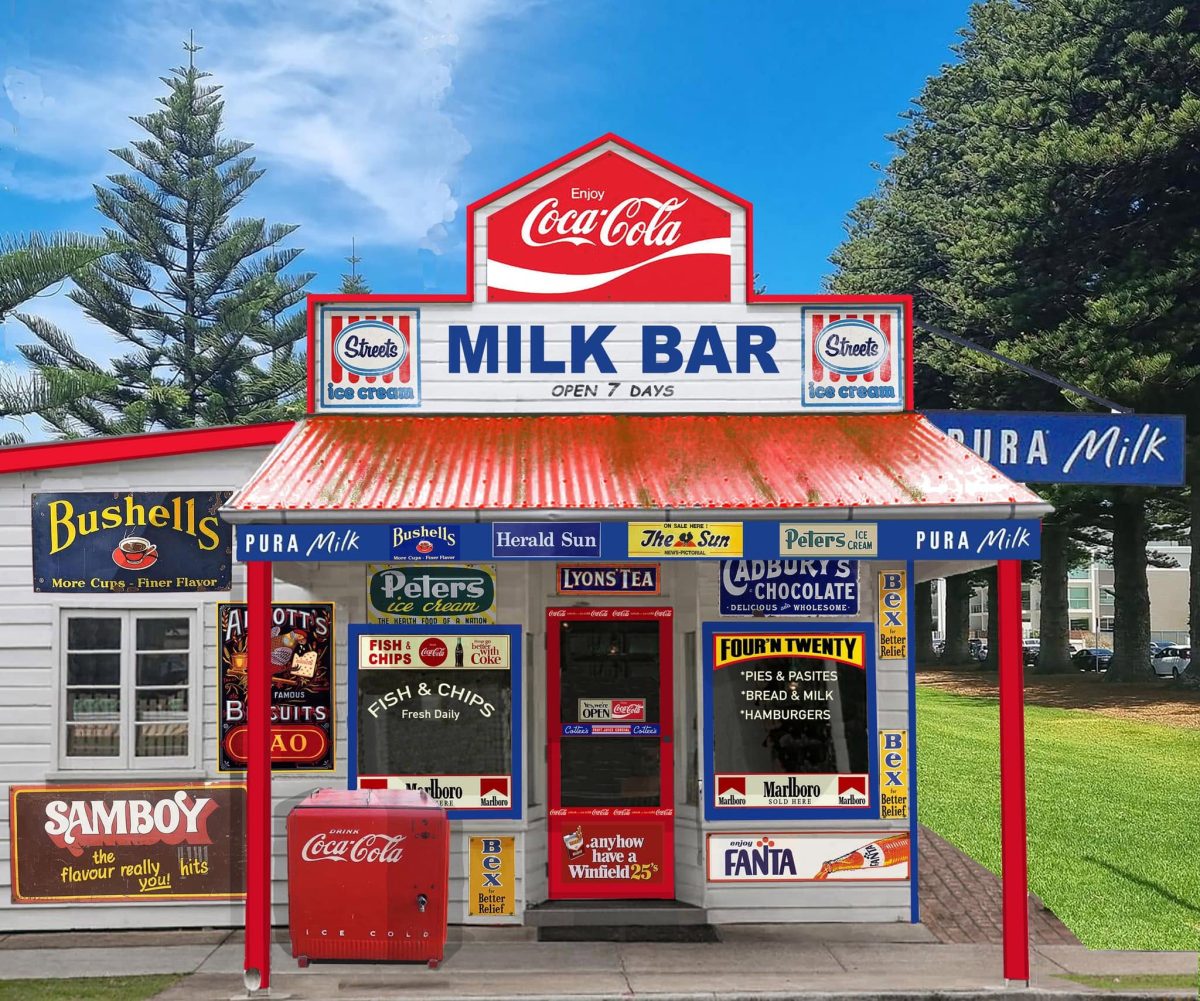
Local Aussie Milk bar
Local Aussie Milk bar - In limited supply; the classic Aussie milk bar. Image by Pixabay


The Corner Milk bar
Before supermarkets stayed open late and petrol stations sold everything from milk to phone chargers, the corner milk bar was a vital piece of community infrastructure.

It was where children spent pocket money on mixed lollies, adults bought emergency bread and milk, and everyone accepted that newspapers would be stacked beside a freezer full of Paddle Pops.

Many milk bars have since become cafés, convenience stores, townhouses or mysteriously vacant shops with faded signs still promising food, drinks and newspapers. Those that remain have evolved. You may now find a self-serve espresso machine where the lolly jars once stood, although there is usually still a dim corner devoted to chips, batteries and household products.

The milk bar’s survival may ultimately depend on Australians continuing to forget one essential grocery item until after dinner. Fortunately, this seems likely.
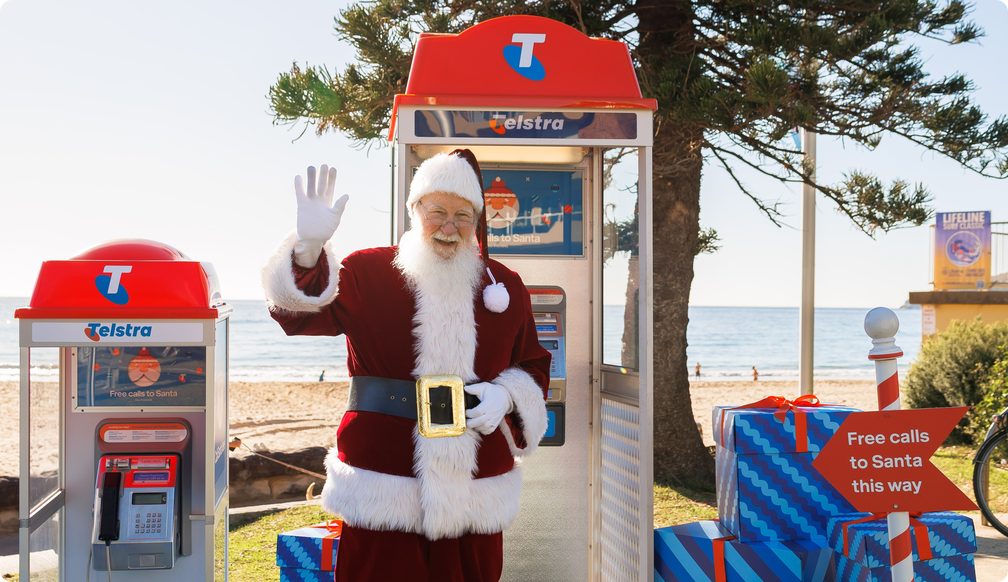
Telstra payphone call to Santa
Telstra payphone call to Santa - Telstra's payphone calls to Santa over the Christmas holidays have given payphones a new life. Image courtesy of Telstra.


Public Pay Phone Boxes

The public phone box was once where you rang Mum for a lift, called a friend after missing the last bus or conducted private teenage business within full view of an entire shopping strip.

Then the mobile phone arrived and transformed us into people who can be contacted anywhere, at any time.

Phone boxes still exist, but they now resemble relics from an era when people memorised numbers and carried coins. Their role has changed too, providing a useful option when phones are flat or for emergency service calls. Over the Christmas holidays, they become a direct line to Santa, thanks to a successful Telstra campaign where dialling #Ho Ho Ho (#46 46 46) connects you to the big man.

They may be less prominent, but removing them completely would feel Scrooge-like and dangerously optimistic about mobile battery life.
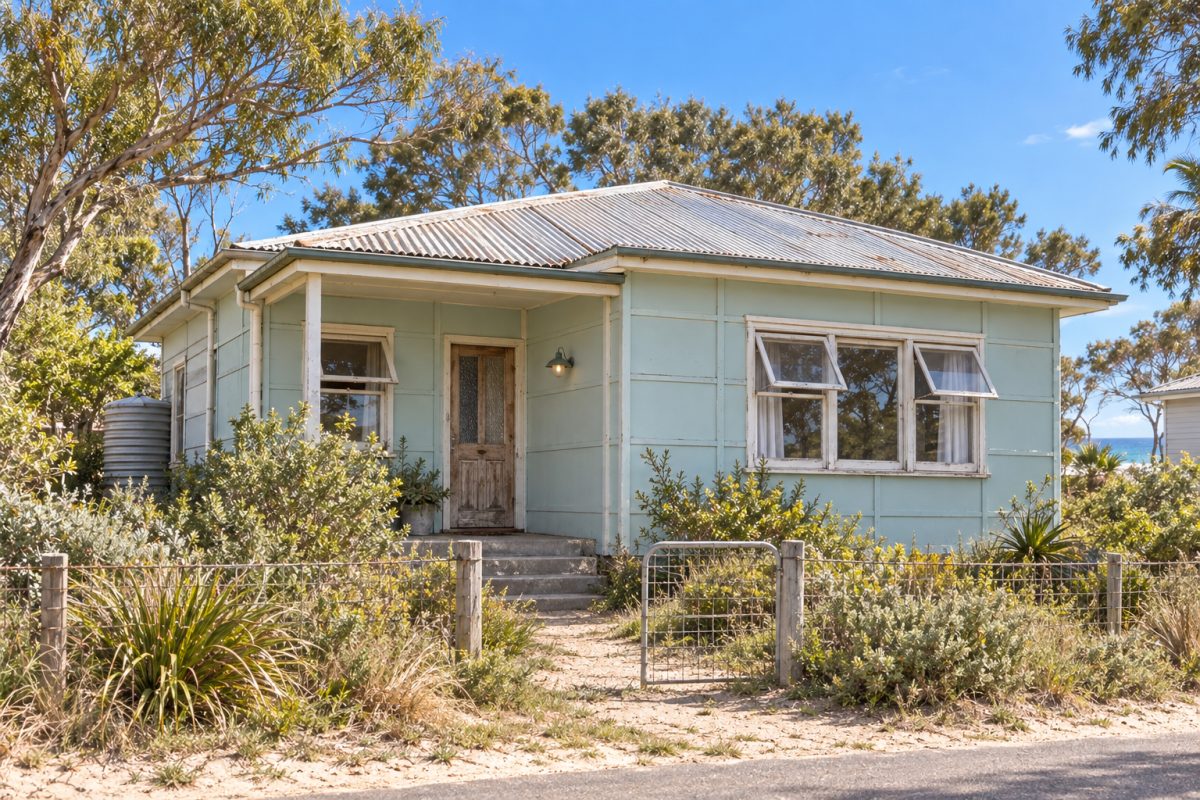
Aussie Fibro Beach House Elise Arnold
Aussie Fibro Beach House Elise Arnold - Now replaced by coastal homes, these fibro holiday houses were once everywhere. IMage courtesy of Elise Arnold.


The Fibro Beach Shack

The classic Australian beach shack was rarely luxurious. It had flyscreen doors, mismatched furniture and at least one bedroom clearly created by placing beds in a passageway.

Its décor consisted of shells, faded fishing prints and board games missing crucial pieces. The kitchen contained three blunt knives and a collection of plastic cups advertising businesses that closed in 1987.

Many of these shacks have been replaced by coastal homes featuring polished concrete, six bathrooms and names displayed on tasteful timber signs. The ocean views once enjoyed from a sagging deck are now appreciated through architectural glass while someone prepares a charcuterie board on a marble benchtop.

A few fibro survivors remain, stubbornly occupying land worth more than a small European nation. They may lack infinity pools, but they possess something harder to renovate in: the feeling that nobody cares if you trail sand inside.
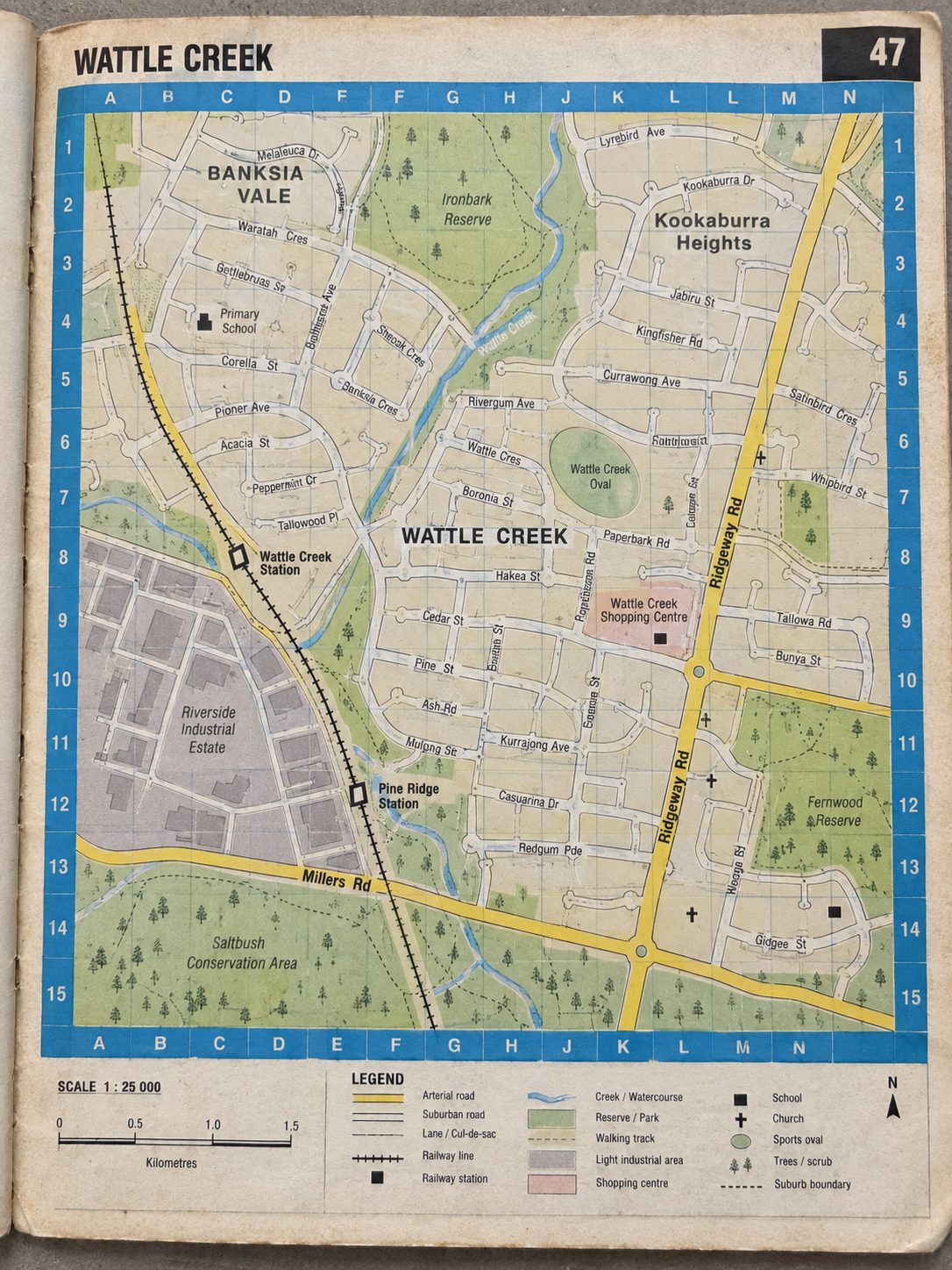
Street Directory Sample Wattle Creek
Street Directory Sample Wattle Creek - The humble street directory. Image courtesy of istock.


The Humble Street Directory

Once an essential passenger-seat accessory alongside a driver confidently declaring they knew a shortcut.

Using one required patience, map-reading skills and the ability to locate D7 without losing your place every time the car turned a corner. Journeys involved handwritten directions, missed exits and heated discussions about whether the map was upside down.

GPS has made navigation easier, but perhaps less memorable. A calm electronic voice now redirects us without judgement, even after the fourth wrong turn. It never sighs, dramatically refolds itself or says, “Well, if you’d listened to me back at the roundabout…”

The street directory has largely retired to glove boxes, bookshelves and garages, too outdated to use but apparently too important to throw away.

These icons may be disappearing, evolving or simply waiting for fashion to bring them back. After all, Australians are excellent at keeping things long past their practical use. Somewhere, right now, a Hills Hoist, a street directory, and a container of mystery screws are being saved because they might come in handy one day.
12
Science & Tech
Can ChatGPT act as an enabler for your OCD?
AI talking in your ear
AI talking in your ear - Magnific.com
An ever-helpful chronic people-pleaser who’s always by your side, can Generative AI send you spiralling down the OCD rabbit hole?

As smart assistants like ChatGPT become more lifelike, people are increasingly confiding in them, trusting them and even befriending them. It’s not difficult to see the mental health risks of growing emotionally attached to a machine that talks like a friend and is seemingly empathetic but lacks the judgement to give you sound advice.

Spending more of your time with an imaginary digital friend who never challenges you, and even encourages harmful behaviour, also makes it harder for vulnerable people to build and sustain real-world human relationships, which require effort and compromise.

Even if you’re awake to this danger and always keep in mind that Generative AI is not a trusted confidant, there are still mental health risks if you’re prone to obsessive and compulsive behaviour.

As someone who has worked hard over the years to keep their OCD in check, I’ve seen first-hand how tools like ChatGPT and Google’s Conversational AI Gemini can send you spiralling down a rabbit hole.

Because AI is designed to be highly agreeable and infinitely patient, it can act as the ultimate enabler for reassurance-seeking, which can be a core OCD compulsion. This might include constantly researching health symptoms or checking whether thoughts and behaviours are normal.

I’ve actually found that Gemini can be genuinely useful for better understanding my chronic health issues. Unlike a normal search query, Conversational AI remembers your previous questions and answers, so you can dive much deeper into topics.

More than this, Gemini also asks follow-up questions to tease out different ideas. That’s fine if you know when to walk away, but would be an inescapable trap for obsessive-compulsive hypochondriacs fearing that every little ache and pain is some undiagnosed death sentence.

For me, OCD mostly presents as a tendency to become obsessed with new projects and ensuring everything is “just right”, the latter of which is unofficially known as Optimisation OCD. You can see how that is a dangerous combination for a technology journalist like me who spends their days playing with new tech.

It’s actually the kind of OCD that can serve you well and boost your productivity, as long as you remain in control.

Once I learned to curb it, my editors started to complain: suddenly I was writing less about all the crazy projects that would have me tearing apart devices or crawling around in the ceiling running cables in the middle of the night.

These days, I force myself to apply a mental checklist before embarking on new projects, similar to building a business case which must prove both value and need. It’s a safeguard to protect both my sanity and the sanity of those who have to live with me.

Recently, Gemini’s Conversational AI took me down a rabbit hole researching the possibility of adding a retractable bolt to our dog door, to stop one of my dogs barking at passersby.

As an extra degree of difficulty, I wanted to tie it into our home automation system. I wasn’t sure if it would solve the problem, but it seemed like an enticing idea.

It sounds like an innocent enough project, but I soon felt myself succumbing to my OCD tendencies as Gemini rapidly accelerated the process from initial idea to a plan of action.

After Gemini helped me explore various solutions and choose the right combination of components, I was ready to order parts online before I realised I had completely abandoned that mental checklist designed to act as an OCD safeguard.

I enforced my rule about walking away from a potential project to clear my head. When I returned to it a few days later, it was clear that it wasn’t worth the time, effort or expense.

The fact Gemini acted as an enabler to so quickly override my self-enforced OCD safeguards was terrifying, when I stopped to think about where Gemini could have taken me back in the days when I didn’t understand my problems and how to keep them in check.

Next time, it might have been a crazy OCD-fuelled idea much more grand, expensive and exhausting than simply automating a dog door. I know that Gemini is not my friend, but I also need to remember that it can still get in my ear and override my sense of perspective.
14
Music
Across the Great Southern Land: Toby Mobbs Takes His New Album Coast to Coast
Toby Mobbs with tour posters
Toby Mobbs with tour posters - Toby Mobbs
When most musicians announce national tours, they schedule shows in the East Coast capitals, perhaps a few regional centres or a stop in Adelaide or Perth. Few ever take in the full depth and breadth of this country. This makes Toby Mobbs’ commitment to national touring so remarkable. Since dropping his debut album Placid in the Rough in 2022, the Albury-Wodonga-based singer-songwriter has accompanied every new release with an Australian tour that stops in every state and territory. Now with the recent release of his third album Stranger That I Know, Toby is preparing to do it all again.

Working closely with his co-producer and regular collaborator Matt Cross, Toby’s latest album features eight tracks spanning the genres of folk, pop, and rock.

“I really like how genre-diverse my albums are, but in a way that is in service to the song, not just trying to wedge a heavy track on there for the sake of it,” Toby told Hold the News. “I sometimes struggle to give the whole album a genre label, but that’s also what I like about it. It feels like a genuine expression of my songs for where they want to go.”

Stranger That I Know is the third album in Toby’s 10-year, four-album project. While he normally takes two years preparing each album, this one came together a little differently as he threw himself into another passion: photographing spiders.

“As with most of my projects, I don’t do things by halves, so what was meant to be a stroll into the wilderness to take some photos has now turned into publishing a book called ‘Spiders of the David Mitchell Wetlands’ [to be released in 2028],” Toby mused. That project left him with just nine months to prepare his album, but you know what they say about pressure creating diamonds.

“It’s amazing how much you can get done when procrastinating from the thing you should be doing. Because of that, this new album was finished in record time and I’m as proud as ever with the result. I work with a great group of people to bring it all together. There’s a definite mix of enjoyment, pride, and a sigh of relief once it’s all done and once you’re holding the vinyl record in your hand.”
Toby Mobbs playing live
Toby Mobbs playing live - M Rehman Photography

After releasing Stranger That I Know a few weeks ago, Toby has turned his attention to his national touring plans. Next month he’ll pack up his 2004 Mazda 3 hatch and hit the road. After playing the capitals on his first tour and the second-largest cities in each state and territory on his second, Toby is excited to visit the third-largest cities in each region this time around. His beloved Mazda has more than 400,000 kays on the clock, so Toby knows this tour is likely her last, but he’s ready to take her out one last time.

“For these tours I spend 28 days driving 14,000 km to every state and territory,” he said. “There’s some 11-hour driving days in there so it’s far from easy, but it’s a really unique way to see Australia. I’ll either be playing, sleeping, or driving the whole time, and when you’re almost constantly on the move … it gives you a solid idea on just how big Australia is. I see so much, but so little of what there is to see.”

Such an extensive national tour is an enormous commitment for an independent artist, but Toby is incredibly passionate about taking his music across the country.

“I found there were many touring acts that would promote an Australian ‘national tour’ but skip half the country or just focus on the East Coast,” he said. “The national tour label is something I wanted to respect and do it justice.”

It’s become tradition for Toby to start his tours in Wagga Wagga, where he was born. This year, the Wagga Wagga show is the first of three featuring Matt Cross on keys. The remaining concerts will see Toby playing solo before he joins a chamber orchestra in his home of Albury-Wodonga for the final night. Toby has also chosen up-and-coming local support acts for each date.

Soaring local petrol prices make this year’s tour his most ambitious yet, but his kind fans will help ensure the shows keep rolling on.

“I bring merch with me to sell at each show but one of the most effective things on the merch table is an empty plastic jerry can that I call my ‘fuel fund’,” he explained. “I’m always surprised just how generous people are with that. I think it’s because they do something tangible to keep the wheels turning and the petrol tank full.”

Toby Mobbs’ new album Stranger That I Know is now streaming on all major platforms and available at JB Hi-Fi. He'll visit the following venues on his national tour.

7 October 2026 – Thirsty Crow, Wagga Wagga
8 October 2026 – Pot Belly Bar, Belconnen
9 October 2026 – Society City, Wollongong
11 October 2026 – The Nook, Sunshine Coast
17 October 2026 – Durack Community Arts Centre, Palmerston
23 October 2026 – Kokomo’s, Fremantle
27 October 2026 – Prince Albert Hotel, Gawler
30 October 2026 – The Old Church on the Hill, Bendigo
1 November 2026 – Don Memorial Hall, Devonport
13 November 2026 – The Cube, Albury-Wodonga

Visit Toby Mobbs' website
Listen to Stranger That I Know
Purchase tickets to Toby’s upcoming shows
15
News
Vinyl Record Sales Continue Growing in Australia
Turntable
Turntable - Ingo Ellerbush - Unsplash
Ironically, while one group of people believes AI is going to kill us all within the decade, another is out buying turntables and vinyl records.

Sounds crazy, right?

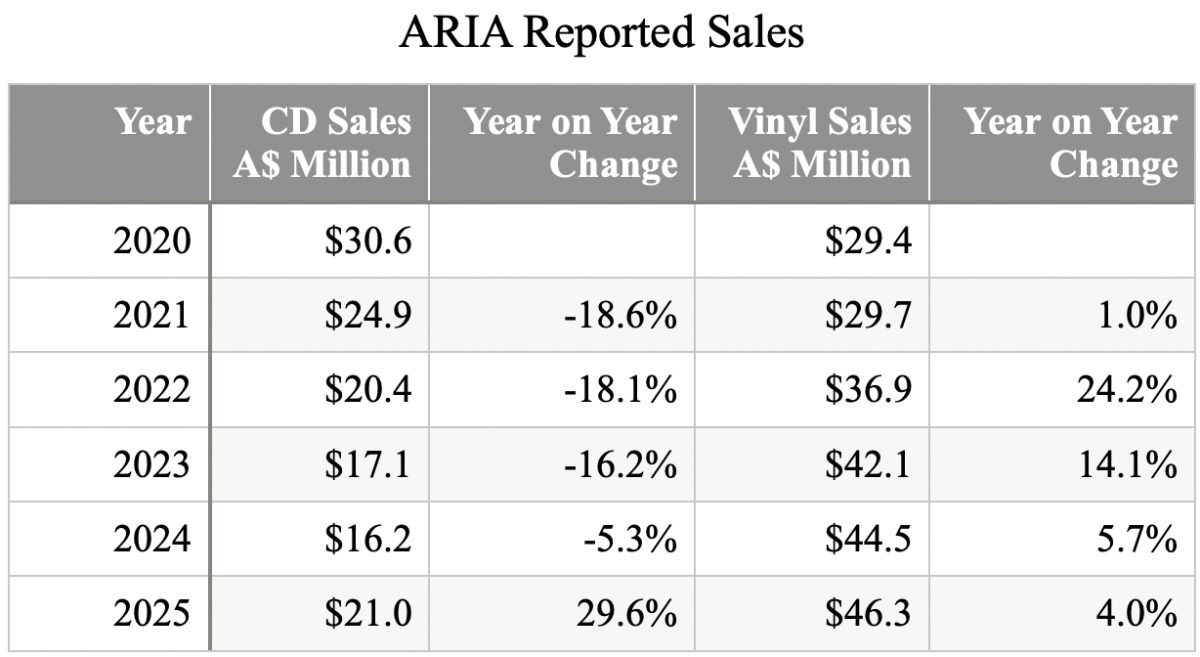
But sales data from ARIA's latest full year report clearly shows a growing trend in the sales of vinyl records.

table
table - ARIA Sales of CDs and Vinyl Records


These figures don't even include second hand sales, traded on Facebook Marketplace eBay and other e-commerce platforms.

Meanwhile, CD sales have generally declined, despite a rebound in 2025.

The question is why?

Music Streaming
Before we answer this question it is important to acknowledge that the majority of people these days listen to music via a streaming service like Spotify or Apple Music. For a small monthly subscription, users can access a huge library of music and enjoy unlimited listening. But for some music aficionados streaming does not cut it.

Compact Discs
Now here is a product that most will agree offers superior sound quality. The CD was first introduced in 1982. A conveniently small digitally encoded disc. Mostly immune to fingerprints and minor scratches. But the CD was not perfect, its packaging was a disaster. Known as the CD jewel case, the plastic cover was anything but a jewel. Simply opening it was a frustrating struggle, often resulting in a broken hinge. The album artwork came in a small booklet which, once removed, was almost impossible to put back into the case.

Vinyl Albums
First introduced by Columbia Records back in 1948 the 12" vinyl album predated digital technology. They were played on a rotating turntable with a sensitive stylus tracking the groove which encoded the music in an analogue way.

Between 1948 and the mid 1970s the technology was dramatically improved. Initially by introducing stereo in 1958 and later with High Fidelity electronics.

The standard Vinyl LP (Long Playing) album was typically packed in a protective inner sleeve and printed cardboard envelope.

The covers would typically feature an image of the artist or other relevant art as well as information about the band lineup, venue and sometimes also the lyrics.

The Feeling
Possessing a particular album in one's collection said something about you. It was not uncommon for first-time visitors to head straight to one's album collection to snoop on who you were.

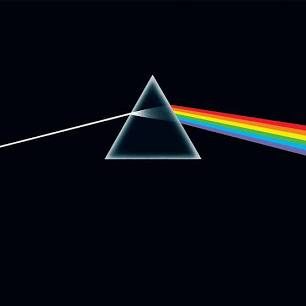
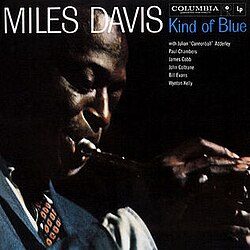
Aha, I see you have "Dark Side of the Moon" or "Miles Davis Kind of Blue" or "The Vienna Philharmonic - Wagner: Das Rheingold"

A person's music collection said something about that person and could indicate a common interest.
album2
album2 - Dark Side of The Moon

The vinyl album not only gave you a personality but it gave you a connection to the artist, a feeling that one had somehow contributed to the artist's success, which in most cases the artist really deserved.

Albums often contained a collection of songs that were carefully curated. An opening piece followed by a particular sequence of songs and ending with a closing piece.

Listening to an album was a complete experience.

The album cover was also something to enjoy, while listening one would often study the cover carefully and read every lyric. Bob Dylan's lyrics needed reading more than once, well no one really knew what he meant.

Maybe there was also something hypnotic or relaxing about watching a turntable go round and round at 33 rpm - without interruptions by sponsors.

That does it for me, I'm getting a turntable.


album1
album1 - Miles Davis Kind of Blue


Sources

ARIA 2025 report
16
News
Australia This Week: Migration Curbs, AI Risks and Services Under Pressure
farm-work
farm-work - Tim Mossholder - Unsplash
Government tightens migration settings in major policy shift
The federal government has announced sweeping changes to Australia's migration rules, targeting a reduction in annual net overseas migration to 225,000 people by 2028. The measures affect international students and their dependants, backpackers and people seeking to switch visa categories while remaining in Australia. The announcement comes amid rising support for One Nation, which has made immigration a central part of its political campaign, adding to pressure on the government to reduce migration levels.


Prime Minister urges US and China to cooperate on AI risks
Anthony Albanese has called for the United States and China to work together on artificial intelligence safety, drawing a parallel with nuclear non-proliferation treaties. Speaking after meeting Apple executive chairman Tim Cook, the Prime Minister stressed that humans must remain in control of AI systems and urged the two major powers to mitigate AI risks "in the interests of humanity". The intervention signals Australia's recognition that AI governance at the global level will have direct consequences for Australian technology policy and economic competitiveness. The timing reflects growing international concern about uncontrolled AI development, with the US Trump administration simultaneously announcing plans to establish an "AI Force" and appoint an AI tsar, though taking a lighter regulatory approach than Australia is considering.

Tragic domestic violence deaths in NSW spark policy debate in Victoria
Three women tragically lost their lives in separate domestic violence-related incidents across New South Wales within just 24 hours—a devastating reminder of the human cost of family violence. Meanwhile, Victorian Labor has pledged to introduce new offences and tougher penalties if re-elected, including a proposed manslaughter offence covering cases where abuse leads a victim to take their own life. It also proposes increasing the maximum penalty for rape to life imprisonment. The proposals aim to address gaps in existing laws, including cases where perpetrators abandon victims who need medical care. Labor says the changes would prevent offenders from slipping through those gaps and escaping accountability.

Canberra provider to close disability services amid NDIS changes
Carers ACT will close its Hub Disability Day Program and NDIS support coordination service at the start of October. The organisation cites rising operating costs and changes to funding arrangements, saying it can no longer afford to subsidise the services. Participants and disability advocates have expressed concern about finding replacement support and the disruption to established routines. The announcement comes as federal NDIS changes seek to reduce expenditure, placing funding restraint and continuity of care at the centre of the debate.


ABC rejects bias finding over War Memorial investigation
The ABC has rejected a media watchdog finding that its Four Corners investigation into the Australian War Memorial’s redevelopment unfairly favoured critics of the project. The episode, Sacrifice, aired in March 2025. Following a complaint from War Memorial council chair Kim Beazley, the Australian Communications and Media Authority found that the program highlighted shortcomings identified by an audit without adequately explaining its broader findings. It also confused separate stages of public consultation and used language and interview techniques that favoured opponents of the redevelopment. The ABC maintains that the program was legitimate public-interest journalism. It argues that holding public officials accountable requires rigorous questioning, and warns that the ruling could discourage investigative reporting. The broadcaster stands by the episode and has declined to take remedial action.


Illegal tobacco trade fuels arson crisis for Melbourne businesses
Arson attacks targeting tobacconists engaged in the illegal tobacco trade have intensified in Melbourne, creating spillover damage for neighbouring businesses. Small retailers located near targeted tobacconists are being denied insurance coverage or priced out of the market due to the elevated fire risk in their vicinity. The attacks have created a secondary economic impact, damaging the revenue and reputation of businesses with no connection to illegal tobacco sales. The crisis highlights how criminal activity in one sector can destabilise legitimate commerce in surrounding areas.

Hospital helipads remain closed, but emergency retrievals continue
Medical retrieval helicopters remain unable to use helipads at Murray Bridge and Victor Harbor hospitals in South Australia because of unresolved aviation safety requirements, including clearance from nearby buildings. Emergency retrieval services continue, with helicopters landing at nearby ovals and ambulances transferring patients between the landing sites and hospitals. Health Minister Blair Boyer says Murray Bridge’s helipad is close to reopening, while Victor Harbor requires a longer-term solution. No firm reopening dates have been provided.


---
AI-generated weekly digest — stories relevant to Australia, 13 September 2026 – 20 September 2026

Sources: ABC News Australia, Guardian Australia, BBC News Australia, Sydney Morning Herald
Immigration - Reuters
Domestic Violence - Guardian
NDIS - ABC
War Memorial - ABC
18
News
The Lions, The Wizard and the Wardrobe Malfunctions
Lions, the Wizard and the wardrobe malfunction
It has been a tense finals series in the AFL. The Brisbane Lions have made the Grand Final for the third year in a row, brushing aside the Hollywood Hawks with the kind of casual confidence you would expect from reigning double premiers. Even the magic tricks of Hawthorn’s young gun Nick Watson, better known as The Wizard, were not enough to slow them down.

Meanwhile, Fremantle, the never‑premiers, the eternal bridesmaids, the club that has turned heartbreak into a lifestyle brand, knocked over Sydney and now find themselves staring at a Brisbane side chasing a triple dynasty. It is a matchup that feels like destiny for one team and emotional suicide for the other.

As we wait for the big showdown, it is hard not to reflect on the season that was. Hawthorn’s light has been extinguished, but memories of their chaotic opening round still linger. Jack Ginnivan sparked controversy when he was spotted wearing a novelty ring on the sidelines despite the AFL’s strict no‑jewellery policy. Which reminded me of the many other wardrobe malfunctions that have graced Australia’s favourite sport.

There have been plenty of classics over the years. The Western Bulldogs were fined for wearing inappropriate socks in 2001, for one example. The 2025 season delivered one of the funniest examples. Richmond’s number‑one draft pick Sam Lalor suffered a viral wardrobe malfunction during his AFL debut when his shorts briefly slipped while celebrating a goal against Carlton. And this wasn't the only bums out moment.

Brisbane also had a kind of full mooning festival. During the Sir Doug Nicholls Round, the Lions wore a special Indigenous AFLW guernsey featuring a yellow arc across the backside and a black tree rooted into the lower half of the jumper. The design was widely praised, but one unfortunate detail had fans making the same joke. To the naked eye, it looked like the players were running around with their shorts sliding down their behinds.

After his Brownlow win Lachie Neale appeared to be wearing a different girlfriend on his arm (And after a gut punch on Ginnivan he may not even see the GF). Lets also not forget mid season 2026, Swans star Isaac Heeney seemed to be wearing a class‑action lawsuit.

The AFL never disappoints. Whether it is dynasties, wizards, heartbreak merchants or wardrobe chaos, the theatre is always full and the costumes are never quite safe, and yes, there may be some focus on fixing 'the culture' next year, but it sure is a hell of a ride.
20
Politics
Parliament debates veterans' healthcare reform and university overhaul as child support abuse measures advance
Article image
Federal Parliament sitting week: Monday 14 September, Tuesday 15 September, Wednesday 16 September, Thursday 17 September

Bills Introduced
Removing caps on veterans' healthcare costs
Military Rehabilitation and Compensation Amendment (Veterans' Healthcare Without Caps) Bill 2026
The bill removes financial limits on healthcare benefits for veterans covered by the military compensation scheme. It expands access to treatment without caps on what the scheme will cover. This affects serving and former defence personnel and their families relying on military health support.

New university funding and access system
Universities Accord (Opening the Doors of Opportunity) Bill 2026
The bill implements a new funding model for tertiary education aimed at improving access and affordability. It changes how universities are funded and structured to support broader participation. This affects university students, institutions, and graduates seeking education access.

Private health insurance rebate modernisation
Private Health Insurance Amendment (Modernising the Private Health Insurance Rebate) Bill 2026
The bill reforms how the government's private health insurance rebate is calculated and delivered. It updates the rebate system to change eligibility or payment methods. This affects people with private health insurance and their access to government subsidies.

Removing "No Jab No Pay" family assistance penalties
A New Tax System (Family Assistance) Amendment (No Jab No Pay Repeal) Bill 2025
The bill repeals rules that reduced family tax benefits for parents who did not vaccinate their children. It removes vaccination status as a requirement for receiving full family assistance payments. This affects families receiving child support and family tax benefit payments.

Stopping financial abuse in child support
Child Support and Family Assistance Legislation Amendment (Ending Financial Abuse in the Child Support Scheme No. 1) Bill 2026
The bill introduces measures to prevent child support arrangements being used as a tool for family violence. It adds protections and allows courts to modify payments in abuse situations. This affects separated parents, carers, and children in families experiencing domestic abuse.

Faster import tariff reviews
Customs Amendment (Safeguard Inquiries) Bill 2026
The bill speeds up government reviews of protective tariffs on imported goods. It shortens inquiry timeframes and changes the process for examining import safeguards. This affects importers, local manufacturers, and consumers of goods subject to tariff protection.

Tougher penalties for illegal tobacco smuggling
Customs and Other Legislation Amendment (Illicit Tobacco Enforcement Modernisation and Other Measures) Bill 2026
The bill modernises enforcement tools against illegal tobacco sales and smuggling. It updates customs powers and penalties to target the illicit tobacco trade. This affects tobacco smugglers, legitimate retailers, and tax revenue protection.

Indigenous aged care commissioner and oversight
Aged Care Legislation Amendment (Aboriginal and Torres Strait Islander Aged Care Commissioner and Other Measures) Bill 2026
The bill establishes a new commissioner role dedicated to aged care standards for Indigenous Australians. It creates oversight and complaint mechanisms specific to Indigenous aged care services. This affects Aboriginal and Torres Strait Islander older people and aged care providers serving these communities.

Doping code compliance for sports bodies
Sport Legislation Amendment (World Anti-Doping Code Implementation) Bill 2026
The bill updates Australian sports law to comply with international anti-doping standards. It requires sports organisations to align their anti-doping rules with the World Anti-Doping Code. This affects athletes, sports bodies, and anti-doping testing regimes in Australia.

Money laundering and terrorism financing crackdown
Anti-Money Laundering and Counter-Terrorism Financing Amendment Bill 2026
The bill strengthens rules on detecting and stopping money used for terrorism or serious crime. It tightens reporting requirements and compliance obligations for financial institutions. This affects banks, money service providers, and financial crime detection.

Carbon credit market integrity rules
Carbon Credits and Other Legislation Amendment (Integrity and Transparency) Bill 2026
The bill improves transparency and accountability in the carbon credits market. It introduces new rules to prevent fraud and ensure credits represent real emissions reductions. This affects companies buying carbon credits and environmental integrity of climate schemes.

Private health insurance joint replacement levy
Private Health Insurance (National Joint Replacement Register Levy) Amendment Bill 2026
The bill introduces a small levy on private health insurers to fund a national register of joint replacements. It creates a funding mechanism for tracking joint replacement surgery outcomes. This affects private health insurance members and the cost of private health insurance premiums.

Defence force conduct rules reform
Defence Force Discipline Amendment (RCDVS Implementation and Related Measures No. 1) Bill 2026 and Defence Legislation Amendment (RCDVS Implementation and Related Measures No. 2) Bill 2026
These bills implement changes to defence force discipline and conduct following a review of restorative justice practices. They update rules for handling misconduct and grievances in the military. This affects defence force personnel and how workplace disputes are resolved in defence.

Legal process changes for Knox class action
Knox Class Action (Facilitation) Bill 2026
The bill enables a specific group of litigants to pursue a class action on modified legal terms. It changes procedural rules to facilitate the particular Knox class action case. This affects the Knox class action participants and litigation access.

Student ombudsman funding mechanism
National Student Ombudsman Levy Bill 2026 and Tertiary Education Quality and Standards Agency Amendment (National Student Ombudsman Levy) Bill 2026
These bills establish a levy on universities to fund a national student ombudsman service. They create a new funding model for student complaint handling and dispute resolution. This affects university students and universities as levy-paying institutions.

Bills Passed
Indigenous aged care oversight now law
Aged Care Legislation Amendment (Aboriginal and Torres Strait Islander Aged Care Commissioner and Other Measures) Bill 2026
This bill, which establishes a dedicated Indigenous aged care commissioner, has passed both the House of Representatives and Senate. The new commissioner will oversee aged care standards and handle complaints from Aboriginal and Torres Strait Islander communities. Indigenous older people and aged care providers now have dedicated oversight mechanisms.

Faster import tariff reviews now law
Customs Amendment (Safeguard Inquiries) Bill 2026
This bill to streamline government reviews of protective tariffs has passed both chambers. Import protection inquiries will now move faster through the review process. Importers and local manufacturers can expect quicker decisions on tariff safeguards.

Veterans' healthcare caps removed
Military Rehabilitation and Compensation Amendment (Veterans' Healthcare Without Caps) Bill 2026
This bill removing financial limits on veterans' healthcare has passed both the House and Senate. Veterans covered by the military rehabilitation and compensation scheme can now access treatment without hitting funding caps. Serving and former defence personnel gain unrestricted access to covered healthcare.

Defence force conduct reforms now law
Defence Force Discipline Amendment (RCDVS Implementation and Related Measures No. 1) Bill 2026 and Defence Legislation Amendment (RCDVS Implementation and Related Measures No. 2) Bill 2026
These bills updating defence force discipline rules have passed both chambers. The defence force now has reformed procedures for handling misconduct and grievances. Defence personnel operate under updated conduct and accountability rules.

Student ombudsman funded
National Student Ombudsman Levy Bill 2026 and Tertiary Education Quality and Standards Agency Amendment (National Student Ombudsman Levy) Bill 2026
Both bills establishing university-funded student ombudsman services have passed both chambers. Universities will now contribute via levy to fund independent student complaint handling. University students now have access to a dedicated ombudsman service.

Worth Watching
Parliament is currently debating bills on university funding reform, private health insurance rebates, family assistance changes, and carbon credit market regulation. The child support and family violence protections bill is moving through the House and is expected to progress to the Senate. The "no jab no pay" repeal is in Senate debate and signals a policy shift on vaccination-related family assistance penalties. Various customs and defence-related bills remain under consideration across both chambers.

Weekly Federal Parliament Briefing — sourced from Hansard via OpenAustralia API. Parliamentary material Copyright Commonwealth of Australia. This is a summary only.
21
Politics
NSW Parliament Tackles Organised Crime, Medical Cannabis Driving Rules, and Renewable Energy in Week of Major Reforms
Article image
NSW Parliament sitting week: Tuesday 15 September, Wednesday 16 September, Thursday 17 September

Bills Introduced
Aboriginal land rights restoration process, Aboriginal Land Rights Amendment Bill 2026
Introduced by a private member in the Legislative Assembly.
The bill creates a process for Aboriginal communities to claim and recover land rights.
It establishes a new framework for recognising and restoring Aboriginal land ownership.
Aboriginal communities and organisations seeking to reclaim traditional lands will be affected.

Small-scale mining permits, Mining Amendment (Small-Scale Licences) Bill 2026
Introduced by a private member in the Legislative Assembly.
The bill creates a new category of small-scale mining licences for limited operations.
It allows individuals and small operators to obtain mining permits under a simplified approval process.
Small-scale miners and rural communities where limited mining activity occurs will be affected.

Water management changes, Water Legislation Amendment Bill 2026
Introduced by a government member in the Legislative Council.
The bill amends water management legislation to adjust regulatory requirements.
It modifies rules governing water use and management across NSW.
Water users, councils, and water authorities will be affected.

Fishing enforcement updates, Fisheries Management Amendment (Enforcement) Bill 2026
Introduced by a government member in the Legislative Council.
The bill strengthens enforcement powers for fisheries compliance.
It expands the tools available to fisheries officers to detect and prosecute illegal fishing.
Commercial and recreational fishers, and fishing enforcement agencies, will be affected.

Sex selection abortion bans, Abortion Law Reform Amendment (Sex Selection Prohibition) Bill 2025
Introduced by a private member in the Legislative Council.
The bill prohibits termination of pregnancy based solely on the sex of the foetus.
It creates an offence for medical practitioners who knowingly perform sex-selection abortions.
Women seeking abortion services and medical practitioners will be affected.

---

Bills Debated or Passed
Organised crime penalties and evidence rules, Crimes and Other Legislation Amendment (Further Organised Crimes Reforms) Bill 2026
Debated in the Legislative Assembly.
The bill strengthens criminal penalties and adjusts evidence rules to target organised crime networks.
It modifies sentencing and courtroom procedures for organised crime offences.
Offenders involved in organised crime, law enforcement, and the courts will be affected.

Medical cannabis and driving safety, Road Transport Legislation Amendment (Medical Cannabis and Driving Offences) Bill 2026
Passed by the Legislative Council.
The bill regulates driving by people using prescribed medical cannabis and adjusts driving offence rules.
It introduces testing and impairment assessment procedures for drivers using legal medical cannabis.
Medical cannabis patients, drivers, and police will be affected.

Demerit points system adjustment, Road Transport Amendment (Demerit Points Reduction) Bill 2026
Debated in the Legislative Assembly.
The bill changes how demerit points accumulate for driving offences.
It adjusts the demerit point system to modify penalty thresholds for licence suspension.
All NSW drivers will be affected.

Councillor conduct rules, Local Government and Other Legislation Amendment (Councillor Conduct Proceedings) Bill 2026
Passed by the Legislative Assembly.
The bill reforms the disciplinary process for councils dealing with misconduct by elected councillors.
It streamlines and clarifies procedures for investigating and sanctioning councillor misconduct.
Local councillors, councils, and the Local Government Conduct Commissioner will be affected.

Renewable energy scheme for power, Electricity Supply Amendment (Renewable Fuel Scheme) Bill 2026
Passed by the Legislative Assembly.
The bill introduces a renewable fuel scheme requiring electricity suppliers to source renewable power.
It mandates that power retailers meet minimum renewable energy targets by acquiring renewable power credits.
Electricity suppliers, consumers, and renewable energy providers will be affected.

Electricity infrastructure funding, Electricity Infrastructure Investment Amendment Bill 2026
Passed by the Legislative Assembly.
The bill adjusts investment rules and funding mechanisms for electricity network upgrades.
It modifies how network infrastructure projects are financed and approved.
Electricity network operators, consumers, and infrastructure investors will be affected.

Sydney's Olympic Park changes, Sydney Olympic Park Authority Amendment (Millennium Parklands) Bill 2026
Passed by the Legislative Council.
The bill alters governance and management of the Millennium Parklands precinct at Olympic Park.
It adjusts the Sydney Olympic Park Authority's powers and responsibilities for managing the parklands.
Parklands users, the Sydney Olympic Park Authority, and the local community will be affected.

Greater Sydney Parklands review, Greater Sydney Parklands Trust Amendment (Review) Bill 2026
Passed by the Legislative Council.
The bill requires a formal review of the Greater Sydney Parklands Trust's operations and structure.
It mandates an independent assessment of the Trust's effectiveness and governance.
The Greater Sydney Parklands Trust, parklands users, and local councils will be affected.

Sporting venues governance, Sporting Venues Authorities Amendment Bill 2025
Debated in the Legislative Council.
The bill adjusts governance and management rules for sporting venue authorities across NSW.
It modifies the powers and responsibilities of organisations managing major sporting facilities.
Sporting venue operators, sporting organisations, and facility users will be affected.

Knife detection technology, Law Enforcement (Powers and Responsibilities) Amendment (Knife Scanning) Bill 2026
Under consideration in the Legislative Council (Second Reading and Committee stages).
The bill authorises police to use metal detection scanning devices to detect concealed knives.
It introduces new search powers allowing officers to use non-invasive knife scanning technology.
Police, the public in high-risk areas, and civil liberties advocates will be affected.

Crown land management review, Crown Land Management Amendment (Statutory Review) Bill 2026
Under consideration in the Legislative Council (Committee stage).
The bill requires a statutory review of crown land management rules and processes.
It mandates a formal assessment of crown land administration and policy.
Government agencies managing crown land, local councils, and landholders will be affected.

Emergency services funding and powers, Emergency Services Legislation Amendment Bill 2026
Debated in the Legislative Assembly.
The bill adjusts funding, governance, or operational powers for emergency service organisations.
It modifies rules governing fire, ambulance, rescue, or emergency management services.
Fire services, ambulance services, rescue organisations, and emergency personnel will be affected.

Contemporary music support, Contemporary Music Bill 2026
Debated in the Legislative Assembly.
The bill establishes support mechanisms for contemporary music performance and development in NSW.
It creates funding, grants, or regulatory frameworks to support modern music genres and artists.
Contemporary music artists, venues, festivals, and cultural organisations will be affected.

---

Worth Watching
Parliament has passed significant legislation on renewable energy, local council conduct, and parklands management. Three bills remain under active consideration: the knife scanning powers (which balance security against privacy concerns), the abortion sex-selection ban (which continues to attract debate), and the demerit points system adjustment (which directly affects NSW drivers). The organised crime reforms are still being fine-tuned in debate and may be amended before final passage.

Weekly NSW Parliament Briefing — sourced from NSW Parliament Hansard API. Parliamentary material Copyright NSW Parliament. This is a summary only.