1
Events
The day London accidentally flooded with beer
Beer-flood
Beer-flood - Canva
It sounds like the setup to a terrible pub joke. A giant vat of beer bursts, a tidal wave rushes through the streets, and London briefly finds itself knee-deep in porter.

Except it really happened.

On 17 October 1814, one of the strangest industrial disasters in British history unfolded, when an enormous vat at the Horse Shoe Brewery in central London burst without warning, unleashing a chain reaction that sent more than 1.4 million litres of beer pouring into the surrounding neighbourhood.

When one barrel became a tsunami
The Horse Shoe Brewery was famous for brewing porter, a dark beer that was hugely popular across London.

To produce it, the brewery stored beer in enormous wooden vats reinforced with heavy iron hoops.

One of the largest stood more than six metres tall and held hundreds of thousands of litres of porter.

On that October afternoon, one of the iron hoops suddenly failed. The pressure inside the vat caused it to burst, smashing into neighbouring vats and triggering a catastrophic domino effect.

Within moments, an estimated 323,000 imperial gallons, more than 1.4 million litres of beer came crashing through the brewery walls.

A flood no one could have imagined
The wave of porter surged into the narrow streets of St Giles, one of London's poorest districts at the time.

Brick walls collapsed. Houses were badly damaged. Cellars filled within seconds as the beer swept through homes and businesses.

As bizarre as the story sounds today, it was also a genuine tragedy. Eight people lost their lives in the flood, many trapped inside buildings that collapsed under the force of the torrent.

It remains one of the most unusual industrial accidents ever recorded.

An unexpected court ruling
You might assume the brewery faced enormous legal consequences.

Instead, the coroner ruled the disaster an "Act of God", meaning no one was held legally responsible for the accident. The brewery was allowed to continue operating, and even received relief on the excise duty it had already paid for the beer that had been lost.

It's a decision that would almost certainly raise eyebrows today, but it reflected the legal system of early nineteenth-century Britain.

One of history's strangest disasters
The Great Beer Flood has become one of those stories that sounds too ridiculous to be true.

Yet every part of it is documented in historical records. It wasn't caused by sabotage, war or an elaborate prank. It appears to have begun with the failure of a single iron hoop on an enormous wooden vat.

With that in mind, should anyone say that history is nothing but kings, queens and battles, remind them that one ordinary afternoon in 1814, London was briefly flooded by more than a million litres of beer.

SOURCE
Historic England
History.com
British Newspaper Archive
2
Business
Top-Down, Bottom-Up: A Corporate Ladder Perspective
Bottom-Up View
Bottom-Up View - Sean Pollock - Unsplash
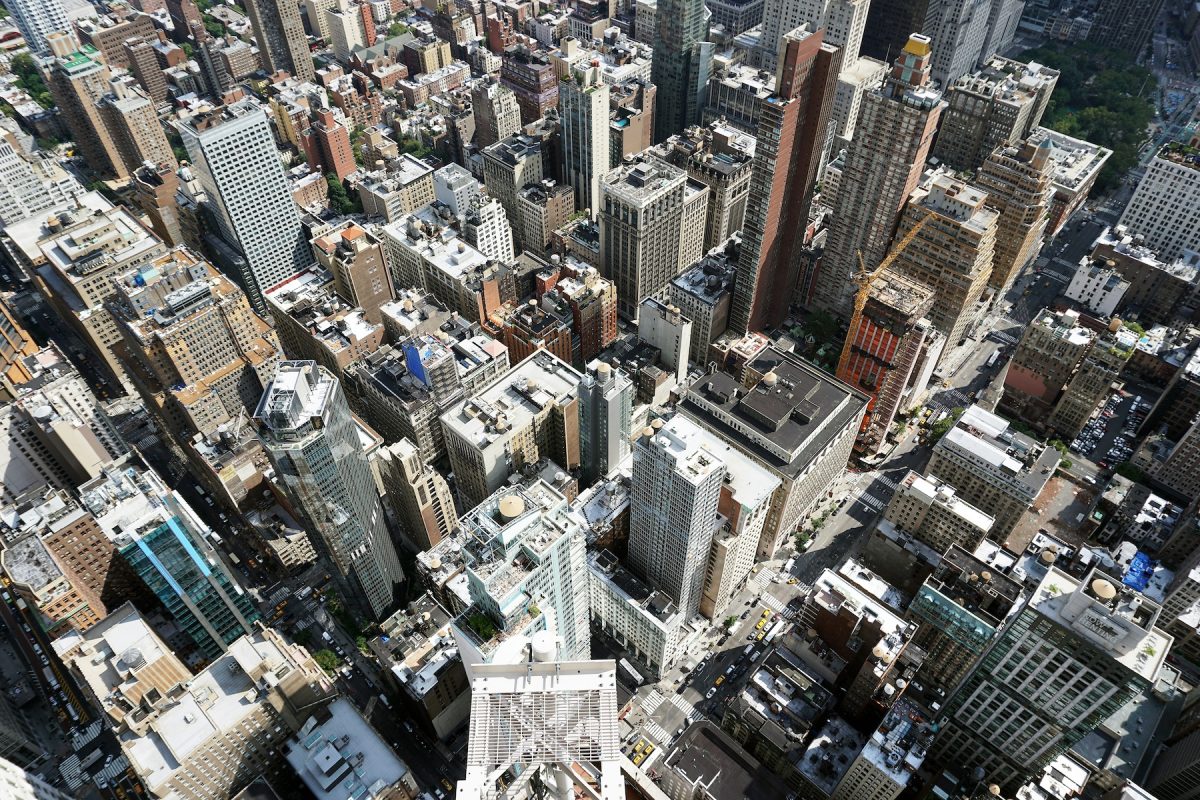
Have you ever stood in a city street and looked up or taken the lift to the top of a skyscraper and looked down?

A very different perspective, right?

On the ground you hear the noise of people and traffic. Taxis and motorbikes competing for space in gridlocked traffic.

But the perspective from the top of the skyscraper is different. The wider picture lets you see, for example, how the traffic jam is caused by roadworks further up in town and how each individual person or car is just responding to their immediate surroundings.

Top-Down View
Top-Down View - Sander Crombach - Unsplash


Just like the physical world, bottom-up and top-down perspectives within corporate structures share the same elements.

Workers on the factory floor experience frustrations but often don't have a full understanding of why those frustrations exist.

In a typical corporate structure there is an invisible information valve which lets information flow up, but often, intentionally or unintentionally, prevents information from flowing down.

Workers often have no knowledge about what is being discussed on the level above.

It is not uncommon for a worker to approach their manager asking for a pay increase, while at the same time that manager is talking to their manager about the employee's poor performance.

Of course one would hope that a good manager would not let a performance issue come as a surprise to the employee, but it does happen.

But management's perspective is wider than many workers realise and can even extend beyond the boundaries of the work itself.

A worker may not know the names and salaries of the managers one level above, but those managers surely have access to the names, salaries and performance assessments of the workers below.

Management decisions can even be swayed by events taking place in a worker's personal life, even when those events appear to have nothing to do with the work itself.

For example, a decision to promote an employee to a more demanding position might be swayed by events in the employee’s private life: a move to a new home with a 90-minute commute, a divorce, a planned pregnancy, financial difficulties or a drinking problem.

Management may never reveal their reasoning behind a specific decision, but workers should understand that there is an information gap and why most decisions are usually made in the best interest of the business.

Workers can help narrow the information gap by being open and transparent about their plans. A planned pregnancy or a long commute may not be seen by management as an obstacle. Much depends on the demands of the role and what value the employee brings to the organisation.

Climbing the corporate ladder, just like a physical ladder, requires work.

The key to a successful corporate career is usually to put the business first.

Always ask: Is this decision good for the business?

Workers who demonstrate business-first thinking are more likely to find themselves on the next level, with a wider perspective.
3
AD Advertisement
Write For Hold The News
Advertisement image
Have something worth saying?

Do you feel compelled to write, have a story to tell or a message you want to share with fellow Australians?

Join our team of volunteer writers and give it a fair go.

We publish articles across a wide range of topics and let readers decide what's worth reading. A new edition is released every Monday, with articles ranked according to the number of reads they receive.

Register here to become a writer, or contact us if you have any questions.

Not ready to write just yet?

Subscribe here and follow Hold The News to see what others are writing.

You can also submit a follow up article to a current or past article if you have something to add.

Steven Sesselmann (editor)
4
Business
Who will be the next Michelin?
Veteran car
Veteran car - Bruce Warrington - Unsplash
You are a third-generation blacksmith in France. The year is around 1898 and business is good. The cobblestone streets are hard on horseshoes and customers are lining up to have their horses fitted.

As a specialist horseshoe fitter people refer to you as a farrier, a common trade at the time.

Word has reached you of a German inventor named Carl Benz who has built a mechanical carriage - one that doesn't need a horse. Your first impression is, that this is an expensive toy for wealthy people.

But not long after, motorised jalopies start appearing in your street and soon the queue of horses wanting new shoes start shrinking.

You are up in arms about the new technology, these automobiles drive much too fast, make too much noise, blow smoke out the back and worst of all: They are not horses!

But not too far down the road lived two enterprising young brothers, Édouard and André Michelin. They ran a struggling farm implement business making rubber valves and gaskets.

After a request from a cyclist to repair a rubber tyre, Édouard came up with an idea for a removable pneumatic tyre which made puncture repairs much easier. The invention was patented in 1891 and soon adapted by the emerging automobile industry.

With every year that passed your farrier business saw fewer and fewer horses coming in for shoe fitting, and by the 1930s it was rare to see working horses in the streets.

Meanwhile the Michelin brothers' business was going from strength to strength. Such was the demand that the company had to grow their own rubber tree plantations in the Far East just to secure enough rubber.

And the rest is well-known history....

The moral of the story is that both the farrier and the brothers Michelin were solving the same problem.

A horseshoe and a rubber tyre, both make contact with the road surface and extend the life of its host.

The disruption we are facing in 2026 with AI, is expected to be at least as severe as the replacement of the horse by the motorcar, which begs the question;

Who will be the next Michelin?


Source
6
Fiction
The Other Panopticon (6a)
The Other Panopticon
The Other Panopticon - Original
Chapter 6a

Darwin – Winter 2006

As Hannah predicted, DNA tests confirmed that the red-haired and pale, freckly Kylie Cunningham’s DNA was not a biological match to her parents or her brother. Kurt Cunningham, on the other hand, was indeed the biological son of Bruce and Beryl – as his physical appearance – dark hair, swathy appearance and olive skin - suggested.

It was now time to start digging into the Cunningham family history, a task that Hannah, Celina and Enzo pursued with vigour.

By the time Darwin was at its mildest, every available Commonwealth and Territory Government database had been probed by my relentless trio of Spider ‘catchers’ and soon we had a picture of the family that seemed not to gel with what the Cunninghams were declaring themselves to be.
In late July, Celina, Enzo and I sat facing a large whiteboard in my locked office as Hannah went through what we had established about the family thus far.

‘Available records,’ she began, ‘show that Bruce and Beryl Cunningham were born in Launceston, Tasmania - he on 11 August, 1948 and she on 12 December 1950. According to local records here, they were married in Launceston on 25 June 1973 and gave birth to Kurt James Cunningham there on 11 June 1976 then to Kylie Barbara Cunningham on 6 May 1978. All four attended local public schools in Launceston until the family moved to the Top End in 1991 and the following year Bruce registered his barramundi fishing charter business in Darwin.’

‘Pause it there for a moment please, Hannah,’ I asked. ‘Before we start focussing on the family’s early days in Launceston, consider the timing of their arrival and settling into Darwin – 1991.’

‘The Russian SVR would have just taken control of all KGB First Chief Directorate operations,’ Enzo noticed.

‘And knowing what we now know about the SVR, we can assume they had more ambitious plans for their overseas illegals networks that the KGB had,’ added Celina.

‘So what if the family never lived in Launceston at all?’ said Hannah. ‘What if they were parachuted by the SVR directly into the Top End in 1991 and suddenly appeared here with a nice SVR bankroll, sufficient to buy a house, car and boat and start up their charter fishing business from scratch?’

‘Easy to check,’ I replied, ‘but we can’t delegate anything to our people down in Tasmania. One of us has to head down there and check the Tassie records ourselves.’

I looked at my team members and Celina finally raised her hand.

‘Hannah and Enzo are pretty busy at present and, frankly, I need to take a bit of a break from ‘Testosterone Kurt’, she admitted. ‘It shouldn’t be too hard to access some of the local and government databases down there. I’ll tell them I’m doing a genealogical study of my family.’
Hannah seemed pre-occupied.

‘Something is bothering me about these DNA results,’ she said. ‘Why would the SVR post three biological members of one Russian family to Australia then add an additional person – Kylie in this case – when doing so could risk drawing attention to them?’

‘Here’s one theory,’ I suggested, ‘Maybe Kylie’s on a different SVR brief to the other three.’
Hannah took a step towards me.

‘Meaning, Michael?’

‘Any number of things. For instance, she could be here to keep an eye on them or she could be on a more proactive SVR brief than they are.’

‘How proactive?’ asked Enzo.

‘Well, she could be on a penetration brief – establish herself initially as an academic with political expertise then maybe join the Commonwealth public service: somewhere where the SVR is actively targeting.’

‘Like the Foreign Affair Department for instance?’ Hannah suggested. ‘She does seem to speak a number of different languages.’

I shrugged.

‘Just a theory at the moment but it does beg the next question.’

‘Like where do the other members of the Cunningham family fit into that particular SVR strategy?’ Celina asked.

‘Good question,’ I replied. ‘Maybe they’ve been told to focus on other SVR target areas such as Pine Gap or the US contingent at Robertson Barracks.’

Hannah took a step back towards the whiteboard.

‘Assuming, of course, Michael, that we are dealing with an illegal SVR network and not one of Zorkov and Co’s SVR disinformation schemes.’

‘Indeed,’ I sighed. ‘So let’s get you, Celina, down to Launceston, to find out if the Cunningham family’s claims of starting life out in that fair city are truth or fiction.’


Continued Article #726
8
Science & Tech
Imagine a tattoo that changed colour when something was wrong
Tattoo
Tattoo - Canva
Most tattoos tell a story. They celebrate a memory, honour a loved one or simply express who we are.

But what if your next tattoo could do something far more remarkable?

What if it quietly monitored aspects of your health, and changed colour when something inside your body wasn't quite right?

It might sound like science fiction, but researchers are already developing tattoo-like biosensors that could one day do exactly that.

Rather than using ink purely for decoration, these experimental tattoos are infused with tiny chemical sensors that react to changes inside the body, creating visible colour changes that may provide an early indication that something needs attention.

How a smart tattoo works
Unlike a smartwatch or fitness tracker, these tattoos don't rely on batteries or electronics.

Instead, they use specially designed colour-sensitive molecules placed within the skin. These molecules react to chemicals found in interstitial fluid, the clear liquid that surrounds the body's cells and carries many of the same biological markers found in blood.

As the levels of certain biomarkers change, the tattoo changes colour. Different sensors can be designed to respond to different substances, allowing researchers to monitor multiple indicators of health.

Scientists have already developed prototype tattoo sensors that respond to changes in glucose, pH and albumin, all of which can provide important clues about a person's health.

More than just diabetes
One obvious application is diabetes, where a colour-changing tattoo could potentially help monitor glucose levels without repeated finger-prick tests.

But researchers believe the technology could eventually do much more.

Future versions may be able to monitor hydration, inflammation and a growing range of biomarkers linked to different health conditions.

Scientists are also exploring ways these sensors could provide continuous health monitoring without the need for wearable electronics.

Much of this work is still taking place in research laboratories, but progress over the past few years has been rapid.

A glimpse of tomorrow's healthcare
These smart tattoos won't replace doctors or medical tests any time soon. Instead, researchers see them as another tool that could help people detect changes earlier, and seek medical advice before problems become more serious.

It's part of a much bigger shift towards continuous health monitoring, where tiny sensors quietly collect information throughout the day instead of relying on occasional check-ups.

So the next time you see a tattoo, remember that the ink of the future might do far more than create an incredible image.

SOURCES
Nature Reviews Chemistry
Study on Dermal Tattoo Biosensors
Study on Colorimetric Dermal Tattoo Biosensors
Communications Materials
9
Politics
Parliament debates online safety rules, private health rebates, and tobacco enforcement as multiple bills advance
Article image
Federal Parliament sitting week: Tuesday 13 October, Thursday 15 October

Bills Introduced
Tougher online safety rules for tech platforms
Online Safety Amendment (Digital Duty of Care) Bill 2026
The bill would impose a new "duty of care" obligation on online platforms to protect users from harmful content and conduct. It does this by creating a legal responsibility requiring platforms to implement safety measures and respond to complaints. The change affects social media companies, search engines, and other digital services used by Australians.

Changes to private health insurance rebate system
Private Health Insurance Amendment (Modernising the Private Health Rebate) Bill 2026 [No. 2]
The bill would reform how the government's private health insurance rebate works, changing eligibility or payment arrangements. It uses amendments to the rebate scheme's rules to alter which Australians receive the subsidy and potentially how much they get. The change affects people with private health insurance and the health funds themselves.

New protections for families in child support cases
Child Support and Family Assistance Legislation Amendment (Ending Financial Abuse in Child Support Scheme No. 1) Bill 2026
The bill aims to prevent child support arrangements being used as a tool for financial abuse between ex-partners. It does this by introducing new provisions to identify abusive patterns in child support claims and providing protections. The change affects separated families and organisations supporting domestic abuse victims.

New Aboriginal and Torres Strait Islander aged care commissioner role
Aged Care Legislation Amendment (Aboriginal and Torres Strait Islander Aged Care Commissioner and Other Measures) Bill 2026
The bill would create a dedicated commissioner to oversee aged care services for Aboriginal and Torres Strait Islander people. It establishes a new position with powers to investigate complaints and improve culturally appropriate care standards. The change affects older Aboriginal and Torres Strait Islander Australians using aged care services.

Mobile phone coverage for rural and remote areas
Telecommunications Legislation Amendment (Universal Outdoor Mobile Obligation) Bill 2026
The bill would require telecommunications companies to provide outdoor mobile phone coverage in more regional areas. It does this by imposing new universal service obligations on telcos to extend networks beyond current commercial reach. The change affects people living in rural and remote Australia who currently have poor or no mobile coverage.

Crackdown on illegal tobacco sales
Customs and Other Legislation Amendment (Illicit Tobacco Enforcement Modernisation and Other Measures) Bill 2026
The bill strengthens enforcement against smuggled and illegal tobacco by giving border and tax authorities new powers and penalties. It introduces tougher penalties, expanded search powers, and modernised detection methods to catch illicit tobacco imports. The change affects tobacco importers, retailers, and law enforcement agencies working on border security.

New register for joint replacement surgery outcomes
Private Health Insurance (National Joint Replacement Register Levy) Amendment Bill 2026
The bill establishes a national register to track joint replacement surgery outcomes and introduces a small levy on private health insurers to fund it. It creates a data collection system requiring hospitals to report surgery results, funded by a new charge on health funds. The change affects people having hip and knee replacements and private health insurers.

Updated anti-doping rules for Australian sport
Sport Legislation Amendment (World Anti-Doping Code Implementation) Bill 2026
The bill updates Australian sports anti-doping laws to align with the latest World Anti-Doping Code international standards. It amends penalties, testing procedures, and investigation powers to match updated global rules. The change affects athletes, sporting organisations, and anti-doping authorities.

Restrictions on police strip searching and childbirth shackling
Crimes Amendment (Prohibiting the Strip Searching of Children) Bill 2026 and Crimes Amendment (Prohibiting Shackling During Childbirth) Bill 2026
These two bills ban the strip searching of children in custody and the shackling of women during childbirth. They do this by making these practices illegal in all circumstances, with limited exceptions for genuine safety threats. The changes affect police procedures, correctional facilities, and maternity services.

Stopping further water buybacks in Murray-Darling Basin
Water Amendment (Ending Further Murray-Darling Basin Water Buybacks) Bill 2026
The bill would prevent the government from purchasing additional water rights in the Murray-Darling Basin beyond current commitments. It does this by removing or restricting the government's authority to buy back water entitlements from farmers and other water holders. The change affects farmers, water-dependent industries, and water management in Australia's most stressed river system.

Bills Passed
Sanctions against Iran and Syria take effect
Autonomous Sanctions Amendment (Iran and Syria) Bill 2026
The bill passed both the House and Senate, enabling Australia to impose targeted sanctions against Iran and Syria without waiting for UN approvals. It expands the government's power to act unilaterally on foreign policy concerns through financial and trade restrictions. The change allows the federal government to respond faster to international situations.

Illicit tobacco enforcement powers now law
Customs and Other Legislation Amendment (Illicit Tobacco Enforcement Modernisation and Other Measures) Bill 2026
The bill passed all parliamentary stages, giving border and tax officials stronger tools to detect and prosecute illegal tobacco imports. The new powers take effect immediately and include enhanced penalties and search capabilities. Tobacco smugglers and illegal importers now face tougher enforcement.

Worth Watching
Parliament is also considering several bills that haven't yet reached final passage:

  • A proposed cap on university fees and changes to student support systems (Universities Accord (Opening the Doors of Opportunity) Bill 2026) — currently being debated between chambers
  • Technical changes to social security payments (Social Security and Other Legislation Amendment (Technical Changes No. 2) Bill 2026) — awaiting final Senate consideration
  • New consumer protections for telecommunications (Telecommunications Amendment (Enhancing Consumer Safeguards) Bill 2025) — under Senate review
  • A national student ombudsman service funded by a new university levy (National Student Ombudsman Levy Bill 2026) — being debated

Weekly Federal Parliament Briefing — sourced from Hansard via OpenAustralia API. Parliamentary material Copyright Commonwealth of Australia. This is a summary only.
10
Politics
Parliament pushes ahead on crime laws, domestic violence protections, and end-of-life options
Article image
NSW Parliament sitting week: Tuesday 13 October, Wednesday 14 October, Thursday 15 October

Bills Introduced
New animal welfare watchdog for NSW
Prevention of Cruelty to Animals Amendment (Office of Animal Welfare) Bill 2026
Introduced by the Legislative Council.
This bill creates a new Office of Animal Welfare to oversee animal protection in NSW.
The office will be established as a dedicated body with powers to investigate and enforce animal welfare standards.
Animal owners, welfare organisations, and the general public will be affected.

Public health changes for immunisation programs
Public Health Amendment (Immunisation) Bill 2026
Introduced by the Legislative Council.
This bill amends NSW's immunisation laws, though specific details of the changes were not announced during introduction.
The mechanism and scope will become clear during debate in coming weeks.
Parents, carers, schools, and health services will be affected.

---

Bills Debated or Passed
Mandatory life sentences for serious crimes
Crimes Amendment (Mandatory Life Sentences) Bill 2026
Introduced in the Legislative Assembly.
This bill introduces mandatory life sentences for certain serious offences.
It removes judicial discretion in sentencing for specified crimes by making life imprisonment compulsory.
Courts, offenders convicted of serious crimes, and victims' families will be affected.

Faster firearms permit reviews
Firearms Amendment (Administrative Reviews by Ncat) Bill 2026
Introduced in the Legislative Assembly.
This bill allows people to challenge firearms licence decisions through the NSW Civil and Administrative Tribunal (NCAT) rather than through courts.
It transfers review authority from the courts to NCAT, a faster and more accessible process.
Firearms licence applicants and current licence holders will be affected.

Removal of interim climate targets
Climate Change (Net Zero Future) Amendment (Removal of Interim Climate Targets) Bill 2026
Debated in the Legislative Assembly.
This bill removes interim climate reduction targets that were previously set under NSW climate law.
It strikes out specified interim targets, leaving only the net zero by 2050 goal in place.
NSW businesses, environmental groups, and those tracking climate progress will be affected.

Defence land development to need parliament approval
Environmental Planning and Assessment Amendment (Defence Lands Parliamentary Approval) Bill 2026
Debated in the Legislative Assembly.
This bill requires parliamentary approval before defence department land can be developed or used for non-defence purposes.
It adds defence lands to approval pathways that currently apply to other sensitive sites, requiring both cabinet and parliament sign-off.
Defence department, local communities near defence sites, and developers will be affected.

Natural organic reduction approved as burial option
Public Health Amendment (Natural Organic Reduction) Bill 2026 — PASSED
Debated and passed in the Legislative Assembly.
This bill legalises natural organic reduction (NOR) — a method where a body is placed in a vessel with wood chips and other materials that break it down to soil over weeks — as an alternative to burial or cremation.
It adds NOR to the list of lawful methods of human remains disposal under NSW public health law.
Funeral homes, cemeteries, families planning funerals, and end-of-life planning services will be affected.

Fire fighting fleet funding for rural NSW
Rural Fires Amendment (Fire Fighting Fleet) Bill 2026 — PASSED
Debated and passed in the Legislative Assembly.
This bill provides funding and authority for the Rural Fire Service to maintain and operate its firefighting aircraft and equipment fleet.
It amends the Rural Fires Act to clarify funding mechanisms for fleet operations.
Rural Fire Service personnel, volunteers, and residents in bushfire-prone areas will be affected.

Coroners can now notify senior next of kin
Coroners Amendment (Senior Next of Kin) Bill 2026 — PASSED
Debated and passed in the Legislative Assembly.
This bill allows coroners to identify and notify a "senior next of kin" — a person designated as first contact — without having to notify all relatives simultaneously.
It creates a new category allowing coroners to prioritise notification to one senior family member before broader notification.
Coroners' offices and families going through coronial investigations will be affected.

Tougher domestic violence laws passed
Crimes (Domestic and Personal Violence) and Other Legislation Amendment Bill 2026 — PASSED
Debated and passed in the Legislative Council.
This bill strengthens protections for victims of domestic and personal violence.
It amends criminal law and apprehended violence order (AVO) frameworks to increase penalties and improve enforcement.
Domestic violence victims, NSW Police, courts, and perpetrators of domestic violence will be affected.

Burglary and breaking-and-entering offences tightened
Crimes Amendment (Breaking and Entering Offences) Bill 2026 — PASSED
Debated and passed in the Legislative Council.
This bill increases penalties for breaking and entering and burglary offences.
It adjusts sentencing ranges and creates new aggravated offence categories for home invasions and commercial break-ins.
Householders, business owners, courts, and people convicted of property crimes will be affected.

Strata scheme disputes handled faster
Strata Schemes Legislation Amendment (Miscellaneous) Bill 2025 — PASSED
Debated and passed in the Legislative Council.
This bill updates rules for strata-titled apartment buildings and townhouses to streamline dispute resolution and clarify owner responsibilities.
It amends the Strata Schemes Management Act with modernised provisions for voting, meetings, and dispute processes.
Apartment and townhouse owners in strata schemes, strata managers, and dispute resolution bodies will be affected.

Long service leave protections for contract cleaners
Contract Cleaning Industry (Portable Long Service Leave Scheme) Amendment Bill 2026 — PASSED
Debated and passed in the Legislative Council.
This bill extends portable long service leave benefits to contract cleaners who move between employers.
It expands an existing portable scheme to cover the cleaning sector, allowing workers to accumulate leave entitlements across multiple jobs.
Contract cleaning workers, cleaning companies, and major employers using contract cleaning will be affected.

Justices of the Peace get new powers and oversight
Justices of the Peace Amendment Bill 2025 — PASSED
Debated and passed in the Legislative Council.
This bill updates the laws governing Justices of the Peace — volunteers who witness statutory declarations and perform other legal functions.
It modernises appointment, training, and discipline procedures for JPs.
Justices of the Peace, the general public needing statutory declarations witnessed, and the courts will be affected.

Police can use drug detection dogs more widely
Law Enforcement (Powers and Responsibilities) Amendment (Drug Detection Dogs) Bill 2026
Debated in the Legislative Council.
This bill expands the circumstances in which NSW Police can deploy drug detection dogs.
It broadens the powers and settings where police can use dogs to detect drugs.
NSW Police, people in public spaces, and those subject to drug detection operations will be affected.

---

Worth Watching
Jobs and investment bill being debated
Future Jobs and Investment Bill 2025
Currently being debated in the Legislative Council.
This bill aims to attract investment and create jobs across NSW through changes to planning, investment incentives, or related frameworks.
Parliament is still examining the detail; expect a vote in coming weeks.
Workers, businesses, and investors across NSW will be affected.

Cannabis regulation bill still in debate
Drug Misuse and Trafficking Amendment (Regulation of Personal Adult Use of Cannabis) Bill 2023
Being debated in the Legislative Council.
This bill proposes to legalise and regulate personal cannabis use for adults in NSW.
The debate is ongoing and remains contentious; no vote scheduled yet.
Cannabis users, law enforcement, health services, and employers will all be significantly affected depending on the outcome.

Coal industry administration changes pending
Coal Innovation Administration Amendment Bill 2026
Introduced in the Legislative Council; not yet debated.
This bill amends administrative arrangements for coal industry innovation programs in NSW.
Details will emerge as debate proceeds.
Coal industry stakeholders and NSW's energy sector will be affected.

---

Weekly NSW Parliament Briefing — sourced from NSW Parliament Hansard API. Parliamentary material Copyright NSW Parliament. This is a summary only.